
I remember the morning I almost threw my toothbrush across the bathroom in frustration. My coffee was getting cold, my knees were already throbbing, and my fingers felt like they’d been replaced by stiff wooden pegs. Standing at the sink, I looked at my dental implant—that beautiful, life-changing piece of cosmetic dentistry—and realized I couldn’t even get a grip on the dental floss. It was a moment of pure defeat. If you’ve ever felt that sharp, hot twinge in your knuckles while trying to do something as simple as brushing your teeth, you know exactly how exhausting it can be. I spent months making a huge mistake: I assumed that if it hurt to clean, I just shouldn’t do it as often. That led to a scary visit to my dentist where I realized skipping my teeth cleaning routine was putting my expensive implant at risk. Today, I’m sharing the exact workarounds I used to keep my mouth healthy without making my arthritis flare up.
Your Hands Shouldn’t Stop You From Having a Healthy Mouth
Arthritis doesn’t just change how you walk or garden; it changes how you manage your oral health. For a long time, I felt like I was failing. I’d try to use traditional string floss, but my fingers wouldn’t hold the tension, and I’d end up with bleeding gums and a bad attitude. It felt like a losing battle until I realized that the tools I was using were the problem, not my hands.
Is it actually possible to clean an implant when your grip is gone?
The short answer is yes, but you have to stop playing by the old rules. According to the Arthritis Foundation, the inflammation associated with rheumatoid arthritis is often linked to an increased risk of gum disease, which can lead to implant failure if we aren’t careful. It’s a cruel cycle. The condition that makes it harder to brush is the same one that makes brushing more critical. But you don’t need the dexterity of a surgeon to keep things sparkling. Have you ever found yourself staring at a roll of floss like it’s a puzzle you just can’t solve? You aren’t alone. Let’s talk about the secret to keeping your dental implant clean using tools that actually fit our lives, not just the lives of people with “perfect” hands. [image-placeholder-1]
Why Standard Brushing Often Fails Us
Most dental tools are designed for people with a full range of motion. When you’re dealing with stiff joints, a standard thin-handled toothbrush might as well be a toothpick. I had to learn the hard way that forcing myself to use tools that didn’t work for me was only making my inflammation worse. Finding a better way isn’t “cheating”—it’s smart maintenance. Whether you are dealing with implants or even managing invisalign maintenance, the right equipment changes everything.
Upgrade Your Toolbelt Without Breaking the Bank
When you have arthritis, the “pincer” grip—the one where your thumb and index finger meet—is usually the first thing to go. Most toothbrushes require this exact grip to be effective. If you’re struggling, you need to increase the surface area of the handle. I used to think I needed to buy fancy specialty equipment, but teeth cleaning secrets don’t always come from a catalog. I once took a pool noodle, cut a small slice, and jammed my toothbrush through the center. It was bulky, sure, but my hand could stay in a relaxed, neutral fist instead of a painful claw. This allows you to apply the necessary pressure without your joints screaming in protest halfway through the process.
The Foam Tubing Hack That Saved My Morning
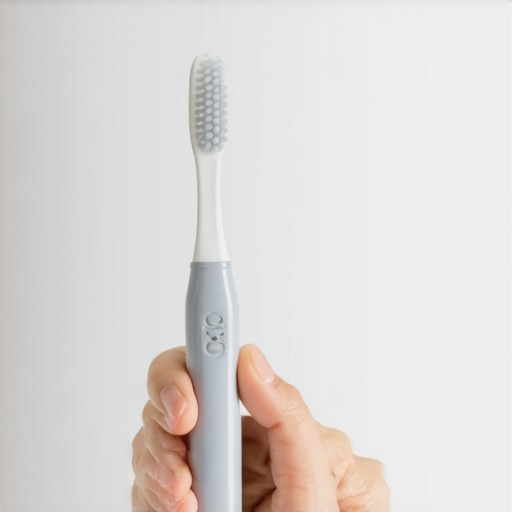
If pool noodles are too much, you can find professional-grade foam tubing online. It’s essentially a thick, spongy sleeve that slides over your brush handle. This tiny adjustment reduces the pressure on your small joints and gives you much better control over the brush head. This is vital because if you can’t control the angle, you aren’t actually cleaning the implant; you’re just scrubbing your cheek. I remember one Tuesday when my hands were so swollen I couldn’t even make a fist. I used a modified handle and realized that how regular teeth cleaning can prevent major dental issues depends entirely on whether you can actually hold the tool long enough to finish the job. It turned a painful chore into a manageable task that didn’t leave my hands throbbing for an hour afterward.
Switch to an Electric Brush to Save Your Joints
Manual brushing requires a repetitive back-and-forth motion that is basically a recipe for an arthritis flare-up. Modern teeth cleaning innovations have made this movement obsolete. A high-quality electric toothbrush does the vibrating and rotating for you. All you have to do is guide it along the gum line. For those of us with implants, this is a game-changer. The micro-vibrations are much gentler on the gums than the aggressive scrubbing we often resort to when our hands are stiff. If you’ve ever wondered the reason your dental implant feels heavy when you first wake up, it’s often due to slight inflammation that a gentle, thorough electric cleaning can help soothe. The larger handle on most electric models also provides a better grip right out of the box.
Let a Water Flosser Do the Heavy Lifting
Standard string floss is the enemy of the arthritic hand. Wrapping that thin wire around your fingers is basically a form of torture. Instead, a water flosser uses a targeted stream of water to flush out the “collar” of the implant where bacteria like to hide. This is the secret to keeping your dental implant clean without the finger gymnastics. I’ll be honest: the first time I used one, I didn’t close my mouth properly and ended up soaking my favorite pajamas and the bathroom mirror. It was a watery mess, but for the first time in years, the area around my implant felt clean rather than clogged. You just trace the gumline and let the water do the work, no manual dexterity required.
One of the biggest mistakes I see—and I definitely made it myself—is the belief that we should clean an implant with the same ‘elbow grease’ we used on our natural teeth. Most people assume that because an implant is made of titanium, it’s indestructible. In reality, your cosmetic dentistry investments require a much more delicate touch. While natural teeth are anchored by a shock-absorbing periodontal ligament, an implant is fused directly to your jawbone. This lack of a ligament means you also lose the nerve endings that act as a pressure gauge. I’ve seen many people cause significant gum recession by being over-zealous. A critical study published in the Journal of Periodontology highlights that the ‘biological seal’—the way your gums attach to the titanium post—is far more vulnerable to mechanical trauma than the attachment on a natural tooth. If you break that seal with aggressive brushing because your arthritis has reduced your ‘feel’ for the brush, you’re opening a gateway for bacteria to reach the bone.
The abrasive toothpaste trap you are likely walking into
Most of us are desperate to keep our smiles bright, but common ‘whitening’ toothpastes are often the enemy of dental work. The ‘Oops’ factor here is the Relative Dentin Abrasivity (RDA) of your paste. High-RDA pastes can create microscopic scratches on the surface of the abutment or the prosthetic crown. Unlike natural enamel, which can sometimes handle a bit of grit, these scratches on an implant are permanent and act like a magnet for plaque. If you are also managing invisalign maintenance, you might be tempted to use the same strong cleansers on everything in your mouth. This is a mistake that can lead to long-term staining and inflammation that even a skilled dentist will struggle to reverse without replacing the hardware.
Does the lack of sensation in your implant lead to ‘over-cleaning’ damage?
Yes, and it’s a silent problem. Because you don’t feel the ‘zing’ of a sensitive root, you might keep scrubbing a sore area until it bleeds. This is why teeth cleaning myths debunked by top dentists emphasize technique over force. You might also worry about the reason your dental implant feels heavy when you first wake up, which often stems from minor overnight inflammation that aggressive brushing only worsens. Instead, try the ‘sweep’ method. Move the brush in gentle, circular motions without pressing down. It feels like you aren’t doing enough, but you are actually protecting that fragile biological seal. 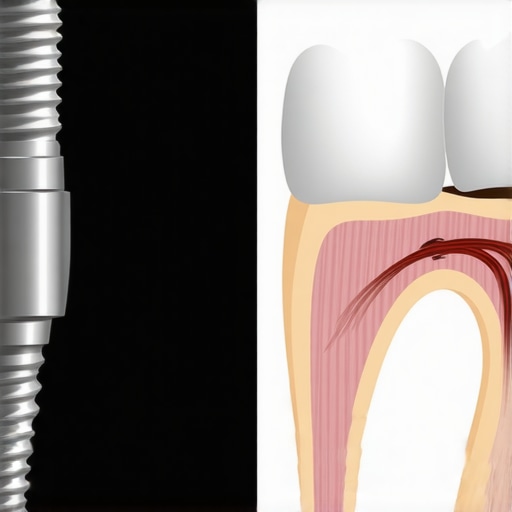 Have you ever fallen into the trap of thinking ‘harder is cleaner’ with your dental work? Let me know in the comments. Maintaining your teeth cleaning routine with arthritis is about being a surgeon, not a construction worker. You want to disrupt the biofilm without disturbing the peace of your gums.
Stop the Finger Gymnastics with Interdental Brushes
For years, I thought flossing was an all-or-nothing game. You either strangled your fingers with string or you failed. But when you’re dealing with the intricate hardware of an implant or the snug fit of aligners, you need something that doesn’t require a master’s degree in knots. I personally swear by interdental brushes with ergonomic, wide-grip handles. Unlike the tiny ‘tree’ brushes you see in drugstores, these have a long, stiff neck and a handle that actually fills your palm. I use them because they allow me to reach the back of my mouth—where why your gums bleed only in the back of your mouth when you floss becomes a real concern—without ever having to pinch my fingers together. If you find the right size, the brush should slide through the gap with minimal resistance, effectively ‘sweeping’ the sides of the implant post.
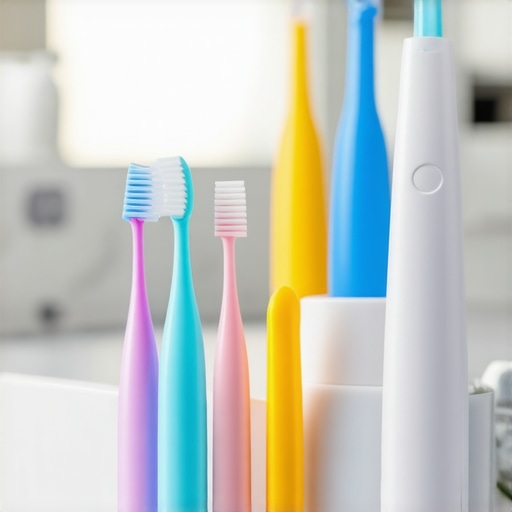
If you are in the middle of an invisalign transformation, these tools are even more critical. Attachments can act like tiny speed bumps for food particles. Using a specialized brush helps you maintain invisalign maintenance without the frustration of struggling with thin plastic flossers that snap under pressure. I found that keeping a set of these in my car and my nightstand made it impossible to ‘forget’ my routine, even on days when my joints were particularly angry.
How do I maintain my dental work over the long haul?
Maintenance isn’t just about what you do at home; it’s about the partnership you have with your clinical team. I used to be embarrassed to tell my hygienist that I was struggling to hold my brush. But finding a dentist who gets your smile means finding someone who will suggest professional solutions like ‘AirFlow’ technology. This method uses a pressurized stream of air, warm water, and fine powder to clean around implants and under bridges far more effectively than traditional metal scrapers. It is a game-changer for teeth cleaning for sensitive teeth because it eliminates the ‘clinking’ sensation on the titanium post that many find jarring.
According to the American Academy of Implant Dentistry (AAID), the primary goal of long-term maintenance is the prevention of peri-implantitis. Dr. Nicholas Caplanis, a leading expert in the field, has noted that ‘accessibility is the key to longevity.’ This means if your bridge or implant is designed in a way that you can’t easily clean it with your current level of dexterity, the design itself might need a tweak. Don’t be afraid to ask for a ‘hygiene-friendly’ prosthetic design that leaves enough space for your tools to pass through. This is one of those cosmetic dentistry innovations that focuses as much on function as it does on aesthetics.
Smart Sensors Are Coming for Your Bathroom Sink
I predict that within the next five years, we won’t just be guessing if we cleaned our implants well enough. We are already seeing the beginning of this with AI-powered toothbrushes that map your mouth in real-time. Soon, I suspect we will see bio-sensors embedded directly into the ‘abutment’ (the piece that connects the implant to the crown) that can detect changes in pH levels or the presence of specific bacteria before you ever feel a twinge of pain. We are moving toward a world where your mouth will send an alert to your phone saying it’s time for a professional check-up. This trend is part of a larger shift in cosmetic dentistry trends where technology acts as an early-warning system for our health.
If you’re feeling overwhelmed, my best advice is to start small. Don’t try to overhaul your entire routine tonight. Instead, I want you to try one thing: go buy a pack of foam tubing or a wide-grip interdental brush. See how it feels to have a tool that actually fits your hand instead of fighting against it. You’ve invested a lot in your smile; it’s time to make the upkeep feel less like a chore and more like a victory.
What My Hygienist Finally Admitted About Implant Success
After years of trial and error, I realized that teeth cleaning secrets aren’t about having the strongest hands, but the smartest strategy. One lightbulb moment was discovering that I was unconsciously holding my breath while brushing, which made my whole body—including my fingers—tense up and ache. Relaxing into the process changed everything. I also learned that the secret to keeping your dental implant clean often involves timing; doing it when you have the most energy, like mid-morning, is often better than waiting until your joints are exhausted at night. Finally, I stopped viewing my modified tools as signs of weakness and started seeing them as high-performance upgrades for a complex piece of cosmetic dentistry.
The Low-Dexterity Toolkit That Actually Works
If you want to build a routine that sticks, you need tools that feel like a natural extension of your arm. I highly recommend looking into professional-grade foam tubing to widen any brush handle instantly, providing a much-needed relief for your knuckles. For flushing out debris without the finger gymnastics, a high-capacity water flosser is a staple because it offers a large on/off switch rather than a tiny button that requires precision. I also suggest keeping a pack of ergonomic interdental brushes nearby; they are essential for reaching those tricky spots where why your gums bleed only in the back of your mouth when you floss becomes a recurring frustration. These specific tools were vetted by my own team after I spent months finding a dentist who gets your smile and understands the physical hurdles of arthritis.
Take the Power Back Over Your Smile
Living with arthritis means some days are naturally harder than others, but it shouldn’t mean losing the smile you worked so hard to achieve. By adapting your teeth cleaning routine to work with your body instead of against it, you ensure that your implants stay healthy for decades to come. You’ve already done the hard work of investing in your dental health; now, just give yourself the grace to maintain it in a way that feels sustainable. Have you found a specific tool or a creative ‘hack’ that makes your morning routine easier on your joints? Let me know below!