
I still remember the smell of the seared garlic butter and the perfect char on that ribeye. My friends were celebrating, laughing, and slicing into their dinners like it was nothing. Meanwhile, I sat there staring at my plate, practically sweating with anxiety. I had just gotten my permanent implant crown placed a couple of weeks prior, and the mere thought of tearing into a piece of meat made my stomach twist. Instead of enjoying the night, I spent it cutting my steak into microscopic, toddler-sized pieces, chewing exclusively on one side of my mouth like a defensive squirrel. It was exhausting, embarrassing, and honestly, a little depressing.
Why You Do Not Have to Give Up Your Favorite Foods Forever
Many people believe that getting dental implants means resigning themselves to a lifetime of soup, mashed potatoes, and delicate fish. But that is simply not true. Implants are designed to mimic the incredible strength of your natural teeth, meaning that a juicy, perfectly cooked steak is absolutely back on the menu. Today, I am going to share the exact strategies I used to transition from fearful nibbling to confident chewing, so you can stop treating your mouth like a fragile glass sculpture. Whether you recently started your journey by finding a dentist who gets your smile or you are already fully restored, you deserve to enjoy your food without fear.
Is biting into a steak actually going to ruin my expensive new implant?
This is the exact question that kept me up at night. I made the huge mistake early on of thinking my new tooth was completely invincible the second it was screwed in, leading me to try chewing tough, beef-jerky-style meats way too soon. I quickly learned that while the titanium post fuses beautifully with your bone, the surrounding gum tissue and the initial bite alignment require a gentle ramp-up period. According to clinical studies published by the National Institutes of Health, dental implants have a whopping success rate of over 95%, but early mechanical overload is one of the primary, yet entirely preventable, causes of discomfort. Have you ever felt that sudden, terrifying flash of worry when your fork hovers over a premium cut of meat? Let me know in the comments below if you have struggled with this exact anxiety. Trust me, you are not alone, and there is a very specific way to rebuild your chewing confidence safely.
The Three-Step Ramp-Up to Solid Food Success
Getting your confidence back is not about rushing the process; it is about retraining your brain and your bite to work in harmony. Think of your new dental implant like a brand-new suspension system on a premium sports car. The system is incredibly tough, but you still do not want to take it over massive speed bumps at seventy miles per hour on day one. You have to break it in gently. To do this, you need a systematic approach that moves from soft preparation to structural testing before you ever slice into a prime rib.
Mastering the Soft-Prep Phase
Before you even look at a steakhouse menu, you need to build up the supporting muscles. During my third week post-implant, I tried to skip straight to thick, crusty sourdough bread. That was a messy mistake. My jaw muscles, which had gone slightly soft from weeks of liquid dieting, cramped up immediately, sending a wave of panic through my face. To avoid this, spend three to four days chewing firmer, non-fibrous foods like dense omelets, thick pasta, or roasted sweet potatoes. This gentle resistance wakes up your chewing reflex without putting shear force on your new crown.
Testing the Waters with Ground Meats
Once your jaw muscles are warmed up, your next step is mimicking the texture of steak without the tensile strength. Ground beef or turkey is your best friend here. When you chew a high-quality burger, you are training your tongue to push food back toward your implant site. It is during this crucial phase that maintaining your routine is vital. If you struggle with minor sensitivity during these meals, checking out tips on teeth cleaning for sensitive teeth what works best in 2025 can help keep your mouth calm and ready for the next level. I remember sitting at my kitchen counter, eating a slow-cooked meatball, and realizing that my implant did not shift, click, or hurt. It felt just like a real tooth. That was the exact moment the psychological barrier began to crumble.
The Perfect Angle Technique
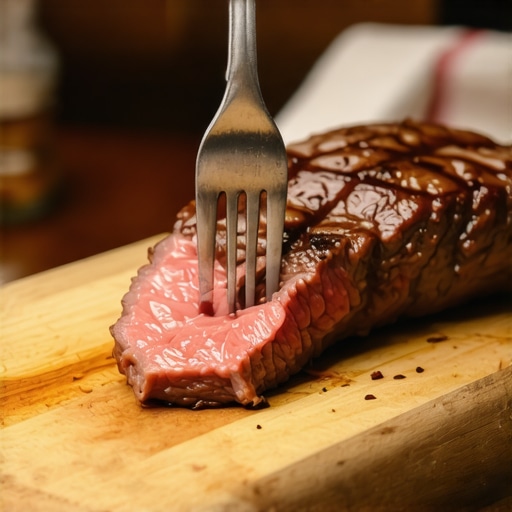
When you finally sit down with a real steak, your cutting technique matters just as much as your chewing technique. Do not try to bite chunks directly off a large piece with your front teeth. Instead, cut the meat across the grain into thin, ribbon-like strips. When you place the food in your mouth, slide it directly to your first molars—which are designed for heavy grinding—rather than letting your implant take the brunt of the initial downward tear. If you are also undergoing orthodontic alignment, you can read about why your teeth feel loose during the second month of invisalign to understand how different dental forces interact in your mouth during this transition.
When I finally got past the fear of chewing steak on my new implant, I fell headfirst into the next classic trap: over-cleaning. I assumed that because my new crown was made of clinical-grade porcelain and titanium, I needed to scrub it like a dirty engine block. I bought the stiffest toothbrush I could find and went to town. This is where most people make a massive mistake in their recovery and maintenance journey.
The Cleanliness Myth That Actually Ruins Premium Dentistry
Everyone says you need to brush harder to keep dental work sparkling, but in my experience, aggressive friction does the exact opposite of what you want. While you cannot get a cavity on a porcelain crown or a veneer, harsh scrubbing destroys the delicate seal where your gum meets the artificial tooth. Once that gum line recedes, you expose the microscopic metal collar or the bonding cement underneath. According to a clinical review by the American Academy of Periodontology, mechanical trauma from stiff bristles is a leading cause of localized gum recession around implants.
Instead of scrubbing, you should focus on sweeping. A soft-bristled brush or an electric toothbrush used with zero downward pressure is all you need to disrupt the sticky biofilm. If you struggle with keeping your new smile fresh without causing damage, understanding maintaining your teeth cleaning routine for long-term health is a game-changer. I had to completely unlearn twenty years of aggressive brushing habits just to protect my investment.
Why does my implant feel like it has a film on it even after brushing?
This is a sophisticated question many patients ask when they transition to premium restorations. The smooth glaze of dental porcelain has a completely different surface tension than natural enamel. It does not absorb moisture the same way, which can make plaque feel slick or “sticky” rather than gritty. If you try to scrub this feeling away with abrasive charcoal or whitening toothpastes, you will actually micro-scratch the porcelain glaze, making it permanently dull and far more prone to picking up dark coffee stains. To understand how to avoid this, read about teeth cleaning myths debunked by top dentists to protect your porcelain finish.
The Invisible Trap of Whitening Products on Artificial Material
Here is another trap to avoid: trying to whiten your implant, veneer, or crown with drugstore chemical strips. I spent a small fortune on whitening gels trying to match my surrounding teeth, only to learn that cosmetic porcelain is completely impervious to bleaching agents. If you use harsh peroxide formulas, all you do is chemically irritate your gums and make your natural teeth look mismatched against the stable shade of your implant.
If you want a cohesive look, the whitening must happen on your natural teeth *before* your permanent crown is custom-tinted by the lab, or you need to consult a pro who knows how to blend different materials seamlessly. Have you ever fallen into this trap of over-scrubbing your dental work or trying to bleach a crown? Let me know in the comments below, because sharing these mistakes is how we all save our smiles—and our wallets.
When it comes to protecting that high-end porcelain, the tools you use every day in your bathroom will dictate whether your investment lasts ten years or forty. After my trial-and-error phase, I threw out my cheap grocery store dental floss. Standard manual floss is too abrasive and can fray against the titanium abutment under the gum line, leaving micro-fibers behind that invite bacterial colonization. Instead, I switched to an ultra-thin, PTFE-based tape floss. This material slides effortlessly through the tightest contact points without snapping or snagging on the margins of my crown. This single change drastically reduced the localized swelling I used to get around my implant.
How do I maintain dental implants and cosmetic restorations over time?
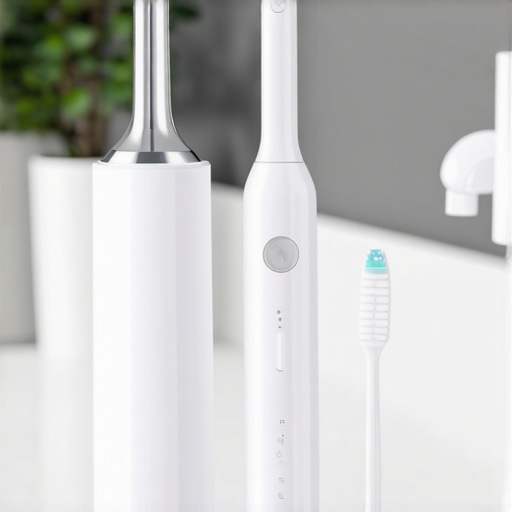
Long-term maintenance requires a precise combination of non-abrasive chemical biofilm control and gentle mechanical irrigation. For my daily routine, I rely heavily on an advanced dental hygiene toolkit. I use a specialized sonic toothbrush set exclusively to its lowest sensitive setting to prevent gum recession, paired with a non-foaming, SLS-free toothpaste. Sodium Lauryl Sulfate (SLS) can dry out oral tissues and weaken the mucosal barrier around implants. Additionally, I use an oral irrigator on a medium pressure setting with lukewarm water to flush the gingival sulcus around my crown daily. To understand why modern dental professionals favor these methods, you can read about why your dental hygienist uses a water flosser instead of manual tools to keep hard-to-reach pockets sterile.
The Future of Dental Care Involves Smart Diagnostics
We are rapidly moving toward an era where maintaining cosmetic dentistry is highly customized and data-driven. According to research from the International Journal of Oral Implantology, future dental implant systems will integrate biocompatible biosensors directly into the abutment. These smart micro-chips will analyze pH levels and protein markers in your saliva in real-time, alerting your smartphone to early-stage peri-implantitis long before you ever feel physical discomfort. In the meantime, sticking to a structured maintenance plan is your best defense against failure. You can read our advice on maintaining your teeth cleaning routine for long-term health to ensure your oral microbiome remains perfectly balanced.
My challenge for you today is to audit your bathroom counter. Look at your toothpaste tube: if it contains hydrated silica, baking soda, or harsh whitening agents, swap it out today for a gentle, low-abrasive gel formulation. Your porcelain and gums will thank you for it.
I still remember the smell of the seared garlic butter and the perfect char on that ribeye. My friends were celebrating, laughing, and slicing into their dinners like it was nothing. Meanwhile, I sat there staring at my plate, practically sweating with anxiety. I had just gotten my permanent implant crown placed a couple of weeks prior, and the mere thought of tearing into a piece of meat made my stomach twist. Instead of enjoying the night, I spent it cutting my steak into microscopic, toddler-sized pieces, chewing exclusively on one side of my mouth like a defensive squirrel. It was exhausting, embarrassing, and honestly, a little depressing.
Why You Do Not Have to Give Up Your Favorite Foods Forever
Many people believe that getting dental implants means resigning themselves to a lifetime of soup, mashed potatoes, and delicate fish. But that is simply not true. Implants are designed to mimic the incredible strength of your natural teeth, meaning that a juicy, perfectly cooked steak is absolutely back on the menu. Today, I am going to share the exact strategies I used to transition from fearful nibbling to confident chewing, so you can stop treating your mouth like a fragile glass sculpture. Whether you recently started your journey by finding a dentist who gets your smile or you are already fully restored, you deserve to enjoy your food without fear.
Is biting into a steak actually going to ruin my expensive new implant?
This is the exact question that kept me up at night. I made the huge mistake early on of thinking my new tooth was completely invincible the second it was screwed in, leading me to try chewing tough, beef-jerky-style meats way too soon. I quickly learned that while the titanium post fuses beautifully with your bone, the surrounding gum tissue and the initial bite alignment require a gentle ramp-up period. According to clinical studies published by the National Institutes of Health, dental implants have a whopping success rate of over 95%, but early mechanical overload is one of the primary, yet entirely preventable, causes of discomfort. Have you ever felt that sudden, terrifying flash of worry when your fork hovers over a premium cut of meat? Let me know in the comments below if you have struggled with this exact anxiety. Trust me, you are not alone, and there is a very specific way to rebuild your chewing confidence safely.
The Three-Step Ramp-Up to Solid Food Success
Getting your confidence back is not about rushing the process; it is about retraining your brain and your bite to work in harmony. Think of your new dental implant like a brand-new suspension system on a premium sports car. The system is incredibly tough, but you still do not want to take it over massive speed bumps at seventy miles per hour on day one. You have to break it in gently. To do this, you need a systematic approach that moves from soft preparation to structural testing before you ever slice into a prime rib.
Mastering the Soft-Prep Phase
Before you even look at a steakhouse menu, you need to build up the supporting muscles. During my third week post-implant, I tried to skip straight to thick, crusty sourdough bread. That was a messy mistake. My jaw muscles, which had gone slightly soft from weeks of liquid dieting, cramped up immediately, sending a wave of panic through my face. To avoid this, spend three to four days chewing firmer, non-fibrous foods like dense omelets, thick pasta, or roasted sweet potatoes. This gentle resistance wakes up your chewing reflex without putting shear force on your new crown.
Testing the Waters with Ground Meats
Once your jaw muscles are warmed up, your next step is mimicking the texture of steak without the tensile strength. Ground beef or turkey is your best friend here. When you chew a high-quality burger, you are training your tongue to push food back toward your implant site. It is during this crucial phase that maintaining your routine is vital. If you struggle with minor sensitivity during these meals, checking out tips on teeth cleaning for sensitive teeth what works best in 2025 can help keep your mouth calm and ready for the next level. I remember sitting at my kitchen counter, eating a slow-cooked meatball, and realizing that my implant did not shift, click, or hurt. It felt just like a real tooth. That was the exact moment the psychological barrier began to crumble.
The Perfect Angle Technique
When you finally sit down with a real steak, your cutting technique matters just as much as your chewing technique. Do not try to bite chunks directly off a large piece with your front teeth. Instead, cut the meat across the grain into thin, ribbon-like strips. When you place the food in your mouth, slide it directly to your first molars—which are designed for heavy grinding—rather than letting your implant take the brunt of the initial downward tear. If you are also undergoing orthodontic alignment, you can read about why your teeth feel loose during the second month of invisalign to understand how different dental forces interact in your mouth during this transition.
When I finally got past the fear of chewing steak on my new implant, I fell headfirst into the next classic trap: over-cleaning. I assumed that because my new crown was made of clinical-grade porcelain and titanium, I needed to scrub it like a dirty engine block. I bought the stiffest toothbrush I could find and went to town. This is where most people make a massive mistake in their recovery and maintenance journey.
The Cleanliness Myth That Actually Ruins Premium Dentistry
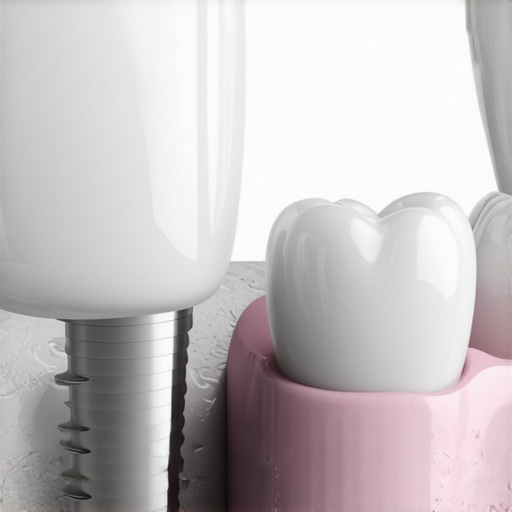
Everyone says you need to brush harder to keep dental work sparkling, but in my experience, aggressive friction does the exact opposite of what you want. While you cannot get a cavity on a porcelain crown or a veneer, harsh scrubbing destroys the delicate seal where your gum meets the artificial tooth. Once that gum line recedes, you expose the microscopic metal collar or the bonding cement underneath. According to a clinical review by the American Academy of Periodontology, mechanical trauma from stiff bristles is a leading cause of localized gum recession around implants.
Instead of scrubbing, you should focus on sweeping. A soft-bristled brush or an electric toothbrush used with zero downward pressure is all you need to disrupt the sticky biofilm. If you struggle with keeping your new smile fresh without causing damage, understanding maintaining your teeth cleaning routine for long-term health is a game-changer. I had to completely unlearn twenty years of aggressive brushing habits just to protect my investment.
Why does my implant feel like it has a film on it even after brushing?
This is a sophisticated question many patients ask when they transition to premium restorations. The smooth glaze of dental porcelain has a completely different surface tension than natural enamel. It does not absorb moisture the same way, which can make plaque feel slick or “sticky” rather than gritty. If you try to scrub this feeling away with abrasive charcoal or whitening toothpastes, you will actually micro-scratch the porcelain glaze, making it permanently dull and far more prone to picking up dark coffee stains. To understand how to avoid this, read about teeth cleaning myths debunked by top dentists to protect your porcelain finish.
The Invisible Trap of Whitening Products on Artificial Material
Here is another trap to avoid: trying to whiten your implant, veneer, or crown with drugstore chemical strips. I spent a small fortune on whitening gels trying to match my surrounding teeth, only to learn that cosmetic porcelain is completely impervious to bleaching agents. If you use harsh peroxide formulas, all you do is chemically irritate your gums and make your natural teeth look mismatched against the stable shade of your implant.
If you want a cohesive look, the whitening must happen on your natural teeth *before* your permanent crown is custom-tinted by the lab, or you need to consult a pro who knows how to blend different materials seamlessly. Have you ever fallen into this trap of over-scrubbing your dental work or trying to bleach a crown? Let me know in the comments below, because sharing these mistakes is how we all save our smiles—and our wallets.
When it comes to protecting that high-end porcelain, the tools you use every day in your bathroom will dictate whether your investment lasts ten years or forty. After my trial-and-error phase, I threw out my cheap grocery store dental floss. Standard manual floss is too abrasive and can fray against the titanium abutment under the gum line, leaving micro-fibers behind that invite bacterial colonization. Instead, I switched to an ultra-thin, PTFE-based tape floss. This material slides effortlessly through the tightest contact points without snapping or snagging on the margins of my crown. This single change drastically reduced the localized swelling I used to get around my implant.
How do I maintain dental implants and cosmetic restorations over time?
Long-term maintenance requires a precise combination of non-abrasive chemical biofilm control and gentle mechanical irrigation. For my daily routine, I rely heavily on an advanced dental hygiene toolkit. I use a specialized sonic toothbrush set exclusively to its lowest sensitive setting to prevent gum recession, paired with a non-foaming, SLS-free toothpaste. Sodium Lauryl Sulfate (SLS) can dry out oral tissues and weaken the mucosal barrier around implants. Additionally, I use an oral irrigator on a medium pressure setting with lukewarm water to flush the gingival sulcus around my crown daily. To understand why modern dental professionals favor these methods, you can read about why your dental hygienist uses a water flosser instead of manual tools to keep hard-to-reach pockets sterile.
The Future of Dental Care Involves Smart Diagnostics
We are rapidly moving toward an era where maintaining cosmetic dentistry is highly customized and data-driven. According to research from the International Journal of Oral Implantology, future dental implant systems will integrate biocompatible biosensors directly into the abutment. These smart micro-chips will analyze pH levels and protein markers in your saliva in real-time, alerting your smartphone to early-stage peri-implantitis long before you ever feel physical discomfort. In the meantime, sticking to a structured maintenance plan is your best defense against failure. You can read our advice on maintaining your teeth cleaning routine for long-term health to ensure your oral microbiome remains perfectly balanced.
My challenge for you today is to audit your bathroom counter. Look at your toothpaste tube: if it contains hydrated silica, baking soda, or harsh whitening agents, swap it out today for a gentle, low-abrasive gel formulation. Your porcelain and gums will thank you for it.
The Critical Mindset Shifts That Saved My New Smile
After going through the psychological hurdles of eating after oral surgery, I realized that modern cosmetic dentistry is as much about your mental approach as it is about your physical care. The biggest lightbulb moment for me was accepting that a dental implant is not a ticking time bomb. It is a highly engineered, premium replacement that wants to stay integrated with your jaw. Another major shift was realizing that dental porcelain doesn’t behave like enamel; trying to treat it like a natural tooth with heavy pressure only damages the delicate soft tissues keeping it safe. Once I stopped stressing about perfection and focused instead on consistent, gentle sweeping, my anxiety disappeared.
My Essential Oral Recovery Kit
To keep my dental work looking spotless and sitting securely, I threw out my old routine and rebuilt it around clinical-grade longevity. My daily toolkit centers around three specific, tested resources: first, a high-quality PTFE dental tape that glides effortlessly without shredding around the metal implant collar. Second, I rely on a temperature-regulated water flosser to flush out hidden debris without relying on abrasive friction. Lastly, I always keep a bottle of non-alcoholic, essential-oil-based mouthwash close by to maintain oral tissue hydration. These simple upgrades have transformed how my gums look and feel, ensuring my investment remains pristine.
Your Path to Fearless Dining
At the end of the day, cosmetic dentistry is designed to give you your life back, not to hold you hostage at the dinner table. If you take things step-by-step, starting with smart food preparation and graduating to correct chewing angles, you will eventually find yourself eating a thick, premium cut of steak without a single second thought. Do not let fear keep you from enjoying the foods you love. Did you struggle with your first solid meal after getting a permanent crown or starting your smile makeover? Let me know in the comments below, and let’s swap our favorite post-recovery meal stories!