
I once spent an entire morning dry-heaving over my bathroom sink because I was determined to get my tongue “dentist-clean.” It was a mess. I thought the harder I scrubbed the back of my throat, the better I was doing. Spoiler alert: I wasn’t. I was just making myself miserable and ending up with a sore throat instead of a clean mouth. If you have ever felt that sharp, panic-inducing constriction in your throat while trying to follow your teeth cleaning routine, you know exactly what I am talking about. It is visceral, it is annoying, and it makes you want to skip the most important part of oral hygiene. Today, I am going to show you how to ditch that fuzzy feeling and those lingering sulfur smells without the drama of a gag reflex. Have you ever had to stop mid-brush because your stomach did a literal somersault? You are definitely not alone in that.
Why You Can’t Ignore That Fuzzy Coating
I used to think that brushing my teeth was enough, but my breath never felt truly crisp. I realized that my tongue was essentially a plush carpet for bacteria. According to the Cleveland Clinic, roughly 50% of the bacteria in your mouth are lounging right there on your tongue’s surface, and no amount of rinsing is going to budge them. If you skip this step, you are basically leaving half the job unfinished. It is the hidden reason why even after a professional cleaning, your mouth might feel “furry” again within just a few hours. I learned the hard way that a clean tongue is the real secret to waking up without that dreaded “death breath” feeling.
Does a tongue scraper actually live up to the hype?
Many of my neighbors ask if they can just use their toothbrush and call it a day. While you can, a toothbrush is designed for hard enamel, not the soft, squishy tissue of your tongue. Using a brush often requires more pressure, which is exactly what triggers that gag reflex. A dedicated scraper is flatter, thinner, and much less likely to tickle the back of your throat into a panic. Transitioning to a proper tool was the first step in my journey toward a cleaner mouth without the constant threat of vomiting.
My Biggest Mistake Was Going for the Gold Too Fast
When I first started, I tried to reach for the very back of my throat on the first swipe. That is a one-way ticket to a bad time. My reflex would kick in instantly, and I would give up for a week. The trick I discovered—and what I tell everyone now—is to start from the middle and work your way back over several days. Your brain needs to learn that the scraper isn’t a threat. By being too aggressive early on, I actually made my reflex more sensitive. Now, I use gentle innovations in my routine that keep things calm. Once you master the desensitization process, you will be able to reach those back areas where the real gunk hides, all without shedding a single tear over the sink. It is about patience, not power.
Get the Gunk Out Without the Gag
When I finally stopped trying to power-wash my throat and started treating my tongue with a bit of respect, everything changed. Think of your tongue like a high-pile rug; you can’t just splash water on it and expect the deep-seated dirt to vanish. You need to physically lift the debris out. The first rule of thumb is to stick your tongue out as far as comfortably possible. This flattens the surface and gives you more real estate to work with. Hold your scraper at a 45-degree angle. If you go in vertically, you are just pushing the biofilm deeper into the papillae. Instead, you want a gentle, sweeping motion from the back toward the tip. I remember the first time I actually saw what came off—it was a thick, yellowish film that looked like wet sand. It was gross, but seeing it leave my mouth was the most satisfying part of my entire teeth cleaning routine. 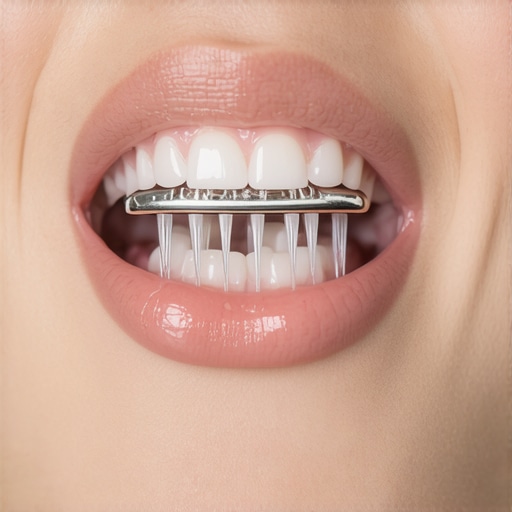
Pick the Right Tool for the Job
You wouldn’t use a wire brush to clean a silk shirt, so why use stiff bristles on a sensitive tongue? While some teeth cleaning myths debunked by top dentists suggest your toothbrush is fine, a dedicated metal or high-quality plastic scraper is far superior. It provides a consistent edge that captures more sulfur-producing bacteria in one pass. If you are a fan of modern teeth cleaning innovations that reduce sensitivity and boost results, you might even look into U-shaped scrapers that distribute pressure evenly across the width of your tongue. This prevents that localized ‘poke’ that often triggers the urge to retch.
Start in the Safe Zone to Trick Your Reflex
The biggest mistake is aiming for the uvula on day one. I spent weeks just cleaning the front two-thirds of my tongue. Your brain has a protective mechanism—the gag reflex—that is designed to keep you from choking. You have to negotiate with it. Start where it feels safe, apply light pressure, and pull forward. Rinse the scraper after every single pass. If you leave the gunk on the tool, you are just redepositing it. Once you get comfortable, move back by just a few millimeters each morning. Eventually, you will be able to reach those ‘furry’ zones that are the primary reason your teeth feel furry only hours after a professional cleaning.
Don’t Trap Bacteria Under Your Aligners
If you are currently undergoing an Invisalign transformation, tongue cleaning isn’t just optional—it is a requirement for survival. Your aligners create a sealed environment where saliva doesn’t flow as freely. If your tongue is loaded with bacteria, that film gets pressed right against your teeth and trapped inside your trays. I noticed that on the days I skipped my scraper, my trays would develop a funky odor by lunchtime. Learning how to get the morning breath smell out of your invisalign case for good starts with making sure that smell never enters your mouth in the first place.
Breathe Through Your Nose to Stay Calm
Here is the pro-tip that saved me: breathe deeply through your nose while you scrape. For some reason, the brain has a harder time triggering a gag reflex when the nasal passage is clear and active. I used to hold my breath, which tensed up my throat muscles and made the scraper feel like a massive intrusion. Now, I focus on a steady nasal rhythm, and the process is over in thirty seconds. It is a small physiological hack that makes a massive difference in whether you actually stick to the habit or throw the scraper in the trash out of frustration.Let’s dig deeper into why most people fail despite having the right tools. I see it all the time: people buy a fancy scraper and then proceed to use it like they are trying to strip paint off a deck. The ‘Oops’ factor here is over-aggression. When you apply too much pressure, you aren’t just removing bacteria; you are micro-scarring your papillae. This creates even more nooks and crannies for sulfur-producing germs to hide in later. It is a vicious cycle that actually makes your breath worse over time. Most teeth cleaning myths debunked by top dentists center around the idea that ‘harder is better,’ but in my experience, a light, consistent touch is what actually disrupts the biofilm without causing inflammation.
Why does my tongue still look white even after I have scraped it?
This is the advanced question I get most often. If you have scraped and your tongue still has a persistent white or grayish hue, it might not be food debris at all. According to a study published in the Journal of Periodontology, persistent coating can often be a sign of oral candidiasis or simply chronic dehydration rather than poor hygiene. This is where why your mouth feels dry even though you drink a gallon of water becomes a critical piece of the puzzle. If you are scraping raw skin trying to remove a ‘stain’ that is actually a lack of moisture, you are doing more harm than good. 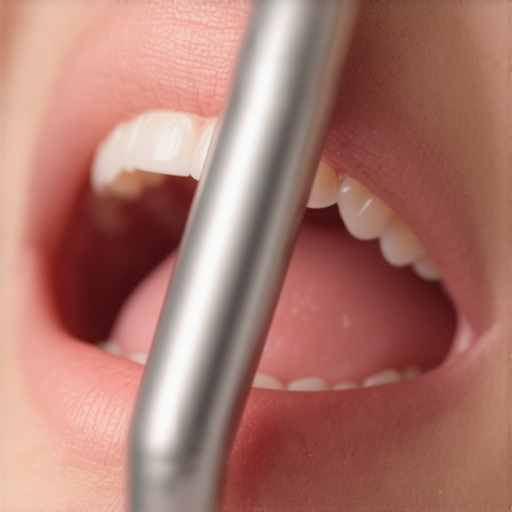 Another nuance involves those of you currently in clear aligners. We often talk about maintaining your teeth cleaning routine for long-term health, but few realize that a dirty tongue is the primary reason for ‘Invisalign breath.’ When you snap those trays in, you are creating a stagnant environment. If you have not cleared the tongue’s biofilm, those bacteria migrate and colonize the space between the tray and your enamel. It is also why the truth about why your front teeth feel loose on invisalign tray swap days can feel even more intense—inflammation from trapped bacteria can make the periodontal ligaments more sensitive to the pressure of the new tray. Before you reach for the cosmetic dentistry myths that promise a quick fix, start with the microscopic health of your tongue. You have to realize that your mouth is an ecosystem, not a set of Lego blocks. Have you ever fallen into the trap of scrubbing too hard or noticed your breath getting worse despite more brushing? Let me know in the comments—I would love to hear your ‘oops’ moments so we can all learn from them.
I’ve realized that maintaining your teeth cleaning routine for long-term health isn’t just about what you do in the morning—it’s about the quality of the gear you’re using. After years of experimenting with flimsy plastic scrapers, I finally made the switch to surgical-grade stainless steel. Why? Because plastic is porous. Over time, it can harbor the very bacteria you’re trying to evict, no matter how much you rinse it. A metal scraper can be sterilized with boiling water, ensuring you aren’t just redepositing old germs every morning. This is the same reason why invisalign maintenance expert tips for clear confident smiles often prioritize ultrasonic cleaners over simple brushing. You need tools that actually scale with your hygiene goals rather than working against them.
The One Tool I Swear By for Fresh Breath
If you are still using the back of your toothbrush to clean your tongue, you are leaving about 30% of the biofilm behind. I personally use a U-shaped stainless steel scraper because it allows for even pressure distribution. This is critical because it prevents that localized ‘poke’ that usually sets off my gag reflex. According to research published in the Journal of Applied Oral Science, mechanical tongue cleaning can reduce volatile sulfur compounds (VSCs) by up to 75%, but the efficacy is heavily dependent on the tool’s ability to maintain a consistent, sharp-but-gentle edge. When I switched from plastic to steel, the difference in my ‘midday mouth feel’ was night and day. It’s a small investment that pays off every time you have a close-up conversation.
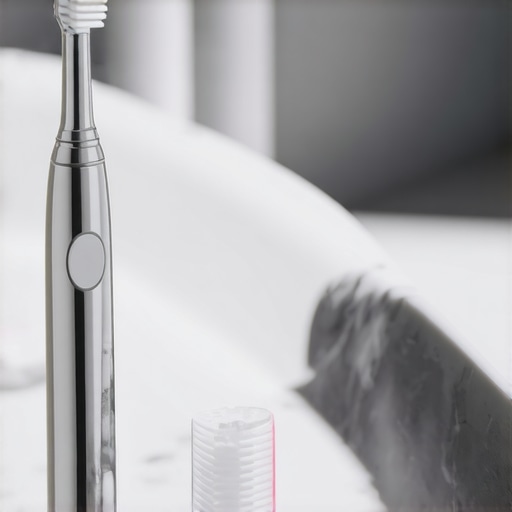
How Can I Keep My Routine Consistent Long-Term?
The secret to staying consistent isn’t willpower; it’s convenience. I keep my scraper right next to my toothbrush so I can’t ignore it. If you are traveling, don’t let your routine slide. I have a dedicated travel kit because I know that missing even two days allows that ‘fuzzy’ feeling to return. For those of you managing an Invisalign transformation, consistency is even more vital. If you aren’t scraping, you’re trapping those VSCs under your trays, which can lead to enamel erosion over time. I’ve found that using modern teeth cleaning innovations that reduce sensitivity and boost results, like pH-balanced oral rinses after scraping, helps soothe the tongue and keeps the microbiome in check.
Why Your Next Scraper Might Be Smart
I predict that within the next five years, our oral hygiene tools will become diagnostic. We are already seeing the beginning of this with electric brushes that track pressure, but the future is in the microbiome. Imagine a scraper equipped with sensors that can detect shifts in your oral bacteria before a cavity even forms. We already know why invisalign is the future of clear braces—it’s because of the data and precision involved. I expect that same level of ‘smart’ technology to hit our daily cleaning tools soon, turning a 30-second chore into a full health checkup. For now, the best thing you can do is master the manual tools we have. My challenge for you tomorrow morning: before you brush, do the ‘nose-breathing’ technique I mentioned and use a metal scraper to see exactly what you’ve been leaving behind. Once you see the results, you’ll never go back to just brushing alone.
What My Dental Hygienist Finally Confessed About Biofilm
After years of struggling, I finally learned a few things that standard tutorials never mention. First, the ‘biofilm bounce’ is real; if you don’t scrape your tongue before you start your brushing, you’re often just moving bacteria around rather than removing it. I also discovered that a pink tongue isn’t the only sign of health—the texture of the papillae matters just as much as the color. If your tongue feels heavy or ‘thick,’ it might be related to why your saliva feels thick and how it leads to more cavities. Another lightbulb moment was realizing that scraping before bed is actually more effective for preventing morning breath than doing it in the morning alone, as it stops bacteria from fermenting while you sleep. Lastly, I learned that teeth cleaning myths debunked by top dentists often overlook the psychological aspect of the gag reflex—it is as much about your brain feeling ‘safe’ as it is about physical touch.
The Only Gear That Actually Survives My Bathroom Cabinet
I have thrown away dozens of gadgets, but these four remain essential to my daily life. I swear by the heavy-duty, surgical-grade stainless steel U-scraper because its weight does the work for you, meaning you don’t have to press down and trigger a reflex. For times when my mouth feels particularly sensitive, I rely on the salt water trick for shrinking a painful gum boil at home or general irritation; it is a natural way to reset the oral microbiome without harsh chemicals. If you are wearing trays, you absolutely need an ultrasonic cleaner to ensure you aren’t putting a clean tongue back into a dirty environment, as seen in these invisalign maintenance expert tips for clear confident smiles. Finally, never underestimate the power of a simple, focused nasal breathing technique—it is the free ‘tool’ that makes the whole process possible.
Take the First Step Toward a Truly Confident Smile
Changing your morning habits isn’t just about hygiene; it is about the confidence that comes with knowing your breath is truly fresh. When you integrate these teeth cleaning secrets into your daily life, you’ll notice a difference in how you interact with people and how you feel about your own health. Don’t be discouraged if you gag the first few times—your body will adapt as you refine your teeth cleaning routine. You deserve a mouth that feels as clean as it looks. Have you found a specific angle or a mental trick that helps you avoid the gag reflex while scraping? Share your secret in the comments below!