
I remember standing in front of my bathroom mirror three years ago, squinting at the edges of my front teeth. They didn’t just look off-white; they looked almost translucent, like a frosted glass window. In a moment of pure desperation, I slapped on a generic whitening strip from the drugstore. Big mistake. Within twenty minutes, a sharp, electric shock traveled straight into my jaw—the kind of pain that makes your knees buckle. I spent the next two days sipping room-temperature water through a straw because anything else felt like a lightning bolt to my nerves. If you have ever felt that ‘zing,’ you know exactly why I spent years terrified of cosmetic dentistry for discolored teeth. Today, I am going to show you that a brighter smile is not off-limits just because your enamel is on the thinner side. We are going to find the middle ground between ‘yellow’ and ‘pain’ by focusing on methods that protect your tooth structure instead of stripping it away.
Stop Hurting Your Smile in the Name of Brightness
Many of us fall into the trap of thinking more power equals better results. When I first noticed my teeth losing their luster, I went hard on the abrasives. I even tried those DIY ‘hacks’ involving lemon juice and baking soda. I thought I was cleaning, but I was actually eroding my only line of defense. When your enamel is naturally thin, the yellowish layer underneath—the dentin—is much closer to the surface. Harsh treatments don’t just cause pain; they can actually make your teeth look darker over time as the dentin becomes more visible. It is vital to look into teeth cleaning for sensitive teeth as a foundation before you even think about bleaching. My early mistake was assuming my teeth were ‘dirty’ when they were actually just ‘thin.’ I was scrubbing at a problem that required a more delicate touch. Have you ever tried a whitening product only to regret it five minutes later?
Will This Just Make My Sensitivity Worse?
It is the most common fear I hear from readers, and it is a valid one. According to the American Dental Association, tooth bleaching can cause temporary pulpitis—inflammation of the tooth’s center—which is much more likely to occur if the enamel barrier is compromised. This is why standard ‘one-size-fits-all’ kits are often a disaster for us. We need to focus on modern teeth cleaning innovations that incorporate desensitizing agents like potassium nitrate or amorphous calcium phosphate. We also need to understand the truth about whitening strips and sensitive roots, because if your gums are receding even slightly, those strips are hitting the most vulnerable part of your tooth. I spent months researching how to brighten my smile without ending up in a dental chair crying for numbing cream, and the strategies we are about to discuss are the only ones that didn’t leave me in tears.
Prepare Your Teeth for the Brightening Process
To get results without the agony, you have to treat your mouth like a construction site that needs a solid foundation before the paint goes on. I learned this the hard way when I tried a 35% carbamide peroxide gel right before a friend’s wedding. I wanted that “Hollywood white” in forty-eight hours. By the second application, my teeth felt like they were literally vibrating in my skull. I had to stop, and my teeth didn’t even look better—they just looked dehydrated and angry. Now, I use a desensitizing toothpaste for two full weeks before any treatment. This builds up the “shield” in your microscopic tubules by using minerals to plug the pathways to the nerve. If you are serious about results without the risk, look into modern teeth cleaning innovations that integrate these soothing minerals directly into the professional cleaning process.
Switch to Low-Concentration Gels
Forget the “overnight” promises found on late-night infomercials. For those of us with thinner enamel, the goal is “slow and steady.” Using a 5% or 10% gel over fourteen days is infinitely safer than a 35% gel for thirty minutes. It is like tanning versus getting a sunburn; you want the pigment to change without damaging the tissue. This approach respects the fact that the truth about whitening strips and sensitive roots is often a painful one if you rush. Low concentration gives your nerves time to adapt and prevents the internal inflammation that causes those dreaded lightning-bolt shocks. 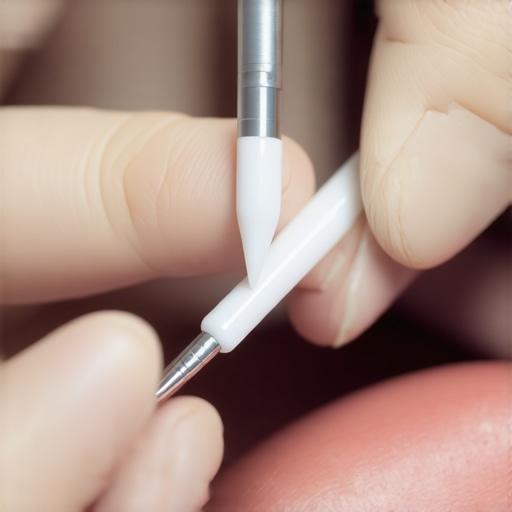
Try Non-Bleaching Cosmetic Fixes
Sometimes, the discoloration isn’t just on the surface—it’s the dark dentin showing through a thinning enamel wall. In these cases, no amount of bleach will help because you cannot “whiten” your way through transparent enamel. This is where cosmetic dentistry for discolored teeth shifts from chemical reactions to structural enhancements.
Fixing Color with Dental Bonding
Dental bonding is like putting a thin, beautiful coat of high-end plaster over a cracked wall. It hides the imperfections without removing much, if any, of your natural tooth structure. I had a small, stubborn gray spot on my lower canine that no strip could touch. My dentist used a biocompatible resin that matched my other teeth perfectly. We can use bonding to fix a chipped tooth in under 45 minutes, and the same technology works for masking deep internal stains. It is a physical barrier that stays white and doesn’t cause a single “zing” of sensitivity because it doesn’t open the pores of your teeth.
Why Porcelain Veneers Are the Ultimate Shield
If bonding is the plaster, veneers are the new siding for your house. They are incredibly thin shells of handcrafted ceramic. If your teeth are sensitive because the enamel is naturally thin or worn down by age, veneers actually provide a permanent protective layer. You get the color you want and a literal shield against cold air and hot coffee. It is a more significant investment, but it solves the sensitivity and the color in one comprehensive step, making it the gold standard for those who have failed with traditional whitening.Let’s dig deeper into the mechanics of why these mistakes happen. Most people believe that a dental visit should involve a rigorous, almost industrial-level scrubbing. We have been conditioned to think that ‘white’ and ‘clean’ are synonyms, but in the world of professional care, that is one of the most dangerous cosmetic dentistry myths. When you have naturally thin enamel, the goal isn’t to remove as much as possible; it’s to preserve every microscopic micron of structure you have left.
Stop Chasing the Squeaky Clean Feeling
I used to obsess over that perfectly smooth sensation right after a cleaning. If I felt any texture on my teeth by dinner time, I’d reach for the hardest toothbrush I could find. Here is the hidden nuance: the reason your teeth feel furry only hours after a professional cleaning isn’t because you’re ‘dirty’ again. It is actually a protective protein layer called the pellicle. When you try to scrub this away with high-abrasive pastes, you are essentially taking sandpaper to a fine silk. You aren’t just cleaning; you’re actively thinning your enamel. Have you ever fallen into this trap of over-brushing? Let me know in the comments.
The Charcoal Trap That Ruins Enamel
We see it all over social media: ‘natural’ charcoal pastes that promise to lift stains instantly. I tried it for a month, thinking it was a safer alternative to chemicals. It was a massive ‘oops’ moment. Charcoal is highly abrasive. While it might remove some surface tea stains, it does so by grinding down your enamel. A study published in the Journal of the American Dental Association (JADA) confirmed that charcoal-based dentifrices can increase the roughness of tooth surfaces and potentially lead to permanent damage because they lack the protective fluoride and minerals needed for remineralization. 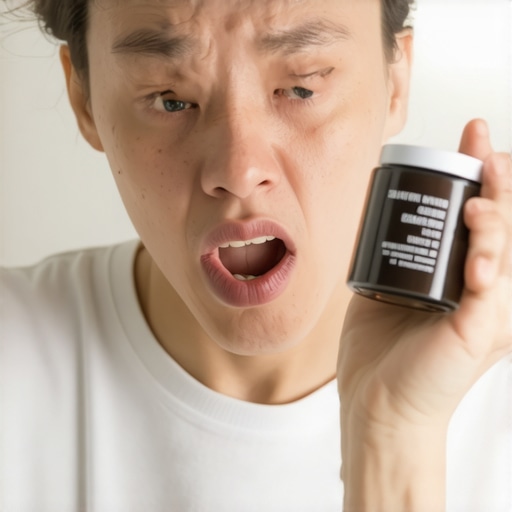 To see if your current routine is doing more harm than good, you should take the grit test to see if your charcoal toothpaste is destroying your enamel. If the paste feels like sand between your fingers, it’s far too aggressive for your mouth.
Can a Professional Cleaning Actually Make My Teeth Look More Yellow?
It sounds like a contradiction, doesn’t it? But for patients with thin enamel, it is a very real possibility if the hygienist uses old-school, aggressive scaling techniques. If the outer enamel is already worn thin, aggressive polishing can strip away the remaining translucent layer, revealing the darker, yellowish dentin beneath. This is why you must seek out teeth cleaning myths debunked by top dentists to understand that modern care is about precision, not power. We now use modern teeth cleaning innovations like air polishing with erythritol or glycine powders. These methods are much softer than traditional pumice and can clean effectively without the ‘zing’ or the structural loss. Expert-level care isn’t about how hard the dentist works; it’s about how carefully they protect what you already have.The technical side of maintenance often gets ignored in favor of the initial transformation, but once you’ve achieved that perfect shade, the real work starts. I have moved past the era of generic drugstore products and into the world of bio-mimetic materials. If you want to keep that brightness, you need to stop thinking about ‘cleaning’ and start thinking about ‘rebuilding.’ I personally switched to toothpaste containing 10% Nano-Hydroxyapatite (n-HAp). Unlike fluoride, which creates a thin layer on the surface, n-HAp actually penetrates the tubules to replace lost minerals from the inside out. A study published in the Journal of Dentistry by Dr. Shigeki Honma highlighted that n-HAp was significantly more effective than traditional desensitizers at occluding exposed dentinal tubules. This isn’t just a fancy ingredient; it’s a structural necessity for those of us with thin enamel. When you are maintaining your teeth cleaning routine for long-term health, you must prioritize mineralization over abrasion.
Swap Your Gritty Paste for Medical-Grade Mineralization
For years, I used whatever was on sale, but now I treat my toothpaste like a prescription. I look for ‘low-RDA’ (Relative Dentin Abrasivity) formulas. Most whitening pastes have an RDA of 150 or higher, which is like using a belt sander on your teeth. I stick to anything under 70. This ensures that while I am removing the daily tannins from my morning coffee, I am not taking my enamel with it. This is the cornerstone of teeth cleaning for sensitive teeth because it stops the cycle of erosion before it begins. If you are also wearing aligners, remember that Invisalign maintenance expert tips always emphasize keeping the trays clean to prevent bacteria from sitting against your enamel all day. 
How do I maintain my bright smile for the long haul?
Maintenance isn’t just about what you do in the morning; it is about how you manage your mouth’s ecosystem throughout the day. I keep a pH-balancing mouth spray in my bag. Why? Because every time you eat, your mouth becomes acidic, which softens your enamel. If you brush while your mouth is in that acidic state, you are literally brushing your teeth away. Waiting 30 minutes or using a neutralizer is a game-changer. This approach is part of the broader cosmetic dentistry trends that transform smiles today, moving away from reactive fixes toward proactive preservation. Looking ahead, I predict we will see AI-powered dental cameras that plug into our smartphones to track enamel density in real-time, allowing us to see exactly where we need to focus our mineralization efforts before a cavity ever forms. I strongly encourage you to ditch the charcoal and switch to a nano-hydroxyapatite paste tonight; your nerves will thank you within a week.
The Most Expensive Mistakes I Made Before Finding a Gentle Path
After years of trial and error, I realized that my obsession with ‘scrubbing’ was actually my biggest hurdle. When you have thin enamel, white isn’t just a color—it’s a reflection. If you strip away the protective layer, you’re just revealing the yellow dentin underneath. I also learned that dehydration often ‘fakes’ a white smile. Many high-intensity lights just dry out the tooth, making it look bright for an hour before the rebound sensitivity kicks in. Finally, I stopped viewing cosmetic dentistry for discolored teeth as a purely chemical process. It is about structural integrity first. Use every brushing session as an opportunity to remineralize rather than just remove.
The Only Arsenal You Need for a Pain-Free Glow
I have narrowed my routine down to a few essentials that actually work without the dreaded ‘zing.’ First, I never use a paste with an RDA over 70; I want to clean, not sandblast. Second, I’ve embraced the ultimate guide to teeth whitening and cosmetic enhancements as my roadmap for choosing safe products. I also recommend keeping a pH-balancing spray handy after meals to stop acid erosion in its tracks. If you are curious about what is next in professional care, look into cosmetic dentistry trends that transform smiles beyond expectations, which now focus heavily on bio-rejuvenation and protecting the root. #IMAGE_PLACEHOLDER_E#
Take the First Step Toward a Fearless Smile
You do not have to choose between a bright smile and a comfortable one. By prioritizing mineralization and seeking out providers who understand cosmetic dentistry insights regarding enamel thickness, you can achieve a look that feels both natural and radiant. The future of your smile isn’t about how much you can take away, but how much you can protect. If you have been sitting on the fence because of past pain, start with a consultation for cosmetic dentistry for discolored teeth and ask about their low-sensitivity protocols. What is the one thing that has kept you from trying a professional whitening treatment? Let me know in the comments below!