
I remember sitting on the edge of my bathtub, jaw aching from twenty minutes of swishing cold-pressed coconut oil, wondering if I was doing more harm than good. I’d just spent a small fortune on my smile, and the last thing I wanted was to jeopardize my new look. There I was, caught between ‘natural’ wellness trends and the clinical reality of my dental work. I know I’m not alone in this—many of us who have invested in cosmetic dentistry are constantly looking for ways to protect that investment. But here is the kicker: I actually ended up causing a minor gum irritation because I replaced my actual flossing with this oil routine for a month. Today, I’m going to share exactly what happens when that oil meets your titanium and porcelain, and why you might want to put the jar down. [image_placeholder_1]
Stop Swishing Until You Read This
If you have dental implants, your oral environment is fundamentally different from someone with all-natural teeth. While oil pulling is an ancient practice, it wasn’t exactly designed with medical-grade titanium in mind. I used to think it was a ‘one-size-fits-all’ detox, but I quickly learned that cosmetic dentistry myths can be genuinely dangerous if you aren’t careful. The truth is that implants rely on a delicate seal between the gum and the abutment. I once made the mistake of thinking I could skip maintaining your teeth cleaning routine because my mouth ‘felt’ cleaner after swishing. In reality, I was just letting plaque harden around the base of my crown.
Is this ancient ritual actually worth the hype for implant patients?
Many of my neighbors ask if they can just use oil to avoid how regular teeth cleaning can prevent major dental issues. The answer is a resounding no. In fact, a report by the American Dental Association (ADA) states that there is no reliable clinical evidence that oil pulling reduces cavities or improves oral health more than standard care. I learned the hard way that why your dental implant feels slightly different than your natural teeth is precisely why you need to be more diligent with proven methods, not less. Have you ever felt like you were gambling with your dental health by trying a new trend? Let’s dive into why the ‘oil detox’ might actually be trapping bacteria against your implant’s surface instead of pulling it away.
Why Thick Oil Can’t Replace Precision Tools
Think of your dental implant like a high-performance engine. You wouldn’t pour thick, raw vegetable oil over a specialized gasket and expect it to run smoothly; you’d use the specific lubricant the engineers recommended. When you swish coconut oil, it coats everything in a viscous film. While it might feel ‘smooth’ to your tongue, it’s actually creating a sticky trap for food particles. I’ve seen cases where people think they are ‘detoxing,’ but they are actually just masking the symptoms of teeth cleaning myths debunked by top dentists. Instead of pulling bacteria out, the oil can act as a shield, preventing your fluoride or antibacterial rinses from actually reaching the gum line where the implant meets the bone.
Target the Biological Seal with a Low-Pressure Water Stream
The most critical part of an implant is the ‘peri-implant seal.’ This is where your gum tissue hugs the titanium post. If this seal is breached by bacteria, you’re looking at bone loss. I remember the first time I used a water flosser after my procedure. I turned it up to the highest setting, thinking more power meant more clean, and I ended up blasting my sensitive gums so hard I saw stars and sprayed the bathroom mirror from ceiling to floor. Now, I use the lowest setting and aim at a 90-degree angle to the tooth. This gently flushes the ‘sulcus’—that little pocket—without tearing the delicate tissue. To get the best results, guide the tip along the gumline, pausing briefly between each tooth. This precision is what prevents the ‘film’ that oil pulling often leaves behind.
Keep Your Porcelain Free from Gritty Residue
One of the biggest dangers of DIY ‘natural’ trends is the tendency to mix oil with abrasives like charcoal or baking soda. If you’ve noticed that your dental implant crown feels gritty against your tongue, you might already be scratching the polished surface of your porcelain. Once that finish is gone, it becomes a magnet for stains. 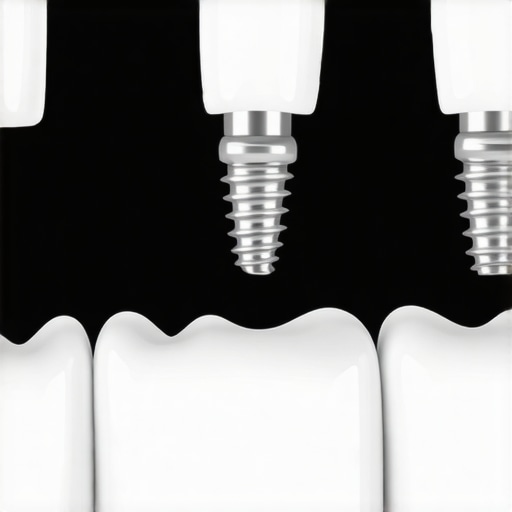 Instead of scrubbing with grit, focus on maintaining your teeth cleaning routine with a soft-bristled electric brush. Modern teeth cleaning innovations that reduce sensitivity allow you to get that ‘polished glass’ feel without the risk of mechanical damage to your expensive restorations. Unlike natural teeth, implants lack a periodontal ligament—the ‘shock absorber’ that provides blood flow—which makes them more vulnerable to the ‘biofilm’ that oil can accidentally trap. I found that when I switched back from my month of oil pulling to a rigorous interdental brush routine, the ‘furry’ feeling on the back of my crowns disappeared within 48 hours.
Identify the Warning Signs of Implant Trouble
You need to be an active observer of your own mouth. Don’t just swish and hope for the best. Check your gums in a well-lit mirror once a week. If you notice a change in texture or color, it’s time to stop the home experiments. Understanding why your dental implant feels slightly different is part of the learning curve, but ‘different’ shouldn’t mean ‘painful’ or ‘swollen.’ If you find yourself wondering how to handle a loose healing cap or why the tissue looks inflamed, put down the jar of oil and pick up the phone. Regular professional checkups are the only way to ensure the texture of a crown remains consistent and the foundation stays rock solid.
Stop Obsessing Over the Color and Focus on the Foundation
Many people believe that once they achieve that ‘Hollywood smile,’ the hard work is over. In my experience, the most dangerous mindset is assuming that because porcelain and titanium can’t ‘rot,’ your maintenance can move to the back burner. The biggest mistake I see—and one I’ve been guilty of—is confusing a white smile with a healthy one. While cosmetic dentistry insights often focus on the visual payoff, the real expertise lies in managing the ‘bio-interface.’ Unlike your natural teeth, which are attached to the bone by a complex network of fibers, an implant is directly fused. This means there is no ‘blood supply’ coming from a ligament to fight off infection at the gum line. If you skip how regular teeth cleaning can prevent major dental issues, you aren’t just risking a stain; you are risking the very foundation of your investment.
Does your hygienist use the correct tools for your specific restoration?
This is a question many patients never think to ask. Standard metal scalers can actually create microscopic scratches on the surface of an implant abutment or a porcelain veneer. These scratches aren’t just an aesthetic issue; they act as ‘luxury condos’ for bacteria to move in and multiply. Advanced care requires specialized plastic or graphite instruments that protect the integrity of the material. According to the American Academy of Periodontology, peri-implantitis (the implant version of gum disease) can lead to rapid bone loss if the bacterial colony isn’t disrupted professionally with the right equipment every few months. This is why teeth cleaning myths debunked by top dentists emphasize the need for professional intervention over DIY ‘detox’ methods like oil pulling. 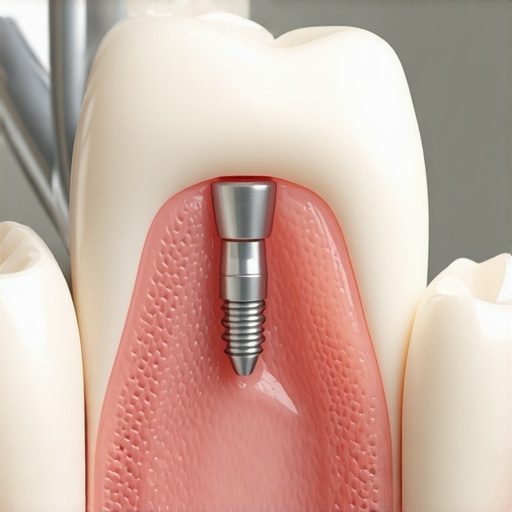
Why Your Indestructible Implant Is Actually More Fragile Than You Think
The ‘oops’ factor most people encounter is the ‘Invincibility Trap.’ You might think, ‘It’s a medical-grade screw, it can handle anything.’ But while the screw is tough, the seal between the implant and your gum is surprisingly delicate. When you try ‘natural’ alternatives and ignore maintaining your teeth cleaning routine, you allow a biofilm to harden into calculus. Once that happens, no amount of coconut oil or manual brushing will nudge it. I’ve seen patients who spent thousands on cosmetic dentistry trends only to lose an implant because they thought ‘clean enough’ was good enough. We have to move past the idea that cleaning is just about removing coffee stains. It is about mechanical disruption of the bacteria that want to reclaim that space. Have you ever fallen into this trap of thinking your dental work was maintenance-free? Let me know in the comments. Utilizing modern teeth cleaning innovations that reduce sensitivity can make these necessary deep-cleans much more comfortable, so there’s really no excuse to gamble with your health. Your dental implant feels slightly different for a biological reason—it requires a higher level of specific, scientific care than the teeth you were born with.I used to think my manual toothbrush was ‘good enough’ until I saw the high-definition scans of my gumline. My dentist showed me that even with perfect technique, I was missing the tiny crevices where my crown meets the natural tissue. That was the day I switched to a sonic-powered brush with a built-in pressure sensor. This isn’t just about bells and whistles; it’s about protecting the porcelain. If you’ve spent money on cosmetic dentistry for discolored teeth, the last thing you want is to wear down that beautiful finish with over-aggressive scrubbing. I’ve found that the tactile feedback from a pressure sensor is the only way to ensure I’m not accidentally receding my own gums while trying to be ‘extra clean.’ According to a study published in the Journal of Oral Implantology, mechanical disruption via sonic vibration is significantly more effective than manual scrubbing when dealing with the stubborn biofilms found on titanium surfaces, as the vibration helps break up bacterial colonies that are physically shielded by the implant’s architecture.
How do I maintain my dental work over the next decade?
The secret isn’t a one-time miracle cure; it’s a commitment to maintaining your teeth cleaning routine with professional-grade tools. I personally use an interdental brush dipped in a non-abrasive gel to navigate the tight spaces around my implant. It sounds tedious, but it’s the difference between a restoration that lasts ten years and one that lasts thirty. Using modern teeth cleaning innovations that reduce sensitivity has also changed the game for me, allowing me to use a water flosser daily without that sharp, stinging sensation I used to fear. This level of consistency ensures that the ‘bio-interface’—where your body meets the dental hardware—remains inflammation-free.
The Simple Device That Prevents Cloudy Aligners
For those of you currently in clear aligners, you know the struggle of the ‘cloudy tray.’ I stopped using my toothbrush to clean them because it created microscopic scratches that trapped odors and stains. Now, I use a dedicated ultrasonic cleaner. It uses high-frequency sound waves to create cavitation bubbles that blast away debris without me ever having to lift a brush. This is honestly the secret to keeping your Invisalign trays perfectly clear even on day fourteen. 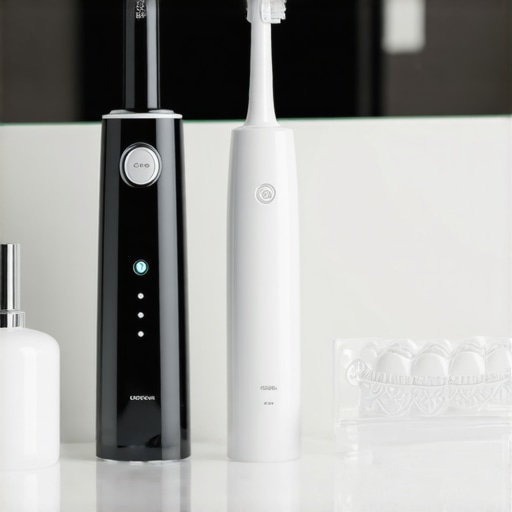 Beyond the gadgets, you have to be vigilant about the ‘smell test.’ If your aligners or your breath start to change, you might be dealing with bacteria buildup in your storage gear. I’ve found that learning how to get the morning breath smell out of your Invisalign case is just as important as cleaning the trays themselves. Looking ahead, I predict we are moving toward a world where AI-integrated dental mirrors will scan our mouths daily, syncing with our dentist’s office to flag issues before they require surgery. Until then, we have to rely on Invisalign maintenance expert tips and our own discipline. If you haven’t already, I strongly encourage you to invest in a water flosser this week; it is the single most effective way to protect your long-term dental health.
Hard Lessons from My Bathroom Sink
Looking back at my month of coconut oil swishing, I realize I was searching for a shortcut to oral health that simply doesn’t exist in a jar. The biggest realization for me was that cleanliness is not just a sensation; it is a measurable biological state that requires precision. Here are a few things I learned after nearly compromising my own dental work:
- Trends often mask real issues. By focusing on oil pulling, I ignored the early signs of gum inflammation because I assumed the oil was ‘detoxing’ my mouth. In reality, I was just avoiding the necessary discipline of maintaining your teeth cleaning routine with tools that actually disrupt biofilm.
- Porcelain is tough but not invincible. Just because your crowns can’t get cavities doesn’t mean the foundation beneath them is safe from neglect. You have to treat the gum line as the most critical part of your teeth whitening and cosmetic enhancements journey.
- Professional help is non-negotiable. There is no ‘at-home hack’ that replaces the specialized instruments a hygienist uses. I used to believe common cosmetic dentistry myths that suggested DIY methods were enough, but my clinical scans proved otherwise.
The Three Gadgets That Actually Save My Smile
If you want to move beyond kitchen-cupboard experiments and into real results, I recommend adding these specific tools to your morning ritual. I trust these because they provide the mechanical precision that liquid oil lacks:
- A Sonic Brush with a Pressure Sensor: This is the only way to ensure you aren’t accidentally scrubbing away your gums while trying to polish your porcelain.
- A Cordless Water Flosser: This tool is essential for flushing out the tight spaces around an implant without tearing the delicate peri-implant seal.
- An Ultrasonic Cleaner: For anyone with clear aligners, this is a game-changer. It’s the most effective way to address how to get the morning breath smell out of your Invisalign case without scratching the plastic.
Make Your Smile Your Longest-Lasting Asset
You’ve already taken the hardest step by choosing to enhance your life through cosmetic dentistry trends. Now, the goal is to protect that radiance for decades. Don’t let the noise of ‘natural’ trends distract you from the science-backed care your mouth actually needs to stay healthy. If you have any concerns about how your restorations are holding up, please feel free to contact us for a professional evaluation. Your smile is a lifetime investment—let’s keep it that way!
Have you ever tried a viral dental trend that didn’t live up to the hype? Let me know in the comments below!