
I still remember the absolute panic of my first major DIY cosmetic dentistry experiment. I was standing in front of my bathroom mirror, humming a tune, getting ready for a big weekend. I peeled off those plastic strips, spat out the excess gel, and smiled. My teeth looked slightly brighter, sure, but my gums? They looked like they had been ghost-dusted. A stark, snowy white line ran right along my lower teeth. It looked like my tissue was literally dying. I freaked out, immediately thinking I had permanently scarred my mouth or ruined my chances at ever getting Invisalign because of tissue damage.
The Ghostly Glow in Your Mouth is Actually Quite Common
If you are staring at your bathroom mirror right now with pale, blanched gums, take a deep breath. You haven’t ruined your smile forever. What you are seeing is a temporary chemical reaction. The active ingredient in almost all whitening strips is hydrogen peroxide. When this concentrated gel bleeds off the plastic strip and sits directly on your delicate oral tissue, it causes a fast, localized reaction. The white appearance is actually a mild chemical blanching. It is very similar to what happens when you spill household hydrogen peroxide on a small cut on your finger.
We are going to dive into exactly why this happens, how long you have to wait for your pink color to return, and the simple mistakes you are probably making that cause the gel to leak. If you have ever experienced your tongue burning after using whitening strips or noticed your gums peeling a few days later, you are definitely not alone. We will fix your technique today so you can keep brightening your smile without the unnecessary pain.
Is This Chemical Blanched Look Actually Bad for Your Gums?
According to clinical studies, including research published by the American Dental Association, hydrogen peroxide concentrations above 10% can cause transient soft tissue irritation, but it typically resolves completely within a few hours without permanent damage. The whitening agents are meant for your tooth enamel, which is incredibly tough, not your soft, vascular gums. My biggest early mistake was pressing the strips hard into my gumline, thinking I needed to cover every millimeter of my teeth. I was essentially bathing my gums in peroxide. Have you ever peeled off a strip only to find your gums looking completely bleached and stinging? Drop a comment below and let me know how long your redness lasted!
How to Stop the Bleach and Protect Your Gums
When my own gums turned snow-white during my first DIY experiment, I learned the hard way that whitening strips are not a ‘slap-them-on-and-forget-it’ product. Safely achieving a brighter smile requires a few crucial tactical adjustments. Think of whitening gel like high-powered engine oil: it does wonders where it belongs, but if it leaks onto the wrong parts, you are going to smell smoke. By adjusting how you prepare your teeth, trim the physical barrier, and manage the immediate aftermath, you can easily protect your delicate oral tissues from chemical irritation.
Dampen the Gel Grip by Drying Your Teeth First
Most people open a packet of strips and press them directly onto wet teeth. This is a massive mistake. Your saliva acts like a slip-and-slide, carrying the active hydrogen peroxide right off the plastic barrier and directly onto your gums. The first time I tried drying my teeth with a clean washcloth beforehand, the strip gripped so firmly to my enamel that the gel did not budge a single millimeter. I avoided all gum blanching entirely. Before you apply any product, take a dry tissue or a clean corner of a towel and wipe your front teeth completely dry. This ensures the whitening agent stays locked onto the enamel where it belongs.
Trim the Strips to Fit Your Unique Smile Line
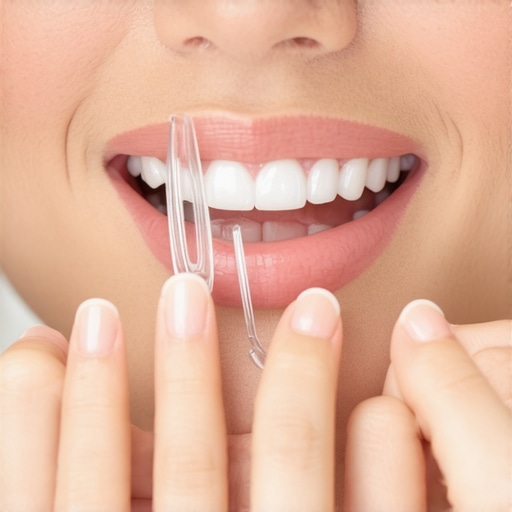
Generic over-the-counter whitening strips are designed to be a one-size-fits-all solution, but human mouths are incredibly diverse. If you have smaller teeth or a slightly uneven gumline, those generic rectangular strips will inevitably overlap onto your soft tissue. Take a clean pair of small scissors and custom-trim the height of the strips before peeling them from their plastic backing. By cutting a slight curve into the strip or simply shortening its vertical height, you prevent the peroxide from ever making contact with your gums. It is a simple two-minute step that saves you days of stinging and peeling discomfort.
Ditch the Heavy Scrubbing Before You Whiten
Another common blunder is brushing your teeth vigorously right before putting on your strips. When you brush, especially if you have not yet adopted modern teeth cleaning innovations that reduce sensitivity and boost results, you create micro-scratches and tiny abrasions along your gumline. Applying peroxide directly to those freshly irritated tissues is a recipe for instant burning. If you need to clean your teeth before whitening, do a gentle rinse with water or brush gently without toothpaste at least an hour beforehand. This gives your natural oral barrier time to recover and protect itself.
Rinse and Wipe the Moment the Timer Dings
The moment you peel off your whitening strips, your job is not quite done. Residual gel often clings to your teeth and slowly migrates upward to your gums. To stop this active chemical process immediately, use a soft, damp cloth or a wet finger to gently wipe away any leftover gel from your enamel and gum tissue. Follow this up by rinsing your mouth thoroughly with room-temperature water. Taking these immediate steps prevents prolonged exposure to the active bleaching agents, keeping your gums healthy, pink, and pain-free.
When you start researching how to get that perfect Hollywood smile, you quickly run into a wall of generic advice. Everyone tells you that over-the-counter kits are a risk-free miracle, or conversely, that they completely ruin your enamel. In my experience, the truth is far more nuanced. While the temporary blanching of your gums is harmless, many people fall into a dangerous trap: they confuse aggressive chemical bleaching with actual oral health. They believe that if a product burns or turns their tissue white, it must be “working” to scrub away stains. This is a massive myth that can lead to chronic tissue recession if ignored over several years.
Why does the bleach pattern look patchy on some teeth but not others?
An advanced issue that many DIY whitening fans notice is uneven, patchy results. You might end up with brilliant white canine teeth but dull, yellowish premolars. According to a study by the American Academy of Cosmetic Dentistry, natural tooth enamel has varying levels of density and mineral thickness across different areas of your mouth. The front teeth have thinner dentin layers, making them respond much faster to hydrogen peroxide. If you try to force an even shade by leaving the strips on longer than directed, you won’t balance the color; instead, you will simply chemical-burn your gums and end up searching for cosmetic dentistry myths debunked what you really need to know to fix the damage.
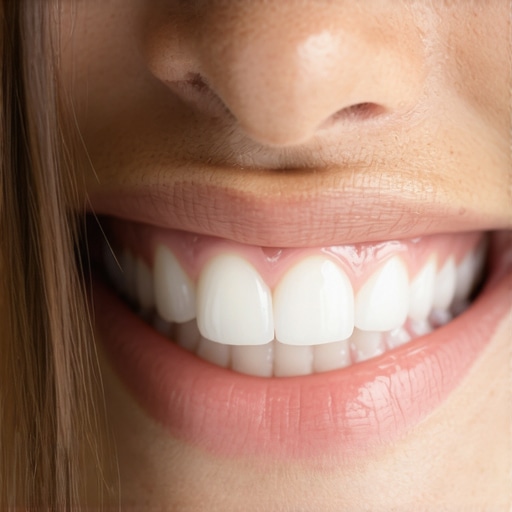
The real secret to a bright smile isn’t abusing supermarket whitening gel. It is maintaining a flawless foundation. If you have micro-layers of plaque or tartar built up near your gumline, the whitening strip cannot penetrate it. The peroxide will simply bounce off the plaque and pool onto your soft tissue, causing that dreaded ghost-white chemical blanching. This is why professional care is irreplaceable. Getting regular checkups and understanding how regular teeth cleaning can prevent major dental issues ensures your enamel is completely clean and ready to absorb whitening agents evenly, without burning your gums.
If you have already experienced uneven whitening or painful gum irritation, you might want to look into professional alternatives. Modern dentists use custom-fitted trays that seal the peroxide away from your soft tissue entirely. To explore more advanced ways to safely brighten your smile, check out our guide on the ultimate guide to teeth whitening and cosmetic enhancements. Have you ever fallen into this trap of over-whitening and ended up with burning, white gums? Let me know in the comments below!
Taking control of your at-home cosmetic routine is a game-changer, but keeping those results pristine without triggering chronic sensitivity requires the right daily arsenal. I used to think a basic toothbrush and any random tube of paste would keep my enamel white. I was completely wrong. Once you invest the effort into brightening your teeth, transitioning into a smart maintenance phase is what separates a fleeting glow from a lifetime of healthy, radiant smiles.
The Daily Tools I Personally Trust for Long-Term Maintenance
I don’t recommend products lightly, but switching to a high-quality electric toothbrush with a built-in pressure sensor completely changed how my gums reacted to daily cleaning. The physical scrubbing action of manual brushing often wears down micro-scratched enamel, especially after it has been sensitized by bleaching agents. I personally use an oscillating-rotating brush head because clinical trials show it removes significantly more plaque along the gingival margin without aggressive abrasive force.
Alongside a smarter brush, you need to rethink your flossing habits. If you struggle with tight spaces where plaque loves to hide and rot your whitening progress, finding the secret to floss that doesn’t snap between tight teeth is critical. Clean interdental spaces allow light to pass through your teeth naturally, giving you that translucent, healthy look rather than a flat, chalky white appearance.
How do I maintain my bright smile safely over time?
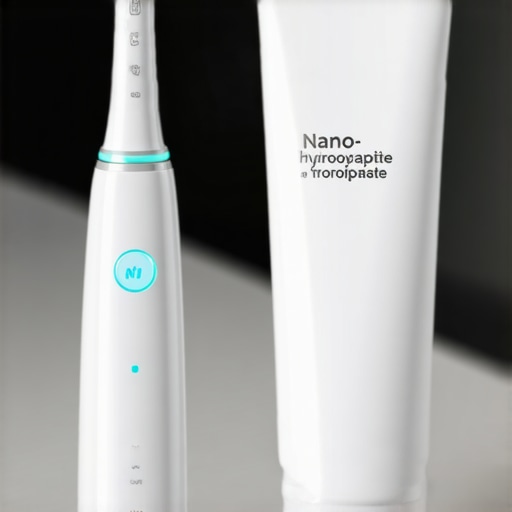
Maintaining your results is all about chemical moderation and structural support. Instead of reaching for whitening strips every single month, adopt a micro-maintenance routine. I recommend using a nano-hydroxyapatite (nHa) toothpaste. While fluoride remineralizes enamel, nano-hydroxyapatite actually plugs the microscopic dentin tubules that whitening strips open up. This material is a favorite among top cosmetic dentists because it restores the natural gloss of your enamel, reduces sensitivity, and prevents new stains from embedding deeply into the tooth structure.
Additionally, remember that oral hygiene is the foundation of all cosmetic success. You cannot maintain a Hollywood smile if you skip professional scaling. Learning more about maintaining your teeth-cleaning routine for long-term health ensures that you are constantly clearing away the hardened calculus that no at-home brush can ever budge. If you are also undergoing orthodontic alignment, implementing structured Invisalign maintenance expert tips for clear confident smiles will keep your aligners and your teeth pristine simultaneously.
What the Future of Cosmetic Whitening Looks Like
The cosmetic dental industry is moving away from aggressive, highly acidic bleaching gels. Based on recent dental technology forecasts, the future belongs to bio-active smart gels paired with targeted LED wavelengths. We are starting to see the introduction of peptide-based formulas that selectively target organic stain molecules while simultaneously rebuilding the enamel matrix. This means we are rapidly approaching an era where whitening your teeth will actually make them stronger, completely eliminating the risk of chemical gum blanching.
For those looking to take their oral care to the absolute next level, I highly recommend trying the nano-hydroxyapatite toothpaste swap tonight. It is an easy, highly effective shift that will protect your gums and lock in your brightness. If you are ready to combine professional hygiene with your cosmetic goals, check out how to find a clinician by reading our guide on choosing the right dentist expert tips for your best smile journey.
When you start taking your smile into your own hands, the line between cosmetic enhancement and accidental damage can feel incredibly thin. After years of testing products and analyzing dental trends, I have gathered a few vital realizations that will save your soft tissues and optimize your results.
The Hardest Lessons I Learned About Brightening My Smile
The first major realization is that white teeth do not automatically equal healthy teeth. I used to think that pushing the limits of hydrogen peroxide was just the price of beauty, but overloading your mouth with chemicals actually weakens your enamel over time. Second, your gums have an incredibly long memory. While the blanched, snowy-white look of chemical irritation usually fades within a few hours, repeated exposure can lead to permanent recession that even advanced cosmetic dentistry innovations in 2025 will struggle to easily reverse without surgical grafting.
Finally, I learned that customized protection always beats generic design. No over-the-counter strip can match the precise margins of your natural gumline. Taking charge of your oral care means acknowledging that human anatomy is beautifully irregular, and your whitening routine must adapt to those unique contours rather than forcing a standard plastic strip to fit.
My Essential Toolkit for Perfect Home Maintenance
To keep my smile bright without risking another painful gum-bleaching episode, I rely on a highly curated set of daily essentials. First, I always keep a pair of curved micro-scissors in my vanity drawer specifically for trimming whitening strips down to size. Second, I swapped my standard harsh toothpaste for a premium nano-hydroxyapatite formula that actively rebuilds enamel structure. Lastly, I never skip my professional cleaning appointments. I coordinate my whitening treatments directly around my routine cleanings because removing surface plaque first is the only way to get even, beautiful results.
Your Turn to Achieve a Pain-Free Radiance
You do not have to choose between a bright, dazzling smile and healthy, comfortable gums. By treating your delicate oral tissues with the respect they deserve and using smart, defensive application techniques, you can enjoy all the benefits of cosmetic dentistry insights right from your own home. Take your time, prepare your teeth properly, and put an end to the painful burning for good.
Have you ever experienced your gums turning white or stinging after using a whitening strip? Let me know in the comments below how long it took for your pink color to return!