
I remember exactly where I was when I saw it: sitting on the kitchen floor, trying to coax a spoonful of peas into my daughter’s mouth. She laughed, I caught a glimpse of her upper gums, and my heart nearly stopped. There was a dark, purplish-blue bulge right where her molar was supposed to be. It looked like she’d been punched or had a nasty infection. I panicked. I immediately started Googling everything under the sun, convinced I had failed as a parent. But here is the thing: what I was looking at wasn’t a dental disaster. It was a perfectly normal, albeit scary-looking, part of growing up. Today, I want to talk you off the ledge and explain exactly why your toddler’s gums look purple where a new tooth is erupting so you don’t spend your night in a spiral of worry like I did.
That Dark Spot on Their Gums Is Not Always a Fall
You might think your little one took a tumble while you weren’t looking. After all, it looks like a bruise. In a way, it is. When a tooth is fighting its way to the surface, it sometimes ruptures a tiny blood vessel. That blood gets trapped in a little sac around the tooth, creating what we call an eruption hematoma. It’s the same reason why your child’s gums are blue right before a new tooth comes in. I made a huge mistake early on by trying to ‘clean’ the spot with a cold metal spoon, thinking maybe it was just a bit of blueberry skin stuck there. Don’t do that. Poking at it only causes more irritation and might even introduce bacteria. The best thing you can do is leave it alone and let nature take its course. It’s just as surprising as the first time you notice the reason your child’s front teeth look like saws, but I promise it is rarely an emergency. Have you ever peeked into your kid’s mouth and felt that instant jolt of ‘oh no’ when seeing one of these?
Should I be rushing to the emergency room?
It is totally normal to feel a bit of skepticism when a neighbor tells you ‘it’s fine’ while your kid’s mouth looks like a bruised plum. You might worry about an abscess or a serious infection. However, according to the American Academy of Pediatric Dentistry, these eruption cysts are typically asymptomatic and resolve themselves once the tooth finally breaks through the tissue. Unless your child has a high fever or the area is oozing pus, you can usually breathe easy. While you are waiting for that tooth to pop, you might find it’s a struggle to keep up with hygiene. I’ve been there, struggling with how to stop your toddler from biting the toothbrush during every cleaning because those gums are tender! If the sight still makes you uneasy, choosing the right dentist for a quick peace-of-mind checkup is never a bad idea. We are going to dive into the exact signs that mean you actually should call a pro, but for now, put the flashlight down and take a deep breath.
Keep Your Hands and Spoons Out of Their Mouth
One of the biggest mistakes we make as parents is wanting to fix things instantly. When I saw that purple bump on my daughter’s gums, my first instinct was to touch it, press it, and—I’m embarrassed to admit—see if I could ‘pop’ it with a clean fingernail. Please, learn from my panicked middle-of-the-night research session: do not do this. An eruption hematoma is essentially a tiny, localized bruise. Think of it as a delicate water balloon. If you puncture that sac, you aren’t helping the tooth get out faster; you’re just opening a doorway for bacteria to enter a very sensitive area. While teeth cleaning secrets usually involve being thorough and direct, this is the one time where less is definitely more.
Treat the area like a fragile water balloon
Imagine the tooth is a guest trying to push through a crowded room. The hematoma is the crowd getting squeezed against the wall. Eventually, the guest (the tooth) will break through, and the pressure—along with the purple color—will vanish on its own. I once spent forty minutes trying to massage my daughter’s gums with a silicone nub, thinking I was helping. All I got for my trouble was a very grumpy toddler and a sore finger. 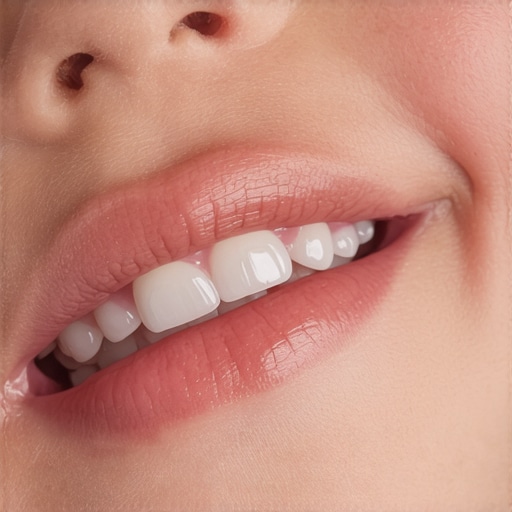
The cold compression method that actually works
Instead of manual pressure, focus on temperature. Cold is your best friend here. I found that a clean, damp washcloth that had been in the freezer for ten minutes worked wonders. It provides the same relief you’d look for if you were learning how to soothe a child’s gums after a filling. My daughter would gnaw on that cold fabric, and the vasoconstriction from the cold actually helped shrink the swelling of that purple bulge. If they are already on solids, a frozen bagel or a cold piece of cucumber can be a lifesaver. Just be sure to supervise them closely to avoid any choking hazards while they find relief.
Don’t let the purple spot stop your hygiene routine
It is tempting to skip brushing when the gums look so angry, but that is a recipe for disaster. Plaque loves to hide in the crevices of swollen gums. If you are struggling because your toddler refuses to open their mouth for the brush, try using a finger brush with extremely soft bristles. You don’t need to scrub the purple spot directly; just gently clean the surrounding teeth. You might also find the secret to getting a toddler to stop swallowing every bit of toothpaste helpful during this phase, as they tend to suck on the brush even more when their mouth is tender.
Distraction is the ultimate parenting hack
When those gums are throbbing and purple, your toddler is going to be clingy. I found that during the worst of the eruption, changing the environment helped more than any teething gel. We would go for ‘gum-relief walks’ in the stroller, or I’d let her play with a bowl of water on the floor. It doesn’t physically heal the hematoma, but it breaks the cycle of focusing on the discomfort. I noticed that when she was occupied with bubbles or a new toy, she stopped grimacing at the sensitive spot in her mouth.
When that dark spot means something else
While most of these purple bumps are harmless, you need to keep a sharp eye out for ‘red flags.’ If the area starts to look bright red and angry, or if you see white or yellow pus, that’s not a hematoma anymore—that’s an infection. I remember one mom in my playgroup whose son’s ‘teething bruise’ actually turned out to be a small abscess because he had chipped a baby tooth earlier that week. If the swelling spreads to the cheek or if your child develops a fever, put the home remedies away and call a professional. It’s better to have a dentist tell you it’s nothing than to ignore an infection that could affect how your child’s permanent teeth look later in life.
Once you navigate those early years of purple gums and teething scares, the dental journey shifts from immediate panic to long-term maintenance. However, there is a massive gap between ‘brushing twice a day’ and truly understanding how to protect your smile. I’ve noticed that most people think of a professional dental appointment as a simple aesthetic tune-up, but that is a dangerous simplification. Let’s dig deeper into the nuances that even the most diligent brushers often miss.
Your dental cleaning is more than just a surface polish
The most common myth I hear is that if your teeth look white, they are clean. Everyone says a ‘prophy’ is just about getting rid of coffee stains, but in my experience, the real magic happens where you can’t see. Professional care is actually about managing the subgingival biofilm—a microscopic community of bacteria that survives even the best electric toothbrushes. If you think you can skip a session because your teeth aren’t ‘furry,’ you are falling for a major trap. In fact, how regular teeth cleaning can prevent major dental issues is by disrupting these colonies before they can calcify into tartar that only a hygienist can remove. I made the mistake of thinking my ‘clean’ feeling meant I was safe, only to find out that teeth cleaning secrets are really about what is happening beneath the gumline, not just the sparkle on top.
Why do my front teeth feel slightly loose on the day I swap trays?
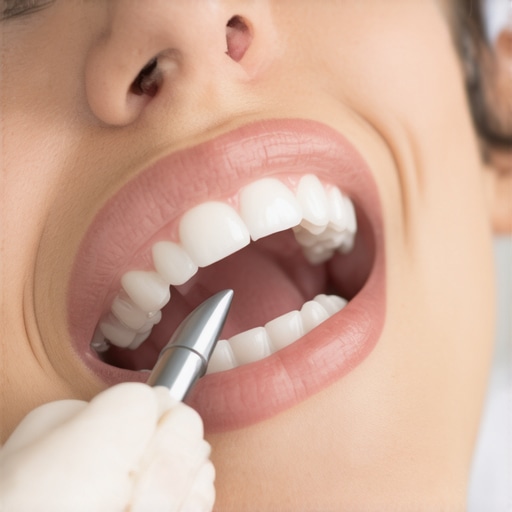
If you are pursuing a straighter smile, you might have felt a mild panic when your teeth seemed to wiggle during an Invisalign treatment. This is a classic ‘advanced’ concern. According to research published in the Journal of the American Dental Association (JADA), orthodontic tooth movement requires a process called bone remodeling. Osteoclasts break down bone in the direction of the movement, while osteoblasts build new bone behind it. This temporary ‘looseness’ is actually a sign the biological process is working. However, many patients assume their teeth are falling out! Understanding the truth about why your front teeth feel loose on invisalign tray swap days can save you a lot of anxiety. It is all part of the plan, provided you are following invisalign maintenance expert tips for clear confident smiles to keep the tissue healthy during the shift.
The risky truth about natural whitening alternatives
Here is the ‘oops’ factor that breaks my heart every time: the DIY whitening trend. Many people believe that ‘natural’ means ‘safe,’ leading them to use baking soda or charcoal to scrub away stains. This is one of the most persistent cosmetic dentistry myths debunked by pros. While these substances are abrasive enough to remove surface stains, they are also abrasive enough to strip away your enamel. Once that enamel is gone, it never grows back, and your teeth will actually look yellower because the dentin underneath is exposed. Instead of a kitchen-cupboard solution, the truth about using baking soda to scrub away surface stains is that it’s often a fast track to permanent sensitivity. If you want a brighter look without the damage, choosing the right dentist who understands the chemistry of peroxide vs. abrasion is essential. Have you ever fallen into this trap of trying a ‘hack’ that backfired? Let me know in the comments.
If you really want to keep that post-treatment glow, you have to stop treating your bathroom like a storage closet and start treating it like a mini-clinic. I realized this the hard way when my first set of clear aligners started looking like they had been soaked in old dishwater. I was scrubbing them with a soft brush and paste, thinking I was being diligent, but I was actually creating microscopic scratches where bacteria could thrive. That’s why I now swear by a 42,000Hz ultrasonic cleaner. It uses sound waves to create cavitation bubbles that implode against the aligner, blasting away debris without any mechanical abrasion. If you’ve noticed the reason your invisalign trays turn cloudy and how to clear them is often our own ‘helpful’ cleaning habits, you’ll understand why this small gadget is a non-negotiable for me. 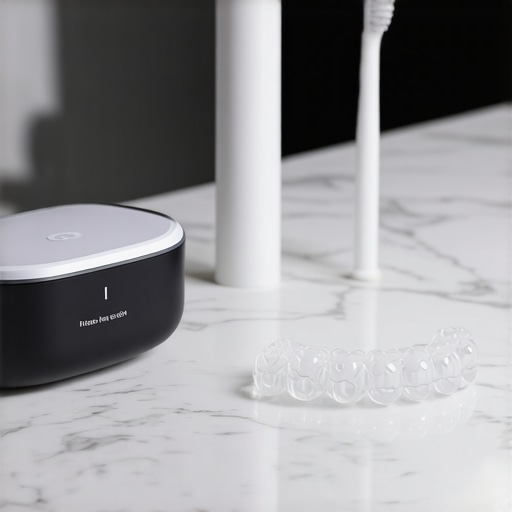
How do I maintain my smile results over time?
Maintenance isn’t just about the first six months; it’s about the next sixty years. Most people finish their Invisalign treatment and assume they’re done, but the biology of your mouth is constantly shifting. You need to be religious about invisalign maintenance expert tips for clear confident smiles, which includes not just wearing your retainer, but keeping it as clean as the day you got it. I’ve found that using a water flosser is the only way I can truly manage the area around my permanent wire. It’s the secret to the best way to clean a permanent retainer without shredding your floss. To back this up with some heavy hitting data, the Cochrane Database of Systematic Reviews has highlighted that oscillating-rotating electric toothbrushes provide a statistically significant reduction in plaque and gingivitis compared to manual brushing in both the short and long term. This isn’t just marketing hype; it is a clinical reality that helps explain how regular teeth cleaning can prevent major dental issues before they require expensive surgery.
Artificial intelligence is moving into your bathroom mirror
Looking ahead, the future of maintenance isn’t just better brushes; it’s better data. We are already seeing the emergence of ‘smart mirrors’ and toothbrush apps that use AI to map your mouth in real-time. Within the next couple of years, I predict we will have consumer-grade devices that can detect early-stage demineralization—the precursor to a cavity—long before you feel a twinge of pain. This is the ultimate evolution of maintaining your teeth cleaning routine for long-term health. You won’t have to guess if you missed a spot; your phone will tell you exactly where the biofilm is hiding. If you really want to level up your routine right now, I challenge you to ditch the manual flossing for just one week and try a high-quality water flosser instead. Watch how much debris it clears out even after you think you’re finished brushing—it’s a wake-up call you won’t forget.
3 Realities About Your Smile That Marketing Ignores
One thing I’ve learned after years of obsessing over dental care—both for my kids and myself—is that white teeth do not always equal healthy teeth. It’s easy to get caught up in the secret to a hollywood smile, but if the underlying tissue is neglected, the sparkle is just a facade. Another ‘lightbulb moment’ was realizing that dental anxiety often stems from a lack of information. When I understood the biology behind those purple teething spots or the bone remodeling of Invisalign, the fear vanished. Finally, remember that technology is a supplement, not a replacement. You can have the most expensive gear, but maintaining your teeth cleaning routine for long-term health still comes down to the two minutes you spend at the sink every morning and night.
The Tools That Actually Earn Their Spot in My Cabinet
I have tested dozens of gadgets, but only a few have genuinely changed my life. First, an ultrasonic cleaner is a non-negotiable for anyone using clear trays or retainers; it reaches the microscopic places a brush simply can’t. Second, I swear by a quality water flosser. It is hands down the best way to clean a permanent retainer without shredding your floss or irritating your gums. Lastly, I always look for modern teeth cleaning innovations that reduce sensitivity, such as hydroxyapatite toothpastes, which help rebuild enamel naturally. I trust these tools because they bridge the gap between professional office results and daily home care.
#IMAGE_PLACEHOLDER_E#
Take the First Step Toward Habitual Health
Whether you are currently navigating the ‘purple gum’ phase with a toddler or you are looking to invest in yourself through cosmetic dentistry, the best time to start is now. Dental health is a compounding asset; the small efforts you make today to prevent decay and maintain alignment will save you thousands of dollars and hours of discomfort in the future. By finding a dentist who gets your smile, you aren’t just getting a provider—you’re getting a partner in your long-term wellness. Don’t let the technical jargon or a scary-looking bruise stop you from achieving the health you deserve. Have you ever discovered a dental ‘hack’ or a specific tool that completely changed how you feel about your routine? Let me know in the comments below!