
I’ll never forget the first time I saw my reflection after a budget crown job back in my early twenties. The shade was a decent match, but the tooth itself looked like a polished marble sitting next to a row of real, textured teeth. It was eerily smooth, reflecting light like a bathroom mirror rather than a natural part of my body. It felt like I was wearing a tiny neon sign in my mouth that screamed, “Hey, this one is fake!” That experience taught me a hard lesson: color is only half the battle. If you don’t get the surface anatomy right, even high-end porcelain will look out of place. Today, I’m going to pull back the curtain on how we meticulously mimic the tiny ridges, valleys, and grit of your natural enamel so your restoration disappears into your smile.
Getting the surface right so your crown doesn’t stand out
When I started out in the world of cosmetic dentistry insights, I made the classic mistake of focusing entirely on the whiteness of a tooth. I thought if the shade guide matched, the job was done. I was wrong. Natural teeth aren’t flat planes; they have a complex topography of lobes and microscopic grooves. When choosing the right dentist, you need someone who understands that light behaves differently when it hits a smooth surface versus a textured one. We use high-definition digital scans and manual contouring to ensure the new porcelain has the same light-diffusion properties as its neighbors. Sometimes, a patient might feel that the reason your new crown feels like a piece of popcorn is stuck is actually just the unfamiliar but necessary texture we have added to make it look authentic.
Is a custom-textured crown actually worth the extra effort?
You might be wondering if these micro-details really matter to anyone but a dentist with a magnifying glass. The answer is a resounding yes. According to the American Academy of Cosmetic Dentistry, the human eye is incredibly sensitive to specular reflection—the harsh, pinpoint glare you get off an unnaturally smooth tooth. By adding perikymata, which are the tiny horizontal growth ridges found on natural enamel, we break up that glare and create a soft, natural glow. Have you ever had a dental restoration that felt too smooth or just off when you looked in the mirror? It is a frustrating feeling, but it is one we can solve by being more intentional with the final polish. Setting the stage for a seamless fit requires more than just a good eye; it requires a bit of artistry and a lot of patience.
Mapping the micro-terrain of your natural teeth
To create a crown that truly vanishes, we first have to map the topography of your existing teeth. Think of it like a topographical map of a mountain range; there are peaks (lobes) and valleys (fissures). If we make the crown a flat plateau, it reflects light in one big, ugly sheet. I once worked with a professional photographer named Elena who was obsessed with her front-left incisor. She actually brought in high-resolution macro photos of her teeth. Looking at those images, I realized that how we match a single front tooth filling to your natural shade is just the baseline; the real magic is in the shadows created by texture. We spent nearly an hour just carving the wax model to match the specific perikymata—those microscopic horizontal ridges—of her right incisor.
Start with high-definition digital impressions
Our process begins with a 3D scan of the surrounding teeth. While how we use digital scans to catch cavities that x-rays might miss is a standard diagnostic use, in cosmetic work, these scans serve as a blueprint for symmetry. We look at the mamelons, which are the jagged ridges often seen on the biting edges of new teeth. Even if your natural mamelons have worn down over time, we need to replicate that specific level of wear. If the crown is too sharp or too rounded compared to the tooth next to it, it looks like a sore thumb. 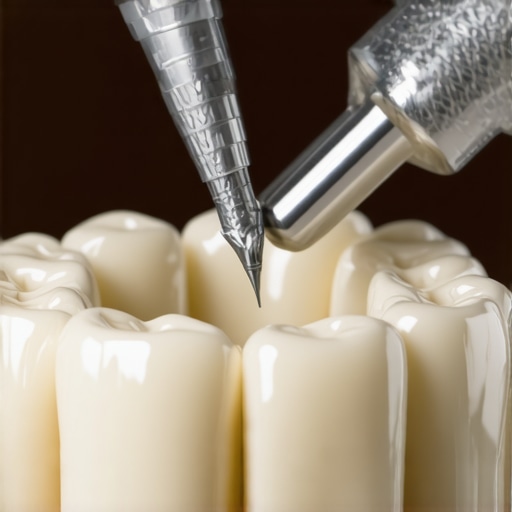
Hand-contouring for that lifelike finish
After the ceramic is milled, it often has a chalky or overly uniform look. This is where the artistry happens. I use fine diamond burs to manually grind in the tiny imperfections. It is like distressing a piece of furniture to make it look like an antique; you have to know where the wear and tear naturally occurs. Some patients worry that cosmetic dentistry myths debunked-what you really need to know includes the idea that a rougher tooth is a dirty tooth. In reality, that slight texture is what allows the tooth to blend. If you have ever noticed the specific reason your teeth feel sharp after a professional cleaning, it is often because the surface is so clean the natural ridges are more prominent. We want that same organic feel.
Testing the light bounce with liquid glazes
Before the final bake in the dental oven, we apply a liquid glaze. This is the moment of truth. We simulate different lighting conditions—office fluorescent, outdoor sun, and soft restaurant lighting. If the light bounces off the crown in a sharp line, we haven’t added enough texture. We need the light to scatter. This scattering effect is why the reason your new crown feels like a piece of popcorn is stuck is sometimes just the sensation of your tongue hitting a properly textured surface for the first time. It feels busy to your tongue because it is not a flat piece of plastic; it is a functioning, textured part of your smile.Building on that tactile realism, we need to address a major misconception: the idea that a perfect restoration is defined by a single, bright color. Let’s dig deeper into the actual physics of a smile.
Why the whitest shade on the guide is usually a mistake
While most patients come in asking for the brightest ‘bleach shade’ available, I often have to play devil’s advocate. There’s a common belief that whiter always equals healthier, but that is one of the most persistent cosmetic dentistry myths debunked-what you really need to know. In reality, natural teeth have a complex internal gradient. If you look closely in a mirror, you will see why your teeth look yellow near the gumline but white at the tips—the enamel is thinner at the base, allowing the warm, yellowish dentin to show through. If we make a crown one solid block of high-value white, it loses its ‘depth’ and looks like a piece of chewing gum. A landmark study in the Journal of Esthetic and Restorative Dentistry emphasizes that ‘optical integration’—how the tooth mimics natural light transmission—is far more critical for patient satisfaction than raw color value. If we don’t build in internal ‘maverick’ stains and varied levels of opacity, your tooth might look great in my office chair but turn a weird, flat grayish-blue under the harsh lights of a grocery store or a candlelit dinner.
Does your new crown need to be as smooth as glass?
This is the nuance that separates a simple ‘tooth-shaped object’ from a masterpiece. Everyone says they want their teeth to feel ‘clean and smooth,’ but if the ceramic is too polished, it reflects light in a single, harsh glare known as specular reflection. We actually need micro-texture to break that light up. Sometimes patients worry that the real reason your coffee stains come back a week after a professional cleaning is due to surface roughness, but usually, it is a lack of polished biological integration at the margins. 
The hidden trap that leads to chronic gum redness
The most dangerous mistake I see in cosmetic work isn’t a color mismatch; it’s an over-contoured ’emergence profile.’ This is the specific angle at which the crown or veneer exits your gum line. If a lab makes the restoration too bulky at the base, it creates a microscopic ‘shelf’ that traps plaque. Even if you are incredibly diligent about maintaining your teeth cleaning routine for long-term health, you simply cannot reach the bacteria hiding under that porcelain ledge. This leads to the ‘permanent red line’—a strip of inflamed, puffy gum tissue that never heals. It’s a classic trap where the dentist tries to make a tooth look ‘fuller’ but ends up suffocating the living tissue. This is why the ultimate guide to teeth whitening and cosmetic enhancements always places equal weight on the ‘frame’ (the gums) as it does on the ‘picture’ (the teeth).
Avoid the Hollywood Flat look
Another nuance many people miss is the ‘halo effect.’ Natural teeth have a distinct, slightly translucent edge where the light passes right through. If your restoration is opaque all the way to the biting edge, it looks ‘heavy’ and artificial. When we are how we match porcelain veneers to your specific complexion, we are calculating how light moves through the porcelain, not just how it bounces off the surface. Have you ever fallen into this trap of prioritizing a ‘bleach white’ shade over natural shape and translucency? Let me know in the comments. Whether you are reading the ultimate guide to invisalign for adults in 2025 or planning a single front tooth crown, remember that nature is rarely uniform—it is beautifully, subtly complex.To achieve the results we have discussed, I do not just rely on a steady hand; I rely on the iTero Element 5D Plus. Most patients recognize this technology from invisalign innovations why 2025 is the year for a perfect smile, but its Near-Infrared Interferometry is what I use to verify the marginal seal of a crown without additional radiation. For the final textural refinement, I am loyal to the Brasseler USA Dialite system. This three-step diamond-impregnated series allows me to transition from a functional grit to a high-luster glaze that mimics natural wetness. If a dentist skips these steps, the light will not scatter correctly, and you will be left with the flat, plastic appearance that screams artificiality.
How do I keep my cosmetic work looking brand new for years?
Once you have invested in this level of artistry, you have to protect the surface integrity. I always emphasize that maintaining your teeth cleaning routine for long-term health requires a shift in the products you use. You must avoid high-abrasivity whitening toothpastes which can micro-scratch the porcelain glaze over time. If you notice the real reason your coffee stains come back a week after a professional cleaning is happening faster on your crown than your other teeth, it is likely because the surface has been roughened by a gritty paste. I recommend a soft-bristle electric brush with a pressure sensor, because why your gums throb after using a new electric toothbrush is usually a sign of excessive force that can recede the gums and expose the porcelain edge. 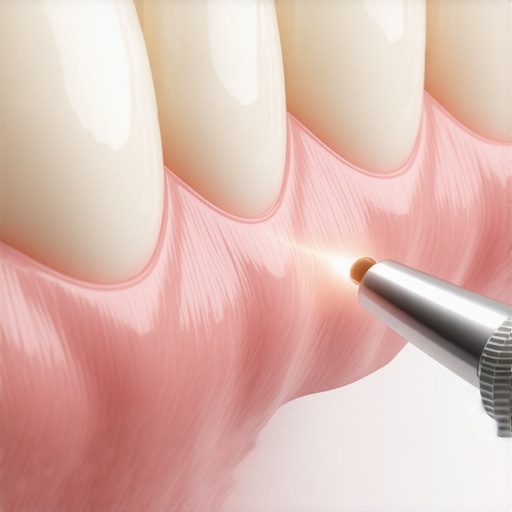 For those balancing cosmetic work with orthodontic alignment, knowing invisalign maintenance expert tips for clear confident smiles is vital to prevent bacterial buildup at the base of your new restorations. If you are struggling with how to get the coffee stains out of your invisalign attachments, avoid soaking them in colored mouthwash, which can actually seep into the bonding material. Looking toward the future, the industry is shifting toward biomimetic 3D printing. As master ceramist Shigeo Kataoka highlights in his seminal text Nature’s Morphology, the goal is to replicate the internal mamelon structures rather than just the outer shell. Soon, AI will analyze your unique lip dynamics to suggest the exact micro-texture needed for your specific facial movements. My best advice for right now? Switch to a toothpaste with an RDA (Relative Dentin Abrasivity) value under 70 to preserve that hand-polished glow for a decade or more.
What I Finally Realized After Seeing a Thousand Smiles
Over the years, I’ve had several ‘lightbulb’ moments that changed how I approach cosmetic dentistry insights. One of the biggest shifts was moving away from the idea of symmetry and toward harmony. A perfectly symmetrical smile often looks robotic; it is the subtle variations in texture and tilt that make a smile look ‘born-with-it’ rather than ‘bought-at-the-lab.’ I also learned that the best dental work is invisible; if people are constantly complimenting your ‘crowns,’ the textures probably weren’t right. They should simply be complimenting your smile. Finally, never underestimate the power of healthy gums—no amount of expensive porcelain can hide the inflammation caused by an over-contoured fit.
My Non-Negotiable Kit for Porcelain Longevity
If you want to keep that custom texture and light-scattering glow for a decade or more, you need to treat your restorations with specific care. Here is the toolkit I personally recommend to every cosmetic patient:
- Low RDA Toothpaste: I always point patients toward formulations with a Relative Dentin Abrasivity under 70. Keeping the grit low ensures you don’t ‘sand down’ the micro-ridges we meticulously carved. Check out our guide on teeth cleaning for sensitive teeth what works best in 2025 for specific product picks.
- Electric Toothbrush with Pressure Sensors: Brands like Oral-B or Sonicare with built-in sensors are vital. They prevent the aggressive scrubbing motion that leads to gum recession around the crown’s margin.
- Fine-Grit Professional Polishing: When you go in for maintenance, ensure your hygienist is aware of your porcelain work. Using modern teeth cleaning innovations that reduce sensitivity and boost results can preserve the integrity of the glaze much better than old-school, coarse pumice.
#IMAGE_PLACEHOLDER_E#
Your Smile Deserves the Artistry of a True Match
Investing in your teeth is about more than just function; it’s about the confidence that comes from a natural, radiant reflection. As we see cosmetic dentistry trends that transform smiles beyond expectations, the focus is shifting away from ‘white blocks’ and toward biomimetic beauty. Don’t be afraid to ask your dentist about the specific textures they plan to use and how they intend to map your natural perikymata. You are the architect of your own confidence, and getting the surface anatomy right is the final, essential piece of the puzzle. Have you ever felt like a dental restoration was too smooth or ‘fake’ when you ran your tongue over it? Let me know your experience in the comments below!