
I’ll never forget the Tuesday morning I woke up with that familiar, nagging sting right against my lower lip. I grabbed my phone, turned on the flashlight, and squinted into the mirror. There it was: a tiny, angry white crater. My first thought? Great, another canker sore from that spicy salsa last night. My second thought, thanks to a deep-dive on the internet, was that my entire jaw was surely about to fall off from a hidden infection. We’ve all been there, standing in the bathroom under harsh fluorescent lights, wondering if a little spot is a minor nuisance or a dental emergency. It’s a stressful way to start the day, and quite frankly, the ‘wait and see’ approach usually just leads to more anxiety. Today, I’m going to walk you through exactly how to distinguish between these two common mouth invaders so you can stop guessing and start treating it right.
Stop Poking That Spot and Learn From My 2 AM Panic Attack
I made a huge mistake early on by assuming every white bump could be cured with a little bit of salt. I once spent three days trying the salt water trick for shrinking a painful gum boil, only to realize I wasn’t dealing with a simple sore at all—it was a localized infection that needed professional eyes. According to the American Academy of Oral Medicine, while canker sores (aphthous ulcers) are incredibly common, affecting about 20% of the population, they are distinct from abscesses which involve pus and bacterial buildup. If you ignore the signs of an infection, you might find yourself needing more than just a quick fix. Regular maintenance and how regular teeth cleaning can prevent major dental issues are your best defense, but when a spot appears, you need to know the ‘texture’ of the problem. Canker sores are usually flat or slightly recessed with a red border, while an infection often presents as a raised bump—sometimes looking like a ‘pimple’ on the gums.
Is this tiny white dot actually worth a trip to the dentist?
Most of us fear being ‘that patient’—the one who schedules an emergency appointment for something a bit of over-the-counter gel could fix. You might worry that you’re overreacting or that the dentist will think you’re being dramatic. But here is the reality: an infection doesn’t just go away; it simmers. If your ‘sore’ is accompanied by a fever, a throbbing jaw, or a foul taste, it’s not just a surface wound. I’ve learned the hard way that finding a dentist who gets your smile and your concerns is vital for peace of mind. Have you ever stared at a spot in your mouth for twenty minutes, debating whether to call for help? Tell me about your most confusing dental mystery in the comments! Before we dive into the specific checklists, remember that teeth cleaning secrets and regular care can often prevent these scares from happening in the first place. Now, let’s get into the nitty-gritty of how these spots feel, look, and behave.
Run Your Tongue Over the Geography of the Spot
Think of a canker sore as a pothole in a road—it is a localized, shallow dip in the surface of your tissue. In contrast, a dental infection or abscess is like a speed bump; it’s a raised, pressurized mound that often feels firm to the touch. When I’m trying to diagnose myself in front of the mirror, I use a clean fingertip to gently press the area. If it feels like a soft, recessed crater that stings sharply when touched, you’re likely looking at a canker sore. If the area feels swollen, tight, or like there is a ‘pocket’ of something underneath the surface, you are likely dealing with an infection that requires professional intervention. 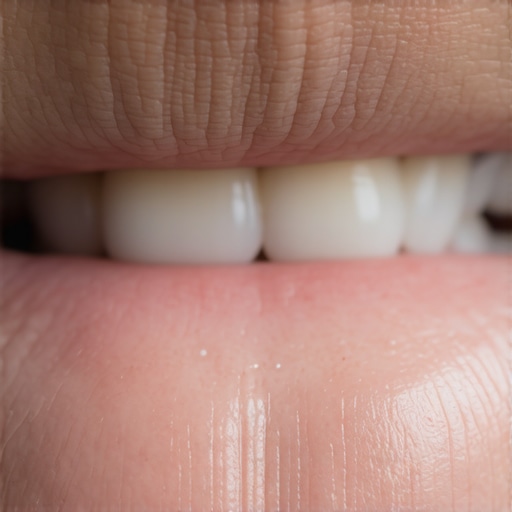
Try the Acid and Pressure Tests
One of the fastest ways to tell these two apart is by how they react to different stimuli. Canker sores are incredibly sensitive to acidity. I remember a specific instance where I wasn’t sure what I was dealing with until I took a sip of lemonade—the sharp, lightning-bolt pain was an immediate giveaway of a canker sore. An infection, however, is often more sensitive to pressure than to acid. Try the ‘tap test’ on the tooth nearest to the spot. If tapping the tooth causes a deep, radiating ache, the issue is likely at the root. Understanding how to tell if your jaw pain is actually a cavity can help you distinguish if the pain is coming from the surface or deep within the bone.
Why the Fourteen Day Rule is Your Best Guide
Time is the ultimate diagnostic tool. A standard canker sore follows a predictable arc: it appears, hurts like crazy for three to five days, and then begins to fade, usually disappearing completely within two weeks. If you have a spot that refuses to budge after fourteen days, it is no longer a simple sore. This is when I stop the home remedies and call the office. Chronic spots can be signs of underlying issues that even modern teeth cleaning innovations that reduce sensitivity and boost results can’t fix without a proper diagnosis. If you are someone who struggles with frequent sores, maintaining your teeth cleaning routine for long term health can help keep the bacterial load in your mouth low, reducing the risk of minor irritations turning into major headaches.
Look for the Systemic Red Flags
You have to look beyond the mouth. A canker sore is a local event—it stays in its lane. An infection, however, is a systemic intruder. I once ignored a ‘gum bump’ for a week until I realized I was feeling unusually sluggish and my neck felt tender. I checked my lymph nodes under my jawline and found they were swollen. If you notice a foul, metallic taste that won’t go away even after brushing, or if you develop a low-grade fever, the infection has likely started to spread. In these cases, a dentist might need more advanced imaging, such as what a 3d cbct scan reveals about your jaw health that standard x-rays cant, to see if the infection has reached the jawbone itself. Do not wait for the pain to become unbearable; the moment you feel a throb that matches your heartbeat, it’s time to move past the home-care phase.Wait, I used to think that as long as I was scrubbing my teeth twice a day, I was invincible. But here is the nuance most people miss: hygiene isn’t just about the surface of the tooth. Many patients assume a ‘prophy’—your standard cleaning—is the same thing as a therapeutic ‘deep cleaning,’ but the difference is critical for your gum tissue health. According to teeth cleaning myths debunked by top dentists, thinking you can simply ‘brush away’ a localized infection is one of the most dangerous traps you can fall into. If you have a bump that feels like a firm pimple, no amount of manual brushing will reach the bacteria hiding deep in the periodontal pocket.
Could your orthodontic aligners be the real culprit behind those sores?
If you’ve recently started a journey toward a better smile, you might notice more frequent irritations. A common misconception is that the aligners themselves are ‘dirty’ or that you’ve developed an allergy. In reality, it is often the physical friction of the composite material. You might feel like your invisalign attachments feel like sandpaper against your cheeks, which creates micro-traumas that mimic canker sores. The ‘oops’ factor here? Many people stop wearing their trays because of the discomfort, which actually delays the tooth movement that would eventually shift the tooth away from that specific irritation point. 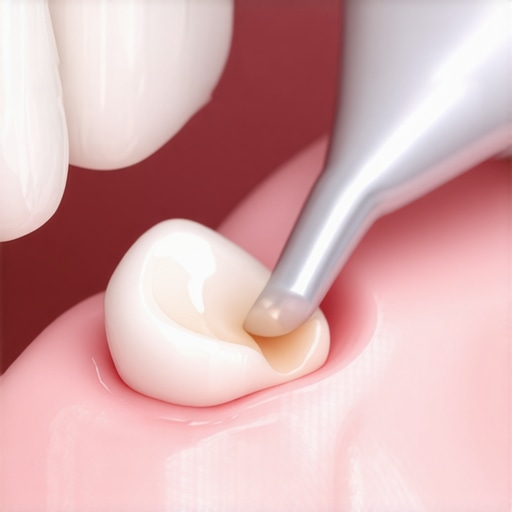 The most sophisticated mistake I see is the ‘Gel Trap.’ When we feel a throb, we instinctively reach for over-the-counter benzocaine. While this is fine for a surface-level canker sore, using it on an abscess is like putting a band-aid on a bullet wound. It numbs the alarm system—your nerves—while the bacterial infection continues to erode the bone underneath. A study published in the Journal of Periodontology highlights that chronic subgingival biofilm can lead to systemic inflammation long before the ‘bump’ even becomes painful. This is why modern teeth cleaning innovations that reduce sensitivity and boost results are so vital; they target the invisible threats, not just the visible spots. Have you ever fallen into the trap of thinking a painful bump would just ‘clear up’ if you brushed harder? I certainly did, and it cost me a very expensive emergency visit. Let me know your experience in the comments. If you’re ever in doubt, the safest move isn’t a Google search—it’s a professional evaluation. You can always contact us to get a definitive answer before a minor sting turns into a major procedure.Moving beyond the immediate panic of a sore requires a mindset shift from ‘fixing’ to ‘sustaining.’ I’ve found that the most successful patients—and I count myself among them now—don’t just wait for the next bump to appear. We treat our oral environment like a high-performance engine that needs specific calibration. For me, that meant investing in a high-frequency ultrasonic cleaner. If you are wearing aligners, the porous nature of the plastic is a magnet for bacteria. Using a dedicated device ensures you are following the secret to keeping your invisalign trays perfectly clear for two weeks without manual scrubbing that can cause micro-scratches. These tiny scratches are where the real trouble starts, as they harbor the very bacteria that lead to the infections we discussed earlier.
Stop Guessing and Start Upgrading Your Dental Toolkit
I swear by a multi-pronged approach that goes beyond the standard pharmacy aisle. For anyone dealing with the friction of orthodontic work, incorporating invisalign maintenance expert tips for clear confident smiles is non-negotiable. I personally use a water flosser with a tapered orthodontic tip. It reaches the areas where my manual brush fails, especially around those tricky attachments. 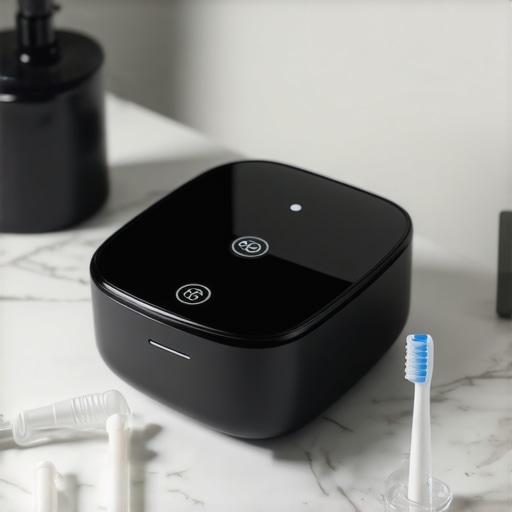 Furthermore, the data supports this high-tech shift. According to a 2024 report by Grand View Research on dental imaging and care, the shift toward 3D intraoral scanning and precision home-care tools is expected to grow by nearly 10% annually, as clinicians and patients move toward ‘preventative mapping’ of the mouth’s landscape.
How do I maintain my dental results over the long haul?
The answer lies in professional consistency and the right tech. While home tools are great, maintaining your teeth cleaning routine for long term health requires a partnership with your dentist. In the future, I predict we will see more AI-driven monitoring where you can scan your own mouth at home and send the data to your clinic for real-time analysis of potential sores or shifts. This is already beginning with how we use digital scans to catch cavities that x-rays might miss, providing a level of detail that was impossible a decade ago. If you want to scale your results, focus on modern teeth cleaning innovations that reduce sensitivity and boost results during your bi-annual visits. I challenge you to swap your manual brush for a pressure-sensing electric model for just one week to see the difference in your gum health. If you’re ready to take the next step in your smile journey, don’t hesitate to contact us for a personalized plan.
The Hardest Realizations from My Own Dental Scares
Reflecting on those early morning mirror sessions, I’ve realized that the ‘wait and see’ method is rarely the best medicine. First, I learned that pain levels are deceptive; some of the most dangerous infections start with a dull throb rather than a sharp sting. Secondly, ignoring the small stuff like aligner friction can lead to bigger issues. I’ve found that teeth cleaning myths debunked by top dentists often point out that we overestimate our home-care abilities and underestimate the power of professional maintenance. Finally, trust your gut—if it feels ‘off,’ it probably is.
Tools That Saved My Sanity and My Gums
I don’t leave my oral health to chance anymore. My essential toolkit now includes a high-quality water flosser, which helps me avoid that ‘sandpaper’ feeling from aligner attachments. I also swear by invisalign maintenance expert tips for clear confident smiles to ensure my hardware isn’t the source of my irritation. #IMAGE_PLACE_FINAL# For those who struggle with odors, learning how to get the morning breath smell out of your invisalign case for good changed the game for my daily comfort. These aren’t just gadgets; they are the frontline defense for my cosmetic dentistry investment.
Your Path to a Pain-Free Smile Starts Now
You don’t have to live in fear of the next white spot. By understanding the geography of your mouth and staying consistent with your maintaining your teeth cleaning routine for long term health, you can distinguish between a minor annoyance and a call to the dentist with confidence. Your smile is a reflection of your overall health, so treat it with the care it deserves. If you’re ever feeling overwhelmed or unsure about a new sensation in your mouth, please contact us so we can help you find clarity. Have you ever spent a whole night googling a mystery bump only to find out it was nothing? Let me know your story in the comments!