
I remember the exact Tuesday night I realized I was “faking” my oral hygiene. I was standing in my bathroom, feeling pretty proud of my nightly routine. I’d spent three minutes scrubbing and was finally getting into the groove of daily flossing. The front teeth? Spotless. The bottom? Perfect. But then I reached those stubborn back molars. Snap. A little bit of pressure, and suddenly the sink looked like a crime scene. Just in the back. Everywhere else was fine, so I told myself it was just a fluke. Maybe I just hit the gum too hard? I kept going, rinsing the pink away, but deep down, I knew something was off. It’s a classic neighborly moment: I want to tell you that just because it is only happening in one spot doesn’t mean you can ignore it. We are going to solve that mystery today and get your health back on track.
Stop Ignoring the Pink in the Back of Your Sink
It is a weirdly specific frustration. You’re doing the work, yet your mouth seems to be rebelling in one tiny corner. I used to think I was just being “aggressive” with the floss back there. I made the classic mistake of assuming that because I wasn’t in pain, the bleeding was just a sign of me being thorough. In reality, I was neglecting the unique anatomy of those back teeth. If you have wondered about the strange reason your back molars bleed even when you floss daily, you aren’t alone. It is usually not about how hard you pull; it is about what is hiding in the shadows of your jaw. Those molars are like the dusty corners of a room that the vacuum never quite reaches. We are going to break down why this happens and how to fix it before it turns into a larger problem that requires cosmetic dentistry insights to repair later on.
Is bleeding back there actually a big deal?
You might think if it is not throbbing, it is not an emergency. I thought the same thing until a routine teeth cleaning turned into a serious conversation about deep scaling and periodontal pockets. Biofilm—that sticky film of bacteria—loves the back of your mouth because it is a low-traffic area for your toothbrush and tongue. According to the American Academy of Periodontology, localized bleeding is often the first warning sign of gingivitis that can quietly escalate into bone loss if left unchecked. It turns out my “fluke” was actually an early warning system I was choosing to ignore because I didn’t want to admit I wasn’t perfect at flossing. Today, we are going to figure out why those specific spots are acting up and how to stop your gums from bleeding without dreading your nightly routine. Have you noticed blood only on your back molars lately, or is your floss coming out clean everywhere else? If you are seeing red, it is time to adjust the strategy, not just the pressure. We need to look at how regular care boosts oral health at any age, especially when things get tricky in the back of the mouth.
Hug the Tooth to Clear the Biofilm
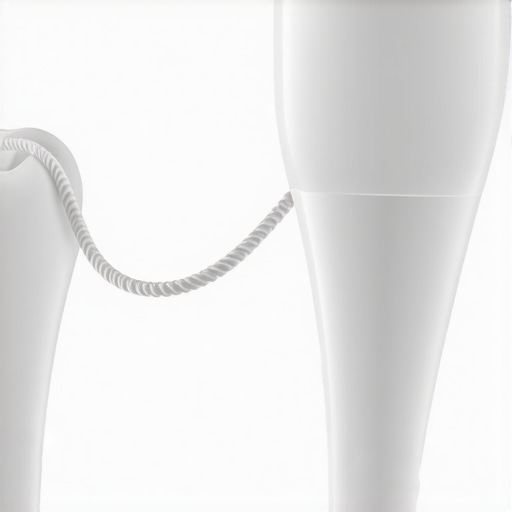
Most of us treat flossing like a game of saw-the-log. We go down, we go up, and we move on. But your molars are shaped like rounded blocks, not flat planks. If you aren’t wrapping that string into a C-shape around the tooth, you are missing about 40% of the surface area where bacteria hide. I remember my first time trying this after a particularly bloody sink incident; I actually felt the floss dip into a pocket I didn’t know existed. It wasn’t about more pressure; it was about the wrap. Think of it like trying to wipe a spill off a curved countertop—you don’t just swipe the top; you follow the edge. When you start doing this, don’t be surprised if you see more blood initially. It is a sign you are finally hitting the infection site. You can learn more about how to stop your gums from bleeding during your first week of this more intensive routine.
Relax Your Jaw to Reach the Corners
It sounds backwards, right? We are taught to open wide for the dentist, but when you are flossing those 12-year molars at home, opening wide actually tightens your cheek muscles against your jawbone. This creates a literal wall that blocks your fingers from getting deep enough. I used to struggle and scrape my knuckles until I realized that if I relaxed my jaw and closed my mouth about halfway, the cheek goes slack. This slack-jaw technique is a game-changer for visibility and access. It is like trying to put on a tight shoe—it is much easier if you don’t point your toes and stiffen the leather. This is often why your dental hygienist asks you to tilt your head so far back or move your jaw to the side; they are trying to bypass those tight muscles to reach the danger zones.
Address the Shred and the Snag
If you feel a catch every time you go between your last two teeth, there is a physical reason for the bleeding. Sometimes it is a tight contact point, and other times it is a tiny ledge of tartar. This is often the hidden reason your floss keeps shredding between two specific teeth. If you can’t get the floss through smoothly, it means bacteria are trapped under a jagged edge where they can’t be brushed away. In my case, I had a microscopic bit of calculus that had essentially turned into a piece of sandpaper for my gums. No amount of home care was going to fix it until I got a professional teeth cleaning to reset the surface. Once that obstacle is gone, your flossing becomes a smooth, one-second task rather than a battle.
Upgrade to Tools That Do the Hard Work
If your hands are too big or your mouth is too small for traditional string, you are fighting a losing battle. I eventually switched to interdental brushes—those tiny, flexible brushes that look like miniature Christmas trees. They are significantly more effective at scrubbing the concave sides of those back teeth than a flat piece of string. For those who find traditional methods too abrasive, focusing on teeth cleaning for sensitive teeth might involve using a water flosser on a low setting to flush out that back-pocket biofilm. The goal is consistency over intensity. By maintaining your teeth cleaning routine for long-term health, you ensure that the localized bleeding doesn’t turn into a systemic issue that affects your entire smile.
We often assume that a bright white smile is the ultimate indicator of health, but I’ve learned the hard way that aesthetics can be a mask. Everyone says that if your teeth look straight and white, you’re doing fine, but in my experience, the healthiest-looking smiles can hide the most aggressive gum issues. This is the ‘Hollywood Trap’—focusing so much on the surface that you forget the biological war happening underneath. You might be considering cosmetic dentistry insights to perfect your look, but if those back molars are still bleeding, your foundation is crumbling. It is a common mistake to prioritize the ‘after’ photo of a treatment over the daily biological maintenance required to keep it.
Your White Teeth Might Be Hiding a Secret
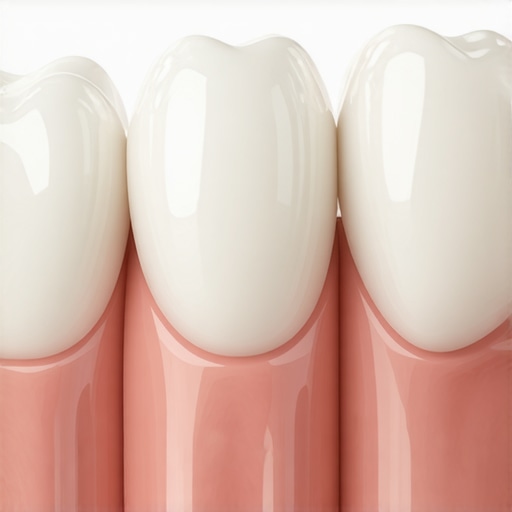
The biggest myth I see is that ‘squeaky clean’ teeth are the only goal. People often scrub their teeth with abrasive charcoals or whitening pastes, thinking they are being thorough. However, these teeth cleaning myths debunked by top dentists often reveal that over-aggressive cleaning actually creates micro-scratches where bacteria can hide even better. I used to think my teeth were invincible because they were white, but I was actually thinning my enamel and making my gums more sensitive. According to research published in the Journal of Clinical Periodontology, pathogenic bacteria can recolonize deep periodontal pockets within days if the underlying biofilm structure isn’t properly disrupted during your routine, regardless of how white your teeth look. This is why modern teeth cleaning innovations focus on gentle disruption rather than harsh scraping.
Why do my teeth feel furry just hours after a cleaning?
If you have ever left the dentist feeling like polished glass, only to have that ‘fuzzy’ feeling return by dinner, you are experiencing the formation of the acquired pellicle. This is a thin film of proteins from your saliva that actually protects your teeth, but it also acts as the ‘glue’ for new bacteria. This is the reason your teeth feel furry only hours after a professional cleaning. The trick isn’t to scrub it off immediately but to manage the type of bacteria that lands there. If you are going through an alignment journey, invisalign maintenance expert tips will tell you that the trays can actually trap this film against your teeth, accelerating the process if you aren’t careful.
Avoid the Trap of the Cosmetic Quick Fix
One dangerous ‘oops’ factor I’ve noticed is the tendency to use cosmetic procedures to cover up functional failures. I’ve seen people rush into veneers because they hate their ‘small’ teeth, only to realize the teeth looked small because they were being worn down by a misaligned bite or nighttime grinding. If you don’t address the root cause, even the most expensive cosmetic dentistry trends will fail prematurely. This is why choosing the right dentist is about finding someone who looks at your jaw mechanics, not just your smile line. Have you ever fallen into the trap of wanting a quick fix for a deeper dental issue? Let me know in the comments. We need to stop seeing cosmetic dentistry myths as reality and start treating our mouths as the complex ecosystems they are.
It is easy to think that once you have finished your Invisalign treatment or had a major cosmetic procedure, the hard work is over. In reality, that is just the beginning of the maintenance phase. I spent years thinking my teeth would stay put, but teeth have a memory, and they love to wander back to their old, crowded positions if you let your guard down. To keep everything working perfectly, I have had to get serious about the specific tools I keep on my bathroom counter.
Level Up Your Nightly Routine With Ultrasonic Tools
I am not typically a gadget-obsessed person, but when it comes to keeping plaque off those stubborn back molars, a manual brush is simply outmatched. I personally switched to an ultrasonic brush that vibrates at 31,000 strokes per minute, and it changed my dental checkups from stressful to boring. These high-frequency vibrations create fluid dynamics that push toothpaste and water into the gaps between your teeth, reaching where standard bristles cannot. 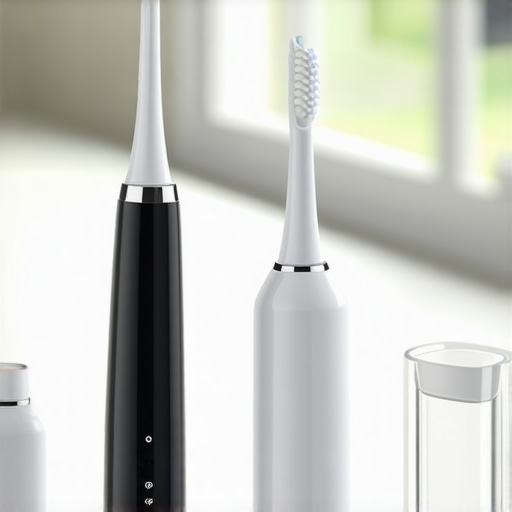 If you are currently wearing clear aligners, the stakes are even higher because the plastic can trap bacteria against your enamel. I swear by using a dedicated ultrasonic cleaning tank for my trays while I eat dinner. This prevents that cloudy, yellowish buildup that makes your smile look dull. You can check out my guide on the secret to keeping your invisalign trays perfectly clear for two weeks for the specific cleaning crystals I recommend to avoid that ‘cloudy’ look.
How can I maintain my alignment and health over the long haul?
The secret is actually quite boring: it is the retainer. If you are following invisalign maintenance expert tips for clear confident smiles, you know that your jawbone takes months to fully harden around the new positions of your teeth. I wear my retainers every single night without fail. For those who struggle with sensitivity after a long day of wear, teeth cleaning for sensitive teeth what works best in 2025 suggests using a high-fluoride remineralizing paste inside the retainer to strengthen enamel while you sleep.
The Future of Your Smile Lies in Digital Monitoring
I predict that within the next few years, we will stop guessing if our teeth are shifting or if a cavity is forming between visits. We are already seeing a massive shift toward how we use digital scans to catch cavities that x-rays might miss. AI-guided software is now being integrated into dental cameras to track gum recession at a micron level. According to a technical report published in The Journal of Adhesive Dentistry, digital integration in patient monitoring has reduced the failure rate of cosmetic restorations by nearly 18% because we catch structural changes before they turn into visible cracks. Maintaining your teeth cleaning routine for long-term health is much easier when you have visual, digital proof that your efforts are paying off. I strongly encourage you to ask your provider for a 3D scan at your next visit; seeing your mouth in a 360-degree render makes those blind spots feel a lot more real. Try this tonight: time your brushing and spend exactly 30 seconds on each quadrant. Most of us cheat on the back teeth, and that extra 10 seconds is usually the difference between health and a future filling.
What I Finally Realized About My Own Dental Blind Spots
For a long time, I treated my dental routine like a checklist rather than a health ritual. I’ve since learned that bleeding gums are a conversation your body is trying to have with you, not a nuisance to be ignored. #IMAGE_PLACE_HOLDER_E# One major lightbulb moment for me was realizing that ‘perfectly white’ doesn’t mean perfectly healthy. You can have a dazzling look while your support system is struggling. I also discovered that being ‘aggressive’ with the floss is actually counterproductive; the goal is to disrupt the biofilm, not to punish your tissue. Finally, I learned that professional help isn’t a sign of failure—it’s a necessary reset. Even the best home care can’t reach certain deep pockets, and how regular teeth cleaning can prevent major dental issues became very clear once I saw those digital scans for myself.
The Gear That Actually Made a Difference for Me
If you are tired of the ‘shred and snap’ of traditional floss, I highly recommend looking into interdental brushes. They reach the concave areas of molars much better than flat string ever could. I also stand by my ultrasonic toothbrush; the high-frequency vibrations do the heavy lifting so I don’t have to scrub manually and irritate the gum line. For my friends wearing aligners, the secret to keeping your invisalign trays perfectly clear for two weeks is using an ultrasonic cleaning tank—it’s a small investment that saves your smile from looking dull. Lastly, always keep a remineralizing paste on hand; it is a lifesaver for managing sensitivity and strengthening enamel after a deep clean.
Your Path to a Healthier Smile Starts Tonight
You don’t need a complete lifestyle overhaul to see results; you just need to be more intentional with those hard-to-reach corners. By maintaining your teeth cleaning routine for long-term health, you are investing in a future where you don’t dread the dentist’s chair. Remember that teeth cleaning myths debunked by top dentists often show us that it is the small, consistent habits that matter most. Take that extra ten seconds for your back molars tonight. You have got the tools and the knowledge now—go ahead and give your mouth the care it deserves. Which specific back molar gives you the most trouble when you are trying to floss? Let me know in the comments below!