
I remember sitting at my kitchen table, sipping a cool glass of water after my first major cavity fix. The numbness was finally fading, and I was ready to celebrate. But instead of tasting my lunch, I felt like I’d just chewed on a roll of pennies. It was jarring. Slightly bitter. And honestly, a little frightening. I immediately grabbed my phone, convinced my dentist had accidentally left a tool in there or that my body was reacting to the metal. Spoiler alert: neither was true, but that metallic tang is a real mood-killer. If you’ve just come back from a visit and feel like you’re breathing out fumes from a copper mine, you aren’t alone. Today, I’m going to walk you through why this happens and how you can get your fresh breath back without panicking.
Why Your Mouth Suddenly Tastes Like a Bag of Coins
When I first dealt with this, I made the classic rookie mistake: I blasted my mouth with the strongest, most alcohol-heavy mouthwash I could find. I thought I could just “burn” the smell away. Big error. All that did was dry out my tissues and make the metallic sensation even more intense. The truth is, that odd scent often comes down to a tiny electrical current in your mouth called oral galvanism. According to the Journal of Oral Rehabilitation, when different metals interact with saliva, they can create a literal battery-like effect. It sounds like science fiction, but it’s just chemistry. It’s not just about the chemistry, though. Sometimes, it’s just a byproduct of the cosmetic dentistry myths we’ve all heard, where we expect instant perfection. In reality, your mouth is a sensitive ecosystem. Whether you’ve recently had teeth cleaning secrets or a fresh restoration, your taste buds are on high alert. [image_placeholder] This sensation is often tied to the reason your mouth tastes like metal after a new silver filling, which is more common than you might think. I’ve spent plenty of time in the dentist’s chair, and if there’s one thing I’ve learned, it’s that our bodies are weirdly loud when they’re healing. That metallic tang isn’t just in your head; it’s a physical response to the materials and the way your saliva reacts to them. It made me self-conscious during meetings and even made my morning coffee taste like it was brewed in a lead pipe. But here’s the thing: most of the time, your mouth is just recalibrating after a procedure like modern teeth cleaning innovations or a filling.
Is this metallic breath actually dangerous?
This is the question that kept me up at 2 AM. I was terrified that mercury was leaking or that I was having an allergic reaction. For the vast majority of us, it’s a temporary nuisance, not a medical emergency. The “smell” is usually just the material settling or a slight shift in your mouth’s pH levels during the healing process. However, it’s a great reminder that keeping up with your routine for long-term health is vital even after the repairs are done. It’s easy to spiral into worst-case scenarios, especially when you’re scrolling through forums at midnight. You start seeing words like “toxicity” and suddenly that tiny filling feels like a ticking time bomb. But let’s be realistic—modern dentistry has come a long way. Have you ever walked out of the office feeling like a human magnet? It’s a bizarre feeling, but knowing the why makes it much easier to handle. My own “penny breath” vanished about 48 hours after I stopped obsessing over it and started following a gentle routine for a brighter smile. Stay tuned as we dive into the specific ways to neutralize that taste faster.
Kill the Copper Taste with These Proactive Steps
When that penny-like flavor persists, you need to act like a chemist for your own mouth. Think of your saliva as the electrolyte in a battery; your goal is to change its composition so it stops reacting to the new materials. My first instinct was to reach for a pack of sugar-free peppermint gum, but that was a disaster. The artificial sweeteners actually seemed to intensify the ‘electric’ feeling against my new filling. Instead, I learned that the fastest way to neutralize the environment is to focus on pH balance.
Reset Your Mouth with a Simple Saltwater Rinse
This is the oldest trick in the book for a reason. Salt is a natural buffer. When you dissolve about half a teaspoon of salt into a glass of warm water, you aren’t just cleaning the area; you are alkalizing your mouth. I remember standing over my sink, skeptical, but after three rounds of rinsing, that heavy copper weight in the back of my throat started to lift. It’s similar to the salt water trick for shrinking a painful gum boil at home because it draws out the excess ions that are causing that metallic tang. Swish it gently for thirty seconds, and don’t be afraid to repeat this every few hours during the first day of recovery. 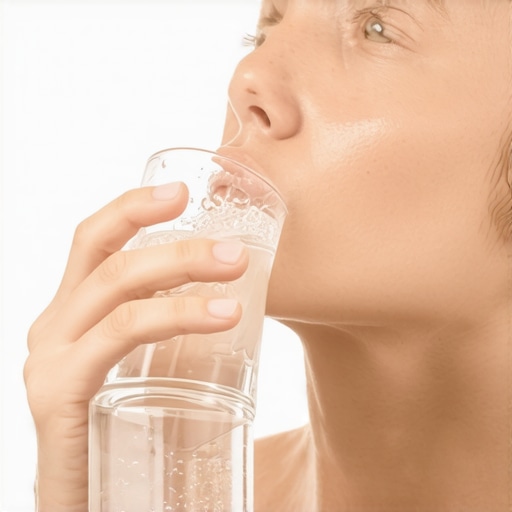
Ditch the Alcohol-Based Mouthwashes Immediately
Most people reach for the ‘blue stuff’ to mask bad breath, but if you have a metallic taste, alcohol is your enemy. It dries out your mucous membranes, and a dry mouth is a breeding ground for concentrated metallic sensations. When I finally switched to a gentle, alcohol-free version specifically designed for teeth cleaning for sensitive teeth what works best in 2025, the irritation subsided. The goal here is to keep the tissues hydrated so the healing process isn’t interrupted by chemical burns or excessive dryness.
Scrub Away the Residual Ions on Your Tongue
The metallic taste isn’t just on your teeth; it often settles in the papillae of your tongue. This was a ‘lightbulb’ moment for me. I realized that while I was obsessing over the filling itself, my tongue was holding onto the metallic ‘debris’ from the procedure. Using a dedicated scraper or a soft-bristled brush to clean the back of your tongue can physically remove the lingering particles. If you struggle with this, look into the best way to clean your tongue without triggering your gag reflex to make it a sustainable part of your morning. It’s an essential step in maintaining your teeth cleaning routine for long term health.
Drink More Water to Keep Your Saliva Thin
Thin, watery saliva is much better at flushing away odd tastes than thick, dehydrated saliva. Every time I felt that copper spike, I’d drink a full eight ounces of cold water. It sounds too simple to work, but it physically dilutes the concentration of ions in your mouth. This is especially important because why your mouth feels dry every time you start your morning workout is often the same reason a metallic taste feels stronger in the morning—your saliva production has dipped. By keeping a high volume of water flowing, you help your body naturally clear the ‘new material’ scent that often accompanies cosmetic dentistry trends that transform smiles today. Think of it as a constant irrigation system for your taste buds.I used to think that once the dentist finished the procedure, the heavy lifting was done. That is arguably the biggest mistake we make as patients. We treat our mouths like a construction site where the cement just needs to dry, but your mouth is actually a living, breathing laboratory. One of the most common cosmetic dentistry myths is that modern materials are completely inert. They aren’t. They interact with your unique biology. If you’ve recently upgraded your smile, you might notice why your invisalign attachments feel like sandpaper or why a new crown feels slightly ‘off’ when you speak. Most people assume they just need to ‘tough it out,’ but that is a major ‘oops’ factor—ignoring a texture mismatch can lead to chronic soft tissue inflammation. A study published in the International Journal of Molecular Sciences suggests that the oral microbiome responds almost instantly to the introduction of new dental polymers and metals, shifting the local pH enough to change your perception of taste for days. This isn’t just ‘healing’; it’s a chemical recalibration.
Why does your saliva turn against your new cosmetic enhancements?
It isn’t just about the metal or the porcelain. Even with clear aligners, the way your tongue interacts with the new plastic surface can trigger a sensory overload. Many patients are surprised by why your teeth feel loose during your invisalign treatment, which only adds to that ‘alien’ feeling in the mouth. The nuance here is that your brain is trying to map a new landscape. If the texture isn’t right—which is why matching the exact texture of your natural teeth is so critical—your nervous system stays in a state of ‘high alert.’ This can manifest as that lingering metallic or sour taste as your salivary glands over-produce enzymes to try and ‘clean’ the new object.  Another trap to avoid is reaching for whitening products too soon after a procedure. You might think you are finishing the look, but you are actually introducing harsh peroxides to a site where the gum-to-material seal is still stabilizing. This is a common hurdle mentioned in the ultimate guide to teeth whitening and cosmetic enhancements. Have you ever felt like your new dental work was a foreign object that just wouldn’t settle in? Did you fall into the trap of over-cleaning it with harsh chemicals? Let me know in the comments.Moving past the initial shock of that odd metallic tang or the feeling that your teeth are suddenly huge, you have to shift your mindset toward long-term preservation. I used to think a standard toothbrush and some floss were enough to protect my investment, but once I dove into the world of clear aligners and professional restorations, I realized I needed a more surgical approach to daily hygiene. If you are like me, you want those results to last a decade, not just a season. The secret isn’t just showing up for your appointments; it’s about what you do in your own bathroom every single morning.
Stop treating your high-end dental work like a standard tooth
One of the biggest mistakes I made early on was being too aggressive with my cleaning. I thought more pressure meant more cleanliness. In reality, modern materials like those used in cosmetic dentistry trends that transform smiles require a gentle touch. Using a hard-bristled brush on a new veneer or crown is like using steel wool on a luxury car. I eventually switched to a high-end sonic toothbrush with a pressure sensor. It literally vibrates to tell me when I’m being too rough, which is essential for maintaining your teeth cleaning routine for long term health. If you are serious about your oral health, look for a brush that offers at least 30,000 strokes per minute; it’s the only way to break up the biofilm without eroding your gums.
How do I maintain my cosmetic results over time?
The long-term success of any procedure, from whitening to full-mouth reconstruction, depends on your mouth’s pH stability. I’ve started using a digital pH testing kit—sounds nerdy, I know—to see how my favorite coffee affects my acidity levels. According to the American Academy of Cosmetic Dentistry (AACD), maintaining a neutral pH is the number one way to prevent the marginal staining that often plagues older dental work. To combat this, I’ve integrated modern teeth cleaning innovations into my weekly habit, specifically using alkaline mouth rinses that neutralize acids after meals. [image_placeholder]
Why an ultrasonic cleaner is my non-negotiable tool
If you are wearing any kind of removable appliance, stop what you are doing and buy an ultrasonic cleaner. I spent months scrubbing my trays with a manual brush, only to realize I was creating micro-scratches that made them look cloudy and yellow. This is a common hurdle I’ve seen in expert tips for clear confident smiles. The ultrasonic cleaner uses high-frequency sound waves to create cavitation bubbles that blast away bacteria from every tiny crevice. It’s the same technology I use to clean the stubborn cloudiness off your night guard. This hands-off approach ensures your aligners stay invisible, which is exactly why you chose them in the first place. I predict that in the next few years, these devices will be as standard as the electric toothbrush. We are already seeing why 2025 is the year for a perfect smile because of how tech is making the ‘boring’ parts of dental care automated. My advanced tip for today? Grab a dedicated tongue scraper made of surgical-grade stainless steel. It’s far more effective than your toothbrush at removing the bacteria that causes that lingering metallic taste and morning breath. Try it for three days, and I promise you’ll never go back.
The three truths about recovery that my dentist forgot to mention
Looking back at my own dental journey, I realized that the physical work in the chair is only half the battle. The other half is the mental game of adjusting to a changing oral environment. First, I had to accept that my brain needed time to ‘un-see’ the new materials. Just like how silver fillings make your teeth look grey in the mirror until you get used to the contrast, your taste buds need a few days to stop sending alarm signals to your brain. Second, I learned that silence isn’t always golden; if that metallic taste comes with a sharp pain, it’s your body’s way of saying the ‘bite’ is slightly off. Finally, the biggest ‘lightbulb’ moment was realizing that my anxiety about the taste was actually making me clench my jaw, which reduced saliva flow and made the taste even more concentrated. Transitioning into the ultimate guide to invisalign for adults in 2025 taught me that even the most advanced clear aligners require this same period of sensory adjustment.
The small gear list that saves my smile every morning
I’ve curated a toolkit that I wish I had on day one. These aren’t just ‘nice-to-haves’; they are the frontline defense for anyone who has invested in their smile and wants to maintain that fresh-out-of-the-chair feeling.
- A Surgical-Grade Stainless Steel Tongue Scraper: Unlike plastic ones, this doesn’t harbor bacteria and provides a much cleaner sweep to remove metallic ions.
- Non-Alcoholic Alkaline Rinses: I keep these in my bag to use after my midday coffee. They neutralize acidity instantly, which is the secret to maintaining your teeth cleaning routine for long term health.
- A Dedicated Sonic Toothbrush with a Pressure Sensor: This was a game-changer for me. It ensures I’m cleaning the margins of my dental work without causing recession or irritation.
I trust these tools because they focus on the science of the oral microbiome rather than just masking smells with artificial scents. Getting this right is a major part of choosing the right dentist—finding someone who educates you on these post-op nuances makes all the difference.
Step into your next chapter with total confidence
Don’t let a temporary metallic tang or a weird sensation make you regret your decision to improve your oral health. Whether you are reading through invisalign success stories or just finished your first deep cleaning, remember that your mouth is an incredible, self-healing machine. It just needs the right environment to do its job. By staying hydrated, keeping your pH balanced, and using the right tools, you’ll soon forget that ‘penny’ taste ever existed. Your journey toward a radiant, healthy smile is a marathon, not a sprint, and you’ve already done the hardest part by showing up. Have you ever experienced a strange sensation like this after a teeth cleaning or a new filling? Let me know in the comments below!