
I remember sitting in my car after my final bridge fitting, staring in the rearview mirror and poking my cheek like a confused chipmunk. My smile looked fantastic, but it felt like I was lugging around a lead sinker in my jaw. I was convinced the lab had made it too thick, or that my dentist had somehow used a heavy-duty industrial ceramic meant for floor tiles. It was distracting, annoying, and honestly, a little bit scary. If you are currently sitting there wondering why your mouth feels like it’s being occupied by a foreign object, I have some good news: you are not going crazy, and that heavy sensation is almost always a temporary trick of the mind. Today, we are going to dive into why this happens and how you can stop obsessing over every millimeter of your new dental work.
That Heavy Brick in Your Mouth Is Not There to Stay
Trust me, I made the classic mistake of poking my new bridge with my tongue every three seconds for the first two days. I even worried about how to fix the whistling sound caused by a new dental bridge because I was so hyper-focused on the change. This ‘heavy’ feeling usually isn’t about the physical weight of the porcelain; it is about proprioception. Your brain has spent years, maybe decades, knowing exactly where your teeth and gums are. When we introduce a bridge, we are changing the landscape. It is the dental equivalent of wearing a new pair of stiff winter boots when you’ve been barefoot all summer—they feel like clunkers at first.
Is this bulky sensation actually worth the hype?
You might be looking at your reflection and thinking that the aesthetic upgrade isn’t worth the feeling of a permanent piece of ‘armor’ in your mouth. I felt the same way until I realized that my brain just needed to re-calibrate. Unlike the struggle to prevent your temporary bridge from popping off while you chew, your permanent bridge is solid. That solidity is exactly what makes it feel ‘dense’ or ‘heavy’ initially. Have you ever felt like your mouth was suddenly five pounds heavier after a trip to the dentist, or are you currently in the middle of that ‘lead jaw’ phase?
Why Your Brain Thinks Your New Smile Is a Foreign Invader
Our mouths are incredibly sensitive instruments. In fact, research published in the Journal of Prosthodontic Research indicates that the periodontal ligament can detect changes in thickness as minute as 10 to 30 microns. That is thinner than a strand of hair! So, when your dentist places a bridge, your nerves are screaming ‘Intruder Alert!’ even if the fit is technically perfect. You might even feel like the reason your crown feels tall when you first bite down is because the bridge is too big, but usually, it is just your muscles adjusting to a new resting position. I spent a week thinking my bite was ruined, but by day eight, I forgot it was even there. This adjustment period is totally normal as your brain begins to filter out the constant tactile signals from the new bridge. We will get into the specific timeline of when that ‘heavy’ feeling should vanish and what signs actually point to a trip back to the clinic.
Stop Playing With the New Hardware in Your Mouth
The most important rule for the first forty-eight hours is simple: leave it alone. I learned this the hard way. When I got my bridge, I spent the entire first evening using my tongue like a forensic investigator, tracing every ridge and groove. By midnight, my tongue was raw and my jaw muscles were actually sore from the constant tension. This habit keeps your brain in a state of high alert. Imagine wearing a new watch on your non-dominant wrist; if you keep checking it every minute, you’ll never stop feeling the weight of the strap. The same logic applies here. You need to give your nervous system permission to categorize the bridge as ‘self’ rather than ‘other.’
The Seventy-Two Hour Distraction Technique
To break the cycle of obsession, I started chewing gum on the opposite side of my mouth and focusing on complex tasks that required deep concentration. This forces the brain to relegate the tactile signals from the bridge to the background. If you find yourself constantly focusing on the sensation, try a lukewarm rinse. It can soothe the area, but remember that teeth cleaning for sensitive teeth techniques should be your baseline once the initial soreness fades. 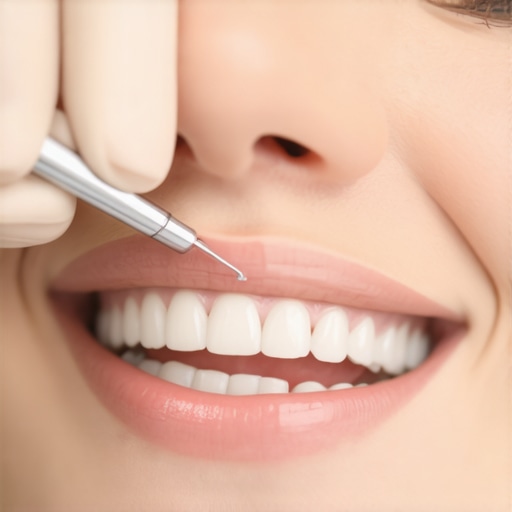
Adjust Your Chewing Patterns to Balance the Load
You might be tempted to ‘protect’ the new bridge by only eating on the other side, but this actually makes the heaviness feel worse because it creates a muscular imbalance. I remember trying to eat a sandwich and feeling like my jaw was tilting. Once I started consciously distributed the work across both sides, the ‘clunky’ sensation began to dissipate. While you are adapting, you also need to learn how to clean under a fixed dental bridge without using a needle threader to keep the area from becoming inflamed, which can add a feeling of pressure or thickness that isn’t actually there.
Watch Out for the High Bite Trap
Sometimes the ‘heavy’ feeling is actually a mechanical issue. If the reason your crown feels tall when you first bite down is because the bridge is just a fraction of a millimeter too high, your jaw muscles will never fully relax. This constant engagement of the masseter muscles creates a dull ache that we often interpret as weight. If you wake up and notice the reason your dental implant feels heavy when you first wake up is a localized throbbing, it’s time to head back to the office. A quick ten-minute adjustment where the dentist buffs down the porcelain can make that ‘lead’ feeling vanish instantly.
Why Texture Matters More Than You Think
We put a lot of effort into the aesthetics, but the way your tongue perceives the surface is what dictates comfort. We often use specific techniques for how we match the texture of a crown to your existing teeth so that the bridge doesn’t feel like a piece of glass in a mouth full of silk. If the bridge feels ‘gritty’ or ‘slick’ compared to your natural teeth, your brain will flag it as a foreign object. Over time, a thin layer of biofilm naturally coats the bridge, making it feel more like your organic anatomy. Give it a week before you decide the texture is the problem.
Why ‘Scrubbing Harder’ Is the Worst Thing for Your New Bridge
Most patients think that because their bridge is made of high-tech porcelain, they need to use ‘industrial’ strength cleaning to keep it pristine. This is actually a massive mistake. In my experience, aggressive brushing with high-abrasiveness whitening toothpastes doesn’t clean the bridge—it wears down the surrounding gum tissue. We often see cosmetic dentistry myths debunked by the fact that the most durable smiles are those treated with the gentlest care. If you over-brush, you’re creating inflammation that mimics a ‘heavy’ or ‘tight’ sensation. Instead, focus on modern teeth cleaning innovations that reduce sensitivity and boost results without the sandpaper effect.
Does your bridge feel heavier when you first wake up in the morning?
If that ‘lead sinker’ feeling is most intense before your first cup of coffee, the problem isn’t the bridge—it’s your jaw’s reaction to it. Many people don’t realize that their brain treats a new restoration like a puzzle piece it needs to ‘grind’ into place while they sleep. This nocturnal clenching, or bruxism, puts immense pressure on the periodontal ligaments of the anchor teeth. Research published in the Journal of Oral Rehabilitation shows that fixed dental prostheses distribute occlusal forces differently than natural teeth, which can lead to muscular fatigue if your bite isn’t perfectly calibrated. You might find the reason your dental implant feels heavy when you first wake up is identical to the bridge sensation: it’s all about muscle strain from trying to ‘settle’ the hardware. 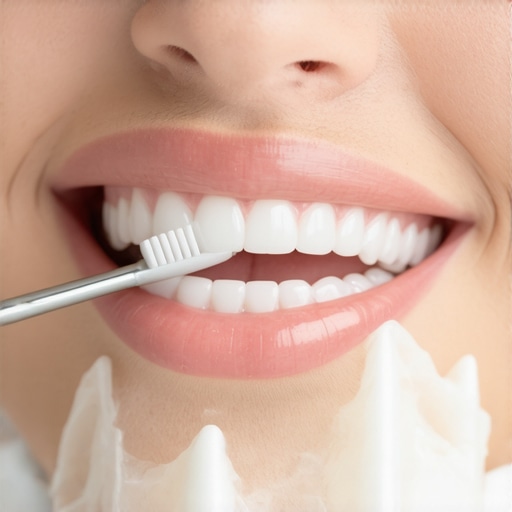
Proprioceptive Overload and the Bio-Emulation Myth
There is a common belief that a bridge should feel exactly like a natural tooth from minute one. However, the ‘nuance’ experts know is that porcelain has a much higher ‘Elastic Modulus’ than natural dentin. This means it doesn’t ‘give’ or flex when you chew. This lack of flex is what your brain interprets as weight. It’s not that the bridge is heavy; it’s that it is rigid. If you are also undergoing other treatments, like choosing the best Invisalign options for your lifestyle, you might already be familiar with how ‘rigid’ devices change your oral perception.
The Trap of DIY Aesthetic Maintenance
Another nuance most people miss is the interaction between chemical whiteners and porcelain. People often try to whiten their remaining natural teeth to match their bridge, but they end up with ‘bleach rebound’ or gum irritation. If you’re looking for cosmetic dentistry for discolored teeth, you must understand that porcelain doesn’t change color. Trying to force a match with over-the-counter strips can cause the gums around your bridge to swell, which makes the bridge feel ‘tighter’ or ‘fatter’ than it actually is. It’s better to follow teeth cleaning myths debunked by top dentists and stick to professional guidance rather than guessing in the bathroom mirror. Have you ever fallen into this trap of trying to ‘perfect’ your dental work at home and making it feel worse? Let me know in the comments below.Now that we’ve tackled the mental hurdle of the heavy feeling, let’s talk about the hardware side of the equation. If you want that bridge to last fifteen years instead of five, you have to treat it like a luxury vehicle, not a rental car. Personally, I stopped relying on traditional string floss the moment I realized I was just shredding the fiber against the porcelain edges. Instead, I transitioned to a high-end water flosser with a specialized orthodontic tip. This isn’t just a gadget; the Journal of Clinical Dentistry has shown that water flossing can be up to 50% more effective at reducing gingivitis than string floss around dental work. I set mine to a medium-low pulse to ensure I’m flushing out debris without traumatizing the gum attachment. If you’re currently choosing the best Invisalign options for your lifestyle or adjusting to a bridge, this one tool changes everything.
How do I maintain a perfect dental bridge for the next decade?
The secret lies in a concept called bio-maintenance. You aren’t just cleaning a tooth; you’re managing a biological interface. I recommend using a non-abrasive gel rather than a paste to avoid micro-scratches on the glaze. Micro-scratches are the primary reason how to know if your dental bonding is stained or actually decaying becomes a concern—stains love to hide in those tiny ruts. #IMAGE_PLACE_HOLDER_D#
Smart Tech Is the Future of Your Smile
Looking ahead, I predict we are less than five years away from smart bridges equipped with microscopic pH sensors that alert your smartphone when bacteria levels spike. Until that tech arrives, your best defense is modern teeth cleaning innovations that reduce sensitivity and boost results during your bi-annual visits. I always ask my hygienist to use an air-polishing system with glycine powder because it’s gentler on the margins of the bridge than traditional scraping. If you find the reason your dental implant feels heavy when you first wake up is lingering inflammation, this gentle approach is a game-changer.
Master the Angle to Protect the Seal
The most specific tip I can give you is the 45-degree flush. Most people aim their water flosser straight at the tooth, but you need to tilt it at a 45-degree angle toward the gum line to properly clear the pontic—the fake tooth in the middle. This prevents the buildup that leads to how to tell if your dental bridge needs to be resealed later on. Combining this with teeth cleaning for sensitive teeth protocols ensures your gums stay tight and pink. I challenge you to try the 45-degree flush tonight; you’ll be shocked at what your standard toothbrush has been leaving behind. Keeping up with maintaining your teeth cleaning routine for long-term health is the difference between a lifetime smile and a costly replacement.
The Reality Check I Needed Before My Bridge Felt Like Mine
The first lesson I learned is that your mouth is a sensory masterpiece; it notices everything. When that “heavy” feeling persists, it is often because we are mourning the empty space our tongue used to play with. If you have ever experienced Invisalign for adults, you know the feeling of “foreign objects” well, but a bridge is unique because it doesn’t come out. The second lesson? The mirror is your enemy for the first 48 hours. You will over-analyze the shape and thickness until your brain finally hits the “ignore” button. Finally, remember that the sensation of weight is almost always muscular tension from clenching, not the actual grams of porcelain.
My Non-Negotiable Kit for a Long-Lasting Smile
To keep my restoration feeling light and healthy, I’ve curated a specific toolkit. I swear by glycine-based teeth cleaning innovations because they don’t scratch the glaze. I also rely on a high-quality water flosser specifically designed for prosthetic margins. These tools ensure that the cosmetic dentistry insights I received from my pro are put to work every single day. I trust these methods because they focus on the biological seal of the gum, preventing the inflammation that makes a bridge feel “tight” or “fat” over time.
#IMAGE_PLACEHOLDER_E#
Reclaiming Your Confidence One Bite at a Time
That heavy sensation is simply the precursor to a life where you no longer have to think about your teeth at all. By maintaining your teeth cleaning routine with patience and the right tools, that “lead sinker” will soon become a part of you. Don’t let the initial adjustment period steal the joy of your new smile. You’ve invested in your health, and your brain just needs a few more days to catch up with the upgrade. Have you ever felt like your new dental work was “taking up too much space,” or did you adjust to your new bridge right away? Let me know below!