
I will never forget that first dinner after I got my molar crowned. I took one bite of a soft piece of sourdough bread and—*clack*—it felt like I had just slammed my jaw into a granite countertop. My new tooth was not just a tooth; it was a skyscraper that had arrived late to the party and decided to stand right in the middle of the dance floor. I felt immediate panic. I started worrying that my dentist had made a massive mistake or that I was going to have to live with a lopsided face forever. If you are currently poking at your new dental work with your tongue and wondering why things feel so incredibly “off,” I promise you are not alone in that frustration.
That Frustrating Mountain in Your Mouth
When I first started exploring the world of cosmetic dentistry, I made a classic mistake: I was way too polite. I sat there in the chair as the dentist asked, “How does that feel?” and I mumbled, “Fine, I think,” even though it felt like a marble was glued to my jaw. I wrongly assumed the tooth just needed to find its place. But here is the reality: your mouth is an engineering marvel of sensitivity. Research published in the Journal of Oral Rehabilitation indicates that the human mouth can detect objects as thin as 10 to 20 microns—which is significantly thinner than a single strand of human hair! This explains why the reason your new crown feels like a piece of popcorn is stuck is often just a microscopic misalignment that your brain perceives as a massive boulder. Today, I want to help you understand why this happens and why you should never just “tough it out.”
Should I just wait for it to wear down?
This is the most common question I get from friends who are nervous about being a “difficult” patient. You might be tempted to think that if you just chew enough, the porcelain will eventually flatten out. I am here to tell you that porcelain and dental gold are tougher than your natural enamel; they aren’t going to budge without professional help. Ignoring a high bite can lead to significant jaw pain, headaches, or even a fractured root if the pressure is centered on one spot for too long. If you have ever felt that specific reason your teeth feel sharp after a professional cleaning, you already know how distracting even a minor change to your oral landscape can be. Have you ever left the dentist’s office only to realize your bite was totally wonky the second you tried to eat your first meal? It is a jarring experience, but the solution is much simpler than you might fear.
Run the Tapping Test Yourself
Before you even pick up the phone to call your dentist, you can perform a quick diagnostic at home. I call it the ‘tapping test.’ When you are standing or sitting upright, tap your teeth together quickly and lightly. Do you feel one tooth hitting before all the others? Now, try the same thing while lying down. Because our jaw position shifts slightly when we change posture, a crown that feels fine while you are upright might suddenly feel like a mountain when you are trying to sleep. This is the same principle we use when performing the tapping test for a loose dental implant, though with a crown, we are looking for vertical height rather than stability. If you feel that singular point of contact, your bite is ‘high,’ and it needs a mechanical adjustment.
The Art of the Articulating Paper
When you head back to the office, the dentist isn’t just guessing where to trim. They use articulating paper, which is essentially the dental version of carbon paper. I remember a specific time when I had a porcelain veneer that felt slightly off. My dentist had me bite down on a strip of blue paper and grind my teeth back and forth. When I opened my mouth, there was a tiny, dark blue ‘bullseye’ on the back edge of the tooth. That mark is a roadmap; it shows exactly where the porcelain is too thick. They use a high-speed diamond bur to shave off mere microns of material. It’s a delicate dance because they also have to ensure they are maintaining the proper ‘occlusal anatomy’—basically, the hills and valleys of the tooth that allow you to chew. This is why how we match the texture of a crown to your existing teeth is so critical; if they smooth it out too much, it becomes a flat sliding board that doesn’t help you break down food.
Why Digital Scans Are the New Gold Standard
Sometimes, the paper test isn’t enough because your jaw muscles might be subconsciously avoiding the high spot during the test. This is where modern tech saves the day. Many top-tier offices now use digital bite-mapping sensors. These devices measure the force of every single tooth strike in real-time on a computer screen. I once saw a patient who had chronic jaw pain that they thought was a toothache. By using a digital scan, we realized their new bridge was taking 40% of the entire jaw’s force. It was a revelation. We often see similar precision when how we use digital scans to catch cavities that x-rays might miss, proving that what we can’t see with the naked eye is often the root of the problem.
Distinguish Between a High Bite and Tooth Sensitivity
It is important to note that a ‘high’ feeling isn’t always about the physical height of the porcelain. Sometimes, the ligament surrounding the tooth is simply inflamed from the procedure itself. If you’ve ever wondered how to tell if your jaw pain is actually a cavity versus a bite issue, look for the ‘rebound’ pain. If it hurts specifically when you release your bite, it’s likely an inflamed ligament. However, if your teeth feel generally shifty or unstable, you might be experiencing something similar to why your teeth feel loose during your invisalign treatment. In both cases, the solution isn’t to wait; it’s to have the alignment checked before the constant pressure causes the nerve to become permanently irritated, leading to a much more expensive root canal.
One of the most dangerous myths in modern oral care is that dental work should eventually “settle” on its own. In reality, your teeth are part of a closed system; if one tooth is too high, your jaw muscles will compensate by shifting your entire bite, often leading to TMJ issues you did not have before. In my experience, people often fall into the trap of thinking a professional cleaning is just about removing stains, but it is actually a vital “reset” for your mouth’s tactile sensors. You might notice the specific reason your teeth feel sharp after a professional cleaning is that your tongue is finally feeling the true architecture of your enamel without the “muffler” of plaque. According to a study in the Journal of Prosthetic Dentistry, the human jaw can detect discrepancies as small as 0.01mm. This is why cosmetic dentistry myths debunked by top dentists often focus on the fact that “pretty” does not always mean “functional.” If you are currently in the middle of a transformation, you might notice why your invisalign attachments feel like sandpaper on your inner lip, but do not ignore that feeling—it is your body’s way of flagging a mechanical error.
Can your brain detect a filling that is off by a hair?
The answer is a resounding yes. If you have ever felt like the reason your new crown feels like a piece of popcorn is stuck is driving you crazy, it is because your nerves are screaming for alignment. A common mistake I see is patients focusing only on the shade guide during cosmetic dentistry sessions while ignoring how the teeth actually meet. If the “hills and valleys” do not interlock perfectly, you risk chipping the very porcelain you just paid for. It is the same logic behind invisalign maintenance expert tips for clear confident smiles: the goal is not just a straight line, but a balanced bite. Have you ever fallen into the trap of thinking a high spot would just “go away”? Let me know in the comments. We should also address teeth cleaning myths debunked by top dentists, specifically the idea that over-polishing is harmless. In fact, aggressive polishing can sometimes lead to the same sensitivity issues as a high crown by thinning the protective layer of enamel. Always ensure your provider is looking at the 3D relationship of your teeth, not just the front-facing aesthetics. If you are unsure where to start, choosing the right dentist expert tips for your best smile journey can help you find a professional who values function as much as form.
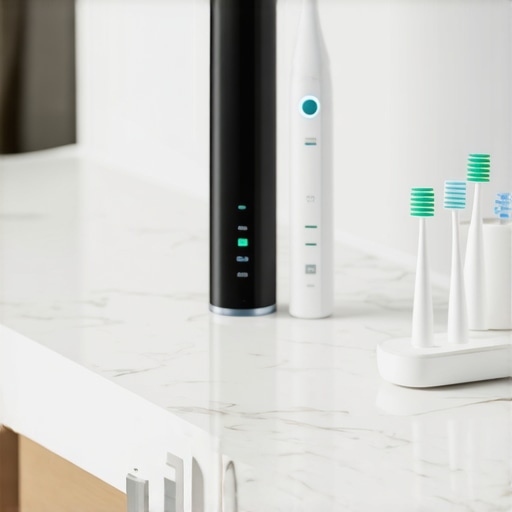
After investing significant time and money into your smile, the last thing you want is to let those results fade. I have learned that the gap between a ‘good’ smile and a ‘Hollywood’ smile often comes down to the specific gear you use at home once the professional work is done. I have become particularly obsessed with the science behind my tools. For instance, I moved away from manual brushing because of the fluid dynamics involved in sonic technology. According to a study published in the International Journal of Dental Hygiene, sonic toothbrushes provide ‘non-contact biofilm removal,’ which essentially means the high-frequency vibrations create micro-bubbles that can clean deep between teeth and under the gumline where bristles cannot physically reach. This is a crucial part of maintaining your teeth cleaning routine for long-term health, especially if you have complex restorations like bridges or crowns.
The Gear That Actually Keeps My Enamel Happy
I am often asked if a $200 toothbrush is really better than a $5 one, and the answer lies in the pressure sensors. Most people with new cosmetic dentistry work tend to over-brush out of fear, which can actually damage the gum tissue. I use the Philips Sonicare DiamondClean because it buzzes the second I press too hard. To complement this, I have replaced traditional string floss with interdental brushes for my back teeth. These are far more effective at addressing the strange reason your back molars bleed even when you floss daily. If you really want to level up, look into a T-Scan (digital bite analysis) during your next check-up. Unlike paper, it shows the timing and force of your bite in milliseconds, ensuring your cosmetic dentistry trends stay functional for decades rather than just a few years.
Stop the Invisalign Funk Before it Starts
For those currently in clear aligners, the maintenance is an entirely different beast. I quickly realized that soaking them in plain water wasn’t enough. To avoid the morning breath smell out of your invisalign case, I recommend using an ultrasonic cleaning pod. These devices use sound waves to shake loose every microscopic particle of plaque from your aligners while you eat breakfast. It is also the best way to get rid of the plastic taste from new aligners when you swap to a fresh tray. I predict that by 2026, we will see more AI-integrated dental apps that allow you to scan your teeth at home, giving you real-time feedback on your invisalign maintenance and alerting you if a tray isn’t seating properly before you even notice a problem.
How do I maintain these results over the long haul?
Consistency is your best friend, but so is knowing when to call in the pros. I schedule a professional cleaning every four months rather than the standard six because I’ve seen how regular teeth cleaning can prevent major dental issues before they require expensive surgery. You should also be mindful of the ‘stain window.’ After a professional cleaning, your teeth are actually more porous for about 48 hours. If you can, try the trick to making professional whitening last through your morning coffee by using a straw or rinsing with water immediately after. If you are unsure if your current routine is working, I challenge you to try the ‘disclosing tablet test’ tonight—these chewable tablets dye the remaining plaque pink, showing you exactly where you are missing. It’s a humbling but incredibly effective way to refine your technique and ensure your invisalign innovations actually lead to a perfect, healthy smile.
The Hardest Lesson I Learned About Listening to My Own Mouth
If there is one thing I have realized after years of dental work, it is that being a ‘good patient’ often means being an honest one. I used to think that the secret to a Hollywood smile was all about the final reveal in the mirror, but it is actually about the subtle clicks and taps you feel when no one is watching. My biggest lightbulb moment was discovering that a tiny adjustment today prevents a major headache tomorrow—literally. I also learned that cosmetic dentistry myths often trick us into thinking discomfort is just ‘part of the process.’ It is not. If you feel that ‘mountain’ in your mouth, trust your body over the clock; your nerves are more accurate than any visual inspection.
The Daily Toolkit for a Stress-Free Smile at Home
I trust these specific tools because they bridge the gap between what happens in the chair and what happens at my sink. First, I never skip using my ultrasonic pod for my trays; it is the only way I have found to truly succeed with invisalign maintenance. Second, I swear by interdental brushes for those tight back molars where traditional string floss always seems to shred or skip. Finally, I always ask my dentist for a T-Scan analysis instead of just the blue paper during my checkups; seeing the data on a screen removes all the guesswork from a high bite. This level of proactive care is essential for maintaining your teeth cleaning routine over decades, not just weeks.
Don’t Settle for a Smile That Only Looks Good
A truly successful dental journey is one where you feel as confident chewing a steak as you do posing for a photo. Your oral health is a living, breathing system that deserves precision and respect. Remember that how regular teeth cleaning can prevent major dental issues starts with you noticing the small things early. Do not be afraid to advocate for yourself; take that first step, call your dentist, and get that ‘skyscraper’ leveled. You deserve a bite that feels like it has always been there, perfectly balanced and pain-free. Have you ever had a crown or filling that felt ‘high’ even weeks after the appointment? Let me know your story in the comments below!