
I was sitting on my couch, halfway through a bowl of extra-crunchy popcorn—the exact snack my orthodontist warned me about—when I felt it. A sickening *click* against my lower molar. My tongue darted to the spot, only to find a metal bracket sliding aimlessly along the archwire like a stray bead on a string. It was 8:45 PM on a Friday. My dentist’s office was closed until Monday. Panic, swift and cold, set in. I’ve spent years obsessing over my smile, even researching cosmetic enhancements, so the thought of one loose piece of metal derailing my progress was terrifying. If you are reading this while staring at a rogue bracket in your bathroom mirror, take a deep breath. I’ve been there, and I’ve survived. Today, I’m going to share the neighborly advice I wish someone had given me during my first ortho-emergency.
My First Braces Crisis at 9 PM on a Friday
When I first started my journey toward a straighter smile, I thought I could outsmart the rules. I figured one little taco shell wouldn’t hurt. I was wrong. My biggest mistake early on? Trying to ‘fix’ the problem myself using a pair of tweezers and some super glue. Seriously, do not do that. It is a dangerous path that can lead to chemical burns or even permanent damage to your enamel. I learned the hard way that finding a pro who understands your goals is vital, but learning to handle the in-between moments is just as important. A loose bracket isn’t a reason to despair, but it is a call to action.
Is This Going to Ruin My Progress?
This is the number one question I get. The fear is that the second the bracket loosens, your tooth will snap back to its original position. Thankfully, that is just a myth. According to the American Association of Orthodontists, tooth movement is a slow, biological process involving bone remodeling. A few days of a loose bracket won’t undo months of work. The real issue is comfort and safety. When the bracket isn’t held tight, the wire can shift, leading to the dreaded ‘cheek-stab.’ I once ignored a poking wire during a camping trip and ended up with a mouth sore so painful I couldn’t enjoy the s’mores.
Stop the Poking and Save Your Cheeks
Your primary mission right now is stabilization. You aren’t trying to re-bond the metal; you’re trying to create a buffer. This is why having a solid dental care kit at home is non-negotiable. Whether you are dealing with a chipped tooth on a Sunday or a sliding bracket, the solution usually starts with orthodontic wax. Have you ever faced a dental disaster right when the office lights went dark? Tell me your story in the comments—we can compare popcorn-related battle scars! [image_placeholder] In the next section, I’ll walk you through the ‘dry-and-apply’ method that actually keeps wax in place, because we all know it never sticks when your teeth are wet.
Check the Damage Before You Touch Anything
First, get a bright light and a mirror. You need to see exactly what is going on before you start poking around. Is the bracket still attached to the wire, or is it dangling? Is the wire itself poking into your cheek? Think of your braces like a delicate suspension bridge; if one cable (bracket) comes loose, the others are still holding the weight, but the tension has shifted. If the bracket is still on the wire but sliding, your goal is to keep it from rubbing. If you were wearing aligners, you’d be looking for Invisalign maintenance tips, but with metal, we are playing a game of physical barriers. Use a clean toothpick or a Q-tip to gently nudge the bracket back to the center of the tooth if it has slid too far. Don’t use force. If it won’t move, leave it where it is.
Keep the Wax Stuck with the Dry-and-Apply Trick
This is where most people fail. They take a blob of wax, shove it onto a wet tooth, and wonder why it falls off thirty seconds later. Orthodontic wax is like a sticker—it refuses to bond to a slick, wet surface. I remember my first attempt; I was so frustrated that I almost gave up after the fifth piece of wax ended up in the back of my throat. The secret is total dehydration of the area.
How to Create a Moisture-Free Zone
Take a paper towel or a clean Q-tip and wipe the bracket and the surrounding tooth surface until it feels almost ‘squeaky.’ Then, take a small, pea-sized amount of wax and roll it between your fingers to warm it up. This makes it more pliable. Press it firmly over the bracket, molding it so it hooks around the edges of the metal. This creates a smooth ‘bumper’ that protects your soft tissue. If you find your teeth are generally sensitive during this process, you might find relief by learning about modern teeth cleaning innovations that help manage enamel health. 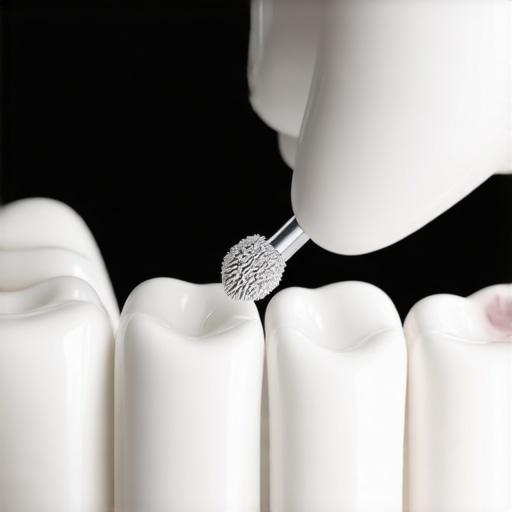
Manage the Wire Without Making it Worse
Sometimes the bracket isn’t the problem—it’s the long end of the wire that has been exposed because the bracket moved. If the wire is poking you, do not reach for the wire cutters in your garage. Those are way too blunt and can actually pull the entire archwire out of place. Instead, try using the eraser end of a pencil to gently tuck the wire back toward the tooth and away from your cheek. It’s a low-tech fix that works surprisingly well. If the wire is still causing a literal cut, you should treat it similarly to how to stop a sharp tooth from cutting your tongue, which involves creating a thick barrier of wax or even a small piece of sugarless gum in an absolute pinch. Keeping the area clean is also vital to prevent infection in any small cuts, much like how regular teeth cleaning can prevent major dental issues by removing irritants before they cause real trouble.
Shift to a Soft Food Protocol Immediately
The moment a bracket is compromised, your chewing mechanics change. Even if you’ve stabilized the piece with wax, the structural integrity of that section of your braces is gone. I once tried to eat a piece of crusty sourdough after ‘fixing’ a bracket with wax, and the first bite sent the bracket flying right off the wire. Stick to yogurt, mashed potatoes, or smoothies. You are trying to minimize the movement of your cheeks and jaw to keep that wax bumper in place. Think of it as a temporary lifestyle shift to protect your investment. If you are worried about your long-term alignment, remember that the emergency fix for a loose bracket is only meant to get you through the next 48 to 72 hours until you can get into the professional chair.Most people assume a white smile is a healthy one, but that is one of the biggest misconceptions in modern cosmetic care. I used to think the brighter the better, but the reason your teeth look yellow in the mirror but white in sunlight often comes down to the way light interacts with your enamel, not just surface stains. If you push whitening too far without professional guidance, you risk ‘over-etching’ your teeth. A study published in the Journal of Dentistry highlights that excessive peroxide use can alter the microhardness of enamel, making it more prone to future staining. Beyond the color, the ‘oops’ factor I see most often is people underestimating the complexity of clear aligners. It is tempting to think of them as simple plastic trays, but the real magic happens with those tiny, annoying bumps on your teeth. I know why your invisalign attachments feel like sandpaper against your cheeks, and while they are uncomfortable, they are the only reason your teeth move predictably. Without them, the plastic has nothing to grip. 
Why are my teeth still moving even though I wear my aligners?
If you feel like your progress has stalled, it might not be the tray—it could be your specific biology or the lack of proper ‘attachments’ to facilitate rotation. According to research in the American Journal of Orthodontics, certain tooth movements require precise anchorage that only a skilled professional can calibrate. This is why choosing the right dentist expert tips for your best smile journey is more about their technical grasp of physics than their office decor. Even your daily hygiene routine has hidden nuances; if you wonder why your teeth feel sticky only a few hours after brushing, it might be that your biofilm is maturing faster due to your diet or pH balance, rather than a lack of effort. Transitioning to modern teeth cleaning innovations that reduce sensitivity and boost results can help manage this without stripping your protective enamel layer. Have you ever fallen into the ‘whiter is always better’ trap? Let me know in the comments.Once you get past the initial shock of a loose bracket or the gritty feel of new attachments, the focus shifts to the long game. Maintenance isn’t just about avoiding emergency calls on a Friday night; it’s about protecting the thousands of dollars you’ve invested in your face. I used to be a ‘manual toothbrush and a prayer’ kind of person, but that changed when I realized that microscopic plaque doesn’t care about my good intentions.
The Tool That Finally Kept My Aligners Crystal Clear
If you are wearing trays, you know the struggle of them turning yellow or smelling like a science experiment by day four. I eventually invested in a small ultrasonic cleaner. It uses high-frequency sound waves to create cavitation bubbles that literally blast debris off the plastic without scratching it. This is a game-changer for Invisalign maintenance because manual scrubbing with a toothbrush actually creates micro-scratches where bacteria can hide. If you are constantly battling that foggy look, you should see my breakdown on how to clean the stubborn cloudiness off your night guard, as the same principles apply.
Why a Water Flosser Is Mandatory for Permanent Retainers
If your dentist installed a fixed wire behind your teeth, you’ve probably realized it’s a total food magnet. Trying to thread traditional floss back there is like trying to sew a button in a dark room. I switched to a high-pressure water flosser specifically because it can reach the periodontal pockets that a string simply can’t. If you find your gums are still tender, exploring teeth cleaning for sensitive teeth can help you find a setting that won’t cause discomfort while still clearing out the ‘junk.’ Dr. Greg J. Huang, a prominent researcher in orthodontics at the University of Washington, emphasizes that the period immediately following active treatment is the most critical for bone stabilization. Without meticulous hygiene, inflammation can actually trigger unwanted tooth movement. 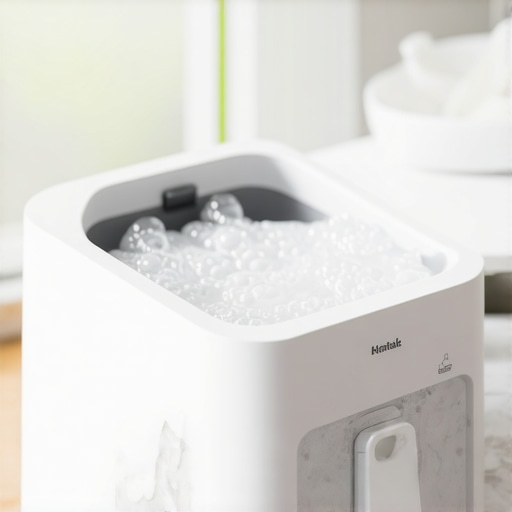
How do I maintain my alignment for the long haul?
The answer is simple but annoying: wear your retainers. However, the ‘how’ matters just as much as the ‘when.’ Many people don’t realize that retainers stretch out over time. I recommend a ‘fit test’ every Sunday night—if your retainer feels tighter than usual, it means your teeth tried to make a break for it during the week. This proactive approach is part of maintaining your teeth cleaning routine for long-term health. If you ever feel like your trays are suddenly loose, it might be time for a scan to ensure you haven’t hit a plateau.
Predicting the Next Wave of High-Tech Smile Care
Looking ahead, we are moving toward a world where your bathroom mirror might be your best diagnostic tool. I predict that within the next five years, we will see AI-integrated dental apps that use your smartphone camera to track enamel wear and minor shifts in real-time. We are already seeing modern teeth cleaning innovations that use bio-luminescent dyes to show you exactly where you missed a spot. The ‘guesswork’ of dental care is dying, and honestly, your wallet will thank you for it. My best advice? Grab an ultrasonic cleaner this week and see the difference it makes in your tray clarity; it’s the one tool I wish I had on day one.
Lessons from the Night the Wax Wouldn’t Stick
Reflecting on my journey, I’ve realized that a loose bracket is often just a rite of passage. One of the biggest cosmetic dentistry myths I used to believe was that treatment should be effortless. The truth is much more nuanced, and some of my biggest lightbulb moments came when things went wrong. First, I learned that patience is your best alignment tool; even if a bracket is loose for 48 hours, your teeth won’t migrate back to where they were ten years ago. Second, attachments are the silent heroes—while they feel like sandpaper, they are the anchors that make Invisalign for adults actually work. Finally, hygiene is the ultimate insurance policy. You aren’t just cleaning teeth; you’re protecting the bone density that allows your smile to shift safely and permanently. #IMAGE_PLACE_HOLDER_E#
The Kit I Actually Use to Stay Ahead of Problems
I’ve tested dozens of gadgets, but only a few remain essential for maintaining your teeth cleaning routine. I swear by a high-quality water flosser; it’s the only way to navigate the “food traps” inherent in permanent retainers and brackets without losing your mind. I also keep a digital folder of my “before” photos on my phone; on the days when the metal is annoying, looking at how far I’ve come is the best motivation. Sharing these teeth cleaning secrets with friends has helped me realize we are all just trying to keep our enamel intact one day at a time.
Believe in the Power of Your Future Smile
It’s easy to feel frustrated when a piece of metal fails at the worst possible time, but don’t let a temporary glitch discourage you. Every time you dry a tooth and apply a piece of wax, you are actively participating in your own transformation. The end result of choosing the right dentist and following through with the boring daily maintenance is a level of confidence you simply can’t buy at a drugstore. Take a breath, call the office in the morning, and keep moving forward toward your goal. Have you ever had a dental emergency strike during a vacation or a big event? Let me know in the comments!