
I once spent an entire three-hour flight trying to scratch the back of my front teeth with my tongue. It was maddening. It wasn’t exactly pain, but a persistent, ticklish sensation that made me feel like I was losing my mind. I tried drinking ice water, I tried pressing on my palate, and I even went into the tiny airplane bathroom to see if I could spot a stray piece of spinach. Nothing. That experience taught me that oral discomfort isn’t always about cavities; sometimes, it’s about a ‘phantom itch’ that signals something deeper is going on with your health. If you are currently sitting there rubbing your tongue against the roof of your mouth, I promise we are going to get you some answers today. We will look at why that specific spot behind your incisors is so sensitive and how you can stop the tickle for good.
What’s Really Happening Behind Those Front Teeth
That area behind your top front teeth is called the incisive papilla. It is a small, sensitive bump of tissue that sits right over a bony opening for nerves and blood vessels. Because of its location, it is the first thing hit by hot coffee, sharp chips, and—unfortunately—bacteria. I made a huge mistake early on by assuming my itchy gums were just a weird quirk of my allergies. I ignored it for weeks, only to realize later that I had been neglecting my 101-level hygiene. I should have been looking into teeth cleaning secrets instead of just hoping it would vanish. When plaque builds up right at that gum line, your body’s inflammatory response kicks in. That ‘itch’ is often just a low-level alarm bell. Have you ever felt this specific itch after a weekend of heavy snacking or a long stretch without flossing? It’s more common than you think.
Can a Simple Itch Mean Something Is Seriously Wrong?
It is easy to get caught up in ‘Dr. Google’ and assume the worst, but usually, that itch is a sign of localized irritation. However, you shouldn’t dismiss it entirely. According to the American Academy of Periodontology, localized itching in the gingival tissue can be one of the earliest clinical signs of gingivitis, which currently affects nearly half of all adults in the United States over the age of 30. It is your body’s ‘smoke alarm’ before the actual fire of gum disease starts. If you’ve been feeling this, it might be time to stop guessing and start finding a dentist who gets your smile to ensure your gums aren’t receding or becoming chronically inflamed. Even if you think your routine is solid, you might be surprised by how regular teeth cleaning can prevent major dental issues that start with nothing more than a tiny tickle. Understanding why this happens is the first step toward reclaiming your focus and your comfort. Now, let’s break down the five most likely reasons your mouth is acting up.
Clean the Blind Spot with Precision
Think of the area behind your front teeth like the space behind a heavy dresser: it’s rarely seen, hard to reach, and gathers dust—or in this case, biofilm—faster than you’d think. Most of us brush the ‘smile side’ of our teeth for the camera, but we neglect the lingual side. To stop the itch, you have to master the 45-degree tilt. Don’t just move the brush back and forth horizontally. Angle the bristles upward toward the gum line and use small, vibrating circles. This reaches the sulcus, the tiny pocket where bacteria hide. If you find that why your teeth feel sticky only a few hours after brushing is a constant battle, it is likely because you’re missing these crevices. When I first started focusing on this spot, I realized I’d been leaving a thin film of plaque there for years. That film eventually hardens into tartar, creating a rough texture that your tongue cannot help but rub against. 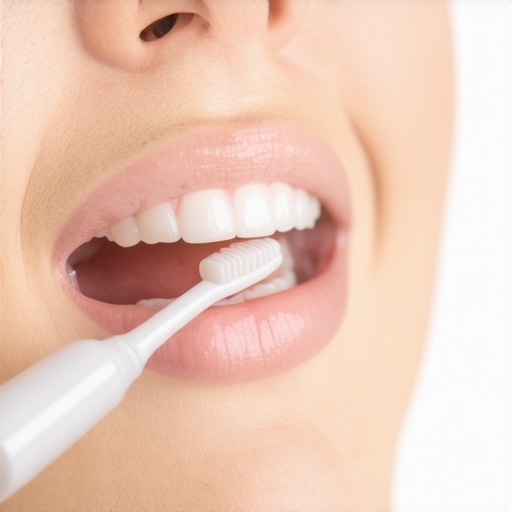
Stop Prodding and Start Soothing the Palate
It is incredibly tempting to use your tongue or even a fingernail to ‘scratch’ the itch behind your incisors. Resist that urge. The tissue here is delicate and sits right over the incisive canal. If you’ve recently scorched your mouth on a slice of pepperoni pizza, you’re likely dealing with ‘pizza palate.’ This thermal trauma causes the tissue to inflame and itch as it heals. Instead of irritating it further, learn the best way to soothe a burn on the roof of your mouth by using lukewarm saline rinses rather than ice-cold water, which can actually shock the nerves further. Avoid spicy or acidic foods for 48 hours to give the incisive papilla time to recover without constant chemical irritation.
Check for Trapped Debris Near the Papilla
I remember a Tuesday night when I was convinced I had a major gum infection. The area behind my two front teeth was throbbing and felt ‘tight.’ After twenty minutes of frantic mirror-gymnastics with a flashlight, I found the culprit: a microscopic hull from a popcorn kernel. I had to carefully figure out how to safely remove a piece of popcorn stuck under your gum line without lacerating the tissue. If you feel a sharp, localized itch that won’t go away, it is almost always physical. Use a piece of waxed floss and make a ‘C’ shape around the tooth, gently sliding it under the gum margin. Never ‘snap’ the floss, or you’ll cause a secondary injury that itches even worse as it heals.
Manage Aligner and Retainer Friction
If you are currently in the middle of orthodontic treatment, that itch might be a sign of mechanical irritation. Aligning trays are fantastic for aesthetics, but they can trap saliva and bacteria against that sensitive bump of tissue for 22 hours a day. I noticed a massive difference in my comfort levels once I learned how to stop your invisalign trays from smelling like old saliva, because clean trays mean less bacterial load on your palate. Sometimes the edge of the tray is just a fraction of a millimeter too long, causing a ‘constant rub’ that feels like an itch. If you are struggling with a rough edge, you might also need to know how to handle a loose invisalign attachment on a saturday night if the attachment itself is catching on your tongue and causing that phantom sensation. Furthermore, if you’re wondering why your invisalign trays feel tighter on some days than others, it’s usually due to active tooth movement, which can radiate pressure to the central nerve point behind your teeth, mimicking a tickle or a persistent itch.Most people assume that if their teeth look white, their gums must be healthy. I used to think that way too, until I realized that ‘white’ does not always equate to ‘clean.’ In fact, many people who obsess over aesthetics fall into a dangerous trap: over-whitening. This can lead to chemical sensitivity that feels suspiciously like a deep-seated itch or a phantom tickle. If you have noticed your gums feeling raw or sensitive after a home treatment, you might be falling for one of the many cosmetic dentistry myths debunked by top professionals. Real oral health isn’t just about the shade of your enamel; it is about the biological integrity of the tissue behind it.
Stop Chasing the Scrub and Start Focusing on the Film
Here is the nuance that most people miss: Professional cleanings are not just about removing coffee stains; they are about disrupting the ‘biofilm architecture’ that your manual toothbrush simply cannot reach. If you are only focused on the front-facing surface for photos, you are ignoring the complex lingual environment where that annoying itch actually lives. I have seen patients spend thousands on the ultimate guide to teeth whitening and cosmetic enhancements while completely ignoring the foundation of their oral health. If your gums are itchy and inflamed, even the most expensive veneers will feel uncomfortable. The ‘Oops’ factor here is assuming that aggressive brushing will kill the itch. In reality, scrubbing the incisive papilla too hard can cause micro-tears that invite more bacteria in, creating a cycle of chronic irritation. 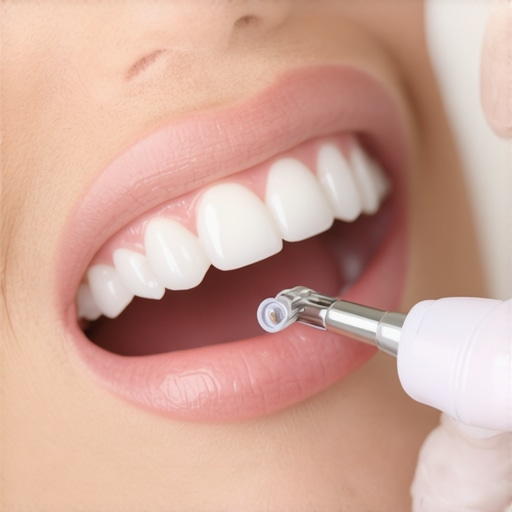
Why Does the Itch Persist After Your Professional Scaling?
It is incredibly frustrating to leave the dentist’s chair only to feel that familiar tickle return forty-eight hours later. This often happens because of rapid bacterial ‘recolonization.’ According to research published in the Journal of Clinical Periodontology, bacterial biofilm can begin to re-establish its complex structure in as little as 4 to 12 hours after a professional cleaning. This is why maintaining your teeth cleaning routine for long-term health is a 24/7 commitment, not a twice-a-year event. Many of the modern teeth cleaning innovations that reduce sensitivity and boost results are designed to slow this regrowth, but they are only effective if your home care is surgical in its precision. Don’t fall into the trap of thinking a ‘deep cleaning’ is a one-and-done cure. If you ignore the daily maintenance of that ‘blind spot’ behind your front teeth, the itch will return because the bacteria are experts at hiding in those shadows. The biggest mistake? Using harsh, alcohol-based mouthwashes to ‘sanitize’ the itch. This actually dries out the delicate mucosa and makes the sensation twice as intense. Instead, look into teeth cleaning tips for a brighter smile this spring that focus on balancing your oral microbiome rather than using scorched-earth tactics. Have you ever fallen into the ‘over-brushing’ trap trying to scratch an internal itch? Let me know in the comments below, because I’ve definitely been there.
Upgrade Your Toolkit for the Hard-to-Reach Spots
I used to think my standard manual toothbrush was enough until I realized it couldn’t even navigate the curve of my incisors. Now, I personally swear by an oscillating electric brush with a dedicated pressure sensor. Why? Because the pressure sensor prevents you from scrubbing the life out of your incisive papilla while still disrupting that stubborn biofilm. If you are dealing with chronic sensitivity, you need to look at teeth cleaning for sensitive teeth what works best in 2025 to find tools that won’t leave your gums raw. I also added a water flosser to my nightly routine, not as a replacement for string floss, but as a ‘power wash’ for the lingual side of my teeth. It’s the only way I’ve found to effectively clear out the debris that causes that maddening tickle. For those of us who can’t live without caffeine, I’ve had to master the secret to drinking iced coffee with Invisalign without staining your teeth, which includes a quick rinse immediately after finishing the cup to ensure no sugars sit behind those front teeth. 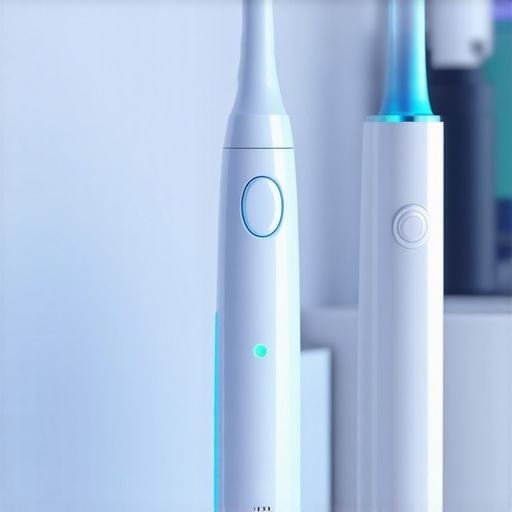
How do I maintain a healthy oral microbiome over time?
Maintenance isn’t just about the physical removal of gunk; it’s about the chemistry of your mouth. According to a study published in the Journal of Oral Microbiology, the use of oral probiotics containing S. salivarius K12 can significantly reduce the population of inflammatory bacteria that cause gingival itching and bad breath. I started using these dissolved lozenges at night, and the ‘sticky’ feeling I used to wake up with vanished within a week. You also need to stay on top of your hardware. If you are wearing aligners, following Invisalign maintenance expert tips for clear confident smiles is non-negotiable. If you let those trays get cloudy, you are essentially strapping a bacterial petri dish to the very spot that’s itching. Consistent care is the difference between a mouth that feels ‘fine’ and one that feels genuinely clean.
The Future of Precision Oral Care
We are moving toward a world where your toothbrush will likely analyze your saliva in real-time to tell you exactly which bacteria are causing your gum irritation. Until then, we have to be our own advocates. I predict that ‘microbiome balancing’ will soon replace ‘aggressive whitening’ as the biggest trend in the industry. People are starting to realize that why Invisalign is the future of clear braces isn’t just about the look; it’s about the ability to maintain superior hygiene during treatment compared to metal brackets. If you want to stop the itch for good, I challenge you to try one advanced tip tonight: use a high-quality tongue scraper followed by a salt-water rinse instead of a harsh alcohol mouthwash. Your gums will thank you. If the sensation persists, it’s time to stop DIY-ing your health and start how to choose a dentist for your Invisalign transformation or general care to get a professional evaluation.I once spent an entire three-hour flight trying to scratch the back of my front teeth with my tongue. It was maddening. It wasn’t exactly pain, but a persistent, ticklish sensation that made me feel like I was losing my mind. I tried drinking ice water, I tried pressing on my palate, and I even went into the tiny airplane bathroom to see if I could spot a stray piece of spinach. Nothing. That experience taught me that oral discomfort isn’t always about cavities; sometimes, it’s about a ‘phantom itch’ that signals something deeper is going on with your health. If you are currently sitting there rubbing your tongue against the roof of your mouth, I promise we are going to get you some answers today. We will look at why that specific spot behind your incisors is so sensitive and how you can stop the tickle for good.
What’s Really Happening Behind Those Front Teeth
That area behind your top front teeth is called the incisive papilla. It is a small, sensitive bump of tissue that sits right over a bony opening for nerves and blood vessels. Because of its location, it is the first thing hit by hot coffee, sharp chips, and—unfortunately—bacteria. I made a huge mistake early on by assuming my itchy gums were just a weird quirk of my allergies. I ignored it for weeks, only to realize later that I had been neglecting my 101-level hygiene. I should have been looking into teeth cleaning secrets instead of just hoping it would vanish. When plaque builds up right at that gum line, your body’s inflammatory response kicks in. That ‘itch’ is often just a low-level alarm bell. Have you ever felt this specific itch after a weekend of heavy snacking or a long stretch without flossing? It’s more common than you think.
Can a Simple Itch Mean Something Is Seriously Wrong?
It is easy to get caught up in ‘Dr. Google’ and assume the worst, but usually, that itch is a sign of localized irritation. However, you shouldn’t dismiss it entirely. According to the American Academy of Periodontology, localized itching in the gingival tissue can be one of the earliest clinical signs of gingivitis, which currently affects nearly half of all adults in the United States over the age of 30. It is your body’s ‘smoke alarm’ before the actual fire of gum disease starts. If you’ve been feeling this, it might be time to stop guessing and start finding a dentist who gets your smile to ensure your gums aren’t receding or becoming chronically inflamed. Even if you think your routine is solid, you might be surprised by how regular teeth cleaning can prevent major dental issues that start with nothing more than a tiny tickle. Understanding why this happens is the first step toward reclaiming your focus and your comfort. Now, let’s break down the five most likely reasons your mouth is acting up.
Clean the Blind Spot with Precision
Think of the area behind your front teeth like the space behind a heavy dresser: it’s rarely seen, hard to reach, and gathers dust—or in this case, biofilm—faster than you’d think. Most of us brush the ‘smile side’ of our teeth for the camera, but we neglect the lingual side. To stop the itch, you have to master the 45-degree tilt. Don’t just move the brush back and forth horizontally. Angle the bristles upward toward the gum line and use small, vibrating circles. This reaches the sulcus, the tiny pocket where bacteria hide. If you find that why your teeth feel sticky only a few hours after brushing is a constant battle, it is likely because you’re missing these crevices. When I first started focusing on this spot, I realized I’d been leaving a thin film of plaque there for years. That film eventually hardens into tartar, creating a rough texture that your tongue cannot help but rub against.
Stop Prodding and Start Soothing the Palate
It is incredibly tempting to use your tongue or even a fingernail to ‘scratch’ the itch behind your incisors. Resist that urge. The tissue here is delicate and sits right over the incisive canal. If you’ve recently scorched your mouth on a slice of pepperoni pizza, you’re likely dealing with ‘pizza palate.’ This thermal trauma causes the tissue to inflame and itch as it heals. Instead of irritating it further, learn the best way to soothe a burn on the roof of your mouth by using lukewarm saline rinses rather than ice-cold water, which can actually shock the nerves further. Avoid spicy or acidic foods for 48 hours to give the incisive papilla time to recover without constant chemical irritation.
Check for Trapped Debris Near the Papilla
I remember a Tuesday night when I was convinced I had a major gum infection. The area behind my two front teeth was throbbing and felt ‘tight.’ After twenty minutes of frantic mirror-gymnastics with a flashlight, I found the culprit: a microscopic hull from a popcorn kernel. I had to carefully figure out how to safely remove a piece of popcorn stuck under your gum line without lacerating the tissue. If you feel a sharp, localized itch that won’t go away, it is almost always physical. Use a piece of waxed floss and make a ‘C’ shape around the tooth, gently sliding it under the gum margin. Never ‘snap’ the floss, or you’ll cause a secondary injury that itches even worse as it heals.
Manage Aligner and Retainer Friction
If you are currently in the middle of orthodontic treatment, that itch might be a sign of mechanical irritation. Aligning trays are fantastic for aesthetics, but they can trap saliva and bacteria against that sensitive bump of tissue for 22 hours a day. I noticed a massive difference in my comfort levels once I learned how to stop your invisalign trays from smelling like old saliva, because clean trays mean less bacterial load on your palate. Sometimes the edge of the tray is just a fraction of a millimeter too long, causing a ‘constant rub’ that feels like an itch. If you are struggling with a rough edge, you might also need to know how to handle a loose invisalign attachment on a saturday night if the attachment itself is catching on your tongue and causing that phantom sensation. Furthermore, if you’re wondering why your invisalign trays feel tighter on some days than others, it’s usually due to active tooth movement, which can radiate pressure to the central nerve point behind your teeth, mimicking a tickle or a persistent itch.Most people assume that if their teeth look white, their gums must be healthy. I used to think that way too, until I realized that ‘white’ does not always equate to ‘clean.’ In fact, many people who obsess over aesthetics fall into a dangerous trap: over-whitening. This can lead to chemical sensitivity that feels suspiciously like a deep-seated itch or a phantom tickle. If you have noticed your gums feeling raw or sensitive after a home treatment, you might be falling for one of the many cosmetic dentistry myths debunked by top professionals. Real oral health isn’t just about the shade of your enamel; it is about the biological integrity of the tissue behind it.
Stop Chasing the Scrub and Start Focusing on the Film
Here is the nuance that most people miss: Professional cleanings are not just about removing coffee stains; they are about disrupting the ‘biofilm architecture’ that your manual toothbrush simply cannot reach. If you are only focused on the front-facing surface for photos, you are ignoring the complex lingual environment where that annoying itch actually lives. I have seen patients spend thousands on the ultimate guide to teeth whitening and cosmetic enhancements while completely ignoring the foundation of their oral health. If your gums are itchy and inflamed, even the most expensive veneers will feel uncomfortable. The ‘Oops’ factor here is assuming that aggressive brushing will kill the itch. In reality, scrubbing the incisive papilla too hard can cause micro-tears that invite more bacteria in, creating a cycle of chronic irritation.
Why Does the Itch Persist After Your Professional Scaling?
It is incredibly frustrating to leave the dentist’s chair only to feel that familiar tickle return forty-eight hours later. This often happens because of rapid bacterial ‘recolonization.’ According to research published in the Journal of Clinical Periodontology, bacterial biofilm can begin to re-establish its complex structure in as little as 4 to 12 hours after a professional cleaning. This is why maintaining your teeth cleaning routine for long-term health is a 24/7 commitment, not a twice-a-year event. Many of the modern teeth cleaning innovations that reduce sensitivity and boost results are designed to slow this regrowth, but they are only effective if your home care is surgical in its precision. Don’t fall into the trap of thinking a ‘deep cleaning’ is a one-and-done cure. If you ignore the daily maintenance of that ‘blind spot’ behind your front teeth, the itch will return because the bacteria are experts at hiding in those shadows. The biggest mistake? Using harsh, alcohol-based mouthwashes to ‘sanitize’ the itch. This actually dries out the delicate mucosa and makes the sensation twice as intense. Instead, look into teeth cleaning tips for a brighter smile this spring that focus on balancing your oral microbiome rather than using scorched-earth tactics. Have you ever fallen into the ‘over-brushing’ trap trying to scratch an internal itch? Let me know in the comments below, because I’ve definitely been there.
Upgrade Your Toolkit for the Hard-to-Reach Spots
I used to think my standard manual toothbrush was enough until I realized it couldn’t even navigate the curve of my incisors. Now, I personally swear by an oscillating electric brush with a dedicated pressure sensor. Why? Because the pressure sensor prevents you from scrubbing the life out of your incisive papilla while still disrupting that stubborn biofilm. If you are dealing with chronic sensitivity, you need to look at teeth cleaning for sensitive teeth what works best in 2025 to find tools that won’t leave your gums raw. I also added a water flosser to my nightly routine, not as a replacement for string floss, but as a ‘power wash’ for the lingual side of my teeth. It’s the only way I’ve found to effectively clear out the debris that causes that maddening tickle. For those of us who can’t live without caffeine, I’ve had to master the secret to drinking iced coffee with Invisalign without staining your teeth, which includes a quick rinse immediately after finishing the cup to ensure no sugars sit behind those front teeth.
How do I maintain a healthy oral microbiome over time?
Maintenance isn’t just about the physical removal of gunk; it’s about the chemistry of your mouth. According to a study published in the Journal of Oral Microbiology, the use of oral probiotics containing S. salivarius K12 can significantly reduce the population of inflammatory bacteria that cause gingival itching and bad breath. I started using these dissolved lozenges at night, and the ‘sticky’ feeling I used to wake up with vanished within a week. You also need to stay on top of your hardware. If you are wearing aligners, following Invisalign maintenance expert tips for clear confident smiles is non-negotiable. If you let those trays get cloudy, you are essentially strapping a bacterial petri dish to the very spot that’s itching. Consistent care is the difference between a mouth that feels ‘fine’ and one that feels genuinely clean.
The Future of Precision Oral Care
We are moving toward a world where your toothbrush will likely analyze your saliva in real-time to tell you exactly which bacteria are causing your gum irritation. Until then, we have to be our own advocates. I predict that ‘microbiome balancing’ will soon replace ‘aggressive whitening’ as the biggest trend in the industry. People are starting to realize that why Invisalign is the future of clear braces isn’t just about the look; it’s about the ability to maintain superior hygiene during treatment compared to metal brackets. If you want to stop the itch for good, I challenge you to try one advanced tip tonight: use a high-quality tongue scraper followed by a salt-water rinse instead of a harsh alcohol mouthwash. Your gums will thank you. If the sensation persists, it’s time to stop DIY-ing your health and start how to choose a dentist for your Invisalign transformation or general care to get a professional evaluation.
Three Crucial Realizations That Stopped My Chronic Gum Itch
After years of trial and error, I finally understood that the tissue behind my teeth wasn’t just ‘there’—it was actively communicating with me. First, I realized that bleeding or itching isn’t a signal to scrub harder; it’s a signal to be more gentle and consistent. Second, I learned that my diet played a massive role; high-sugar weekends almost always resulted in a ‘spongy’ feeling the following Monday. Third, and most importantly, I discovered that some teeth cleaning myths debunked by top dentists are true—you really can’t out-brush a bad technique. Focusing on the vibration of the bristles rather than the force of my hand was the ultimate game-changer for my oral comfort.
The Only Tools You Actually Need for a Calm Palate
You don’t need a drawer full of gadgets, but you do need precision. I personally trust a few specific items to keep my incisive papilla from acting up. A soft-bristled electric brush with a pressure sensor is non-negotiable for anyone prone to irritation. I also recommend a high-quality tongue scraper—it removes the bacteria that migrate from the back of the tongue to the roof of the mouth. If you’re unsure where to start your journey toward a healthier mouth, I suggest choosing the right dentist expert tips for your best smile journey to find a professional who values preventative care as much as you do. Finally, never underestimate the power of a simple saltwater rinse; it’s the most cost-effective anti-inflammatory tool in existence.#IMAGE_PLACE_HOLDER_E#
Your Path to a Permanent State of Comfort
The journey to a healthy smile is never really finished, but the ‘maddening’ phase of oral discomfort definitely can be. By paying attention to the lingual side of your teeth and respecting the delicate nature of your gum tissue, you are doing more for your longevity than any whitening treatment ever could. Whether you are inspired by Invisalign success stories real patients real transformations or you just want to eat a piece of fruit without pain, the key is consistency. Don’t be afraid to ask for help if the itch persists; reaching out to a professional through a contact us page is the first step toward a worry-free smile. Your teeth cleaning routine is the foundation of your confidence—treat it with the respect it deserves. Have you ever felt that annoying tickle behind your front teeth after a holiday weekend? What worked for you? Let me know in the comments below!