
I will never forget the sound—that sharp, hollow ‘clack’ when my cousin’s front tooth met the edge of a swimming pool. One second he was laughing, and the next he was holding his mouth in shock while his incisor rested on the concrete. We all panicked. My first instinct back then was to grab it by the root and scrub it under hot water to get the pool chemicals off. Looking back, that was the absolute worst thing I could have done. I almost ruined his chances of a successful replant because I didn’t know the basics of tooth survival. If you are reading this because you are in the middle of a crisis, take a deep breath. We are going to fix this, but you need to act fast and follow these specific steps to ensure the best outcome.
Don’t Just Stand There Staring at the Sidewalk
The moments immediately following a dental trauma are the most critical for your long-term health. When a tooth is knocked out, the clock starts ticking on those tiny, living cells on the root surface known as the periodontal ligament. If those cells die or are scrubbed away, the tooth cannot reattach to the jawbone. I’ve seen patients try everything from wrapping the tooth in a dry tissue to putting it in a glass of tap water. Neither of those is a long-term solution. If you are currently dealing with a loose tooth caused by a sports injury or a full avulsion, the way you transport that tooth to our office is the difference between a simple replantation and a future of expensive implants.
Is it actually possible to put a tooth back in?
Many people assume that once a tooth is out, it is essentially ‘dead’ and destined for the trash. I used to think the same thing until I saw the science in action! The reality is much more hopeful than you might expect. According to the American Association of Endodontists, a tooth that is kept moist and treated by a professional within 30 to 60 minutes has a remarkably high success rate for being saved. It is not just about the aesthetics of your smile; it is about preserving your natural bone structure. Whether you are worried about what to do if your child knocks out a permanent front tooth or it is your own smile on the line, the storage medium matters more than the speed of your car. Have you ever found yourself in a dental emergency and felt totally unprepared for the blood and the stress? It is a scary feeling, but you are not alone. Please contact us immediately so we can prepare the treatment room for your arrival and talk you through the storage process over the phone.
Pick it up by the crown or lose it forever
Think of the tooth like a lightbulb. If you grab it by the glass (the crown), you are fine. If you grab it by the delicate wiring at the bottom (the root), you have just broken the connection. The root is covered in microscopic fibers that act like living velcro to hold the tooth in your jaw. Once you touch those fibers, you crush them. I once saw a dad at a Little League game pick up his son’s tooth and wipe it on his jeans to get the dirt off. My heart sank. By cleaning it, he was essentially sanding off the tooth’s only hope of survival. If it is dirty, hold it by the chewing surface and let cool water flow over it for no more than ten seconds. No soap, no scrubbing, and definitely no chemicals. If you are dealing with a different kind of damage, like how to stop a small chip in your tooth from getting bigger before your appointment, the urgency is lower, but for an avulsed tooth, every second of exposure to the air is an enemy. 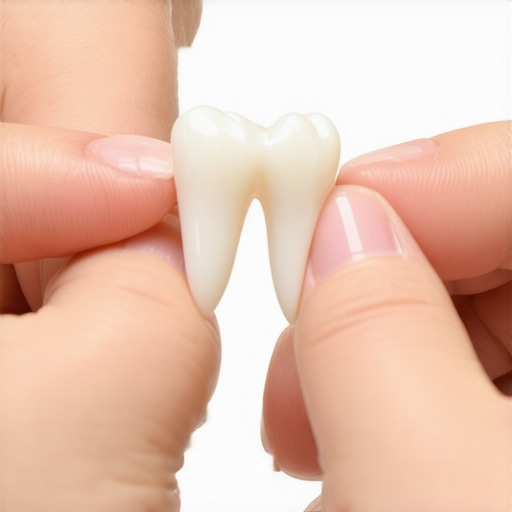
Your mouth is the best transport case you own
If you are brave enough and the person is conscious, the absolute best place for that tooth is back in its socket. Line it up and gently bite down on a piece of gauze or a clean cloth to hold it in place. It sounds gruesome, but your own body is the perfect incubator. If that isn’t an option, the next best thing is a small container of whole milk. Why milk? It has a pH level and proteins that keep those root cells happy and prevents them from swelling and bursting. I remember a high school soccer game where a teammate took an elbow to the face. The coach almost rinsed the tooth with Gatorade, which would have been a disaster because the acidity would have killed the cells instantly. I stepped in, grabbed a carton of milk from the snack bar, and kept the tooth submerged until we got to the clinic. That tooth survived because we did not let it dry out. Avoid tap water for long-term storage; the chlorine is toxic to the roots.
What if you do not have milk on hand?
In a pinch, have the patient spit into a cup and submerge the tooth in their own saliva. It is not pretty, but it works. While how regular teeth cleaning can prevent major dental issues is our usual focus, this is a moment where biology trumps routine hygiene. Just like you need the exact way to rinse your mouth after a tooth extraction to heal properly, you need the right environment to keep a ‘live’ tooth from dying. If you are currently in the middle of orthodontic treatment, do not let this distract you from your invisalign maintenance expert tips for clear confident smiles, but prioritize the trauma first. The goal is simple: keep the tooth wet, keep the root untouched, and get to a dental professional within sixty minutes.But getting to the office is just the first hurdle. Once the immediate crisis is over, I often see patients fall into a secondary trap: the obsession with a ‘perfect’ restoration that actually compromises their biology. Let’s dig deeper into what we frequently get wrong about long-term dental success and why the ‘more is better’ approach is a recipe for disaster.
Stop chasing ‘Hollywood White’ at the expense of your enamel
Most people believe that the whiter a tooth is, the healthier it must be. This is one of the most persistent cosmetic dentistry myths debunked in my daily practice. In reality, a natural tooth has a slight translucency and a hint of warmth from the underlying dentin. When you over-whiten, you aren’t just removing stains; you are potentially dehydrating the tooth and stripping away the prismatic structure of the enamel. This is precisely the reason your front teeth look transparent at the very bottom. If you can see through the edges of your teeth, you haven’t achieved a ‘clean’ look—you’ve achieved structural thinning. A study published in the Journal of Dentistry confirmed that excessive bleaching can reduce enamel microhardness, making your ‘perfect’ smile more prone to chipping than it was before you started. 
The hidden danger of the ‘squeaky clean’ sensation
We are taught from childhood that if a little brushing is good, a lot of hard brushing is better. This is a massive ‘oops’ factor that leads to irreversible gum recession and enamel wear. I call it the ‘Aggressive Brusher Syndrome.’ You might feel like you’re being thorough, but you’re actually performing a slow-motion extraction of your own gum tissue. If you find yourself replacing your toothbrush every month because the bristles are splayed, you are doing it wrong. Understanding teeth cleaning myths debunked by top dentists is essential because modern care is about bio-management, not abrasive scrubbing. We now utilize modern teeth cleaning innovations that reduce sensitivity and preserve the delicate margin where your tooth meets your gum, which is far more important for longevity than how hard you can scrub.
Why do your aligners feel tighter on some days than others?
Even patients who are diligent with their orthodontic care often get frustrated by the fluctuating fit of their trays. They assume the plastic is warping or they haven’t worn them enough, but the nuance usually lies in systemic inflammation or microscopic tooth movement. This is exactly why your invisalign trays feel tighter on some days than others. Factors like your salt intake, your hydration levels, and even how much you clenched your jaw during sleep can change the ‘seating’ of the aligner. It’s a sophisticated biological dance, not a mechanical flaw. Have you ever fallen into this trap of over-correcting or over-brushing? Let me know in the comments.Maintenance isn’t just about doing more; it’s about being smarter with the tools you choose. If you’ve invested in your smile, why treat it with tools designed for the 1950s? I have personally shifted away from manual scrubbing for anything that comes out of my mouth.
The ultrasonic secret most dentists forget to mention
If you wear a night guard or clear aligners, please stop using a toothbrush on them. The bristles create microscopic scratches that act like luxury condos for bacteria. This is how you end up needing to know how to stop your invisalign trays from smelling like old saliva. Instead, I recommend a dedicated ultrasonic cleaner. It uses high-frequency sound waves to create cavitation bubbles that blast away plaque without scratching the plastic. A study in the International Journal of Dental Hygiene found that ultrasonic cleaning is significantly more effective at removing biofilm than manual brushing alone. This is the absolute best hack for how to clean the stubborn cloudiness off your night guard and keeping your orthodontic investment crystal clear. 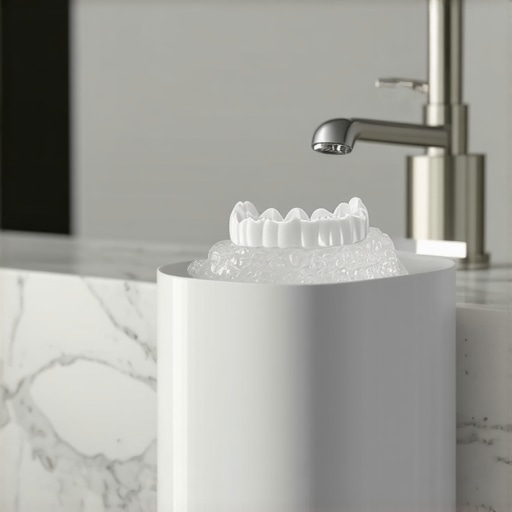
Why your water flosser needs a specific setting
Most people use their water flosser like a pressure washer, but the goal isn’t to blast your gums into submission. You should be using the ‘pulse’ mode. The intermittent pressure change is what actually dislodges the sticky proteins in plaque. While modern teeth cleaning innovations that reduce sensitivity are great in the clinic, your home routine needs to be just as precise. If you are following invisalign maintenance expert tips for clear confident smiles, remember that the water flosser is your best friend for getting behind those plastic attachments. I predict that within five years, we will see smart-flossers that use infrared light to detect exactly where plaque remains, giving you a real-time ‘heat map’ of your mouth on your smartphone. We are already moving toward 4D tooth tracking in the office, where we compare your current scan to one from years ago to see exactly how much your enamel has worn down. This level of data is the best way to catch issues before they become expensive emergencies.
How do I maintain my smile results over time?
The key to longevity is consistency and the right ‘support’ system. This means maintaining your teeth cleaning routine for long term health by scheduling professional checkups every six months, regardless of how good your teeth look in the mirror. As you look into the ultimate guide to invisalign for adults in 2025, you will see that the future of dentistry is moving toward preventative bio-tracking. My advanced tip for you today: buy a pH-neutralizing mouth rinse. Most commercial rinses are actually quite acidic. Using a neutralizer after coffee or snacks can stop enamel erosion in its tracks. Try it for one week, and you will notice your teeth feel smoother and less ‘fuzzy’ by the end of the day. If you are still in the planning stages of your journey, contact us to see how these tools can fit your specific needs.
Why I Stopped Aiming for ‘Perfect’ and Started Aiming for ‘Strong’
After years in the dental field, I’ve realized that the most beautiful smiles aren’t the ones that are blindingly white or perfectly straight—they are the ones that are resilient. If I could go back and tell my younger self anything, it would be these three things. First, enamel is a non-renewable resource; once you scrub it away with a hard brush, no amount of money can truly bring back that original protection. Second, the best dental work is the kind no one notices. Whether you are looking at the ultimate guide to teeth whitening and cosmetic enhancements or just getting a filling, the goal should be biological harmony, not a plastic-perfect look. Finally, don’t wait for pain to be your alarm clock. By the time a tooth hurts, the ‘easy’ fix is usually off the table.
The Only Tools I Actually Keep in My Bathroom Cabinet
You don’t need a counter full of gadgets to have a healthy mouth, but you do need the right ones. I personally swear by an ultrasonic cleaner for anything removable—it is the only way to avoid that cloudy buildup over time. If you have sensitive gums, look into teeth cleaning for sensitive teeth what works best in 2025 to find a brush that vibrates rather than oscillates. I also recommend keeping a small bottle of pH-balanced spray in your bag if you’re a heavy coffee drinker; it’s a game-changer for preventing that ‘fuzzy’ feeling. Most importantly, I trust a professional who listens more than they sell. Choosing the right dentist expert tips for your best smile journey often come down to finding someone who prioritizes your long-term health over quick cosmetic wins.
Your Smile Is a Living Story Worth Protecting
At the end of the day, your teeth are tools for living—for laughing, eating, and connecting with the people you love. Whether you’re recovering from a traumatic injury or finally starting your own invisalign success stories real patients real transformations, remember that you are in control of the outcome. You have the knowledge now to handle a crisis and the wisdom to maintain your health daily. This journey isn’t about perfection; it’s about giving your future self the gift of a functional, pain-free smile. We are here to help you every step of the way, from the first consultation to the final reveal. Have you ever had a dental ‘near-miss’ that changed how you care for your teeth? Let me know in the comments below!