
I remember standing in line at my favorite coffee shop, trying to order a simple “iced soy latte,” and instead, I hissed like a disgruntled tea kettle. The barista blinked, I turned beet red, and my brand-new Invisalign trays felt like a giant piece of plastic gum stuck to the roof of my mouth. I had spent weeks researching Invisalign for adults in 2025, but no one really warned me about those tricky “S” sounds. It is incredibly frustrating when you are trying to level up your smile with modern cosmetic dentistry, only to end up sounding like a cartoon character. But here is the good news: that whistle is not permanent, and I have figured out exactly how to ditch it based on my own trial and error.
Say Goodbye to the Whistle and Reclaim Your Voice
The “Invisalign lisp” happens because your tongue is not used to the extra millimeter of plastic on the back of your teeth. Your brain expects a certain amount of space to create sound, but the tray changes the acoustics of your mouth instantly. Early on, I made the classic mistake of trying to speak less to avoid the embarrassment. That was a huge error on my part. Silence does not train your tongue; it just makes the transition slower. You have to talk your way through the discomfort. Whether you are still choosing the best Invisalign options for your daily routine or you are already on tray three, your speech muscle memory needs a workout.
Is this lisp actually going to last forever?
It definitely feels like it in the first 48 hours of a new tray. However, data from clinical observations indicates that most patients adapt to their new dental appliances within a few days as the brain recalibrates oral motor patterns. According to the American Association of Orthodontists, temporary speech changes are a completely normal part of the alignment process and usually resolve as the tongue learns where to land. It is not just about the plastic; it is about how your tongue interacts with the tray edges. If you have ever wondered why your front teeth feel loose on swap days, you already know the mouth is in a constant state of flux. We are going to fix the speech part today. [image]
Train Your Tongue to Ignore the Plastic
You need to practice the “S” and “T” sounds specifically to retrain your brain. I used to read my grocery lists out loud while driving to the store. It sounds silly, but it works wonders. Also, make sure your trays are actually seated properly against your teeth. I spent half a day whistling through my teeth once because I did not realize my tray was not fully snapped in at the back. Once that tray is snug against the teeth, the lisp usually drops by half immediately. Have you ever felt like you were suddenly speaking a different language the second you popped a new tray in? Let me know if you have had a “hissing” incident in public—I promise you are not the only one.
Re-teaching Your Mouth New Manners
The first step to regaining your voice isn’t actually about the words you say, but the speed at which you say them. When I first started, I spoke at my usual caffeine-fueled pace, which only highlighted the struggle. By slowing down about 20%, I gave my tongue the split second it needed to find the right placement. Think of it like walking in high heels for the first time; you don’t run a marathon on day one. You need to focus on choosing the best Invisalign options that fit your daily communication needs, but regardless of the tray type, pacing is king.
The Rainbow Method for S Sounds
If you’re whistling, your tongue is likely hitting the tray too low or too far forward. I started using what I call the Rainbow Method. Try to arch your tongue so it lightly touches the roof of your mouth just behind the front teeth, mimicking a rainbow shape. I spent twenty minutes in front of a mirror repeating “Six slippery snails slid slowly” until my brain finally registered the new clearance. It was messy at first—I actually sprayed my bathroom mirror a few times—but that tactile feedback is essential.
Get That Tray Fully Seated
You cannot speak clearly if there is a pocket of air between your teeth and the aligner. That air gap acts like a whistle chamber. I learned the hard way that just clicking them in with my fingers wasn’t enough. I started using chewies—little foam cylinders—to bite down and sink the trays into place. If you find your trays aren’t staying put, you might be dealing with the honest reason your Invisalign trays keep popping off, which is often a seating issue. Once they are tight against the enamel, your speech improves instantly.
Clean Trays Mean Clearer Words
It sounds strange, but if your trays are gunky, they feel thicker and heavier in your mouth. Plaque buildup can actually change the grip your tongue has on the plastic. I make sure to follow invisalign maintenance expert tips for clear confident smiles every single morning to prevent the trays from becoming bulky with film. If you’ve been slacking, you might notice a funky scent; knowing how to get the morning breath smell out of your invisalign case ensures you aren’t subconsciously closing your mouth too much to hide the odor.
Practice the Podcast Method
One night, I sat down and narrated my entire evening routine as if I were hosting a podcast. “Now, I am opening the fridge… I am choosing a yogurt.” It sounds ridiculous, but speaking continuously for 15 minutes forced my oral motor skills to adapt. If the plastic itself feels irritating, you should learn how to stop aligners from scratching the back of your throat to keep the focus on your vocal exercises. Even when dealing with intense pressure during the first day of new Invisalign trays, the more you talk, the faster the lisp disappears.
While mastering your ‘S’ sounds is a great milestone, real expertise comes from understanding what’s happening beneath the surface of your treatment. Everyone thinks the clear plastic trays are the primary magnet for discoloration, but in my experience, the real culprits are the composite attachments. These tiny ‘buttons’ are essential for grip, yet their porous nature means they absorb pigments far faster than your aligners or natural enamel. If you’ve been frustrated by a darkening smile, you should focus on how to get the coffee stains out of your invisalign attachments specifically, rather than just scrubbing the trays. This is a nuance many beginners miss, leading to a smile that looks ‘off’ even when the trays are brand new.
Stop blaming the plastic for your yellow smile
The biggest ‘oops’ factor I see with new patients is the DIY whitening trap. When people notice a slight yellowing, they often reach for ‘natural’ remedies like charcoal or baking soda. This is a huge mistake. According to a study published in the Journal of Clinical Orthodontics, the abrasive nature of these substances creates microscopic scratches on both your attachments and your enamel, which actually makes it easier for bacteria and stains to stick in the future. Instead of going rogue, you should stick to invisalign maintenance expert tips for clear confident smiles that prioritize non-abrasive care. If you’ve already noticed a change in shade, the truth about using baking soda to scrub away surface stains is that it’s doing more harm than good for your long-term cosmetic goals.
Can a professional cleaning actually disrupt your alignment?
I get asked this all the time: ‘Will the dental hygienist knock my attachments off or mess up the movement?’ The answer is a resounding no, but the timing matters. A deep cleaning is actually more critical now than ever because your trays trap saliva and sugar against your teeth for 22 hours a day. Understanding how regular teeth cleaning can prevent major dental issues is the secret to ensuring your treatment doesn’t end with a mouth full of cavities. However, you need to ensure you are choosing the right dentist expert tips for your best smile journey to find a team that understands how to work around orthodontic hardware without causing unnecessary sensitivity.
Avoid the trap of abrasive ‘natural’ whiteners
The hidden nuance of cosmetic dentistry is that your teeth are in a state of constant ‘remodeling’ during Invisalign. Because of this, your gums might be slightly more sensitive to traditional scaling. If you’ve noticed that the real reason your coffee stains come back a week after a professional cleaning is due to a lack of proper home care, you might need to adjust your routine. Most people assume a cleaning is a ‘reset’ button, but with aligners, it is just one part of the puzzle. I’ve found that teeth cleaning secrets how regular care boosts oral health at any age apply double when you have plastic barriers in your mouth. Have you ever fallen into the ‘natural whitening’ trap only to find your teeth felt rougher afterward? Let me know in the comments. We need to move past cosmetic dentistry myths debunked what you really need to know to get the Hollywood results we are all paying for. Precision in your daily habits is what separates a good result from a perfect one.
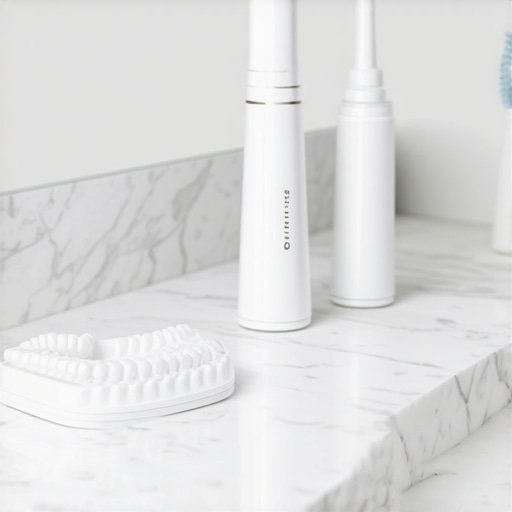
Maintaining that crisp, clear look isn’t just about rinsing with water every few hours; it is about treating your aligners like the high-precision medical devices they are. I have found that the real secret to keeping your invisalign trays perfectly clear for two weeks is not a special toothpaste, but a dedicated ultrasonic cleaner. I personally use a 42,000Hz frequency pod because it uses microscopic cavitation bubbles to blast away plaque without the micro-abrasions that manual brushing causes. According to a study published in the Journal of Orofacial Orthopedics, ultrasonic cleaning is significantly more effective at reducing bacterial biofilm on thermoplastic materials than chemical soaking or manual brushing alone. This keeps the plastic from getting that ‘cloudy’ look that makes it obvious you are wearing trays.
Stop scrubbing your trays with a manual toothbrush
When you use a standard toothbrush to clean your aligners, you are actually creating tiny scratches on the surface. These scratches act like magnets for bacteria and coffee stains, making your trays look yellow even if you are diligent. Instead, I follow invisalign maintenance expert tips for clear confident smiles by using a non-abrasive foam cleanser. If you are out and about, knowing how to get your clear aligners back in after a long dinner without introducing bacteria is vital. I always carry a travel-sized water flosser to ensure no food is trapped behind the attachments, which are the real hotspots for decay.
How do I keep my smile from shifting back to its old ways?
The biggest hurdle in Invisalign for adults in 2025 isn’t the treatment itself; it is the retention phase. Your teeth have ‘ligament memory,’ and they want to return to their original positions. To prevent this, you must be as disciplined with your retainers as you were with your active trays. I recommend a water flosser for anyone with permanent lingual retainers, as modern teeth cleaning innovations that reduce sensitivity and boost results make it much easier to manage gum health without the pain of traditional flossing. If you skip even a few nights, you might find your retainers feel tight, similar to the pressure you felt on your very first tray.
AI is going to be your next orthodontist
Looking toward the future, the way we maintain our smiles is shifting toward remote monitoring. I predict that by 2026, most patients will use AI-driven smartphone apps to scan their teeth weekly. These systems can detect the slightest movement or the start of a cavity before a human eye can see it. This technology is already being integrated when choosing the best Invisalign options for your lifestyle, allowing for fewer office visits and more precise results. It is an incredible time to be refining your smile because the data is finally on our side. If you want to level up your routine right now, try the ‘dry brush’ method: brush your trays with a soft, dry brush to loosen debris before placing them in an ultrasonic bath. It is the single most effective maintenance hack I have discovered.
What I Finally Realized About the First Seven Days of Plastic
Looking back, the speech hurdle was actually a blessing in disguise. It forced me to pay attention to my oral posture in a way I never had before. Here are the lightbulb moments that changed everything for me during my journey with Invisalign for adults in 2025. First, your brain is faster than you think; the adaptation period is usually about 72 hours, not weeks. If you stop hiding your speech and just talk through it, your tongue figures it out by dinner time on day three. Second, confidence masks the lisp. People only notice the whistle when you look like you are struggling. If you speak boldly, most friends will just think you have a slight accent or won’t notice at all. Finally, hydration is the secret lubricant. A dry mouth makes the plastic stickier to your tongue, which worsens the lisp. Keep water handy to keep your speech fluid. Reading through Invisalign success stories from real patients helped me realize that everyone starts exactly where I did—hissing at baristas and feeling like a cartoon character.
The Minimalist Kit for Stress-Free Alignment
You do not need a suitcase full of gadgets, but these three items are non-negotiable for my routine. First, a high-quality ultrasonic pod; it is the only way to ensure your trays stay invisible and free of that cloudy buildup. Second, a pack of silicone chewies to eliminate that speech-ruining air gap that causes whistling. Finally, I swear by a dedicated removal tool, especially when you are out at a restaurant and need to follow the right steps for how to get your clear aligners back in after a long dinner without a struggle. These tools shift the experience from managing a chore to maintaining a lifestyle. I also recommend checking out invisalign maintenance expert tips for clear confident smiles to ensure you are not accidentally scratching your trays with the wrong cleaning brushes.
Your Future Smile Starts with a Little Temporary Whistling
At the end of the day, a few weeks of tricky S sounds is a tiny price to pay for the transformation you are achieving. Whether you are exploring the ultimate guide to teeth whitening and cosmetic enhancements or you are halfway through your tray plan, remember that this is a temporary phase leading to a permanent result. The technology behind why Invisalign is the future of clear braces means you are benefiting from the most precise alignment history has ever seen. Embrace the journey, lisp and all, because the person looking back at you in the mirror in six months will thank you for staying the course today. Did you have a specific word that you just could not say during your first week? Let me know in the comments!