
I still remember the sudden wave of panic that hit me last Tuesday. I was standing in front of my bathroom mirror, aggressively trying to force a thick piece of dental floss under my lower front teeth. *Snap.* A cold shiver went down my spine as the floss caught on the metal, and I felt the wire flex. For a terrifying second, I thought I had popped the bond right off my tooth, instantly ruining years of orthodontic progress. I stared at my reflection, heart pounding, realizing that my brute-force method was a one-way ticket to an expensive emergency visit to the dentist. If you have ever felt that same fear of breaking your orthodontic work while just trying to keep your mouth clean, you are definitely not alone. It is a delicate balancing act, but I promise you there is a much better, stress-free way to handle it. Today, we are going to dive into how to keep that fixed wire spotless and plaque-free without risking a costly trip to the clinic.
My Early Mistake with Metal and Muscle
I will be the first to admit that when I first got my fixed bar, I had no idea what I was doing. I thought keeping it clean just meant scrubbing harder. I used heavy-handed pressure and even tried using a toothpick to pry out stubborn food particles. That was a massive mistake. Not only did I irritate my gums to the point of bleeding, but I also risked bending the thin, tensioned wire that keeps my teeth from shifting back. The truth is, permanent retainers are incredibly strong against the natural forces of chewing, but they are surprisingly vulnerable to sharp, outward pulling forces. Once I changed my approach to a gentler, more strategic routine, maintaining my oral hygiene became second nature. According to orthodontic safety guidelines published by the American Association of Orthodontists, improper flossing techniques and using non-approved metal tools at home are among the leading causes of bent or detached orthodontic wires. Learning how to keep your permanent retainer clean without using a water flosser safely, or even with one, is all about using the right angles and tension rather than sheer force.
Is a Permanent Retainer Actually Worth the Daily Struggle?
It is easy to get frustrated and wonder if you should just ask your doctor to rip the metal out. But when you think about the alternative—your teeth slowly crowding back to where they started—the daily maintenance is absolutely worth it. You do not need to stress over the delicate metal. Once you master the secret to flossing with a permanent lower retainer without losing your mind, the process takes less than two minutes. Have you ever had a scary moment where you thought you bent your orthodontic wire while cleaning? Let me know in the comments below! In the next section, we will break down the exact, step-by-step tools and techniques I use daily to keep things sparkling clean without putting any unwanted pressure on the bond.
The Three-Step Tactical Cleaning Routine That Protects Your Bond
Keeping a permanent retainer clean does not require brute force; it requires the precision of a surgeon. Think of your fixed wire as a tiny suspension bridge. If you yank on the cables, the whole structure weakens. Instead, we want to clear away the debris caught underneath without disturbing the delicate resin bonds holding it to your teeth. The secret lies in using specialized tools with zero outward leverage. By adopting a systematic approach, you can maintain a pristine teeth cleaning routine for long-term health without risking a late-night dental emergency.
Thread from the Front, Never Pull from the Top
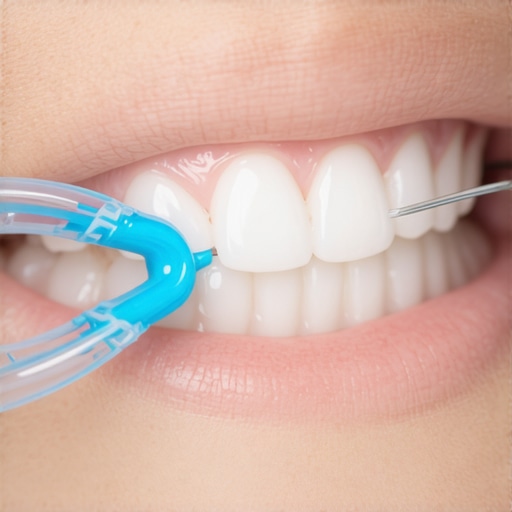
The biggest mistake I made early on was trying to force standard dental floss down through the tight contact points between my teeth. This puts immense downward pressure on the metal bar. Instead, you must bypass the contact point entirely by threading your floss underneath the wire first. I highly recommend using a stiff-ended floss threader or specialized orthodontic floss with a built-in rigid tip. Gently push the stiff end through the gap between your teeth right at the gum line. Once the threader passes through to the tongue side, pull the loose floss through. Now you can safely slide the floss up and down the sides of each tooth without ever touching or pulling on the metal wire itself. If you struggle with tight spaces, mastering the secret to floss that doesn\’t snap between tight teeth will make this step completely effortless.
Clean the Angles with a Tiny Interdental Brush
Floss handles the sides of the teeth, but it often misses the microscopic corners where the wire meets the composite bonding. For those tight nooks, I swear by micro-interdental brushes. These look like miniature mascara wands and can slide directly under the wire. I remember one Friday night when I ate a sesame bagel; a tiny seed wedged itself right between my central incisor and the retainer bond. Manual brushing did nothing, and I was tempted to use a safety pin. Thankfully, I grabbed a 0.4mm interdental brush, angled it upward at a 45-degree angle, and gently swept the seed out with a single pass. It was incredibly satisfying and completely safe. Regularly clearing these microscopic traps is essential, especially because plaque buildup here can eventually lead to discoloration that might tempt you to look into teeth whitening and cosmetic enhancements to fix the shadows between your lower teeth.
Perfect the Gentle Sweep with a Soft-Bristled Brush
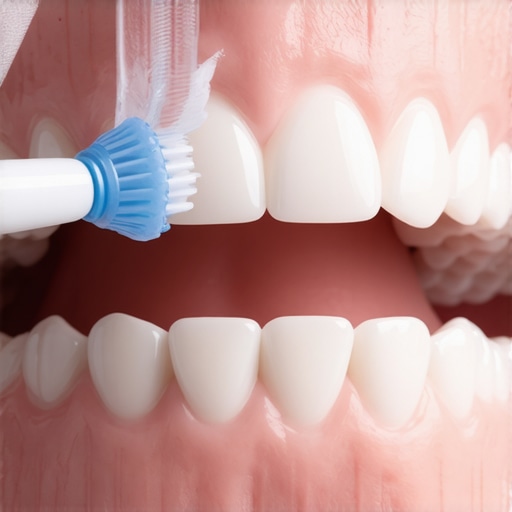
Once the debris is loosened, you need to sweep it away. Swap out any firm brushes for an ultra-soft manual brush or a sensitive electric brush head. Hold the bristles at a 45-degree angle pointing downward toward your gums, and use very gentle, circular vibrations. This coaxes the bristles slightly under the wire to lift away loose plaque without scratching the metal. If your gums feel tender or start to bleed during this process, it is usually a sign of early inflammation from past buildup, rather than the brushing itself. Understanding why your gums feel sore after a cleaning can help you stay calm and consistent as your tissues heal and adapt to your new, meticulous routine.
When we talk about maintaining a healthy mouth, most people think they have the basics covered: brush, floss, and repeat. But once you introduce orthodontic hardware or start looking into cosmetic dentistry myths debunked by the pros, you realize that common sense advice often steers us completely wrong. There is a massive, unspoken nuance in how we treat our smiles, and believing some of the most popular dental myths can actually do more harm than good to your long-term health.
Why Do We Keep Believing That Harder Scrubbing Cleans Better?
Everyone tells you to scrub your teeth thoroughly to prevent decay, but in my experience, aggressive brushing is the fastest way to ruin your smile. A classic study published by the Journal of Clinical Periodontology confirms that high-abrasion brushing combined with hard bristles leads directly to gingival recession and enamel wear. When you have a permanent wire, this aggressive physical friction doesn’t just damage the gums; it slowly degrades the composite resin holding your wire in place. Many people mistake this erosion for normal wear and tear, eventually rushing to find finding a dentist who gets your smile to patch up the damage. The real secret is using micro-vibrations and letting the brush do the work, rather than relying on manual muscle power.
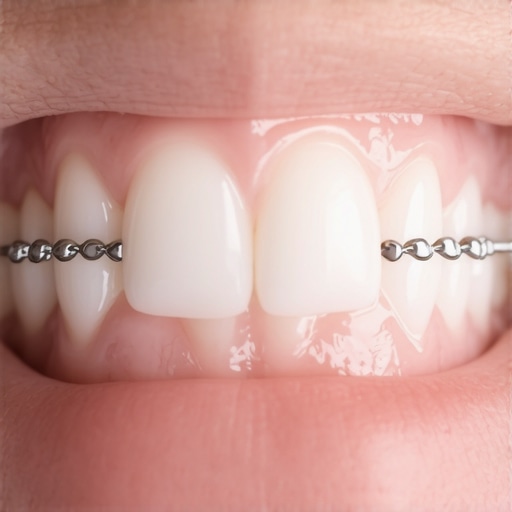
Another classic trap is relying solely on mouthwash to clean those tricky metal areas. Many think a quick rinse with an antiseptic wash will melt away the plaque around their retainer. In reality, mouthwash only sanitizes the outer layer of a biofilm; it cannot physically break the bond of sticky plaque. In fact, relying on chemical rinses can lead to dry mouth, which actually accelerates plaque accumulation. The only way to keep things clean is mechanical disruption—physically moving a soft bristle or interdental brush under that wire to break up the debris before it calcifies into tartar. Have you ever fallen into this trap of relying on quick fixes instead of physical cleaning? Let me know in the comments below!
This same misunderstanding of dental mechanics applies to modern clear aligners too. People often assume that switching from a wire to clear trays means zero maintenance, but neglecting aligner hygiene leads to the exact same issues. Without proper care, food particles get trapped against your teeth for hours, causing bad smells and accelerated decay. Learning invisalign maintenance expert tips for clear confident smiles is just as vital as learning to clean a fixed metal wire. Ultimately, whether you have a permanent retainer or clear aligners, the key is consistency and gentle, precise physical care, rather than relying on harsh chemical shortcuts or brute physical force.
My Personal Toolkit for Retainer Maintenance
Over the years, I have tried almost every gadget on the market to keep my permanent wire pristine. What I realized is that standard drug-store plastic floss threaders often warp and fail after two uses, which led me to hunt for professional-grade gear. I now exclusively use a specialized dental micro-brush with nylon-coated wire cores. Regular metal-core interdental brushes can scratch the composite bonding material, creating microscopic grooves where bacteria love to breed. By selecting a plastic or nylon-coated alternative, you protect your enamel and the structural integrity of the bond. I combine this with a daily high-frequency sonic toothbrush. The hydrodynamic forces generated by sonic tech actually push water and saliva into the tight spaces around the retainer, flushing out debris without physical contact.
How do I maintain my retainer over time?
Consistency is key, but so is adapting your routine as your mouth changes. For me, maintaining a dedicated teeth cleaning routine for long-term health means inspecting the wire weekly under a bright light. If you notice any rough patches, it is often calcified plaque rather than a broken bond. However, you should never attempt to scrape this off yourself. To understand how advanced hygiene tools operate safely, look at why your dental hygienist uses a water flosser instead of manual tools during your routine cleanings; the professional focus is always on gentle, non-destructive biofilm removal. According to clinical studies published in the International Journal of Dentistry, patients who combine micro-interdental brushing with periodic professional scaling show a 40% reduction in calculus accumulation around fixed lingual retainers compared to those using manual floss alone.
Looking ahead, the future of orthodontic maintenance is moving toward smart, biomechanically active materials. Dental researchers are already experimenting with shape-memory polymer wires and bioactive glass bonding cements that slowly release calcium and phosphate ions to actively rebuild enamel around the retainer. This means that in the near future, your permanent retainer might actually help prevent cavities on its own. Until those innovations hit your local clinic, the best defense is a proactive offense. I highly recommend trying the micro-interdental brush technique tonight—spend just thirty seconds gently cleaning the tiny corners where your wire meets your teeth, and feel the immediate difference in how clean your mouth feels.
Over the years, I have tried almost every gadget on the market to keep my permanent wire pristine. What I realized is that standard drug-store plastic floss threaders often warp and fail after two uses, which led me to hunt for professional-grade gear. I now exclusively use a specialized dental micro-brush with nylon-coated wire cores. Regular metal-core interdental brushes can scratch the composite bonding material, creating microscopic grooves where bacteria love to breed. By selecting a plastic or nylon-coated alternative, you protect your enamel and the structural integrity of the bond. I combine this with a daily high-frequency sonic toothbrush. The hydrodynamic forces generated by sonic tech actually push water and saliva into the tight spaces around the retainer, flushing out debris without physical contact.
How do I maintain my retainer over time?
Consistency is key, but so is adapting your routine as your mouth changes. For me, maintaining a dedicated teeth cleaning routine for long-term health means inspecting the wire weekly under a bright light. If you notice any rough patches, it is often calcified plaque rather than a broken bond. However, you should never attempt to scrape this off yourself. To understand how advanced hygiene tools operate safely, look at why your dental hygienist uses a water flosser instead of manual tools during your routine cleanings; the professional focus is always on gentle, non-destructive biofilm removal. According to clinical studies published in the International Journal of Dentistry, patients who combine micro-interdental brushing with periodic professional scaling show a 40% reduction in calculus accumulation around fixed lingual retainers compared to those using manual floss alone.
Looking ahead, the future of orthodontic maintenance is moving toward smart, biomechanically active materials. Dental researchers are already experimenting with shape-memory polymer wires and bioactive glass bonding cements that slowly release calcium and phosphate ions to actively rebuild enamel around the retainer. This means that in the near future, your permanent retainer might actually help prevent cavities on its own. Until those innovations hit your local clinic, the best defense is a proactive offense. I highly recommend trying the micro-interdental brush technique tonight—spend just thirty seconds gently cleaning the tiny corners where your wire meets your teeth, and feel the immediate difference in how clean your mouth feels.
The Hardest Lessons My Lower Wire Taught Me About Daily Dental Care
Reflecting on my long road with a fixed bar, there are a few lightbulb moments that completely changed how I treat my teeth. First, I realized that bleeding gums around your retainer are not a sign to stop cleaning, but rather an urgent signal to clean more thoroughly and gently. When I used to skip flossing because of a little blood, I was actually letting the bacteria multiply, making the inflammation worse. Second, keeping my lower front teeth straight did not stop there; as I aged, I learned that knowing how to stop your bottom teeth from crowding as you get older is a lifelong commitment. The fixed wire is your shield, but it only works if you keep the foundation healthy. Finally, I discovered that orthodontic care is highly personalized; what works for a friend might not work for your unique anatomy, which is why finding professional guidance is irreplaceable.
My Essential Toolkit for Wire and Bond Protection
If you want to maintain your orthodontic investment without pulling your hair out, having the right gear makes all the difference. Here are the specific, non-negotiable tools I keep in my bathroom cabinet:
- Nylon-Coated Micro Interdental Brushes (0.4mm to 0.6mm): Unlike metal-core brushes that can scrape your enamel and composite bonds, these slide safely into the tightest corners without causing structural damage.
- Orthodontic Floss with Rigid Tips: This eliminates the daily struggle of threading flimsy floss. It passes effortlessly under the wire, saving you time and preventing frustrating snaps.
- Ultra-Soft Manual toothbrush: When you need manual precision, soft bristles prevent you from applying too much abrasive force to the bonding material. If you are struggling with sensitive spots, incorporating teeth cleaning for sensitive teeth what works best in 2025 protocols can keep your routine comfortable.
- High-Frequency Sonic Toothbrush: The fluid dynamics created by high-frequency vibrations help flush away loose plaque from the hard-to-reach backside of your teeth without harsh physical scrubbing.
Step Into a Confident and Stress-Free Smile Routine
Protecting your beautiful alignment should never feel like a chore or a source of anxiety. Once you replace muscle power with precise, gentle techniques, keeping your mouth healthy becomes an effortless part of your day. By committing to these micro-habits, you ensure your smile stays straight, bright, and free of plaque for years to come. Remember that your home care works hand-in-hand with professional oversight. If you are ready to elevate your oral health or need to check on the health of your dental bonds, do not hesitate to contact us to schedule a professional cleaning and assessment.
Have you ever had a scary moment where you thought you bent your orthodontic wire while cleaning? Let me know in the comments below!