
I remember sitting on my bathroom floor at 11 PM, literally crying over a piece of skirt steak. It was wedged so tightly behind my lower front teeth, right against that stubborn metal wire, and every time I tried to loop a floss threader through, the plastic tip would just bend and mock me. I felt like a failure at basic hygiene. My gums were throbbing, my patience was gone, and I was genuinely considering if a straight smile was worth this nightly ritual of torture. If you have ever stood in front of the mirror, face-to-face with that permanent lingual wire and felt like you were trying to thread a needle in a dark room during an earthquake, I am here to tell you that it does not have to be this way. Today, I am going to share the specific routine that turned my 15-minute struggle into a 60-second habit.
The night I almost took a pair of pliers to my own mouth
For years, I made a massive mistake: I treated my lower front teeth like a ‘no-fly zone.’ Because it was so difficult to get back there, I would just brush the tops and hope for the best. I bought into some common dental myths that said as long as I was brushing hard, the floss didn’t matter as much for those specific teeth. Boy, was I wrong. By the time my next appointment rolled around, my hygienist had to spend twenty minutes just on those six teeth because the tartar had built up like literal concrete. It turns out that how regular teeth cleaning can prevent major dental issues starts with the spots that are the hardest to reach.
Does this metal wire actually do more harm than good?
You might be wondering if the constant battle with food particles is even worth the benefit of straight teeth. It is a valid fear. The American Dental Association (ADA) has pointed out that while fixed retainers are the gold standard for preventing ‘relapse’ (your teeth moving back to their old, crooked ways), they act as a massive trap for biofilm and plaque if you aren’t diligent. I have even had moments where I panicked about what to do if your permanent retainer wire snaps at dinner, simply because the area felt so fragile and high-maintenance.
Stop treating your lower teeth like a no-fly zone
The breakthrough for me happened when I stopped trying to use standard tools for a specialized job. Whether you are trying to figure out how to remove stubborn spinach stuck in your permanent retainer or you just want to get through a Tuesday night without a gum-bleed, the secret lies in the ‘loop and pull’ method I am about to describe. Have you ever been so frustrated with your retainer that you actually considered asking your dentist to just rip it out? You are not alone, but before you book that appointment, let’s look at the tools that actually work.
Master the mechanical reality of your wire
The secret to a clean retainer isn’t force; it is physics. Think of your lingual wire like a low-clearance bridge. You can’t drive a monster truck under it, so you have to send in a specialized team. Most people fail because they try to force standard floss through a space that is literally sealed shut by dental bonding. To get results, you need a multi-stage attack that handles the bulk debris first and then tackles the microscopic biofilm that lives in the ‘pockets’ between the wire and your enamel.
Blast away the surface debris first
Before you even touch a piece of string, you need to clear the loose stuff. I use a high-powered water flosser on the medium setting. I remember a Thanksgiving dinner two years ago where a piece of sourdough crust got wedged so deep I could feel my pulse in my gums. A standard brush did nothing, but 20 seconds with a targeted stream of water popped it right out. This initial step is vital because it prevents you from accidentally pushing food deeper into the gum line with your floss. If you have any discomfort during this process, checking out teeth cleaning for sensitive teeth what works best in 2025 can help you find a setting or tool that won’t leave you wincing. 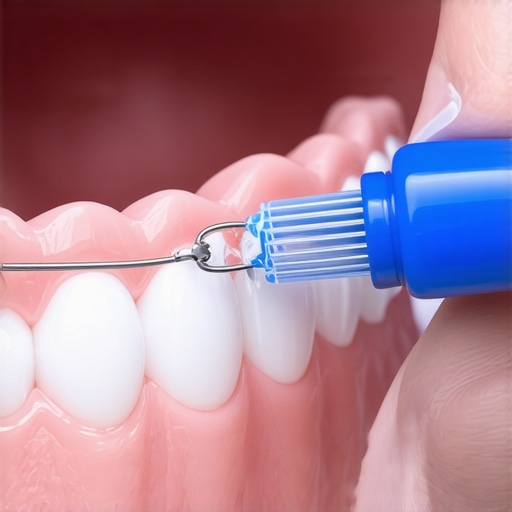
The surgical precision of a threaded loop
Standard floss is useless here unless you have a way to ‘fish’ it under the wire. This is where the floss threader or specialized ‘Superfloss’ comes in. The ‘loop and pull’ method involves inserting the stiff end of the threader into the gap near the gum line—not between the teeth, but in the space below the wire. Once it is through, you pull the floss halfway so it forms a ‘U’ shape around the wire. This allows you to ‘saw’ back and forth against the back of the tooth. It feels like you are buffing a pair of shoes. It is the only way to reach the ‘G-spot’ of plaque buildup where the metal meets the tooth. This level of detail is exactly how maintaining your teeth cleaning routine for long term health becomes a reality rather than a chore.
When the wire feels too tight for floss
Sometimes, the dental bonding is so close together that a threader won’t even pass through. In these cases, you need a proxy brush (an interdental brush). These look like tiny pipe cleaners. I keep one in my wallet for emergencies. The trick is to find the right diameter; too big and you’ll hurt your gums, too small and you won’t scrub anything. Using these tools is part of the modern teeth cleaning innovations that reduce sensitivity and boost results because they minimize the trauma to your soft tissue while maximizing the mechanical removal of gunk. I once used a proxy brush during a long-haul flight to remove a piece of jerky that was driving me insane—it was more effective and less messy than trying to use a threader in a cramped airplane bathroom.
The vertical scrub technique
Once the floss is under the wire, don’t just pull it out. Move it up and down vertically against the side of each tooth. This is the part everyone skips. You need to scrape the side of the tooth that faces its neighbor. If you find this difficult, you might want to consider how to remove stubborn spinach stuck in your permanent retainer for more specialized advice on those impossible-to-reach leafy greens. By doing this vertical motion, you ensure that the ‘triangle’ of gum between your teeth stays healthy and doesn’t start to recede.
Why professional scaling is actually about your microbiome
Most people assume that a dental cleaning is just a high-tech version of what they do at home—removing surface stains and bits of food. However, the real expertise lies in managing the biofilm that colonizes the microscopic scratches in your bonding resin. A common contrarian view among top clinicians is that ‘squeaky clean’ teeth aren’t always healthy teeth. If you are scrubbing until your teeth feel like glass, you might be stripping away the protective pellicle, leaving your enamel vulnerable. Modern experts now focus on biofilm recalibration. This is where modern teeth cleaning innovations that reduce sensitivity and boost results come into play, using guided biofilm therapy rather than just aggressive scraping. According to a study published in the Journal of Clinical Periodontology, the presence of fixed orthodontic appliances significantly increases the localized plaque index regardless of brushing frequency, meaning your ‘good enough’ home routine is likely missing 40% of the bacterial load. 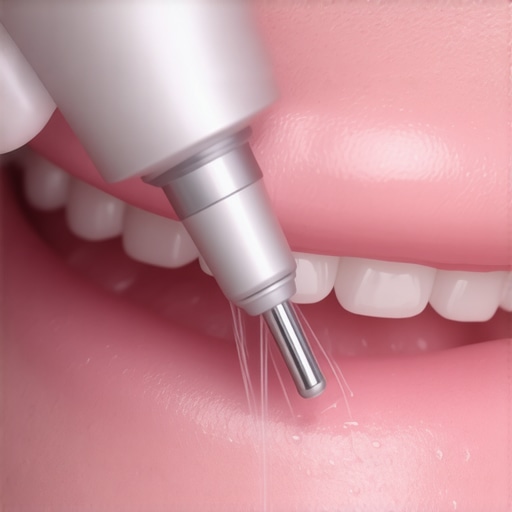
The hidden whitening trap you probably haven’t noticed
I see this mistake constantly: someone with a permanent retainer tries to brighten their smile using abrasive whitening pastes. Here is the ‘oops’ factor: the abrasive particles in many whitening products, especially those highlighted in the truth about charcoal toothpaste and your tooth enamel, can actually degrade the composite bonding that holds your wire in place. Over time, this creates micro-gaps between the glue and your tooth. You won’t see them, but bacteria will find them. This is often why your gums bleed only in the back of your mouth when you floss or specifically around those bonded areas. You think you are cleaning, but you are actually creating a microscopic apartment complex for decay.
Can your permanent retainer actually move your teeth the wrong way?
It sounds like a paradox, but a damaged or ‘active’ wire can actually cause unwanted tooth movement. This is a sophisticated nuance many patients miss. If the wire gets slightly bent—perhaps from that skirt steak I mentioned earlier—it can exert ‘orthodontic pressure’ on your teeth, pushing them into a new, crooked position. This is why regular check-ups are not just about cavities; they are about wire integrity. If you are considering an upgrade to your smile, understanding cosmetic dentistry myths debunked what you really need to know can help you distinguish between a retainer that is doing its job and one that is sabotaging your progress.
Stop the cycle of ‘aggressive’ neglect
The biggest mistake is the ‘all or nothing’ mentality. People either ignore the wire or they attack it with so much force they cause gum recession. Real teeth cleaning secrets how regular care boosts oral health at any age involve a gentle, consistent approach that respects the biological width of your gum tissue. If you find yourself dreading the floss threader, you are likely using the wrong technique or the wrong thickness of floss. Don’t fall into the trap of thinking that pain equals cleanliness. Maintaining your teeth cleaning routine for long term health should be a painless, mechanical process. Have you ever fallen into the trap of brushing too hard just because you couldn’t get the floss through? Let me know in the comments below!
The toolkit that finally replaced my midnight frustration
After years of trial and error, I have realized that your bathroom counter needs to look less like a pharmacy and more like a precision workshop. To maintain that lingual wire without losing your mind, you need two non-negotiable tools. First, a high-quality electric water flosser with a specialized orthodontic tip. I personally swear by the Waterpik Aquarius because of its ten pressure settings; I use setting 6, which is powerful enough to dislodge debris but gentle enough not to irritate the gums. Standard string floss is great for side-to-side cleaning, but it cannot reach the ‘pocket’ created between the wire and the tooth enamel as effectively as a pulsed water stream. Second, you need to ditch the cheap plastic threaders for GUM Proxabrush Go-Betweens. These tiny, tapered brushes allow you to scrub the metal-to-tooth interface in seconds. If you are still weighing your options for straightening your teeth, looking into invisalign vs traditional braces which is smarter for your lifestyle can help you decide if a fixed wire or removable tray is better for your long-term commitment level. 
How do I keep my smile stable as I get older?
This is the question that haunts everyone who has ever worn braces. The hard truth, supported by the landmark long-term stability studies conducted by Dr. Robert Little at the University of Washington, is that physiological ‘drift’ is a lifelong process. Your teeth want to move forward and inward as you age, a process called mesial drift. To fight this, your retainer maintenance must be flawless. I have learned that maintaining your teeth cleaning routine for long term health means treating your retainer check-ups with the same urgency as a cavity filling. If that wire feels even slightly loose, it is no longer a stabilizer; it is a liability. Learning how to stop your bottom teeth from crowding as you get older is not about a one-time fix, but about the daily mechanical removal of the biofilm that weakens the bond of your retainer.
Your future dentist might be an app on your phone
The trend in orthodontics is moving rapidly toward AI-driven home monitoring. We are already seeing the rise of software like DentalMonitoring, where you take a scan of your teeth with your smartphone and AI detects if your permanent wire is bending or if plaque is building up in specific zones. This is one of the most exciting modern teeth cleaning innovations that reduce sensitivity and boost results because it catches problems before they require a painful scraping session. In the next five years, I predict we will see ‘smart’ retainers that can actually alert your phone if they are under too much tension. Until then, you can use simple teeth cleaning tips for a brighter smile this spring to keep your hardware shining. If you want to take your routine to the next level tonight, try this: dip your interdental brush in a non-alcoholic fluoride mouthwash before sliding it under your wire. It delivers the mineral protection exactly where the plaque is most aggressive. Give it a try and see if your gums feel less tender by morning!
The shift from seeing a chore to seeing a lifetime of straight teeth
For the longest time, I viewed my permanent retainer as a piece of unwanted debris rather than a guardian of my investment. The ‘lightbulb moment’ for me happened when I realized that neglecting this tiny wire wasn’t just a hygiene failure; it was a slow-motion invitation for my teeth to return to their old, crowded ways. I learned that how to stop your bottom teeth from crowding as you get older isn’t about some secret genetic lottery—it is about the mechanical integrity of that wire. I also discovered that being ‘aggressive’ with my brush was actually counterproductive. Gentle, frequent contact is far more effective at disrupting biofilm than a once-weekly scrubbing session that leaves your gums bleeding. Finally, I stopped listening to the idea that some people are just ‘prone’ to tartar. While saliva chemistry varies, the real culprit is often the tools we choose to ignore.
Gear that turns a nightly struggle into a win
To make this habit stick, I had to curate a kit that I actually enjoyed using. I transitioned from the cheap, flimsy threaders to a dedicated water flosser because it felt less like surgery and more like a spa treatment for my mouth. If you are still on the fence about which path to take for alignment, understanding invisalign vs traditional braces which is smarter for your lifestyle can help you see why fixed hardware requires such specialized tools. I also keep a set of interdental brushes in my desk drawer and car. They are the ultimate ‘insider’ tool because they handle the friction that water alone cannot. I trust these methods because they align with modern teeth cleaning innovations that reduce sensitivity and boost results, focusing on removing the ‘bad’ bacteria without nuking the healthy ecosystem of your mouth.
Trust the process and keep your hardware shining
You have already done the hard work of getting your teeth into position; don’t let a few minutes of nightly maintenance be the reason you lose that progress. It is easy to get discouraged when you see a little bit of redness or find a piece of food that won’t budge, but remember that your gums are resilient. By maintaining your teeth cleaning routine for long term health, you are ensuring that your smile stays as vibrant and straight as it was the day your braces came off. This is a journey of consistency, not perfection. Your future self, standing in front of a mirror ten years from now with a perfectly aligned smile, will thank you for the extra 60 seconds you spent tonight. #IMAGE_PLACEHOLDER_E# Have you ever felt like your floss threader was doing more damage than good, or have you found a specific tool that changed the game for you? Let me know in the comments below!