
I remember the moment clearly. I was sitting at a local diner, finally ready to tackle a double cheeseburger after months of waiting for my jaw to heal. I took that first big bite, and instead of the usual sensation, I felt a distinct, solid ‘thud’ ring through my jawbone. It wasn’t pain—thank goodness—but it was a wake-up call that my brand-new porcelain addition wasn’t an exact carbon copy of the tooth I’d lost. I spent the next three days obsessively clicking my teeth together, even worrying about what that faint clicking sound means in your new dental implant, before I realized I was just learning a new language of touch. If you have ever caught yourself tapping your new tooth with a fingernail just to see how it sounds, you are not alone. Today, I’m going to break down exactly why that ‘phantom’ feeling happens and why it is actually a sign your implant is working perfectly.
That First Bite Felt a Little Different
I made a massive mistake early on by expecting my implant to behave like a trampoline. Natural teeth have this tiny, microscopic cushion around them called the periodontal ligament. When you chew, that ligament lets the tooth move just a hair. But an implant is different. It is fused directly to your bone. When I first started eating normally again, I panicked because every carrot stick felt like it was vibrating straight into my skull. I even wondered if I had chosen the wrong path, but then I looked into why a single dental implant costs more than a bridge and remembered the long-term benefits of that rock-solid foundation. The difference in sensation isn’t a flaw; it’s a feature of how titanium integrates with your body.
Is this high-tech tooth actually worth the hype?
Most people worry that because it feels ‘mechanical,’ it won’t last or it will feel like a foreign object forever. I felt that way for the first month. I was constantly checking the fit and even performed the tapping test for a loose dental implant more times than I care to admit. But the truth is, the lack of sensitivity is actually a blessing in disguise once you get used to it. You don’t get the same ‘zing’ from ice cream, and you don’t have to worry about the same decay that haunts natural enamel. It’s a trade-off: you lose the ‘organic’ wiggle, but you gain a tooth that won’t ever need a root canal.
Your New Tooth Lacks a Built-in Shock Absorber
The biggest reason for that ‘different’ feeling is the lack of nerves inside the implant itself. Your natural teeth are packed with sensors that tell your brain exactly how hard you are biting down. According to the American Academy of Periodontology, dental implants lack this periodontal mechanoreception, which is why your brain takes a few months to recalibrate its ‘bite force’ settings. During my first winter with an implant, I even noticed the reason your dental implant feels different in cold weather is because the metal and ceramic don’t hold heat the same way your living tissue does. It’s a fascinating bit of science that I wish someone had told me about before I went into the cold. Have you noticed your implant feels ‘colder’ or ‘harder’ than the rest of your smile lately? It’s a common hurdle, but once you understand the mechanics, the anxiety melts away.
Relearn the Way You Chew
Since your implant lacks that ‘dimmer switch’ of a nerve, you have to consciously recalibrate how you eat. Think of it like switching from a car with power brakes to one without—you have to apply the pressure yourself rather than relying on the system to help you out. In the beginning, I found myself biting my cheek or tongue because I didn’t realize how much force I was applying. You need to start with soft foods for at least two weeks, even if your dentist says the bone is ready. This isn’t just about the bone; it is about retraining your facial muscles to handle a rigid object. I remember the first time I tried a crisp apple after my healing period; the sound was so loud inside my head I thought I’d cracked the porcelain. It was just the bone conduction at work.
Dial in Your Bite Force
One trick I used was the ‘two-second rule.’ When you bite down on something for the first few months, pause for two seconds before fully committing to the chew. This allows your jaw muscles to register the resistance of the food against the hard ceramic surface. If you feel that sharp vibration I mentioned earlier, back off. Eventually, this becomes second nature. However, if you notice the tooth doesn’t just feel hard but actually starts to move, you might be dealing with a loose component rather than a sensation issue. You should definitely know why your dental implant crown feels like it is spinning so you don’t mistake a simple screw tightening for a full implant failure.
Keep the Gum Seal Tight
Unlike a natural tooth that is held by a web of fibers, an implant relies on a ‘biological seal’ of gum tissue that hugs the titanium. If this seal breaks due to bacteria, you are in trouble. I didn’t realize that standard floss could sometimes shred against the titanium post, which led me to research the safest way to remove a stuck piece of dental floss without irritating the surgical site. You need to use a water flosser or specialized thick ‘super-floss.’ This keeps the area around the abutment clean without the risk of leaving fuzzy debris behind. It’s a different game than keeping your natural teeth clean, but modern teeth cleaning innovations that reduce sensitivity and boost results make it much easier to stay on top of the maintenance during your professional visits.
Keep Your Hardware Looking Natural
Beyond the function, there is the aesthetics of how the implant sits with the rest of your smile. We all want that seamless Hollywood look, but porcelain behaves differently than enamel when it comes to staining and light reflection. If you are comparing your implant to other work, like veneers or even aligners, you’ll see the maintenance is similar but the structure is unique. For example, if you’ve ever gone through the process of choosing a dentist for your Invisalign transformation, you know that professional guidance on alignment is everything. It is the same with the position of your implant crown. Keeping up with cosmetic dentistry trends that transform smiles beyond expectations helps you realize that an implant is just one part of a healthy, functioning mouth. If you ever see grey metal poking through the gum, stay calm but act fast. Knowing what to do when a piece of your dental implant screw becomes visible is essential for preserving the health of the bone and your aesthetic confidence. I once noticed a tiny grey line at my gum line during a stressful week; it turned out my gums were just slightly inflamed, and a professional cleaning fixed it in thirty minutes.
Don’t Fall for the Invincible Implant Myth
Everyone tells you that once you get an implant, you are basically ‘done’ with dental worries in that spot. In my experience, that mindset is exactly what leads to the most common advanced mistakes. People often treat their titanium posts like they are indestructible, but the reality is more nuanced. While the titanium won’t decay, the bone and gums supporting it are still very much alive and susceptible to peri-implantitis. I’ve seen patients stop being diligent with their hygiene because they think ‘it’s just metal,’ but that’s a dangerous trap. You have to maintain that site even more carefully than a natural tooth because the immune response around an implant is slightly less robust than it is around a natural tooth root. When you are finding a dentist who gets your smile tips from top cosmetic pros, make sure they emphasize the long-term biological maintenance, not just the initial surgery.
Why does my bite still feel off even when the X-rays look perfect?
This is the question that keeps most new implant patients up at night. You go to the office, the dentist checks the fit, and says everything looks ‘textbook,’ yet you feel like you’re biting on a mountain. This usually happens because of a phenomenon called ‘high-occlusion awareness.’ Because an implant has zero give, even being off by a fraction of a millimeter—literally the width of a human hair—can make the reason your crown feels tall when you first bite down feel like a major structural flaw. A study published in the Journal of Oral Rehabilitation highlights that patients with implants have a significantly higher threshold for detecting ‘interocclusal thickness’ compared to those with natural teeth. Your brain is essentially screaming that there is a rock in your mouth because it hasn’t learned to ignore the new, rigid input yet. It is not necessarily a failure of the dentist; it is a recalibration of your proprioception.
The Polished Glass Sensation is More Than Aesthetic
Another common misconception is that professional cleanings are just a ‘deep scrub’ for stains. I used to think that way until I realized that the goal of modern hygiene isn’t just to make things look white; it’s to disrupt the biofilm at a microscopic level. You might notice why your teeth feel like polished glass after a professional prophy cleaning, and that’s not just because they are clean—it’s because the surface tension of the tooth has been altered to prevent bacteria from sticking. When you have an implant or a crown, this becomes even more vital. Traditional scrapers can actually create microscopic scratches on titanium, which then act as ‘hotels’ for bacteria. That is why modern teeth cleaning innovations that reduce sensitivity and boost results, like ultrasonic scalers with specialized tips, are non-negotiable for implant longevity. If your hygienist is using the same old-school metal tools on your implant as they do on your molars, that is an ‘oops’ factor you need to address immediately.
Aligners Are About More Than a Straight Smile
Many people view Invisalign as a purely cosmetic journey, but that is a shallow way to look at it. The hidden nuance is that alignment is actually a form of preventative medicine for your implant. If your bite is misaligned, you are putting ‘off-axis’ forces on that rigid titanium post every time you chew. Over years, this can lead to bone loss or screw loosening. When looking at Invisalign vs traditional braces which is smarter for your lifestyle, consider that the precision of digital mapping allows for a more controlled distribution of force across your entire jaw. Don’t fall for the trap of thinking you’re just paying for a ‘pretty’ look; you’re paying for a balanced mechanical system. Have you ever fallen into this trap of thinking your dental work was ‘set it and forget it’? Let me know in the comments. We need to move past these cosmetic dentistry myths debunked what you really need to know and start treating our smiles like the complex biological machines they are. If you ever feel like something is catching, don’t ignore it; it could be the hidden reason your floss keeps shredding between two specific teeth, which is often the first sign of a shifting contact point.
I didn’t just stop at getting the surgery done; I went into full-on research mode to ensure my investment didn’t end up as a cautionary tale. I quickly learned that the standard plastic toothbrush I had used since high school wasn’t going to cut it anymore. I upgraded to a sonic toothbrush with a dedicated ‘implant mode’ because the vibration frequency is specifically tuned to break up biofilm without jarring the bone-metal interface. If you’ve been feeling some discomfort, you might need to look into teeth cleaning for sensitive teeth what works best in 2025 to find a brush that respects your new hardware. I personally swear by interdental brushes that use plastic-coated wire. Standard metal-core brushes can actually create a galvanic current when they touch your titanium post—it is like a tiny, annoying battery going off in your mouth. Using the right tools is the absolute cornerstone of maintaining your teeth cleaning routine for long-term health.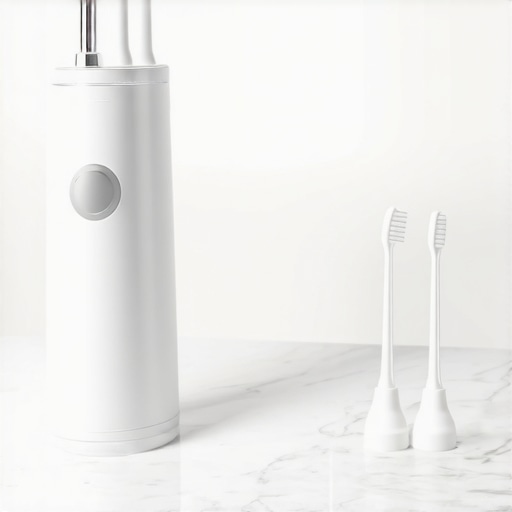
The Plastic-Coated Secret to Cleaning Titanium
Beyond the toothbrush, the way you manage the ‘gap’ between the crown and the gum is where the real battle is won or lost. I found that a water flosser is non-negotiable for anyone with multiple implants or bridge work. It flushes out the debris that even the most expensive string floss can’t reach. If you are also balancing other dental work, like clear trays, following invisalign maintenance expert tips for clear confident smiles will help you realize that consistency is more important than intensity. For those who grind their teeth at night, a custom-fitted guard is your best friend to prevent the porcelain from chipping. Just make sure you know how to get the sour smell out of your nighttime mouthguard so you actually want to wear it every night.
How do I keep this investment healthy for twenty years?
The secret lies in ‘Supportive Periodontal Therapy.’ This isn’t just a fancy name for a cleaning; it is a clinical strategy. A longitudinal study published in the International Journal of Implant Dentistry suggests that the cumulative survival rate for implants over 10 years is roughly 94.6%, but that number drops significantly in patients who lack a rigorous professional maintenance schedule. I make sure my hygienist uses glycine powder air-polishing rather than abrasive pastes. This keeps the surface of the implant smooth so bacteria can’t get a foothold. It is the same kind of forward-thinking care you see when exploring invisalign innovations why 2025 is the year for a perfect smile. Technology is making it easier for us to be proactive rather than reactive.
Why Sensors are Coming to Your Next Crown
I predict that within the next five years, we will see ‘smart crowns’ equipped with micro-sensors that alert your smartphone if the pH levels around the implant suggest a bacterial bloom before you even feel a tingle. We are moving toward a future where your dental hardware actually talks back to you. Until then, we have to rely on our own diligence and the right toolkit. My challenge to you: This week, swap out one standard flossing session for a session with a high-quality water flosser and see if that ‘tight’ feeling around the gums starts to relax. Your jaw will thank you in a decade.
The Hard Truth About My Titanium Upgrade
After living with my implant for over a year, I’ve realized that the ‘phantom’ feeling isn’t something to fear—it is a signal that your body and technology are learning to coexist. One of the biggest lightbulb moments for me was realizing that titanium integration isn’t just about the bone; it’s about retraining your brain. I had to stop comparing it to my natural teeth and start treating it as a high-performance prosthetic. I also learned that teeth cleaning myths debunked by top dentists often overlook how delicate the gum seal around an implant really is. If you treat it exactly like a tooth, you might miss the subtle signs of inflammation. Another big realization? The ‘cold’ sensation is real, but it fades as your jaw bone fully matures around the post. Don’t let the first few months of ‘different’ sensations discourage you from the long-term health benefits.
#IMAGE_PLACEHOLDER_E#
My Daily Gear for a Forever Smile
If you want this investment to last for the next thirty years, you can’t rely on a manual brush and basic floss. My personal toolkit evolved significantly after my surgery. First, I invested in a high-end water flosser; it is the only way to reach the ‘nooks and crannies’ where the crown meets the abutment. I also found that how regular teeth cleaning can prevent major dental issues is especially true for implant patients because we lack the natural immune barrier of a tooth root. For those of us who clench our teeth at night, a custom mouthguard is essential. Just make sure you learn how to get the sour smell out of your nighttime mouthguard so it stays fresh and hygienic. Finally, I trust specific plastic-coated interdental brushes to avoid any metal-on-metal scratching.
Take Control of Your New Foundation
Your journey doesn’t end when the crown is screwed on; that is actually when the maintenance phase begins. The most important step you can take right now is choosing the right dentist expert tips for your best smile journey to ensure your provider understands the nuances of implant care. Don’t be afraid to ask for a more frequent cleaning schedule if you notice any redness or a different sensation. This is your smile, and you are the CEO of its success. If you have any lingering questions or need a professional evaluation, feel free to contact us for a consultation. Have you noticed a difference in how you chew since getting your implant? Let me know in the comments below!