
I stood knee-deep in a dumpster behind a local bistro, frantically tearing open grease-stained bags while my friends watched in horrified silence. Why? Because I had committed the cardinal sin of cosmetic dentistry: I wrapped my trays in a white paper napkin. It took exactly four minutes for the busboy to clear the table and toss my $5,000 smile into the abyss. That moment of pure, unadulterated panic was my lightbulb moment. I realized that losing an Invisalign case isn’t just an accident; it’s a symptom of a routine that hasn’t been lost-proofed yet. If you are tired of the frantic searches and the sinking feeling in your chest, you are in the right place. I am going to share the hard-learned strategies that turned me from a chronic tray-loser into someone who hasn’t misplaced a case in over a year.
Why Your Aligner Case Always Walks Away
It is not just that the cases are small; it is that our brains are hardwired to treat them as secondary to the trays themselves. When I first started, I thought I could just shove my trays in my pocket, but I quickly learned how to stop your invisalign trays from smelling like old saliva, which meant I needed that case nearby at all times. The mistake I made early on was assuming ‘near me’ was the same as ‘secure.’ I would leave the case on car dashboards, restaurant napkins, or the edge of bathroom sinks. A study published in the Journal of Clinical Orthodontics notes that patient non-compliance often stems from the simple friction of losing aligners, with nearly 14% of patients losing at least one tray during their treatment. This matters because every hour your trays are in a trash can instead of your mouth, your teeth are trying to drift back to their old neighborhood. Keeping track of your case is actually the most important part of invisalign maintenance expert tips for clear confident smiles.
Is it actually worth the hassle to track a plastic box?
You might think that buying five backup cases is the solution, but trust me, you will just lose five cases. The real win is in the tracking. I have found that even the most diligent person can benefit from a little tech help, especially after a long meal when you are trying to figure out how to get your clear aligners back in after a long dinner without looking like a dental emergency. Have you ever found yourself digging through a public trash can or frantically searching under your car seat for that little black or blue circle? You are not alone, and it does not have to be this way. We are going to solve the mystery of the disappearing case once and for all, starting with the habits that actually stick.
Stop the Napkin Habit Before it Starts
The ‘Case or Mouth’ rule is the only ironclad law in my house. If the trays are not actively snapping onto my teeth, they are inside the hard plastic shell. No exceptions. This sounds simple until you are at a backyard BBQ with a rib in one hand and nowhere to put your tray. I once tried to balance my trays on the edge of a plastic cup at a wedding because I forgot my case. Predictably, someone cleared the ‘trash,’ and I spent the rest of the reception sifting through champagne flutes in a panic. Now, I treat the case like my phone—if I do not feel it in my pocket, I am not sitting down to eat. Finding the right workflow is a huge part of choosing the best invisalign options for your lifestyle. If you are naturally forgetful, you have to build an environment that compensates for your brain’s gaps.
Strategic Stashing Beats Memory Every Time
Do not rely on your memory; rely on your geography. I keep three cases in rotation: one in my car’s center console, one in my work bag, and one on my nightstand. This ensures that even if I forget my ‘main’ case, I am never tempted to use a napkin or a pocket. When you have multiple cases, you can also avoid the buildup of bacteria from a single, overworked container. If you are worried about hygiene, learning how to clean the stubborn cloudiness off your night guard or aligner case is essential for keeping things fresh. It is much easier to maintain your routine when the tools you need are always within arm’s reach. 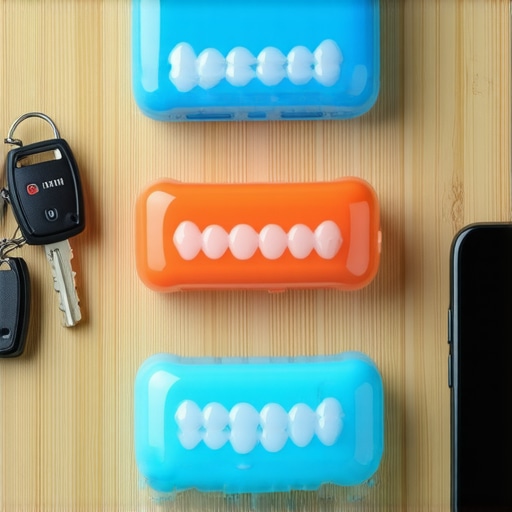
The Bluetooth Tracker Hack for Chronic Losers
If you are the type of person who loses their keys while they are in your hand, you need a Bluetooth tracker. I glued a small, flat tracker to the lid of my Invisalign case. It looks a bit clunky, but the peace of mind is worth it. When I was at a music festival and thought my case had fallen out of my bag, I just pinged it from my phone and found it buried in the grass near the food trucks. This level of invisalign maintenance expert tips for clear confident smiles is not just about cleaning; it’s about asset protection. It turns a potential week-long setback into a five-minute inconvenience.
Keep Your Trays Fresh While They Wait
A lost-proof routine also involves making sure the trays do not become a biohazard while they are in the case. Many people struggle with how to stop your invisalign trays from smelling like old saliva, and the secret is a quick rinse before they hit the plastic. If you are out and cannot find a sink, at least keep a small spray bottle of cleaner in your case to mist them down. This prevents that ‘furry’ feeling that happens when saliva dries on the plastic. Dealing with why your invisalign trays feel tighter on some days than others is stressful enough without adding the smell of a locker room to your mouth. When the trays stay fresh, you are less likely to want to leave them out of your mouth for longer than necessary, which is the key to finishing your treatment on time.Most patients believe that as long as they hit the 22-hour wear-time goal, they are winning. But here is the contrarian truth: wearing your aligners for 22 hours can actually destroy your teeth if you are not obsessive about the pH of your mouth. When you snap those trays in, you are creating a vacuum-sealed environment. If you have any residual acidity from a morning coffee or a healthy fruit smoothie, you are essentially giving your teeth a localized acid bath. This is one of the most common teeth cleaning myths debunked by top dentists—the idea that ‘clean-looking’ teeth are safe. In reality, a study published in Clinical Oral Investigations highlights that the ‘shielding’ effect of aligners prevents saliva—our natural buffering agent—from reaching the tooth surface, which can lead to a rapid drop in pH levels. This lack of saliva flow is why some people find that their teeth feel sensitive or ‘soft’ despite a rigorous brushing routine.
Stop Scrubbing Like Your Life Depends On It
The ‘Oops’ factor often comes from over-correction. When patients realize they need to be cleaner, they start scrubbing their teeth four or five times a day with abrasive whitening pastes. This is a massive mistake. Over-brushing while your teeth are already under the physical stress of being moved can lead to gum recession and enamel wear. It is much more effective to focus on neutralizing your mouth with a quick alkaline rinse before putting the trays back. If you are noticing that why your invisalign attachments feel like sandpaper against your cheeks, it might be because your enamel is becoming slightly more porous from this over-cleansing habit.
Can your aligners actually change your oral chemistry?
Advanced users need to realize that Invisalign doesn’t just move teeth; it changes the entire ecosystem of your mouth. Because your teeth are covered, the natural ‘self-cleaning’ mechanism of your tongue and cheeks is neutralized. This can lead to a buildup of biofilm in areas that were never an issue before. If you have started to notice a strange sensation when you bite down, it is important to understand why your teeth feel loose during your invisalign treatment. While some movement is expected, excessive laxity can be a sign that the underlying bone is under too much pressure from a combination of movement and localized inflammation.
Watch out for the white spot trap
The most sophisticated ‘trap’ to avoid is the appearance of white spot lesions. These look like bright, opaque patches on the teeth, and many patients mistake them for successful whitening. In reality, they are early signs of decalcification—the precursor to a cavity. Because the aligner keeps the tooth surface dry, these spots can form rapidly if you are not using a fluoride or hydroxyapatite-based treatment to remineralize the enamel during your ‘off’ hours. Choosing the right dentist expert tips for your best smile journey often involves finding a pro who monitors these subtle shifts in enamel density, not just the alignment of your arch. Have you ever fallen into this trap and noticed new spots or sensitivity during your treatment? Let me know in the comments. Keeping a close eye on these nuances is what separates a standard result from a truly healthy, Hollywood smile.
Stop scrubbing and start vibrating
For the first six months, I was a slave to my toothbrush, frantically scrubbing my trays every time I took them out. I thought the cloudiness was just a fact of life, but it turns out I was actually creating microscopic scratches that acted like apartments for bacteria. If you want to know how to clean the stubborn cloudiness off your night guard or your active aligners, you need an ultrasonic cleaner. This is a small device that uses high-frequency sound waves to create cavitation bubbles. These bubbles implode against the plastic, blasting away biofilm in seconds without any physical abrasion. It is the single best investment I made for invisalign maintenance expert tips for clear confident smiles because it keeps the plastic crystal clear and odor-free.
Why your phone will soon be your primary orthodontist
The future of this technology is moving toward total remote integration. We are already seeing the rollout of modern teeth cleaning innovations that reduce sensitivity and boost results, but the real shift is in AI-driven monitoring. Invisalign innovations why 2025 is the year for a perfect smile include smartphone-based scanning attachments that allow your doctor to track your progress weekly. Dr. Sandra Tai, author of the Clear Aligner Technique, emphasizes that the biomechanical predictability of these systems increases exponentially when we have real-time data. In the next few years, I predict we will see aligners with built-in sensors that notify your phone if the pH levels in your mouth drop too low, preventing those white spot lesions before they even start.
How do I maintain my results over the long term?
The finish line isn’t the day you stop wearing trays; it’s the day you start wearing your retainer. I have seen so many people go through eighteen months of treatment only to have their teeth drift back because they got lazy with their Vivera retainers. Maintaining your teeth cleaning routine for long term health includes treating your retainer like a sacred object. This is part of the secret to a hollywood smile cosmetic dentistry insights: the work never truly stops, it just changes frequency. You have to commit to ‘nighttime for a lifetime.’ If you find your retainer feels tight, it’s a sign your teeth are trying to move, and you need to wear it for a few extra hours the next day. This level of diligence is what ensures your investment actually lasts decades rather than months. If you haven’t yet, try switching to an alkaline mouth rinse before you pop your trays back in tonight—it’s a tiny shift that makes a massive difference in how your enamel feels by the end of the week.
Hard Truths I Learned While Chasing the Perfect Arch
Looking back at my journey, I realize that the trays were the easy part; the lifestyle shift was the real challenge. One lightbulb moment for me was realizing that I wasn’t just paying for plastic, I was investing in a lifelong habit. First, discipline isn’t a personality trait, it’s a system. If you don’t have a designated spot for your case in every room, you will eventually lose it. Second, the partnership with your provider is the secret sauce. Choosing the right dentist expert tips for your best smile journey helped me navigate the days when my motivation dipped. Lastly, don’t ignore the tiny changes. If something feels off, it usually is, and waiting a week can mean two weeks of back-tracking.
The Tools That Saved My Sanity and My Smile
You don’t need a suitcase full of gadgets, but a few specific items changed the game for me. I swear by my ultrasonic cleaner. It handles the ‘cloudy’ buildup better than any brush ever could, and using it alongside modern teeth cleaning innovations that reduce sensitivity and boost results keeps the whole process painless. I also highly recommend keeping a removal tool in your travel kit; it makes it much easier when you’re trying to figure out how to get your clear aligners back in after a long dinner without making a scene. Finally, stay stocked on alkaline mouth rinses. They neutralize the acid that gets trapped under the trays, protecting your enamel from those dreaded white spots.
#IMAGE_PLACEHOLDER_E#
Why the End of Treatment is Just the Beginning
The day you finish your last tray is exhilarating, but the real victory is keeping that result for the next fifty years. It’s about maintaining your teeth cleaning routine for long term health and respecting the science of orthodontic retention. When I see invisalign success stories real patients real transformations, the common thread is always the commitment to the retainer. Your new smile is a masterpiece of modern cosmetic dentistry, but it requires a little nightly upkeep to stay that way. Don’t let the hard work slide once the attachments come off; the future of your smile is literally in your hands. Have you ever accidentally tossed your trays in a restaurant trash can? Share your best recovery stories or your biggest struggles in the comments below!