
I remember the exact moment the panic set in. It was a Tuesday morning, I’d just popped in Tray 4, and as I went to take a bite of my breakfast, I felt it: a distinct, undeniable wiggle in my front tooth. My heart hit the floor. I was certain my quest for a perfect smile was ending with me losing a tooth. I’ve been through the whole Invisalign journey, and let me tell you, that loose tooth sensation is easily the most unnerving part of the entire process. But here is the thing I wish someone had told me back then: if they didn’t feel a little loose, they wouldn’t be moving. Today, I am going to share exactly why this happens, how to stay calm when it does, and how to spot the difference between healthy progress and a real dental emergency.
That Wobbly Feeling Isn’t a Dental Disaster
When you start your journey, you’re focused on Invisalign maintenance and keeping those trays clear, but nobody really prepares you for the physical sensation of your teeth becoming temporarily unmoored. It feels wrong. We are taught from childhood that a loose tooth is a sign of trouble, but in the world of clear aligners, it is often a sign of success. Early on, I made the huge mistake of trying to push my trays back in with too much force when I felt a wiggle, fearing they weren’t seated right. I didn’t realize that I needed to be more careful about how to tell if your invisalign tray is actually seated properly before assuming the worst. Have you ever poked your tooth with your tongue and felt that mini-heart attack when it moved? If so, you are definitely not alone.
Is it actually normal for my teeth to wiggle like this?
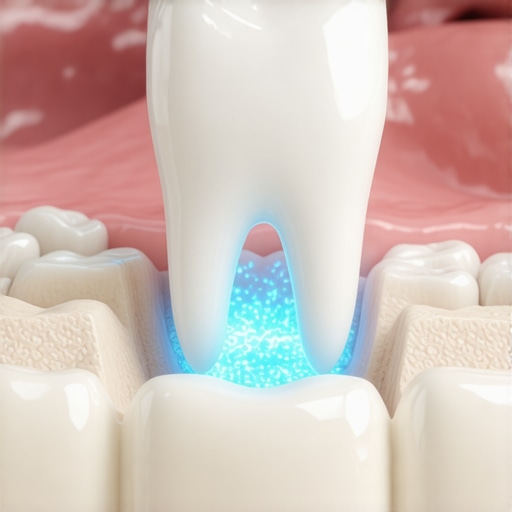
It’s science, not a fluke. According to the American Association of Orthodontists, bone remodeling is a biological necessity for tooth movement; the bone around your tooth root literally dissolves slightly to allow the tooth to shift into a new position. If everything stayed rigid, your smile would never change. You’ll notice this sensation most often on the truth about why your front teeth feel loose on invisalign tray swap days, as that is when the pressure is at its peak. It is vital to have a professional guiding you through this, so make sure you’ve done your homework on choosing a dentist for your transformation. When your teeth are in that transition phase, they are essentially floating in a softened state. It’s temporary, it’s necessary, and while it feels like you’re one apple away from a gap-toothed smile, your gums and ligaments are actually working overtime to stabilize everything once the movement is done.
Stop Poking Your Teeth With Your Tongue
Think of your teeth during Invisalign like fence posts in wet cement. For the posts to move to a new spot, the cement—in this case, your jawbone—has to soften up. If you keep wiggling the post with your hand while the cement is wet, the hole just gets wider and the post becomes even more unstable. I learned this the hard way around Tray 7. My right incisor felt like a loose piano key, and I spent the whole day flicking it with my tongue to see ‘just how loose’ it was. By evening, it was tender and throbbing. The first rule of survival is to leave it alone. The more you play with the movement, the more you irritate the periodontal ligament that is already working overtime to remodel your bone structure.
Stick to Your Cleaning Routine Even When it Feels Risky
When a tooth feels like it might pop out, your natural instinct is to stop brushing it hard or flossing near it. This is a massive mistake. Plaque doesn’t care if your teeth are moving; in fact, it loves the new gaps Invisalign creates. You need to maintain your teeth cleaning secrets to ensure those soft gums don’t get inflamed. If your gums swell due to poor hygiene, they will put even more pressure on the loose tooth, making the sensation worse. I remember being terrified that floss would act like a hook and pull my tooth out, but as long as you are gentle, keeping the area sterile is what actually helps the bone ‘set’ faster once the tray stops applying active pressure.
Vary Your Diet on Tray Swap Days
The peak of the ‘loose’ feeling usually happens during the truth about why your front teeth feel loose on invisalign tray swap days. On these days, your teeth are at their most vulnerable. During my first month, I tried to eat a crusty sourdough baguette on a swap day and nearly cried. Now, I advocate for ‘soft-load’ days. Stick to smoothies, pasta, or yogurt for the first 24 hours of a new tray. This isn’t just about pain; it’s about not putting mechanical stress on a tooth that is currently mid-migration. Proper Invisalign maintenance includes protecting the teeth themselves, not just the plastic trays.
Use the Tapping Test to Gauge Stability
If you are genuinely worried that a tooth is more than just ‘orthodontically loose,’ you can perform a modified version of the tapping test. Use the end of a clean toothbrush to very lightly tap the tooth. A healthy moving tooth will feel slightly ‘springy.’ However, if you feel a sharp, lightning-bolt pain or if the tooth moves more than a millimeter in any direction, it is time to check in with your provider. It is better to be safe and double-check how to tell if your invisalign tray is actually seated correctly than to ignore a potential issue.
Watch for These Specific Red Flags
While a little wiggle is normal, you need to know when you have crossed the line from progress into a problem. If you notice your gums turning a dark purple or if you experience a foul taste coming from the gumline of the loose tooth, these are not standard Invisalign side effects. If you’ve had a recent injury, you might need to know how to handle a tooth that was knocked loose but is still in the socket, which is a very different scenario than orthodontic movement. Normal ‘Invisalign loose’ feels like a dull instability; ‘Emergency loose’ usually involves throbbing, discoloration, or a tooth that doesn’t feel like it’s properly ‘attached’ to the tray’s movement path at all.
Most people assume that the faster you move through your trays, the better the result. I used to think that a little extra ‘push’ with my chewies or moving to a new tray early would shave weeks off my treatment. But here’s the cold, hard truth: your biology has a speed limit. There is a persistent idea that ‘more pressure equals more progress,’ but when you are choosing the best invisalign options for your lifestyle, patience is actually your greatest asset. If you try to outrun the natural remodeling process of your jawbone, you aren’t just making your teeth loose—you are putting yourself at risk for permanent damage.
Why Pushing Too Hard Might Ruin Your Roots
In my deep dive into the mechanics of clear aligners, I discovered that the ‘no pain, no gain’ mantra is actually dangerous here. We often think of invisalign vs traditional braces as a race to the finish line, but moving teeth too quickly can lead to apical root resorption—a fancy way of saying your tooth roots actually get shorter. A study published in the American Journal of Orthodontics and Dentofacial Orthopedics highlights that excessive orthodontic force doesn’t accelerate movement; it can actually trigger a ‘hyalinized zone’ in the ligament that temporarily halts progress altogether. When your teeth feel loose, it should be a gentle flexibility, not a traumatic instability.
Does your loose tooth mean the bone isn’t growing back?
This is the question that kept me up at night. The nuance most people miss is that the ‘looseness’ is a two-part phase: resorption (the bone breaking down) and apposition (the bone building back up). If you don’t allow for enough ‘rest’ time between movements, you’re always in the breakdown phase. This is why maintaining your teeth cleaning routine for long term health is so crucial; you need your gums to be at 100% health to support that bone regeneration. If you’ve been aggressive with your tray swaps, you might find that the wiggle stays around long after it should have stabilized.
The Danger of ‘Natural’ Teeth Whitening Traps
One of the biggest ‘oops’ moments I see involves the sudden urge to go ‘natural’ with cleaning while on Invisalign. You’re already worried about cosmetic dentistry for discolored teeth because the aligners can trap pigments. This leads many to try charcoal or baking soda. Stop right there. I recommend everyone take the grit test to how to tell if your charcoal toothpaste is destroying your enamel. These abrasives are a nightmare when your teeth are mobile. Your enamel is already under unique stress from the friction of the plastic trays and attachments; adding a sandpaper-like paste can cause permanent thinning of the tooth structure which no amount of cleaning can fix.
The Myth of the ‘Protected’ Tooth
Perhaps the most sophisticated mistake is believing that because your teeth are ‘covered’ for 22 hours a day, they are protected from traditional issues. This is actually a major item among teeth cleaning myths debunked by top dentists. In reality, your teeth are in a petri dish of saliva and bacteria. If you skip how regular teeth cleaning can prevent major dental issues, you are inviting decay to happen at an accelerated rate under those trays. I’ve seen more people stall their Invisalign progress due to a sudden cavity than due to the actual tooth movement itself. Have you ever fallen into the trap of thinking a quick rinse was ‘good enough’ before popping your trays back in? Let me know in the comments—we’ve all been there, but it’s a habit that can cost you your smile transformation.
Clean Your Trays Without Any Scrubbing
Once you’ve moved past the initial anxiety of loose teeth and mastered the basics of Invisalign maintenance, the game changes. It becomes about efficiency and long-term clarity. For months, I meticulously brushed my trays with a soft-bristled toothbrush and clear soap, only to find that they still looked ‘cloudy’ by day ten. I eventually learned that I was making a classic mistake. Manual brushing, even with soft bristles, creates microscopic scratches on the medical-grade thermoplastic. These tiny grooves act as magnets for biofilm and bacteria, which is exactly the secret to keeping your trays clear—or failing at it. If you want that invisible look to actually stay invisible, you have to stop the abrasive mechanical cleaning.
Your Toothbrush Might Be Ruining Your Aligners
I finally broke down and invested in a portable ultrasonic cleaner, and it was the single best decision of my entire treatment. These devices use high-frequency sound waves to create cavitation bubbles that ‘implode’ against the surface of the tray, knocking off debris that a brush could never reach. According to research published in the Journal of Clinical Orthodontics, ultrasonic cleaning is significantly more effective at reducing bacterial colony-forming units than manual brushing alone. It also eliminates the need for harsh chemicals that can warp the plastic. If you are struggling with how to get the morning breath smell out of your aligners, this tool is your primary weapon. I personally use mine every single morning while I’m drinking my coffee, and it keeps the trays looking brand new until the day I swap them out.
How do I maintain a straight smile long-term?
The biggest trap people fall into is thinking the finish line is the day they stop wearing active trays. Maintenance is a lifetime commitment. Once your teeth are in their final position, your bone needs months, sometimes years, to fully densify around the new roots. This is why maintaining your teeth cleaning routine for long term health is paramount during the retention phase. Most dentists now recommend Vivera retainers, which are significantly thicker and more durable than standard trays. I tell everyone I meet: your teeth have ‘memory.’ Without a rigid retainer, those ligaments will try to pull your teeth back to their original, crooked spots within weeks. I’ve seen friends lose three years of progress because they skipped their retainer for just one month. Don’t let that be you.
AI Doctors in Your Pocket Are the Next Big Thing
Looking ahead, the way we manage these treatments is shifting rapidly. We are seeing incredible Invisalign innovations in 2025 that focus on remote monitoring. I predict that within the next few years, standard check-ups will be almost entirely digital. New apps already allow you to take a 3D scan of your teeth using your smartphone, which AI then compares against your clincheck plan to tell you if you’re ready for the next tray. This tech ensures you are choosing the best invisalign options for your lifestyle by reducing the number of physical office visits while actually increasing the precision of the movement tracking. We are also seeing modern innovations that reduce sensitivity, making the ‘tray swap day’ much more manageable for those with low pain thresholds.
If you want to take your results to the next level, my absolute best tip is to start using a ‘Pul-tool’ or an OrthoKey. Stop using your fingernails to pry your trays out; it puts uneven torque on the plastic and can actually cause your teeth to ache more because of the lateral pressure. A removal tool pulls the tray straight down, protecting your attachments and your enamel. My challenge to you: stop using your toothbrush on your trays for 48 hours and switch to a dedicated soaking solution or an ultrasonic cleaner. You will notice a difference in the clarity and ‘feel’ of your aligners immediately.
The Mental Game of Trusting the Remodeling Process
One thing I never anticipated was the psychological toll of that “soft” feeling. You spend years with a fixed, stable bite, and suddenly your foundation feels like Jell-O. I learned that the days when my teeth felt most unstable were actually the days when my body was working the hardest to create space. If you are feeling overwhelmed, reading through Invisalign success stories can remind you that this phase is just a bridge to the finish line. Don’t let the temporary movement shake your confidence in the long-term plan. Remember that bone remodeling is a slow process, and the flexibility you feel today is the precursor to the stability you will enjoy tomorrow.
Tools That Saved My Sanity and My Smile
While your trays do the heavy lifting, your lifestyle needs to support the shift. I swear by three things: a high-quality removal tool to avoid manual torque, a gentle water flosser to keep gaps clean without pulling on the roots, and a reliable provider who doesn’t mind a “is this normal?” text. If you are just starting out, checking the ultimate guide to invisalign for adults can help you prep your bathroom cabinet before the wiggle sets in. Having your teeth cleaning secrets ready will save you from the secondary stress of gum inflammation, which often makes the loose sensation feel far more painful than it actually is.
The Future of Your Transformation is Worth the Wiggle
The loose sensation is the physical manifestation of change. It is scary because it feels like things are breaking, but in reality, they are being rebuilt into something better. If you ever feel like the movement is too much or you are seeing those red flags I mentioned earlier, do not hesitate to contact us or your local provider immediately. Choosing the right dentist ensures you have a safety net while you navigate this journey. Stay patient, keep your trays in for the full 22 hours, and remember that a wobbly Tuesday is just a necessary step toward a lifetime of straight-teeth confidence. Have you ever had that sudden panic when a tooth felt a little too mobile during your treatment? Let me know your story in the comments below!