
I stood there, staring at my reflection, trying not to cry over a piece of blue plastic. My bridge looked fantastic—a testament to the wonders of modern cosmetic dentistry—but the reality of cleaning it was a nightmare. I’d spent fifteen minutes wrestling with a needle threader that just wouldn’t cooperate. It poked my gums, it slipped, and finally, it snapped right in the middle of a tight spot. I realized then that if maintenance was this hard, I was going to fail at it. And failing at cleaning your bridge is a one-way ticket to major dental issues you definitely want to avoid. Today, I’m going to show you how I ditched those annoying threaders for good while keeping my gums healthier than they’ve ever been. I want to walk you through the “neighborly” advice I wish someone had given me the day my bridge was cemented in. We are going to reclaim your morning routine and make sure that beautiful smile stays exactly where it belongs.
Stop Fighting Those Flimsy Plastic Loops
I’ll be the first to admit it: for the first six months after I got my fixed bridge, I was a terrible patient. I’d try the needle threaders for two days, get frustrated, and then just… stop. I made the classic mistake of thinking that because the bridge was fake, it didn’t need the same attention as my real teeth. That was a huge error. Without proper care, food particles get trapped, bacteria throw a party, and suddenly you’re searching for how to tell if your dental bridge needs to be resealed because the support teeth are starting to ache. I even once considered the hidden danger of using a safety pin to fish out a piece of stubborn steak after a dinner party. Please, learn from my panic: there is a much more civilized, pain-free way to handle this. You don’t need to be a surgeon to keep your mouth clean; you just need the right gear that doesn’t feel like a puzzle. When you understand that regular care boosts oral health at any age, you start to look for tools that actually fit your lifestyle rather than fighting against them.
Is this really worth all the extra effort?
I know what you’re thinking. Is it really that big of a deal if you miss a spot under the pontic every now and then? It feels like such a small space. However, according to researchers at the American Academy of Periodontology, the accumulation of plaque around dental prosthetics can lead to localized gum disease faster than on natural teeth because the area is harder to stimulate and oxygenate. It’s not just about the bridge; it’s about the health of the anchors—the teeth holding it in place. If those fail, the whole investment goes with them. Have you ever felt like just giving up on flossing your bridge because it’s too much of a chore? I’ve been there, but we’re going to fix that today with some clever tools that actually work. We aren’t just aiming for a quick fix; we want to ensure long-term health without the daily frustration. Let’s dive into the alternatives that make the needle threader look like a relic of the past and help you maintain that bright smile with half the effort.
Turn Your Bathroom into a Mini Spa with a Water Flosser
I’ll never forget the first time I tried a water flosser. I was so determined to get under my bridge that I cranked the setting to ten. In a split second, I had sprayed my reflection, the ceiling, and my very confused cat. It was a mess, but when I finally looked in the mirror, the area around my bridge felt lighter. It was the first time I didn’t feel that ‘pressure’ of trapped debris. This tool is a game-changer for maintaining your teeth cleaning routine for long-term health because it uses pressurized water to reach places a physical threader simply can’t. Think of it like a power washer for your mouth; it flushes the gap between the gums and the pontic (the fake tooth) without you having to guide a piece of plastic through a needle’s eye. This is especially helpful if you’ve noticed how to stop the whistling sound when wearing a dental bridge, which often happens when the fit changes or airflow is blocked by buildup. 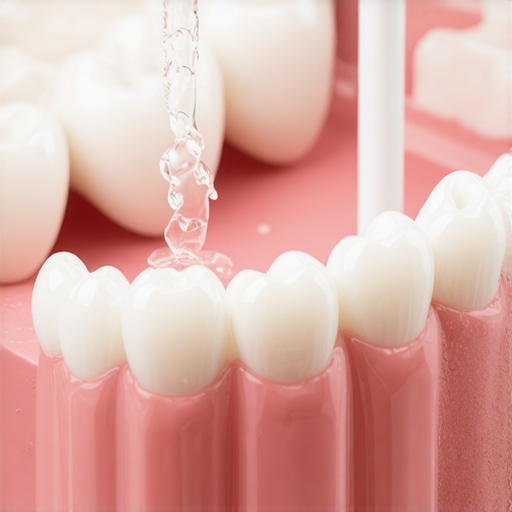
Master the Art of the Spongy Floss Glide
If you still prefer the tactile feel of string, you need to look for ‘superfloss.’ This isn’t your standard waxy string that shreds between your molars. It comes in pre-cut strands with three distinct sections: a stiffened end, a spongy middle, and regular floss at the end. The stiffened end acts like its own threader, but because it’s part of the floss itself, it’s much thinner and easier to navigate than those bulky blue loops. I used to keep a few of these in my car. Once, during a long commute, I managed to clean my entire bridge at a red light—something that would have been impossible (and dangerous) with a separate needle threader. It’s one of those modern teeth cleaning innovations that simplifies a chore into a habit. You simply slide the stiff end through the gap and pull until the spongy part is under the bridge. A few back-and-forth motions, and you’ve cleared out more bacteria than a week of ‘regular’ flossing ever could.
Use Tiny Brushes for the Hardest Gaps
Sometimes, even water and spongy floss aren’t enough for the corners where the bridge meets your natural teeth. This is where interdental brushes come in. They look like tiny, soft pipe cleaners. You don’t ‘thread’ them; you just push them gently into the space at the gumline. I started using these when I realized my gums were getting red right at the base of the anchor teeth. If you have any sensitivity, look into teeth cleaning for sensitive teeth what works best in 2025 to find brushes with coated wires that won’t give you that ‘zing’ of discomfort. Using these small brushes ensures that you are protecting the foundation of your bridge. Remember, if the real teeth holding the bridge up get a cavity, the whole structure is at risk. By focusing on these specific points, you are actively learning how regular teeth cleaning can prevent major dental issues down the road. It takes about thirty seconds, but the peace of mind is worth hours of dental work later.
The Scrubbing Trap That Ruins Your Gums
One of the biggest misconceptions I see—and one I fell for myself—is the idea that more pressure equals a cleaner bridge. We’ve been conditioned to think that if we aren’t “scrubbing,” we aren’t cleaning. But here is the nuance: your gums aren’t a kitchen floor. When you use an interdental brush or a water flosser with too much force, you actually risk creating micro-tears in the delicate tissue where the bridge meets the gumline. I used to think I was being thorough, but I was actually inviting bacteria to settle into those tiny wounds. It’s a common theme in teeth cleaning myths debunked by top dentists; gentle consistency always beats aggressive occasional cleaning. If you overdo it, you might find your gums bleed only when you use an electric toothbrush because they’ve become chronically irritated. 
Why does my bridge still trap food even with perfect technique?
Sometimes, it’s not your cleaning method; it’s the design of the bridge itself. A common “oops” factor is failing to realize that your bone and gum tissue naturally change shape over time. A bridge that fit perfectly three years ago might now have a microscopic gap that’s just the right size for a sesame seed. This is why choosing the right dentist for your initial restoration is so vital—they need to anticipate these changes. A study in the Journal of Clinical Periodontology highlights that the “washout” effect under a pontic occurs because the saliva flow isn’t enough to clear heavy biofilm without specific mechanical aid. If you notice a change in how food gets stuck, don’t just clean harder; it’s time to learn how to tell if your dental bridge needs to be resealed. Ignoring a slight looseness or a new gap can lead to the “penny taste” of infection or even structural failure.
Don’t Ignore the Biofilm That You Can’t See
We often focus on the big pieces of food—the steak or the spinach—but the real enemy is the invisible biofilm. I used to think that if I didn’t see anything on the floss, I was good to go. That’s a dangerous trap. Biofilm is a sticky city of bacteria that hardens into tartar within 24 to 48 hours. This is why modern teeth cleaning innovations like sonic technology are so helpful; they disrupt the bacteria on a microscopic level that manual tools might miss. In the world of cosmetic dentistry myths debunked, the idea that “porcelain can’t get cavities” is technically true, but the tooth under the porcelain absolutely can. If you aren’t cleaning that margin every single day, you’re building a foundation on sand. Have you ever fallen into this trap of thinking your bridge was “safe” just because it looked clean on the surface? Let me know in the comments! Staying ahead of these nuances is the only way to ensure long-term health for your smile. Remember, your bridge is a high-performance tool, and like a fine-tuned car, it needs more than just a surface wash to keep running. Keep an eye on those subtle changes, and don’t be afraid to ask your hygienist for a “deep dive” into your technique during your next visit. It’s better to adjust your routine now than to face major dental issues that could have been prevented with a simple change in angle or tool.
The Handheld Gadgets That Actually Work
I learned the hard way that a standard toothbrush is like trying to detail a sports car with a kitchen sponge—it just doesn’t get into the nooks and crannies that matter. To truly protect your investment, you need to elevate your toolkit. Personally, I never travel without my portable water flosser, but I add a small splash of antimicrobial mouthwash to the reservoir. This ensures that every time I flush the area under my bridge, I’m also delivering a localized hit of bacteria-fighting solution. If you are dealing with aligners, following expert tips for clear smiles is the difference between a tray that stays transparent and one that turns yellow by day ten. I’ve found that using a sonic cleaner for your trays while you eat breakfast is the single best way to prevent that ‘cloudy’ look that ruins the aesthetic. When you realize that regular teeth cleaning can prevent major dental issues, you stop seeing these tools as chores and start seeing them as insurance policies for your face.
How do I keep this dental work looking like new for the next decade?
Maintaining a complex restoration like a bridge or porcelain veneers over the long haul requires more than just home care; it requires a dentist who uses high-level diagnostics. This is where the industry is heading. According to the Gordon J. Christensen Clinicians Report, digital impressions and 3D scans are significantly more accurate than traditional molds for identifying microscopic gaps where cement might be washing out. I’ve started asking for these scans during my yearly checkups. We can compare the current scan to the one from last year to see if my gums have receded even a fraction of a millimeter. This proactive approach is a cornerstone of cosmetic dentistry trends that transform smiles today. It’s about catching a tiny problem before it becomes a bridge failure. 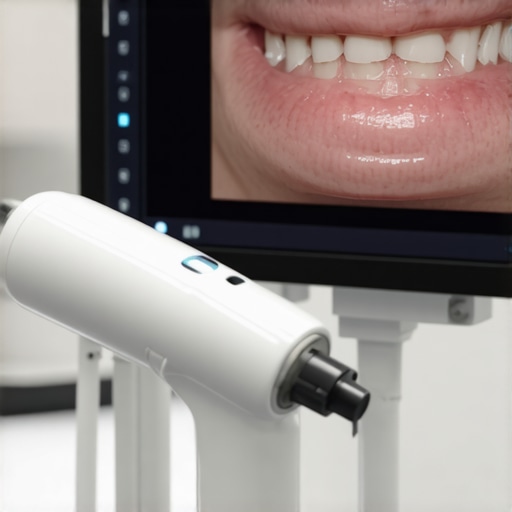
Look Ahead with Tech That Sees Through Enamel
I predict that within the next three years, we’ll all have some form of AI-integrated intraoral camera at home that syncs with our phones to flag red spots or plaque buildup before we even feel a twinge. We are already seeing digital scans catch cavities that x-rays miss, and that technology is getting smaller and cheaper every day. If you’re currently on a smile journey, make sure you are choosing the right dentist who invests in these tools. A dentist who still relies solely on a metal explorer and a mirror might miss the early signs of ‘crevice decay’ around your expensive new work. My best advice? Try the water flosser with a dash of mouthwash tonight—you’ll feel the difference in the tightness of your gums within 48 hours. It’s a simple change that pays massive dividends in how long that Hollywood smile actually lasts.
The Hard Truth About My Five-Year Bridge Milestone
Reflecting on my journey since that first stressful morning with a needle threader, I’ve realized a few things that no brochure explains. First, consistency is more important than perfection; missing one night isn’t a disaster, but missing a week is how you end up needing major dental issues fixed in an emergency chair. Second, your gums will tell you the truth before your eyes do. If they look puffy or red, they are screaming for oxygen and a better flush. Finally, the best dental work in the world is only as good as the foundation it sits on—don’t let your anchor teeth fail from neglect while you focus only on the porcelain.
The Gear That Actually Saved My Sanity
I’ve tried every gadget on the market, but these tools are the only ones that stayed in my bathroom cabinet after the novelty wore off. I swear by a cordless water flosser because it removes the chore element of being tethered to a sink. I also recommend keeping a pack of spongy floss in your travel bag; it’s one of those modern teeth cleaning innovations that makes maintenance feel less like surgery. Lastly, find an interdental brush with a flexible neck—it’s the only way to reach the back side of a molar bridge without cramping your hand. These tools are the secret to maintaining your teeth cleaning routine for long-term health without the daily headache.
#IMAGE_PLACEHOLDER_E#
Your Smile Is Worth the Five Extra Minutes
At the end of the day, a bridge is more than just a dental prosthetic; it’s your confidence, your ability to enjoy a meal, and your first impression on the world. While cosmetic dentistry trends that transform smiles beyond expectations have made these restorations more durable than ever, they still need a human touch to thrive. Don’t be afraid to experiment with different tools until you find the one that clicks for your specific anatomy. You’ve invested time and energy into your smile—now, give it the few minutes of daily respect it deserves to stay bright. Have you ever found a specific tool or trick that made cleaning your bridge finally ‘click’ for you? Let me know in the comments below!