
I remember sitting in my car after a routine appointment, tapping my teeth together and feeling like I’d just had a mountain installed in the back of my mouth. I’d gone in for a simple cavity fix, but I left feeling completely lopsided. It’s a bizarre, unsettling sensation when one tooth decides to be the overachiever of the group and hit the ‘ceiling’ before any of the others. If you’re currently running your tongue over a new restoration and wondering if your jaw is permanently crooked, take a deep breath. I’ve been there, I’ve made the ‘wait and see’ mistakes, and I’m here to tell you exactly what’s going on inside that mouth of yours. Just last year, I spent three days trying to convince myself that my bite would ‘settle’ naturally, only to end up with a throbbing jaw and a return trip to the chair.
Why your bite feels like a tectonic shift
When you’re in the chair and the local anesthetic has turned your lip into a heavy, useless slab of meat, the dentist asks you to ‘bite down and grind’ on that little blue piece of articulating paper. You do your best, but you can’t actually feel where your teeth are. I made the rookie mistake of nodding along and mumble-saying everything felt perfect just because I was hungry and wanted to go home. That’s how I ended up with a tooth that felt a mile high by dinner time. This happens because the expert tips for your best smile usually involve getting that bite alignment precisely right, but your numbed nerves aren’t exactly helpful witnesses during the process. It’s a very similar disorientation to how your jaw feels tired after a long dental cleaning; everything is just a bit out of its usual, comfortable rhythm. Today, we are going to solve the mystery of the ‘high filling’ and figure out if you need a quick five-minute adjustment or just a little more patience. We will look at why this happens and how it affects your overall oral health.
Does a tiny millimeter really make that much of a difference?
You might be skeptical. It seems like such a small piece of resin or composite, so surely your mouth will just adapt and wear it down eventually, right? I used to think the same until I learned that the human mouth is sensitive enough to detect a single hair between the teeth. According to the American Dental Association, your periodontal ligament—the specialized tissue that acts as a shock absorber for your tooth—can become quickly inflamed if it’s taking 100% of the biting force instead of sharing it with its neighbors. It isn’t just a mental quirk; that tiny height difference is a genuine mechanical issue that puts your tooth under immense stress. Does your tooth feel like it’s hitting first every single time you swallow or speak? It shouldn’t be that way.
The phantom pebble in your mouth
When a filling is even slightly too tall, it acts like a permanent pebble in your shoe. You can still walk, but every single step is a nagging reminder that something is off-balance. This ‘premature contact’ can lead to some pretty annoying side effects, like why your new filling feels sensitive to cold air or even a dull ache that radiates through your entire jaw. It’s a similar constant pressure to how your invisalign aligners feel tight when you first swap them out for a new week—your body is reacting to a physical change it wasn’t expecting. If you ignore it, your jaw muscles might start to overcompensate, leading to tension headaches or even a chipped filling down the road. We want to avoid that stress and get you back to enjoying your favorite meals without thinking about your molars every second. Have you ever left the dentist only to realize an hour later that your bite was totally off? Let me know in the comments if you’ve faced this, because it’s a more common ‘lightbulb moment’ than you’d think.Last year, I tried to ‘sand down’ a new crown by chewing on a particularly stubborn sourdough crust. I thought I was being clever, essentially acting as my own DIY dentist. By the next morning, the ligament around that tooth was so inflamed that even a light breeze felt like an electric shock. I eventually had to slink back to the dental chair, where a ninety-second adjustment solved everything. If you are feeling that ‘mountain’ in your mouth, don’t try to chew it away. Instead, pay attention to the specific signals your mouth is sending.
Run the click test to find the culprit
To figure out if your filling is truly high, you need to perform what I call the ‘slow-motion click.’ Most people try to test their bite by chewing rapidly, but your jaw muscles are smart—they will actually shift your jaw to avoid the high spot subconsciously. To get an honest reading, relax your face and slowly, very slowly, bring your teeth together until you feel the very first point of contact. If that contact happens on the new filling while your other teeth are still floating apart, you’ve found the problem. This is often how to handle a sudden sharp pain when you bite down—by identifying exactly where the interference is before the inflammation gets out of control. 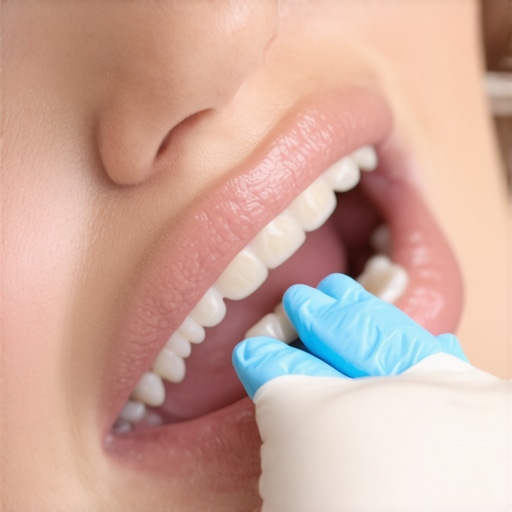
Why a quick office visit is better than toughing it out
You might think you’re saving time by waiting for the filling to ‘wear in,’ but dental composite is incredibly durable. It isn’t like a new pair of shoes that stretches over time. If the bite is off, the tooth is essentially being hammered into the socket with every swallow. This mechanical stress is why your new filling feels sensitive to cold air; the nerve is being rattled constantly. In my case, I waited so long that the inflammation spread to my jaw joint. A quick visit to a professional who knows expert tips for your best smile can fix this. They will use articulating paper to mark the high spots and then use a fine-grit burr to smooth them down. It’s painless, takes minutes, and provides instant relief.
Identifying the sharp signals your jaw is sending
Beyond the ‘mountain’ feeling, look for secondary symptoms. Is your jaw popping on one side? Do you have a dull headache that starts in front of your ear? These are signs that your muscles are working overtime to compensate for the uneven bite. Regular maintenance, much like how regular teeth cleaning can prevent major dental issues, is about preventing these small imbalances from turning into chronic pain. If you notice why your dental bridge feels heavy for the first few days, it’s often the same principle—your mouth is trying to map out a new landscape. If that heavy feeling doesn’t dissipate, it’s a clear signal that the vertical dimension of your bite needs a professional tweak. Don’t let a millimeter of resin dictate your comfort level for another day.People often think that once a dentist trims down a high spot, the discomfort should vanish in a heartbeat. But here is the hidden nuance: your brain has a ‘memory’ for your old bite, and your nervous system doesn’t always hit the reset button just because the porcelain or resin is now the right height. In my experience, we focus so much on the mechanical fix that we ignore the ‘proprioceptive ghost’—that lingering feeling that something is still wrong even when the bite is technically perfect.
Stop blaming the porcelain for your jaw pain
Everyone tells you that cosmetic dentistry is strictly about aesthetics, but cosmetic dentistry myths debunked show us that functionality is the real driver behind those Hollywood smiles. If you’ve been chasing a ‘perfect’ feel and keep going back for adjustments, you might be falling into the ‘occlusal neurosis’ trap. This is a specific state of hyper-awareness where you become so focused on the micron-level contact of your teeth that no adjustment feels like enough. I once spent weeks convinced a crown was too high, only to realize my jaw muscles were simply stuck in a protective spasm from the original procedure. This is a common hurdle when choosing the right dentist; you need someone who understands that the muscles and nerves need time to ‘unlearn’ the old, crooked bite pattern.
Is your ‘perfect’ bite actually a moving target?
Did you know that your bite changes throughout the day based on your hydration levels and even your posture? A study published in the Journal of Oral Rehabilitation notes that the position of your teeth when you are lying down in the dental chair is fundamentally different from when you are standing up or chewing. This is why a restoration that felt great at the office might feel like a skyscraper by 10 PM. If you are going through an Invisalign transformation, this shift is even more pronounced. It’s also why your teeth feel loose during the second month of Invisalign—the bone is literally remodeling, and your ‘bite’ is a work in progress, not a finished product. 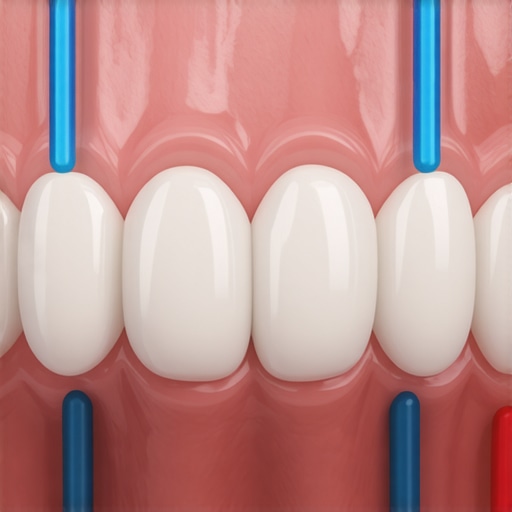 The biggest ‘oops’ factor I see is patients demanding multiple adjustments in a single week. Every time the dentist grinds down the material, they are moving the goalposts for your jaw muscles. If you don’t allow at least three to five days for the inflammation in the periodontal ligament to subside, you’re just guessing. This level of patience is just as vital as maintaining your teeth cleaning routine; it’s about the long-term health of the joint, not just the instant gratification of a ‘smooth’ feel. We often think of the secret to a Hollywood smile as being just about the veneers, but the real secret is the harmony between the teeth and the temporomandibular joint. Have you ever fallen into this trap of over-adjusting a new filling? Let me know in the comments, because finding that balance between ‘needed fix’ and ‘too much tweaking’ is a fine line we all walk.
Can technology actually take the guesswork out of your bite?
If you feel like you are stuck in an endless cycle of ‘shave and test’ at the dentist’s office, it might be time to look beyond the carbon paper. While the blue articulating paper is a classic, many modern practices are shifting toward computerized occlusal analysis. I personally swear by the T-Scan system. Unlike the paper, which only shows where the teeth touch, the T-Scan shows the force and timing of that contact. Dr. Robert Kerstein, a leading expert in computer-guided occlusal therapy, has documented how this digital precision can resolve chronic jaw pain that traditional methods miss. When you are choosing the right dentist, asking if they use digital bite mapping can save you weeks of frustration. This technology is the bridge between a ‘good enough’ filling and a restoration that actually feels like part of your body.
How do I keep my smile stable for the next decade?
Maintenance isn’t just about the occasional scrub; it’s about protecting the investment you’ve made in your mouth. For those of us who have gone through an Invisalign transformation, the work doesn’t stop when the last tray comes out. I’ve found that using a high-quality electric toothbrush with a pressure sensor, like the Philips Sonicare ProtectiveClean 6100, is a game-changer. It prevents you from scrubbing too hard, which is why your gums bleed only when you use an electric toothbrush sometimes—it’s usually the human, not the machine, at fault. Pair this with invisalign maintenance expert tips like using a dedicated ultrasonic cleaner for your retainers to prevent biofilm buildup. This level of care is essential for maintaining your teeth cleaning routine because it addresses the microscopic level of oral health that a standard manual brush simply can’t reach.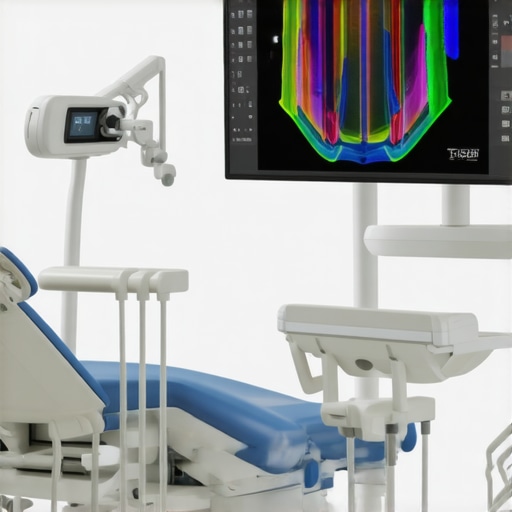
The future of your bite is digital and personalized
I predict that within the next five years, we will see ‘smart’ retainers and mouthguards that sync with your phone to track clenching patterns in real-time. We are already seeing modern teeth cleaning innovations that use guided biofilm therapy to make cleanings nearly painless. This shift toward data-driven dentistry means that ‘feeling’ a high spot will soon be replaced by your dentist seeing a red alert on a screen before you even leave the chair. This is part of the broader cosmetic dentistry trends where the focus is moving from purely visual perfection to biological harmony. If you want to take control of your dental health today, my top advanced tip is to start using a pH-balancing mouth rinse. Most ‘refreshing’ rinses are actually quite acidic, which can soften your enamel and make your fillings more prone to wear. Switching to a neutral or slightly alkaline rinse protects the margins of your dental work, ensuring that ‘perfect’ bite stays perfect for years. Try swapping your current rinse for one with xylitol and a neutral pH for two weeks, and you’ll notice a significant decrease in that ‘fuzzy’ tooth feeling by the end of the day.
The hard truth about why your mouth feels like a construction site
After years of navigating dental chairs and bite adjustments, I’ve realized that the most frustrating part of a ‘high filling’ isn’t the physical height—it’s the mental exhaustion of wondering if you’re imagining it. Here are the three lightbulb moments that changed how I approach my oral health:
- The brain-to-tooth lag is real: Even after a dentist fixes the mechanical issue, your brain might still send ‘alert’ signals for 48 hours. Don’t panic if it doesn’t feel 100% normal the second you stand up.
- Being a ‘nice’ patient is a mistake: I used to mumble that my bite felt fine because I didn’t want to keep the dentist longer. Now, I know that finding a dentist who gets your smile means working with someone who wants you to be picky.
- Your jaw has a physical memory: If you’ve been biting ‘around’ a high spot for three days, your muscles are in spasm. You have to learn how to stop your teeth from clenching when you are stressed at work or after a long procedure to let the inflammation actually heal.
The specific tools that keep my smile in balance
I don’t just rely on luck to keep my dental work in top shape. There are a few specific things I trust to ensure my bite stays aligned and my enamel stays strong:
- Digital Bite Mapping (T-Scan): If your dentist still only uses blue paper, ask about digital options. It’s one of the cosmetic dentistry trends that transform smiles beyond expectations because it removes the guesswork from bite force.
- Neutral pH Mouth Rinses: I personally use rinses containing Xylitol to keep my mouth alkaline. This protects the edges of new fillings from softening, which is a vital part of maintaining your teeth cleaning routine for the long haul.
- Pressure-Sensitive Brushing: Using a brush that vibrates when you press too hard protects those sensitive ligaments. This is a must-know among teeth cleaning myths debunked by top dentists—scrubbing harder doesn’t make things cleaner; it just irritates your bite.
Your path back to a pain-free bite
You don’t have to live with a tooth that feels like a mountain. Whether you are recovering from a simple filling or are in the middle of a complex teeth whitening and cosmetic enhancement journey, your comfort is the ultimate priority. A balanced bite is the foundation of every great smile, and advocating for that extra millimeter of adjustment is the best thing you can do for your long-term health. Don’t let a tiny piece of resin steal your peace of mind. Have you ever left the dentist only to realize your bite was totally off once the numbness wore off? Let me know in the comments how long you waited before going back!