
I remember sitting at a high-end steakhouse a few years ago, trying to look sophisticated while secretly using my tongue to pry a piece of ribeye out from under my dental bridge. It is a very specific kind of panic, isn’t it? You brush three times a day, you gargle until your throat stings, yet that nagging feeling of a stuck seed or fiber remains. It is frustrating, it is embarrassing, and honestly, it makes you wonder if getting the bridge was a mistake in the first place. I spent months thinking my bridge was failing, but the reality was simpler: I was using the wrong tools for the job. In fact, I made the massive mistake of using a sharp toothpick and eventually a safety pin to clear the gap, which only led to bleeding and a lot of unnecessary soreness. Today, I am going to show you exactly why your toothbrush is failing you and how to reclaim your comfort without the constant fear of a ‘pantry’ under your tooth. According to the American College of Prosthodontists, nearly 178 million people in the U.S. are missing at least one tooth, and while bridges are a fantastic solution, they are not a ‘set it and forget it’ piece of hardware.
Why Your Toothbrush Fails the Bridge Test
The truth is, your brush cannot reach what it cannot see. A dental bridge isn’t like a natural tooth; it is a literal bridge over a gap where a tooth used to be. The space between the fake tooth (the pontic) and your gum line is a playground for bacteria and debris. If your bridge wasn’t fitted with a specific hygiene gap, or if your gum tissue has changed shape over time, you are basically fighting a losing battle with standard bristles. This is why even those who are diligent about regular teeth cleaning still find themselves struggling with bad breath or localized irritation.
Is this annoying feeling just my life now?
You might be worried that a constant full feeling or a slight odor is just the price you pay for a complete smile. It is not. You do not have to live with the fear of laughing and revealing a piece of spinach tucked away in your hardware. I have learned that using a safety pin to dig around is a recipe for a massive infection, but there are far more effective, gentler ways to handle this.
The Structural Design That Works Against You
Most people do not realize that the pontic is often shaped in a way that creates a tiny shelf. This shelf is a magnet for plaque. Even if you have mastered maintaining your teeth cleaning routine, that specific nook remains untouched by traditional methods. Have you ever felt like you are doing everything right and still failing to keep that area clean? I would love to hear your stuck food horror stories—we have all been there! We are going to dive into how to clean under a fixed dental bridge without using a needle threader and even how to address a whistling sound that might be bothering you.
Ditch the Toothpick for a Power Washer
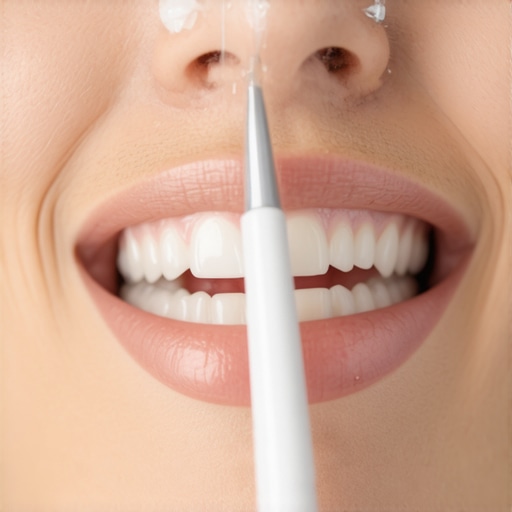
Think of your dental bridge like a backyard deck. You can sweep the surface until it shines, but the real rot happens in the dark space underneath the boards. To clear that out, you need more than a standard brush; you need a water flosser. This tool uses a pressurized stream of water to flush out the ‘pantry’ of food particles that get wedged between the fake tooth and your gums. I remember the first time I used one; I cranked the setting to the highest level and immediately sprayed my bathroom mirror, the ceiling, and my startled cat. Once I learned to lean over the sink and start on the lowest pressure, I was shocked at what came out. It is truly the most effective way to safely remove a piece of popcorn stuck under your gum line without risking damage to the porcelain. This ‘power washing’ method ensures that bacteria cannot colonize the areas your bristles simply skip over.
Tiny Brushes Reach Where You Can’t
If the water flosser is your power washer, interdental brushes are your detailing kit. These tiny, pipe-cleaner-like tools are designed specifically for the gaps that standard floss might skip. They come in various sizes, and it is vital to find the one that fits snugly but does not require force to insert. When I first started using these, I noticed a slight metallic taste—which I later learned was a sign of localized gingivitis from years of neglect. If you experience this, do not panic. You might need to learn how to stop your gums from bleeding during your first week of flossing as your tissue adjusts to being actually clean for the first time in years. These brushes are a game-changer for maintaining your teeth cleaning routine because they physically scrub the sides of the abutment teeth that hold your bridge in place, preventing the decay that often leads to bridge failure.
Floss Like a Pro Without the Headache
For those who prefer the traditional route, ‘super floss’ is the gold standard. It features a stiffened end that acts like a needle, allowing you to thread the floss through the gap under the bridge without needing a separate plastic threader. Once it is through, the spongy middle section sweeps away plaque like a soft mop. I used to think this was a chore until I realized that a healthy bridge can last decades, while a neglected one leads to expensive replacements. If you have sensitive gums, looking into teeth cleaning for sensitive teeth can help you find products that will not irritate your mouth while you work. Remember, the goal is to gently ‘C-shape’ the floss around the natural teeth at either end. Avoiding the hidden danger of using a safety pin or other sharp objects is paramount; you want to preserve the seal of your bridge, not puncture your delicate gum tissue. The sensation of a truly clean bridge is unique—your tongue will keep searching for the ‘fullness’ that used to be there, only to find smooth porcelain and healthy, firm gum tissue.
Most people believe that the goal of a professional cleaning is purely aesthetic—getting rid of that coffee stain from Tuesday morning. However, the true expertise lies in managing the microscopic biofilm. I often see patients who fall into the ‘scrubbing trap,’ thinking that more pressure or grit equals cleaner teeth. This is exactly where you risk destroying your enamel by using abrasive DIY hacks. A real pro knows that modern teeth cleaning innovations are about precision, not power. When it comes to cosmetic work, the ‘Oops’ factor usually happens when patients expect immediate perfection. For instance, porcelain veneers can feel bulky at first because they are designed to protect the tooth structure while settling into your natural bite. If you rush to have them ‘slimmed down’ immediately, you often compromise the material’s long-term integrity.
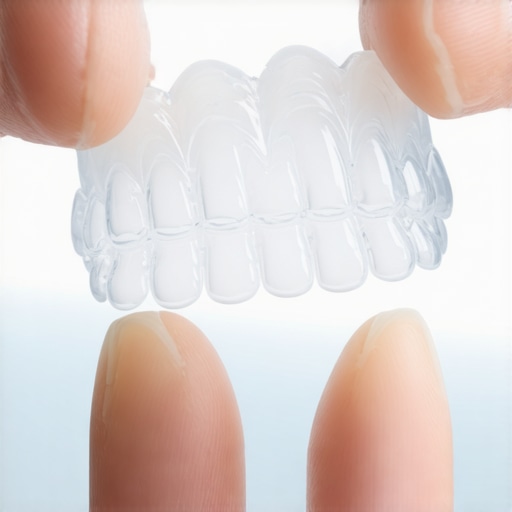
In the world of clear aligners, there is a common myth that wear time is the only metric that matters. While 22 hours a day is the gold standard, the nuance lies in ‘tracking.’ I’ve seen patients who hit their hours perfectly but fail because their attachments feel like sandpaper and they subconsciously avoid biting down fully, which prevents the tray from fully seating. This lack of engagement is what causes Invisalign trays to keep popping off your back teeth. If the tray isn’t perfectly flush against the edge, the tooth isn’t moving—it’s just being held in a static, ‘stuck’ position.
Why do your front teeth feel loose on Invisalign tray swap days?
This is perhaps the most common advanced concern I hear from patients. According to a study published by the Journal of Clinical Orthodontics, the periodontal ligament must undergo a process called ‘remodeling’ to allow for movement. That slight wiggle you feel isn’t your tooth falling out; it’s a necessary biological phase where the bone is softening to allow the tooth to migrate. If your teeth feel loose during Invisalign treatment, it’s usually a sign of success. However, the trap is skipping your trays for just one weekend during this phase. This ‘yo-yoing’ effect confuses the ligament and can lead to root resorption, a serious condition where the body starts to eat away at its own tooth roots. Have you ever fallen into this trap or felt that strange looseness and panicked? Let me know in the comments.
Lastly, when considering cosmetic enhancements, most people focus entirely on the shade. But the real secret to a natural look is texture. We spend a significant amount of time learning how to match the exact texture of your natural teeth because smooth, perfectly flat porcelain looks fake under sunlight. Real teeth have tiny ridges and ‘perikymata’ that catch the light. Ignoring this is why some restorations look like ‘chicklets’ rather than part of a human smile. Maintaining that look requires more than just maintaining your teeth cleaning routine; it requires understanding how to clean without scratching those delicate micro-textures.
Maintaining that delicate texture is precisely why I transitioned to using a low-abrasive paste with an RDA score below 70. If you have invested in a smile makeover, you must treat it like a fine piece of art. You would never use a scouring pad on a silk painting, yet I see people do the equivalent every day with high-grit charcoal pastes. Using the wrong products is the fastest way to ruin your investment, and I always recommend taking the grit test to ensure you aren’t accidentally sanding down your veneers or natural enamel. For those with Invisalign, the challenge is keeping the plastic as clear as the day you popped the tray out of the bag. I personally use an ultrasonic cleaner for my trays every morning; it uses high-frequency sound waves to vibrate off the biofilm that a toothbrush simply smears around. It is the secret to keeping your Invisalign trays perfectly clear for two weeks without that dreaded yellow tint.
Stop the Scratches Before They Start
Beyond the paste, the physical tools you use daily determine the longevity of your bridge or bonding. I’ve found that using a soft-bristled electric brush with a pressure sensor is non-negotiable. If you press too hard, you aren’t cleaning better; you are just pushing your gums away from the margins of your dental work. Dr. Gordon Christensen, a world-renowned expert in restorative dentistry and founder of Practical Clinical Courses, has noted that a significant percentage of fixed prosthodontic failures are due to poor plaque control at the gingival margin. This is why Invisalign maintenance and bridge care require a level of precision that traditional tools often miss. If you are struggling with a lingering scent, learning how to get the morning breath smell out of your Invisalign case is a great first step toward total oral hygiene. 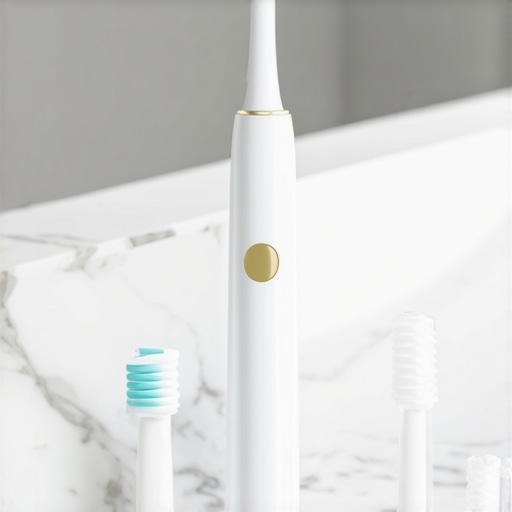
How do I maintain my smile’s brilliance over the long term?
Consistency is the only real answer, but technology makes it much easier. I predict that within the next five years, we will see AI-integrated toothbrushes that don’t just tell you where you missed, but actually analyze the chemical composition of your saliva to alert you to early-stage decay or gum disease. This shift toward real-time monitoring will bridge the gap between your twice-yearly teeth cleaning appointments and your daily home care. By utilizing modern teeth cleaning innovations like guided biofilm therapy, we can now remove plaque with zero discomfort, which is a far cry from the scraping and poking of the past.
Smart Scanning Means No More Guesswork
We are already seeing this future unfold in how we track dental health. Instead of waiting for a tooth to ache, how we use digital scans to catch cavities allows us to see demineralization before it even becomes a hole. This proactive approach is the difference between a simple filling and a complex root canal or bridge. I strongly encourage you to try the ‘five-second light check’ tonight: shine a bright flashlight on your teeth in the mirror. If you see dull spots or tiny scratches, it’s time to rethink your tools. Your smile is a living, breathing part of you, and it deserves the highest level of detailing.
Lessons From the Bridge Trenches
After years of helping patients navigate life with restorations, I have noticed that the most important breakthroughs aren’t just about the tools, but about the biology. First, understand that your ‘proprioception’—the way your brain perceives your teeth—needs time to recalibrate. Cleaning under the bridge daily actually speeds up this process, helping your brain stop flagging the bridge as a foreign object. Second, your gum tissue is surprisingly reactive; if you skip even two days of cleaning, the tissue can swell slightly, making it even harder to reach the gap. This is why many cosmetic dentistry myths debunked by professionals emphasize that ‘maintenance-free’ dentistry doesn’t exist. Finally, look at how regular teeth cleaning can prevent major dental issues to realize that your daily efforts are preventing bone loss that could jeopardize the entire bridge structure.
My Essential Smile Toolkit
If I had to build a survival kit for a healthy bridge, it would start with a high-quality water flosser for flushing out the deep ‘pantry’ zones. I also highly recommend looking into teeth cleaning for sensitive teeth if you find that standard methods cause aching around the abutment teeth. A second must-have is a set of silicone-coated interdental brushes; unlike metal-core ones, these won’t scratch the glaze on your porcelain. Lastly, always keep a pocket-sized mirror with an LED light—sometimes seeing the angle of the gap is the only way to ensure total debris removal. These tools make maintaining your teeth cleaning routine feel less like a chore and more like a professional detailing session.
Commit to Your New Smile
Your journey doesn’t end when the cement dries; that is actually where the real maintenance begins. By adopting these advanced hygiene habits, you aren’t just cleaning a piece of porcelain; you are ensuring that your investment lasts a lifetime and that your breath stays fresh every single day. Take the time to master these tools, and you will find that the ‘annoying’ feeling of a bridge quickly disappears, replaced by a confident, healthy smile. Have you ever had a moment where you finally cleared a stubborn piece of food and felt that instant wave of relief? Let me know your best ‘cleaning win’ or your biggest struggle in the comments below! #IMAGE_PLACEHOLDER_E#