
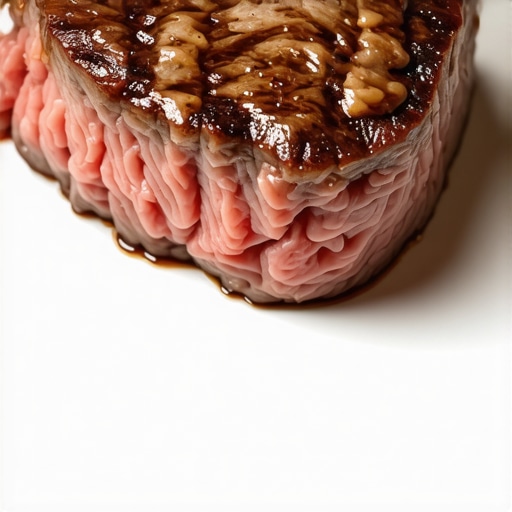
The waiter set the plate down—a perfectly seared, medium-rare ribeye—and my heart immediately sank. There I was, nursing a fresh temporary crown on my upper molar, and I might as well have been staring at a brick. I spent the first ten minutes of the meal just moving peas around, terrified that one wrong chomp would leave my tooth exposed and my crown sitting on the white tablecloth. I’ve been there. I know that specific, low-level anxiety that comes even when you’ve spent time matching the texture of a crown to your real teeth. I’m going to show you exactly how to eat that steak without a dental emergency. It’s not about giving up the good stuff; it’s about a few tactical moves I learned the hard way after a very embarrassing incident involving a piece of saltwater taffy and a frantic call to my cosmetic dentist. [image placeholder]
The Night I Almost Let a Ribeye Win
We often treat temporary crowns like they are made of glass, but the real issue is the cement. My biggest mistake early on was assuming I could just ‘be careful’ while eating normally. I ended up pulling a crown off with a gummy bear because I didn’t respect the physics of the bond. According to the Journal of the American Dental Association, temporary luting agents are specifically designed to have low tensile strength so your dentist can pop the crown off later without breaking your tooth. This means lateral forces—the side-to-side grinding we do when eating steak—are your biggest enemy. Have you ever felt that terrifying ‘tug’ on a tooth and wondered if your dinner was about to cost you another five hundred dollars?
Is this tiny piece of plastic actually going to hold?
It’s a valid fear. When the reason your crown feels tall hits you during your first bite, you realize the alignment isn’t quite the same as your permanent tooth. This slight height difference makes the temporary crown a ‘bullseye’ for every chew. Today, we are solving the mystery of the ‘Safe Steak.’ I’ll show you how to bypass the grinding motion entirely. It involves more than just chewing on the left side of your mouth; it’s about changing how you process food before it even touches your tongue.
Slice It Like You Are Prepping for a Toddler
The first rule of the ‘Temporary Crown Club’ is that your knife is now your best friend. I used to think cutting a steak into normal, bite-sized chunks was enough. It isn’t. You need to mince that ribeye. By the time it hits your fork, it should be no larger than a kernel of corn. Smaller pieces require less mechanical force to break down, which protects the temporary bond. This is similar to the care needed when you’re figuring out the trick to removing a popcorn kernel—it’s all about avoiding unnecessary pressure on the gums and the crown’s margin.
Stop the Side-to-Side Grinding Motion
Your jaw is a complex machine, and when we eat steak, we typically use a ‘milling’ motion. We grind. But with a temporary crown, that grinding creates lateral pressure that can shear the weak cement right off. I learned this lesson the hard way during a birthday dinner where I tried to ‘power through’ a ribeye. Halfway through, I felt a familiar, sickening pop. If you’ve ever had to learn how to handle a tooth that was knocked loose but not out, you know the instant panic that follows. To avoid this, think like a vertical press. Your goal is to bite straight down and open straight up. No sliding. No shifting. It feels robotic at first, but it saves your smile. The physics of the bond is like a temporary adhesive on a smartphone screen protector; it is great for vertical protection but peels away instantly if you catch an edge with a sideways tug.
The One-Sided Chewing Rule is Not a Suggestion
I used to think I could ‘mostly’ chew on one side and be fine. I was wrong. It only takes one stray piece of gristle crossing the midline to catch the edge of that plastic cap. Treat the side of your mouth with the crown like a restricted construction zone. When I finally mastered this, I realized it wasn’t just about the crown; it was about the peace of mind. It is similar to how the truth about sensitive toothpaste and how long it takes to work requires consistency; protecting a crown requires 100% commitment to the ‘safe side’ of your mouth until the permanent one is seated. I remember once trying to sneak a piece of bread on the ‘bad’ side, thinking I could control it with my tongue. The crust acted like a lever, and I spent the rest of the night worrying if the crown was slightly shifted. Stay focused on the safe zone.
Check the Alignment Before You Dig In
Sometimes, the reason your crown feels tall is simply because it is a temporary, and the fit isn’t as precise as a lab-milled porcelain piece. If it feels like that tooth hits first when you close your mouth, you have to be extra cautious. You are essentially biting on a pedestal. During my ‘steak incident,’ I didn’t realize my crown was slightly high until it was too late. If you feel that height, you must cut your food even smaller—think the size of a pea—and practically swallow it whole with minimal interaction with your teeth. This is especially true for fibrous meats like steak where the fibers can wrap around the crown’s margin and pull it when you open your mouth.
Clean the Area Without Causing a Disaster
After the meal, your instinct is to floss immediately. Be careful. Pulling floss up through the contact points is the number one way patients accidentally ‘self-extract’ their temporary crowns. Instead, thread the floss through and pull it out sideways. Knowing the safest way to remove a stuck piece of dental floss is vital here. If you feel any resistance, stop. You don’t want to be searching for how to tell if your dental bridge needs to be resealed because you were too aggressive with your post-dinner cleanup. Stick to a gentle rinse and the slide-out floss method to keep everything intact while maintaining your teeth cleaning routine for long term health. If you must use a toothpick, be incredibly gentle near the gumline where the temporary crown meets the tooth, as this is the most vulnerable spot for food to wedge under the margin.
The waiter set the plate down—a perfectly seared, medium-rare ribeye—and my heart immediately sank. There I was, nursing a fresh temporary crown on my upper molar, and I might as well have been staring at a brick. I spent the first ten minutes of the meal just moving peas around, terrified that one wrong chomp would leave my tooth exposed and my crown sitting on the white tablecloth. I’ve been there. I know that specific, low-level anxiety that comes even when you’ve spent time matching the texture of a crown to your real teeth. I’m going to show you exactly how to eat that steak without a dental emergency. It’s not about giving up the good stuff; it’s about a few tactical moves I learned the hard way after a very embarrassing incident involving a piece of saltwater taffy and a frantic call to my cosmetic dentist. [image placeholder]
The Night I Almost Let a Ribeye Win
We often treat temporary crowns like they are made of glass, but the real issue is the cement. My biggest mistake early on was assuming I could just ‘be careful’ while eating normally. I ended up pulling a crown off with a gummy bear because I didn’t respect the physics of the bond. According to the Journal of the American Dental Association, temporary luting agents are specifically designed to have low tensile strength so your dentist can pop the crown off later without breaking your tooth. This means lateral forces—the side-to-side grinding we do when eating steak—are your biggest enemy. Have you ever felt that terrifying ‘tug’ on a tooth and wondered if your dinner was about to cost you another five hundred dollars?
Is this tiny piece of plastic actually going to hold?
It’s a valid fear. When the reason your crown feels tall hits you during your first bite, you realize the alignment isn’t quite the same as your permanent tooth. This slight height difference makes the temporary crown a ‘bullseye’ for every chew. Today, we are solving the mystery of the ‘Safe Steak.’ I’ll show you how to bypass the grinding motion entirely. It involves more than just chewing on the left side of your mouth; it’s about changing how you process food before it even touches your tongue.
Slice It Like You Are Prepping for a Toddler
The first rule of the ‘Temporary Crown Club’ is that your knife is now your best friend. I used to think cutting a steak into normal, bite-sized chunks was enough. It isn’t. You need to mince that ribeye. By the time it hits your fork, it should be no larger than a kernel of corn. Smaller pieces require less mechanical force to break down, which protects the temporary bond. This is similar to the care needed when you’re figuring out the trick to removing a popcorn kernel—it’s all about avoiding unnecessary pressure on the gums and the crown’s margin.
Stop the Side-to-Side Grinding Motion
Your jaw is a complex machine, and when we eat steak, we typically use a ‘milling’ motion. We grind. But with a temporary crown, that grinding creates lateral pressure that can shear the weak cement right off. I learned this lesson the hard way during a birthday dinner where I tried to ‘power through’ a ribeye. Halfway through, I felt a familiar, sickening pop. If you’ve ever had to learn how to handle a tooth that was knocked loose but not out, you know the instant panic that follows. To avoid this, think like a vertical press. Your goal is to bite straight down and open straight up. No sliding. No shifting. It feels robotic at first, but it saves your smile. The physics of the bond is like a temporary adhesive on a smartphone screen protector; it is great for vertical protection but peels away instantly if you catch an edge with a sideways tug.
The One-Sided Chewing Rule is Not a Suggestion
I used to think I could ‘mostly’ chew on one side and be fine. I was wrong. It only takes one stray piece of gristle crossing the midline to catch the edge of that plastic cap. Treat the side of your mouth with the crown like a restricted construction zone. When I finally mastered this, I realized it wasn’t just about the crown; it was about the peace of mind. It is similar to how the truth about sensitive toothpaste and how long it takes to work requires consistency; protecting a crown requires 100% commitment to the ‘safe side’ of your mouth until the permanent one is seated. I remember once trying to sneak a piece of bread on the ‘bad’ side, thinking I could control it with my tongue. The crust acted like a lever, and I spent the rest of the night worrying if the crown was slightly shifted. Stay focused on the safe zone.
Check the Alignment Before You Dig In
Sometimes, the reason your crown feels tall is simply because it is a temporary, and the fit isn’t as precise as a lab-milled porcelain piece. If it feels like that tooth hits first when you close your mouth, you have to be extra cautious. You are essentially biting on a pedestal. During my ‘steak incident,’ I didn’t realize my crown was slightly high until it was too late. If you feel that height, you must cut your food even smaller—think the size of a pea—and practically swallow it whole with minimal interaction with your teeth. This is especially true for fibrous meats like steak where the fibers can wrap around the crown’s margin and pull it when you open your mouth.
Clean the Area Without Causing a Disaster
After the meal, your instinct is to floss immediately. Be careful. Pulling floss up through the contact points is the number one way patients accidentally ‘self-extract’ their temporary crowns. Instead, thread the floss through and pull it out sideways. Knowing the safest way to remove a stuck piece of dental floss is vital here. If you feel any resistance, stop. You don’t want to be searching for how to tell if your dental bridge needs to be resealed because you were too aggressive with your post-dinner cleanup. Stick to a gentle rinse and the slide-out floss method to keep everything intact while maintaining your teeth cleaning routine for long term health. If you must use a toothpick, be incredibly gentle near the gumline where the temporary crown meets the tooth, as this is the most vulnerable spot for food to wedge under the margin.
Why Your Temporary Crown is More Than Just a Plastic Cover
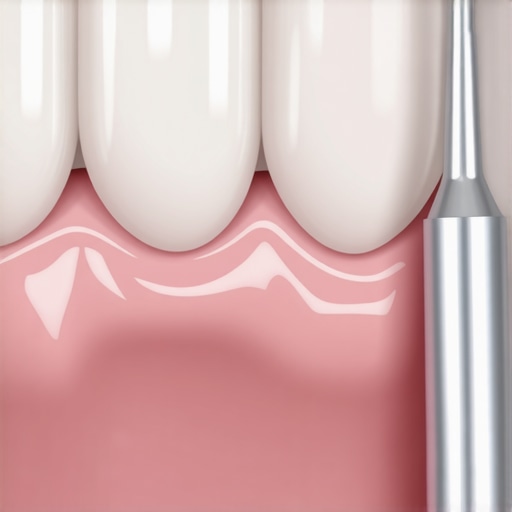
The biggest myth I hear from fellow patients is that a temporary crown’s only job is to protect the sensitive inner tooth until the ‘real’ one arrives. That is a dangerous simplification. In reality, its primary function is as a space maintainer. Your teeth are in a state of constant, microscopic movement. If that temporary falls out while you’re enjoying your steak and you decide to wait a few days to fix it, your adjacent teeth can drift. When you finally go in for the permanent seat, it won’t fit because the gap has shrunk. This is one of the most common cosmetic dentistry myths debunked—temporary doesn’t mean ‘unimportant.’ If it comes loose, it’s an immediate priority, not a ‘see you next week’ problem.
Could your saliva chemistry be weakening the dental bond?
It sounds like science fiction, but the chemical environment of your mouth determines how long that temporary cement holds up against a ribeye. A study published in the Journal of Prosthodontic Dentistry highlights that the degradation of temporary luting agents is significantly accelerated by acidic environments. If you are someone who struggles with why your saliva feels thick, you might actually be at a higher risk for ‘marginal leakage.’ This is where bacteria and fluids seep under the temporary cap. It’s not just about the steak pulling the tooth off; it’s about the chemistry of your mouth dissolving the ‘glue’ from the inside out before you even take your first bite.
The Hygiene Trap That Leads to Post-Op Pain
Here is the ‘oops’ factor most people fall into: they are so afraid of dislodging the crown that they stop cleaning the area entirely. I’ve seen people come back for their permanent crown with gums so inflamed they bleed at the slightest touch. This makes the final bonding process much more difficult and painful. You must continue finding teeth cleaning secrets even around the temporary to keep the tissue healthy. The trick is to use a soft-bristled brush and circular motions rather than a scrubbing action. If you neglect this, you’re essentially creating a breeding ground for bacteria at the most vulnerable time for your tooth.
The danger of ignoring a slightly loose fit
If you feel the crown ‘wiggle’ just a tiny bit, don’t ignore it. Many people think as long as it stays in, they are safe. But a loose temporary allows food particles and sugar to get trapped underneath, which can cause rapid decay on the shaved-down tooth. It’s a similar logic to knowing how to tell if your dental bridge needs to be resealed—any gap is an entry point for trouble. Have you ever fallen into this trap of thinking ‘close enough’ was good enough for your dental work? Let me know in the comments. Protecting that prep work is the difference between a successful transformation and a costly redo.
The moment that permanent crown is finally bonded in place feels like a graduation. You can finally stop over-analyzing every bite of steak and get back to living your life. However, if you want that investment to last fifteen years instead of five, you have to level up your gear. I realized quickly that the standard plastic toothbrush I’d been using for a decade wasn’t going to cut it for my new porcelain-reinforced reality. I had to rethink the way I approached maintaining your teeth cleaning routine for long term health. It’s about moving from defense—just trying not to break a temporary—to offense, which means preventing the gum recession that eventually exposes the dark metal or ceramic margins of your crown.
How do I maintain my dental work over time?
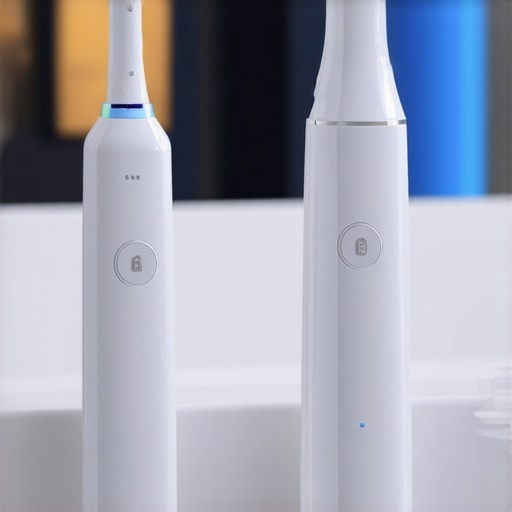
The secret isn’t just ‘brushing more.’ It is about the specific tools you use to manage the plaque that hides at the margin. I swear by a high-end electric toothbrush with a built-in pressure sensor. Why? Because most of us brush too hard, especially when we are nervous about a new crown or bridge, and that mechanical friction can actually damage the gum tissue. According to a long-term study published in the Journal of Clinical Periodontology, patients using oscillating-rotating power brushes had 22% less gum recession over an 11-year period compared to those using manual brushes. This is a game-changer for someone with veneers or crowns where gum health is the only thing keeping the restoration looking natural. I also started using teeth cleaning for sensitive teeth what works best in 2025 protocols, focusing on nano-hydroxyapatite toothpastes that actually remineralize the enamel around the crown’s edge.
Invest in a Water Flosser That Actually Works
If you have multiple crowns or are currently following the ultimate guide to invisalign for adults in 2025, a standard piece of string floss is barely doing 50% of the job. I personally use a cordless water flosser every single night. The reason is simple: it flushes out the ‘micro-debris’ that gets trapped under the bridges and around aligner attachments that traditional floss simply skips over. It’s one of the most underrated invisalign maintenance expert tips because it keeps your breath fresh and your attachments clear of staining. If you’ve ever wondered why some people’s dental work stays bright while others’ starts to look dull, it’s usually because they’ve mastered the art of hydraulic cleaning.
The Future of Your Smile is Digital and Proactive
Looking ahead, I predict we are moving toward a world where ‘at-home monitoring’ is the standard. We are already seeing modern teeth cleaning innovations that include toothbrushes with built-in cameras. By 2025 and 2026, I expect your phone will alert you if the margin on your crown is beginning to leak before you even feel a twinge of sensitivity. We are moving away from ‘fix it when it hurts’ toward a data-driven approach to oral health. This is exactly why finding a dentist who gets your smile and uses 3D scanning technology is so vital right now; they are setting the baseline for your future digital dental twin. My advice? Tonight, try the ‘sideways slide’ when you floss near any dental work—don’t pull up. It’s a tiny habit that protects the bond and keeps your investment secure.
The One Secret to Keeping Your Molar Safe Until Graduation Day
After navigating several rounds of dental work, the most significant realization I had wasn’t about the steak itself, but about the transition. We often view a temporary as a fragile nuisance, but it’s actually a vital placeholder for your future smile. One of the biggest cosmetic dentistry myths debunked in my own journey was that the temporary is just a ‘cover.’ In reality, it keeps your teeth from drifting, which ensures that your permanent porcelain fits perfectly when it finally arrives. I also learned that the ‘it feels fine’ trap is real—just because it doesn’t hurt doesn’t mean the cement isn’t weakening under the pressure of your favorite ribeye. Finally, I realized that gum health during this phase is the true foundation; if your gums are inflamed, the final seating will be twice as sensitive.
My Must-Have Gear for Protecting New Dental Work
To move from defensive eating to proactive care, I’ve curated a specific toolkit that I trust implicitly. First, I highly recommend an electric toothbrush with a pressure sensor. It’s essential for maintaining your teeth cleaning routine for long term health without accidentally scrubbing your temporary right off. Second, a high-quality water flosser is non-negotiable. It provides a deep clean around the crown margins without the ‘tug’ of traditional floss that can lead to disaster. Lastly, I suggest switching to teeth cleaning for sensitive teeth what works best in 2025 protocols, specifically using nano-hydroxyapatite pastes. These tools work together to keep the area sterile and stable until your next appointment.
Savor Every Bite Without the Fear
You don’t have to live on a diet of soup and mashed potatoes just because you’re waiting on a permanent restoration. By using the vertical-bite method and keeping your toolkit handy, you can reclaim your seat at the dinner table with confidence. Taking these small, tactical steps with your temporary crown today ensures that your permanent smile will be healthy, aligned, and beautiful for years to come. Don’t let a little piece of plastic keep you from enjoying the things you love—just play it smart and stay consistent with your care. Have you ever had a dental ‘close call’ while dining out? Let me know your story below!