
It was a Friday night, halfway through a classic thriller, when it happened. One minute I am enjoying a handful of buttery kernels, and the next, I am poking at my molar with my tongue like it is a full-time job. We have all been there. That sharp, irritating sensation of a popcorn hull wedging itself right into the gum line. It feels like a tiny, jagged splinter. I spent the next three hours in front of the bathroom mirror, making things ten times worse because I did not know what I was doing. I actually tried to use a safety pin once—don’t do that. It is one of the hidden dangers of using a safety pin to remove food from your gums that I learned the hard way. My gums bled for days, and the kernel stayed put. Today, I am going to save you the pain and the potential dental bill. We are going to talk about the best way to handle a stubborn popcorn kernel stuck under your gum without causing a full-blown infection. Have you ever spent an entire movie night poking at your teeth instead of watching the screen? Tell me I am not the only one.
Stop Digging and Start Thinking
The first thing you need to do is breathe. The panic that sets in when something is stuck in your mouth often leads to aggressive poking, which just pushes the debris deeper. Popcorn hulls are uniquely evil because they are curved. This shape allows them to slide perfectly under the soft tissue of your gums, where they act like a tiny, irritating bowl. If you keep pushing, you are essentially burying it. I have found that teeth cleaning secrets usually involve gentleness, not force. When you irritate that tissue, it swells up, effectively trapping the object inside. According to the American Dental Association, foreign objects trapped under the gum line can cause a periodontal abscess, which is a localized infection that can be incredibly painful. This happens because the hull is made of cellulose, which our saliva cannot break down. It will not just melt away.
Will that annoying hull eventually just dissolve on its own?
This is the biggest question I get, and the answer is a hard no. Because our bodies lack the enzymes to digest cellulose, that piece of corn is just going to sit there until your body treats it like a splinter and starts an inflammatory response. You might notice why your gums bleed only in the back of your mouth when you floss specifically in that spot. That is your body sounding the alarm. If you have ever wondered the fastest way to stop a gum bleed after a deep cleaning, you already know how sensitive that tissue is. Trust me, the goal here is to coax the kernel out, not to perform amateur surgery in your bathroom. We want to avoid turning a minor nuisance into a reason for an emergency dental visit. Before you grab the tweezers, let’s look at the tools that actually work.
Get That Hull Out Without Making it Worse
First, you need to soften the battlefield. Your gums are likely already tight and angry, gripping that hull like a vice. Instead of reaching for a toothpick, reach for a glass of warm water. Dissolving a teaspoon of salt into it creates a natural isotonic solution that helps reduce the swelling that is currently trapping the debris. This is basically the salt water trick for shrinking a painful gum boil at home, but applied to a physical obstruction. Swish vigorously. The goal here isn’t just to rinse; it is to use the hydraulic pressure of the water to catch the edge of the curved hull and wiggle it free. If you are lucky, the salt will pull enough fluid out of the inflamed tissue to let the kernel slip out on its own. If it stays put, we move to the precision tools.
The Surgical Precision of the C-Shape Floss
Most people floss by popping the string in and out between their teeth like they are playing a harp. That won’t work here. You need to perform what I call the ‘envelope sweep.’ Take a piece of high-quality waxed floss—waxed is crucial because it slides rather than shreds—and gently guide it between the teeth. Once you are past the contact point, wrap the floss into a ‘C’ shape around the tooth where the kernel is hiding. Slide it gently under the gum line, feeling for the obstruction. Once you hook it, don’t pull up. Use a gentle, rhythmic back-and-forth motion. Imagine you are trying to slide a letter out of a tight envelope without tearing the paper. This is one of those teeth cleaning secrets that pros use to clear out stubborn plaque, and it works just as well for corn. If you notice a little pink, don’t panic, but do check out how to stop your gums from bleeding during your first week of flossing to keep the irritation from turning into a full-blown sore.
Leverage the Power of a Water Stream
If the floss fails, it is time for the big guns: a water flosser. I remember a time I had a kernel stuck in the very back, near my wisdom teeth. I was frustrated and, quite frankly, acting like a barbarian. I grabbed my Waterpik and cranked it to the highest setting, thinking I would just ‘blast’ it out. Big mistake. I hit a sensitive nerve and basically power-washed my own internal tissue, leading to a week of throbbing pain. I eventually learned that modern teeth cleaning innovations that reduce sensitivity and boost results are built for finesse, not force. 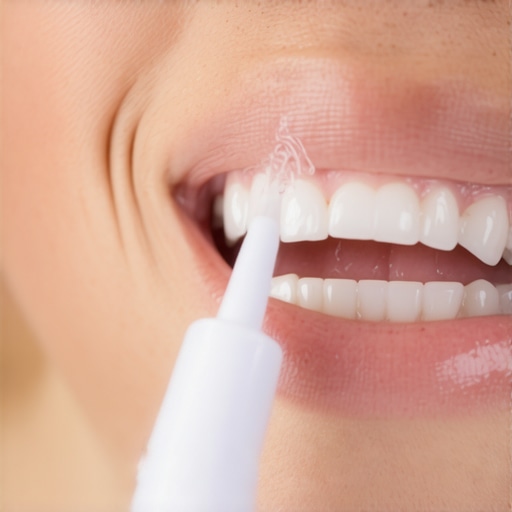 Set your device to the lowest pressure setting. Aim the tip at a 90-degree angle to the gum line and let the pulse do the work. The pulsating water acts like a tiny jackhammer on the hull, vibrating it until it loses its grip on your soft tissue. It is far more effective than a physical probe because the water can get behind the curve of the kernel where a string cannot. If you find your mouth is too reactive for this, you might need to look into teeth cleaning for sensitive teeth what works best in 2025 to find a tool that won’t make you jump out of your skin. The key is patience; you are coaxing an uninvited guest to leave, not evicting it with a sledgehammer.Most people assume that if their gums are prone to catching kernels, they just aren’t cleaning hard enough. This is where the real trouble starts. In my experience, the most dedicated brushers often have the worst food impaction issues because they fall into the aggressive scrubbing trap. When you scrub too hard, you aren’t just removing plaque; you are potentially causing your gum line to retreat. This exposure of the tooth’s neck creates larger gaps where debris can lodge more easily. I used to think I was doing myself a favor by using firm bristles, but I was actually falling for one of the most common teeth cleaning myths debunked by top dentists. You aren’t cleaning; you are essentially excavating your own soft tissue, making it easier for the next popcorn night to turn into a dental disaster.
The Aggressive Cleaning Trap That Actually Traps More Food
When we talk about expertise in oral care, we have to look at the geometry of your smile. If you have noticed small gaps forming near the gum line, often called black triangles, you have effectively created a series of traps for every hull and seed you eat. Many patients think they need more aggressive tools, but often the solution is restorative. Learning how we fix black triangles between your teeth without bulky crowns can actually reduce the frequency of food getting stuck in the first place. Research cited by the American Academy of Periodontology suggests that excessive mechanical force is a leading cause of gingival recession in otherwise healthy mouths. Have you ever fallen into this trap where you brushed so hard you actually made your teeth more sensitive? Let me know in the comments.
Can cosmetic enhancements actually make food traps worse?
It is a sophisticated question because we often view cosmetic dentistry as the ultimate fix. However, if you are currently navigating an Invisalign for adults journey, you have probably noticed that those little resin bumps—the attachments—are absolute magnets for popcorn hulls. It is exactly why your invisalign attachments feel like sandpaper against your cheeks and why they seem to catch every fiber of food that passes by. These attachments are necessary for tooth movement, but they add texture to the tooth surface that naturally smooth enamel does not have. This is one of those cosmetic dentistry myths debunked: the idea that clear aligners make hygiene effortless. In reality, they require a much higher level of finesse to keep those hiding spots clear of debris. 
Stop Searching for the Magic Eraser
Then there is the whitening trap. After a painful run-in with a kernel, many people feel their teeth are dirty and reach for abrasive home remedies like charcoal or baking soda. Stop right there. Using high-abrasivity pastes on already irritated or recessed gums is like throwing gasoline on a fire. The truth about using baking soda to scrub away surface stains is that it can destroy your enamel over time, making the tooth surface rougher and more likely to hold onto stains and food particles. If you see why your gums are receding on only one side of your mouth, it is often a sign of uneven pressure during your cleaning routine. The goal is to maintain a balanced environment where your gums are healthy and tight enough to deflect debris naturally. Don’t over-correct; sometimes the best thing you can do for a traumatized gum is to be patient, keep the area clean with gentle salt water, and let your body’s natural defenses do the heavy lifting.
Upgrade Your Tool Kit for a Lifetime of Health
After my popcorn disaster, I realized that my ‘caveman’ approach to dental care was the real problem. I started investing in tools that do the heavy lifting for me. If you are still using a manual brush and a prayer, it is time to look at modern teeth cleaning innovations that reduce sensitivity and boost results. A landmark systematic review from the Cochrane Library suggests that electric toothbrushes provide a 21% reduction in plaque after three months of use compared to manual brushing. This isn’t just about bells and whistles; it is about the physics of oscillating-rotating bristles vs. a tired hand. This transition was especially helpful when I started noticing teeth cleaning for sensitive teeth what works best in 2025, as it allowed me to clean effectively without triggering that sharp, electric-shock sensation.
Keep Your Invisalign Trays From Becoming a Biohazard
If you are on the clear aligner path, maintenance isn’t just about the teeth; it is about the plastic. Neglecting Invisalign maintenance expert tips for clear, confident smiles is how you end up with trays that look yellow and smell like a locker room. I recommend a dedicated ultrasonic cleaner for your trays. It uses high-frequency sound waves to create microscopic bubbles that implode against the plastic, vibrating away the biofilm that a toothbrush can’t reach. It is the same tech dentists use for professional cleaning, shrunk down for your bathroom counter. #IMAGE_PLACE_HOLDER_D#
How do I maintain professional dental results at home?
The secret to maintaining your teeth cleaning routine for long term health is consistency over intensity. You do not need to scrub until your gums bleed; you need to disrupt the bacteria every single day. I have found that using a water flosser on the ‘pulse’ setting at least three nights a week makes a massive difference in the depth of my gum pockets. This routine keeps the tissue tight and prevents those ‘black triangles’ from catching future popcorn hulls.
What the Next Five Years of Dentistry Looks Like
I predict we are moving toward a ‘smart’ dental era. We are already seeing Invisalign innovations why 2025 is the year for a perfect smile, but the real shift will be AI-integrated diagnostics. Imagine a toothbrush that doesn’t just tell you if you missed a spot, but analyzes your saliva pH in real-time to warn you of a pending cavity. We are seeing how we use digital scans to catch cavities that x-rays might miss becoming the standard, and eventually, this tech will be in our homes. For now, focus on the tools that work today. Try the ‘Low-Pressure Pulse’ method with a water flosser tonight—your gums will thank you for the finesse over the force.
Lessons I Learned While Staring Too Close to the Mirror
The most important thing I realized during my own dental drama is that a popcorn hull isn’t just a piece of food; it acts like a tiny, organic suction cup. When it slides under the gum, it creates a vacuum seal that physical poking only strengthens. I also learned that your gums have a ‘memory’ for trauma. If you are too aggressive today, that tissue remains sensitive for weeks, which is why understanding teeth cleaning for sensitive teeth what works best in 2025 is so vital for recovery. Another lightbulb moment was realizing that inflammation is the real cage. It isn’t just the kernel holding on; it’s your swollen gums clamping down. If you can’t get it out in ten minutes, walk away, let the salt water work, and try again when the swelling subsides. Finally, I learned that a ‘pop’ sound or a sudden metallic taste usually means you’ve broken that vacuum seal—that’s your cue to flush the area one last time.
The Kit I Use to Keep My Gums Happy
You don’t need a dental degree to manage these situations, but you do need the right tools. I’ve refined my home kit to include specific items that prioritize finesse over force. First, I always keep high-quality sea salt on hand for its superior osmotic pressure compared to standard table salt. Second, I’ve swapped my manual tools for a water flosser with a dedicated ‘perio’ tip, which is designed to reach deeper into those pockets without causing damage. I also recommend checking out choosing the right dentist expert tips for your best smile journey so you have a professional on speed dial for when a DIY fix isn’t enough. Lastly, a good interdental brush is far safer than a toothpick for those wider gaps where hulls love to hide. #IMAGE_PLACEHOLDER_E#
Take the Fear Out of Your Next Movie Night
You shouldn’t have to fear a snack just because you’re worried about your oral health. By shifting your focus from ‘digging’ to ‘flushing,’ you protect your delicate gum tissue and avoid long-term recession. Remember that how regular teeth cleaning can prevent major dental issues is more than just a tagline; it is the foundation of preventing these stuck-food emergencies in the first place. Consistency in maintaining your teeth cleaning routine for long term health will keep your gums tight and resilient, making it much harder for debris to find a hiding spot. Stay patient, stay gentle, and keep that water flosser ready. Have you ever spent a whole night obsessing over a stuck seed or hull? Let me know your best (or worst) removal story in the comments below!