
I remember sitting across from a potential client last year, feeling like a million bucks after my recent cosmetic dentistry work. I hadn’t touched a clove of garlic in weeks. But as soon as I opened my mouth to explain the contract, I saw her nose crinkle. That tiny, unmistakable flinch. My heart sank. I knew that smell. It was pungent, sharp, and suspiciously like a Caesar salad dressing—yet my breakfast was a bland bowl of oatmeal. It is a special kind of panic when your body betrays you like that. It makes you want to hide, but more importantly, it makes you want answers. If you are currently dealing with the ‘garlic ghost’ despite a clean diet, you aren’t crazy, and you certainly aren’t alone. Today, we are going to dive into why your internal chemistry is mimicking a steakhouse and how we can fix it for good.
When Your Breath Smells Like a Kitchen (But You Didn’t Cook)
The reality is that your mouth is a complex ecosystem, and sometimes, the balance gets thrown way off. I used to think that as long as I brushed twice a day, I was invincible. I even shared some teeth cleaning secrets with friends, thinking I had it all figured out. I was wrong. Early in my journey, I made the mistake of trying to ‘scrub’ the smell away with harsh abrasives, not realizing I was actually destroying my enamel in the process. The ‘garlic’ scent is often actually Volatile Sulfur Compounds (VSCs) produced by bacteria hiding in places your toothbrush can’t reach. It could be trapped under a fixed dental bridge or even hanging out on the very back of your tongue. Have you ever noticed a weird taste or smell right after a workout or when you’re stressed? That’s usually the moment the mask slips.
Could This Mean Something is Seriously Wrong?
It is natural to worry that a persistent phantom smell is a sign of a major health crisis. According to the American Dental Association, while most foul breath originates in the mouth, certain metabolic shifts or even medications can cause your breath to take on a sulfurous, garlic-like quality. This is why smelling like sulfur despite brushing is a signal you shouldn’t ignore. It’s your body’s way of saying something is out of sync. We are going to look at the practical steps to neutralize these compounds, starting with cleaning your tongue properly and checking for hidden traps in your dental work. Tell me, have you ever been caught off guard by a ‘garlic’ smell when you knew for a fact your lunch was totally onion-free?
Neutralize the Odor at the Source
To stop that persistent garlic scent, you have to treat your mouth like a professional kitchen—it needs a deep scrub in the corners you usually ignore. Most people think a quick 30-second brush is enough, but how regular teeth cleaning can prevent major dental issues is all about the details. Think of your mouth as a rug; brushing only cleans the top fibers, but the real dirt is trapped deep in the pile. If you aren’t disrupting those bacterial colonies, they will keep pumping out sulfur every time you exhale.
Master the Art of Tongue Scraping
Your tongue is the biggest reservoir of bacteria in your mouth. If it has a white or yellowish coating, you are looking at the source of the smell. I used to be terrified of cleaning the back of my tongue because I have a hair-trigger gag reflex. One morning, I was so frustrated by that metallic taste—much like the real reason your mouth tastes like pennies after a workout—that I finally committed to a scraper. The key is to start from the back and pull forward with gentle, even pressure. Using the best way to clean your tongue without triggering your gag reflex changed my morning routine from a chore into a necessity. Seeing what actually comes off that scraper is a wake-up call you cannot ignore.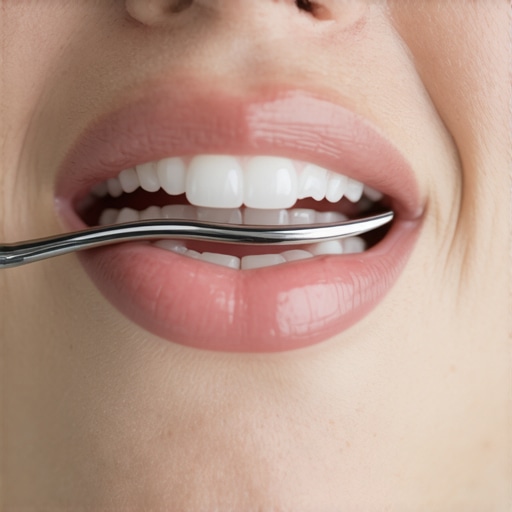
Flush Out the Hidden Crevices
Bacteria love dark, tight spaces. If you have any dental work, you have dead zones. Cleaning under a crown or a bridge is like trying to dust behind a heavy radiator—you cannot reach it with standard tools. I remember a friend who was convinced he had a permanent garlic breath problem until we realized his bridge was acting as a food trap. Learning how to clean under a fixed dental bridge without using a needle threader can be a game-changer. Use a water flosser or specialized interdental brushes to force those sulfur-producing bacteria out of their hiding spots before they can ferment.
Fight the Dryness That Feeds the Smell
Saliva is your mouth’s natural detergent; it washes away food particles and neutralizes acids. When your mouth goes dry—whether from stress or because you are pushing hard at the gym—the bacteria go into overdrive. This is often why your mouth feels dry every time you start your morning workout. Without saliva, those volatile sulfur compounds (VSCs) concentrate, making your breath smell like a jar of minced garlic. Keep a bottle of water nearby and consider a saliva-stimulating mouthwash that does not contain alcohol, as alcohol can actually worsen the dryness over time.
Keep Your Clear Aligners From Harboring Odors
If you are currently in the middle of an orthodontic journey, your hardware might be the culprit. Those plastic trays sit against your teeth for 22 hours a day, creating a warm, moist greenhouse for bacteria. I once skipped a cleaning cycle on my trays for just two days, and the smell was unmistakable. You have to know how to get the morning breath smell out of your invisalign case for good and your trays. If you are not soaking them daily, you are basically re-inserting a layer of concentrated garlic scent every time you put them back in. Use a gentle soak and avoid abrasive pastes that fail the grit test, as micro-scratches in the plastic will only trap more odor-causing particles.We often assume that more force equals more cleanliness, but let’s look at the nuance most people miss. I see patients daily who are essentially sanding down their teeth. You might think you’re being thorough, but according to the American Academy of Cosmetic Dentistry, over-aggressive brushing is a leading cause of gum recession and enamel thinning. This is the ultimate ‘Oops’ factor: the more you damage the surface, the more porous it becomes, allowing those sulfur-producing bacteria to settle in deeper. I’ve found that the grit test is the only way to know if your toothpaste is actually a sandpaper-like weapon against your smile. In my years of observing smile transformations, I’ve realized that the ‘garlic’ smell is often just a symptom of a disrupted oral microbiome. When you use harsh chemicals or abrasive tools, you kill off the beneficial bacteria that keep the odor-producers in check. Think of it like a garden; if you salt the earth to kill the weeds, nothing else will grow either, and the most resilient, foul-smelling weeds will be the first to return. Shifting your mindset from ‘sanitizing’ to ‘balancing’ is the most advanced move you can make for your oral health.
Stop scrubbing your enamel away
It’s a common belief that ‘squeaky clean’ teeth should feel slightly rough, but that’s one of the biggest teeth cleaning myths debunked by top dentists. True health is about a smooth, glass-like finish where biofilm can’t gain a foothold. If you’ve switched to a trendy charcoal paste hoping for a Hollywood glow, you might be doing the opposite. Those large particles create micro-fissures in your teeth that hold onto pigment and scent. 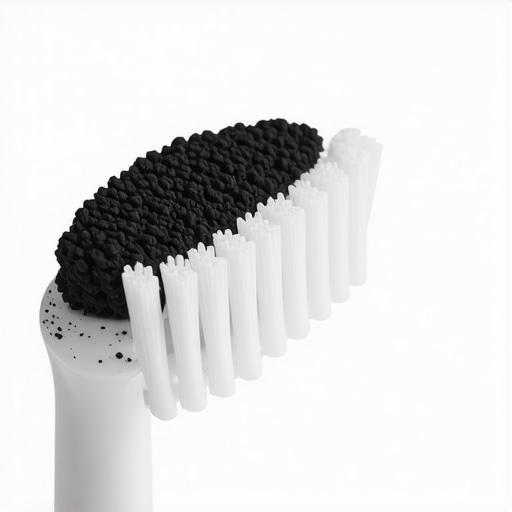
Is your expensive cosmetic work hiding a bacterial colony?
This is the advanced level of the ‘garlic’ mystery. If you have veneers or bonding, the interface where the material meets your natural tooth is a microscopic ledge. If the fit isn’t perfect, or if you aren’t using cosmetic dentistry myths debunked to guide your maintenance, that ledge becomes a skyscraper for bacteria. A study in the Journal of Clinical Periodontology highlights that chemical disruption of biofilm is often more effective than sheer mechanical force for these complex areas. This is why patients often report Invisalign maintenance issues; they focus on the trays but ignore the attachments glued to their teeth. These attachments have a rougher texture than natural enamel, creating a perfect harbor for Volatile Sulfur Compounds (VSCs) that no amount of mouthwash can reach.
The hidden danger of chasing a white smile
When we focus solely on aesthetics, we often ignore the biological health of the mouth. For instance, many people ignore the intense pressure during the first day of new Invisalign trays, thinking it’s just about the movement. But that inflammatory response can change your mouth’s chemistry, potentially temporarily altering the scent of your breath as your body reacts to the hardware. If you are experiencing this, don’t just reach for a stronger mouthwash which might dry out your tissues further. Instead, prioritize hydration and gentle, effective biofilm management. Most people get caught in a cycle of over-cleaning that actually strips away the natural defenses of the mouth, leaving it vulnerable to the very odors they are trying to escape. Have you ever fallen into this trap of over-cleaning only to find the problem gets worse? Let me know in the comments below.
I used to think that buying the most expensive toothpaste was the peak of oral hygiene, but I quickly learned that the tools you use are just as important as the technique. If you are still battling that lingering scent or feeling like your teeth aren’t quite ‘smooth’ enough, it’s time to look at the hardware in your bathroom cabinet. I’ve transitioned away from the ‘scrubbing’ mentality and moved into what I call ‘precision management.’ This isn’t just about vanity; it’s about maintaining your teeth cleaning routine for long-term health so you don’t end up back in the chair for emergency fixes. The goal is to create an environment where those sulfur-producing bacteria simply cannot thrive.
The specific gear I use to keep the sulfur at bay
I personally swear by a sonic toothbrush with a built-in pressure sensor. I found that I was one of those ‘aggressive’ brushers we talked about earlier, and the sensor literally stops the vibration if I press too hard. This protects the work I’ve had done and ensures I’m not contributing to gum recession. But the real game-changer for the ‘garlic ghost’ was switching to a high-quality water flosser. While traditional floss is great, modern teeth cleaning innovations that reduce sensitivity and boost results allow you to flush out the gingival pockets where bacteria hide. According to a study published in the Journal of Periodontal Research, the use of ultrasonic vibrations and targeted water streams specifically disrupts the glycocalyx—the ‘sticky’ protective layer that binds biofilm—far more effectively than manual string floss alone.
How do I keep my breath fresh after cosmetic work?
Maintaining the investment of cosmetic dentistry requires more than just brushing. If you have veneers or bonding, you need to be hyper-aware of the margins. I use an alcohol-free, pH-balanced mouthwash every night to ensure my saliva stays in the ‘neutral’ zone. For those wearing clear aligners, you must learn how to stop your invisalign trays from smelling like old saliva by using an ultrasonic cleaning pod. I use one twice a day with a gentle cleaning tablet; it uses sound waves to shake loose the microscopic debris that a brush simply misses. If you are noticing discoloration on the attachments, you should also look into how to get the coffee stains out of your invisalign attachments without using harsh abrasives that could ruin the bond.
Looking toward the future, I predict we are going to see a massive shift toward personalized oral probiotics. Instead of trying to kill all bacteria, we will be ‘seeding’ our mouths with beneficial strains like S. salivarius K12 to naturally crowd out the ones that cause bad breath and decay. We are moving away from the era of ‘scorched earth’ dentistry and into an era of biological harmony. If you haven’t already, I strongly encourage you to try the ‘Grit Test’ on your current toothpaste tonight—if it feels like sand between your fingers, it is time to throw it out and switch to a hydroxyapatite-based formula that rebuilds enamel instead of wearing it down.
The Most Surprising Lessons I Learned From the Garlic Ghost
Reflecting on my own struggle with phantom odors, I’ve realized that the ‘squeaky clean’ feeling we chase is often a trap. First, I had to accept that my mouth isn’t a kitchen counter to be bleached; it’s a living forest. When I stopped using harsh, alcohol-based rinses, I noticed my mouth stayed hydrated longer, which naturally suppressed those sulfur smells. Secondly, I learned that the back of my tongue was essentially a ‘dormant volcano’ of odor-causing bacteria that only a metal scraper could truly handle. Finally, I discovered that consistency beats intensity every single time. By maintaining your teeth cleaning routine for long-term health, you create a baseline that keeps the ‘ghost’ from ever returning.
The Essential Kit for Every Fresh-Breath Warrior
If you’re ready to upgrade your arsenal, I recommend focusing on tools that prioritize precision over power. I personally trust modern teeth cleaning innovations that reduce sensitivity and boost results, such as sonic toothbrushes that alert you when you’re pressing too hard. I also swear by alcohol-free, pH-neutral rinses because they maintain the delicate balance of your oral microbiome. For those currently straightening their smiles, mastering Invisalign maintenance with ultrasonic pods is the only way to ensure your hardware doesn’t become a scent-trap. Lastly, always refer to the ultimate guide to teeth whitening and cosmetic enhancements before trying new products, so you don’t accidentally damage your enamel while chasing a brighter look.
#IMAGE_PLACEHOLDER_E#
Reclaim Your Confidence One Brush at a Time
Dealing with persistent breath issues can feel like a lonely battle, but it is one you can absolutely win with the right approach. It’s not about finding a magic cure; it’s about understanding the biology of your mouth and giving it the care it deserves. Whether you are recovering from a long day or prepping for a big presentation, a thorough and gentle teeth cleaning remains your best defense. Don’t let the fear of a phantom smell hold you back from speaking your mind or flashing your smile. Have you ever found yourself panicking about a phantom garlic smell right before a big meeting? Let me know your experience in the comments below!