
I remember the first time I noticed those strange, wandering patches on my tongue; I was convinced I had accidentally swallowed something caustic or caught a rare tropical bug. My heart sank as I looked at the map-like shapes in the mirror, and in my panic, I did the worst thing possible: I grabbed my stiffest toothbrush and scrubbed until I saw pink. It was a visceral mistake that left my mouth throbbing for days. If you are reading this, you probably know that sting all too well. Dealing with a geographic pattern isn’t just about aesthetics; it’s about managing a surface that is far more sensitive than a typical tongue. Today, I am going to share the gentle, effective method I finally discovered that clears away debris without making you wince, ensuring your breath stays fresh even when your tongue looks like a topographical chart of the Andes.
Stop Treating Your Tongue Like a Scuffed Floor
For the longest time, I thought that more pressure equalled a cleaner mouth. I was wrong. When you have geographic tongue—or benign migratory glossitis, if we are being fancy—the ‘islands’ on your tongue are actually areas where the tiny bumps called papillae are missing. According to the American Academy of Oral Medicine, this condition affects roughly 1% to 3% of the population and is essentially an inflammatory response, not an infection. This means you cannot simply ‘scrub it off.’ In fact, over-cleaning is a major reason why your breath still smells after using a tongue scraper; you’re just irritating the tissue and causing more inflammation. I spent years making the mistake of using alcohol-heavy mouthwashes that felt like liquid fire. Instead, the focus should be on soft, lateral movements and hydration. Have you ever tried a metal scraper only to find it leaves those red patches feeling raw and sensitive for hours?
Will this map-like pattern ever just disappear?
It is the question every ‘mapper’ asks eventually. The truth is that geographic tongue tends to come and go, migrating across the surface in a way that can be totally frustrating. While it might not go away forever, learning the best way to clean your tongue without triggering your gag reflex or causing pain is the first step toward peace of mind. By focusing on improving your oral health at any age through specialized care rather than brute force, you can manage the sensitivity effectively. Let’s dive into the specific tools that actually work for our unique anatomy.
Swap Your Steel Scraper for a Cloud
Most people think a tongue scraper needs to be a rigid piece of stainless steel to be effective. When you have geographic tongue, your surface is more like an over-ripe peach than a piece of leather. I learned this the hard way when I bought a high-end metal scraper, thinking it was the ‘professional’ choice. Two strokes in, I hit a denuded patch—one of those islands where the papillae had vanished—and it felt like a paper cut across my entire mouth. Now, I only recommend using a silicone-headed cleaner or a dedicated ultra-soft toothbrush. These tools are part of the modern teeth cleaning innovations that reduce sensitivity while still effectively lifting the biofilm that causes odors. Think of it like using a microfiber cloth on a glass screen instead of a scouring pad. 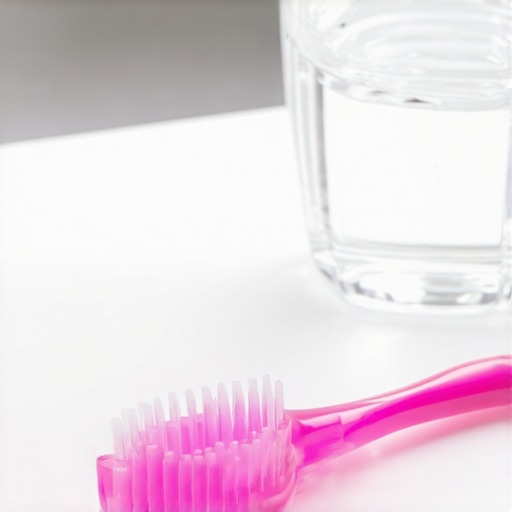
The Lateral Glide Technique
Instead of the traditional ‘back-to-front’ pull that triggers the gag reflex, I found that short, lateral sweeps are much more forgiving. Imagine you are lightly dusting flour off a countertop. You aren’t trying to dig into the surface; you are simply clearing the top layer. Start at the center and move toward the edges. If you hit a particularly red or ‘active’ patch of your map, skip it entirely for a day or two. There is no prize for cleaning a wound. If you find your mouth reacts poorly even to this, you might be looking at teeth cleaning for sensitive teeth techniques that prioritize tissue preservation over deep scrubbing.
Hydrate the Map to Prevent the Sting
Geographic tongue thrives on dryness. When your mouth is dry, the sensitive patches become brittle and more prone to irritation. I once went for a long run on a windy autumn day and didn’t drink enough water. By the time I got home, my tongue felt three sizes too big and every ‘island’ was pulsing. I tried to clean it, and the friction was unbearable. Now, I always swish with room-temperature water before even touching a brush. This pre-soak softens the debris. If you experience sharp pain when you drink room temperature water, it might be a sign of broader sensitivity, but for the tongue, it is about creating a slick surface.
Ditch the Alcohol in Your Rinse
If your mouthwash has a ‘burn’ that makes your eyes water, it is effectively a chemical sander for your geographic tongue. Alcohol dries out the oral mucosa, making the map patterns more prominent and painful. I switched to an alcohol-free, pH-balanced rinse and noticed the redness of my patches dimmed within forty-eight hours. It is about maintaining a calm environment. This is similar to how maintaining your teeth cleaning routine doesn’t require harsh chemicals to be effective; it just requires consistency and the right pH balance. By focusing on these gentle mechanical steps and avoiding chemical irritants, you can manage the ‘map’ without the misery.Most people assume that when a flare-up occurs, the safest bet is to avoid the dentist entirely until the ‘map’ migrates away. I used to think the same, fearing that a professional scale and polish would be like taking a sandblaster to a fresh wound. However, professional care is actually your best defense against secondary infections. The nuance lies in communication. You must advocate for yourself; tell your hygienist to avoid the high-pressure air-polishing tools on your tongue. According to teeth cleaning myths debunked by top dentists, regular maintenance actually reduces the overall bacterial load that can make those ‘islands’ feel more inflamed. If you skip these appointments, the plaque buildup on your teeth can migrate, causing the sensitive patches on your tongue to throb even more.
Why charcoal is the worst enemy of a sensitive tongue
There is a dangerous trend involving abrasive DIY ‘hacks’ like charcoal or lemon juice to ‘brighten’ the tongue. This is a massive mistake. If you have geographic tongue, your enamel and your papillae are already in a state of flux. Using charcoal doesn’t just scrub away stains; it acts as a micro-abrasive that can permanently damage the sensitive surface of your mouth. I have seen readers try these methods only to find that the truth about charcoal toothpaste and your tooth enamel applies just as harshly to your tongue’s soft tissues. Similarly, many people reach for high-strength whiteners to distract from the ‘map’ look, but this often leads to a situation where your mouth feels like it is burning after using whitening strips because the chemicals seep into the areas where papillae are missing. 
Could your map be a cry for help from your gut?
Have you ever wondered why your tongue looks like a topographical map one week and perfectly normal the next? While most doctors call it idiopathic, advanced clinical observations suggest a deeper link. A study published in the Journal of Contemporary Dental Practice indicates that a significant percentage of patients with geographic tongue also exhibit low serum levels of Zinc and Vitamin B12. This suggests that the ‘migration’ isn’t just a random event; it’s a systemic signal. If you are also managing orthodontic work, you might notice that expert tips for clear confident smiles often emphasize hydration and mineral balance for a reason—your mouth is an ecosystem, and any shift in nutrients shows up on your tongue first.
Stop the cycle of over-cleaning
The biggest ‘oops’ factor I see is the ‘Scrub-to-Smooth’ trap. You see a patch, you think it’s ‘dirty,’ and you scrub until it’s smooth. But that smoothness is actually the loss of your protective barrier. When I finally stopped trying to ‘fix’ my tongue through friction and started using modern teeth cleaning innovations that reduce sensitivity, the frequency of my flare-ups dropped by half. If you are considering cosmetic dentistry myths debunked, remember that a healthy foundation is more important than a temporary aesthetic fix. Treat your tongue like silk, not a rug. Have you ever fallen into this trap? Let me know in the comments.I have spent years testing every gadget on the market, from vibrating scrapers to copper loops, and I have learned that the best tool for a geographic tongue is often the simplest one. Personally, I have switched to the Orabrush or a similar ultra-soft micro-bristled cleaner. Why? Because the individual bristles are soft enough to navigate the ‘islands’ of your tongue without the blunt force of a metal blade. This level of care is essential if you are also maintaining your teeth cleaning routine for long term health. If you use a tool that is too aggressive, you’re not just hurting your tongue; you’re creating an inflammatory environment that can affect how your entire mouth feels.
How to stay fresh without the burn
My secret weapon isn’t a brush at all; it’s a specific pH-neutralizing mouthwash. Most commercial brands use high concentrations of menthol or alcohol, which are basically kryptonite for sensitive papillae. I look for rinses containing chlorine dioxide—it neutralizes sulfur compounds without the ‘sting’ that makes you want to climb the walls. This approach mirrors the latest modern teeth cleaning innovations that reduce sensitivity. When your mouth’s pH is balanced, those map-like patterns tend to stay in their dormant phase much longer. 
Your dentist needs to be your teammate
When you sit in that chair, don’t wait for them to notice your tongue. I always start the appointment by saying, ‘I have active geographic tongue patches today; please avoid the high-pressure spray in those areas.’ It sounds simple, but it changes the entire experience. This is especially true if you are undergoing more intensive treatments like Invisalign maintenance where your aligners might already be causing slight irritation to your cheeks. Regular visits are still vital because how regular teeth cleaning can prevent major dental issues is a fact that doesn’t change just because your tongue is sensitive.
How do I maintain my tongue health over time?
The key is a ‘Low-Friction Lifestyle.’ This means avoiding the urge to over-clean during a flare-up and focusing on systemic hydration instead. I’ve noticed that when I stay on top of my teeth cleaning for sensitive teeth protocols, the rest of my mouth follows suit. Consistency beats intensity every single time.
What the future holds for us mappers
Looking ahead, I predict we will see smart toothbrushes equipped with bio-sensors that can actually detect the pH level of your tongue’s surface in real-time, alerting you to a flare-up before the visible patches even appear. According to Burket’s Oral Medicine, the leading clinical text on oral mucosal disorders, the management of benign migratory glossitis is shifting toward this type of personalized, symptom-based care rather than broad-spectrum treatments. We are moving toward an era where we can predict the ‘migration’ of these patches. For now, your best move is to ditch the harsh chemicals today. Try swapping your alcohol-based rinse for a pH-neutral alternative tonight and see if that morning sting starts to fade.
What No One Tells You About Living with a Map-Like Tongue
Reflecting on my journey with geographic tongue, I realized that the condition was never something to ‘cure’ through force. It was a signal to slow down and listen to my body. Here are the most important shifts I made to find peace: First, the ‘Wait and See’ Rule—not every red patch needs an intervention. Often, the best thing you can do for an active island is to leave it completely alone for 48 hours to prevent irritation. Second, I discovered that stress is a major trigger; my map migrated most aggressively during high-pressure work weeks, so managing cortisol became as important as my brushing routine. Finally, stop the ‘Mirror Trap’—checking your tongue twenty times a day only increases anxiety, which can physically worsen inflammation. Look once, clean gently, and move on.
My Essential Toolkit for Sensitive Tongues
If you are ready to stop the sting, these are the resources and tools that changed the game for me. First, swap that metal scraper for an Orabrush or a silicone-based cleaner—this is one of the most effective modern teeth cleaning innovations that reduce sensitivity. I also highly recommend keeping a pH-neutral, alcohol-free rinse in your cabinet to maintain balance without the chemical burn. If you are looking for a deeper dive into how aesthetic treatments interact with oral sensitivity, I recommend reading about cosmetic dentistry myths debunked to ensure you aren’t inadvertently using products that trigger a flare-up. Knowledge and gentle tools are your best defenses for maintaining your teeth cleaning routine for long term health.
The Path Toward a Calm and Healthy Mouth
Managing geographic tongue can feel like a lonely battle, especially when you feel like your mouth is constantly changing. But remember, this condition is just one part of your oral ecosystem. By focusing on how regular teeth cleaning can prevent major dental issues and being a vocal advocate for your needs during professional visits, you can live pain-free. Your geographic tongue doesn’t have to define your oral health journey. Have you found a specific food or drink that triggers your map-like patches? Let me know in the comments below!