
I was halfway through a bowl of overly-salted popcorn—the kind that gets everywhere—when I felt it. A weird, sharp little “snap” against my cheek. I ran my tongue along my canine and my heart sank. The little composite bump was gone. It was 10:15 PM on a Saturday. My dentist was probably asleep, and I was staring at my clear aligner like it was a ticking time bomb. I’ll be honest: I panicked. I even considered, for a fleeting, desperate second, if a dab of craft glue would fix it. Spoiler alert: do not ever do that. You’ll ruin the tray and probably your enamel.
Don’t Panic Because Your Smile Is Still on Track
After I talked myself down from the “Superglue Incident,” I realized that a missing attachment isn’t the dental apocalypse I thought it was. It’s a common hiccup in the journey toward a perfect smile. Whether you’re following a strict Invisalign maintenance routine or you’re a total newbie, these things happen. The composite material is strong, but it’s not invincible against a rogue popcorn kernel or a particularly sticky piece of sourdough. Today, I’m going to show you exactly how to handle this little weekend crisis so you don’t lose sleep or progress.
Does This Mean My Trays Won’t Work Anymore?
This is the big fear, right? You think the whole system is going to collapse because one anchor is missing. However, the reason your Invisalign trays feel tighter on some days than others is often due to the overall pressure of the plastic, not just the attachments. According to a study published in the American Journal of Orthodontics and Dentofacial Orthopedics, aligners can still exert significant force even if one attachment is temporarily missing, provided the tray is seated correctly. You aren’t going to wake up with crooked teeth on Monday morning. If you’ve ever wondered how to handle a loose bracket when your dentist is closed, the rules are surprisingly similar. Keep the area clean, keep your trays in, and call the office first thing Monday. Have you ever faced this specific problem and felt that sudden “oh no” moment? Tell me I’m not the only one who nearly reached for the glue!
Inspect the Aligner Fit Immediately
First, you need to play detective. Grab a small dental mirror or even just use your phone’s front-facing camera with the flash on. You’re looking to see if the tray still seats firmly against the tooth. Think of the attachment like a small handle on a drawer; even if the handle breaks, you can usually still pull the drawer open, but it takes a bit more effort. If the tray isn’t popping out or feeling incredibly loose, you’re in a good spot. I once spent twenty minutes in a dimly lit bathroom trying to see if my canine attachment had actually fallen off or if I was just imagining it. I finally realized that knowing teeth cleaning secrets: how regular care boosts oral health at any age is helpful, but in that moment, I just needed to see if the plastic ‘clicked.’ If the tray still feels snug, the plastic itself is doing most of the heavy lifting. Attachments are like ‘grip tape’ for your teeth, providing extra leverage for the plastic to grab onto, but the aligner is the engine of the car. 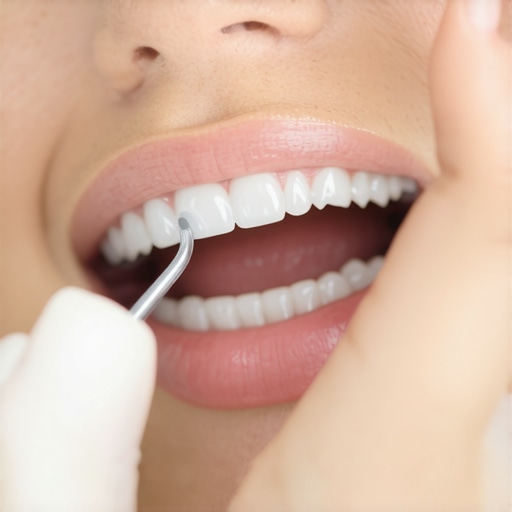
Clean Away Any Remaining Residue
When an attachment pops off, it often leaves a microscopic layer of composite material or a slightly rough patch behind. This is where bacteria love to hide, and it can feel strange against your tongue. If you feel a weird, tacky texture on your tooth, you might wonder why your teeth feel sticky even after you brush, but in this scenario, it’s likely the leftover bonding agent. Use a soft-bristled toothbrush to gently clean the spot. If that rogue popcorn kernel is what caused the chaos, make sure you know how to safely remove a piece of popcorn stuck under your gum line so you don’t irritate the gums further while you’re fishing for debris. Keep your hygiene high because a smooth tooth surface is much easier for the dentist to rebond later.
Resist the Urge to DIY Your Dental Repair
It’s incredibly tempting to think you can just ignore the missing bump or, worse, try to fix it yourself with at-home materials. Do not try to file down the rough spot left behind. You could accidentally damage your enamel, and then you’ll be searching for how to stop a small chip in your tooth from getting bigger before your appointment. Instead, treat the tooth with care and avoid biting down on hard foods in that specific area until it’s fixed. If the missing bump is on a front tooth, it might affect the ‘grip’ needed for complex movements, but for a molar, it’s often less urgent. When this happened to me, I was terrified my tooth would stop moving entirely and I’d have to start my whole treatment over. However, reading invisalign success stories: real patients, real transformations reminded me that many people have minor setbacks and still finish with a perfect result.
Call the Office as Soon as They Open
Your final step in this mini-crisis is purely administrative but absolutely vital. Don’t wait for your next check-up in three weeks. Call the office and let them know exactly which tooth lost its ‘button.’ They might tell you to come in right away, or they might say it can wait if that specific tooth isn’t scheduled for a major rotation in your current set of trays. The goal is to keep the momentum of your Invisalign maintenance plan without unnecessary delays. When I finally called my dentist on Monday morning, I was braced for a long lecture, but they just squeezed me in for a five-minute rebonding session. It was faster than a standard coffee break and much less stressful than my Saturday night panic.
Stop Obsessing Over the Number of Buttons on Your Teeth
There is a massive misconception in the world of clear aligners that the more attachments you have, the ‘better’ or ‘faster’ your treatment will go. In fact, many people feel cheated if they only have a few. But here is the contrarian truth: more attachments can actually complicate your journey. Every extra bump creates a new nook for plaque to hide, which is why teeth cleaning secrets: how regular care boosts oral health at any age are so vital for aligner patients. If your dentist can achieve the same movement with three attachments instead of ten, you are winning. When one falls off, it is often because the surface tension of the bonding agent wasn’t perfectly dry during the initial application—not because your tooth is ‘rejecting’ the treatment.
What Happens to the Root If the Attachment Stays Off Too Long?
This is the sophisticated question that keeps most patients up at night. Are you causing permanent root damage by wearing a tray without its anchor? According to a study in the European Journal of Orthodontics, the effectiveness of clear aligners relies on the ‘force system’ created by the entire tray, not just a single point of contact. If an attachment is missing for a few days, the tooth might stop ‘tracking’ (moving into the tray’s pre-programmed space), but it won’t suddenly spin out of control or damage the root. The real danger is ‘tipping,’ where the crown of the tooth moves but the root stays put. This is why choosing the best Invisalign options for your lifestyle involves finding a provider who monitors these nuances closely. 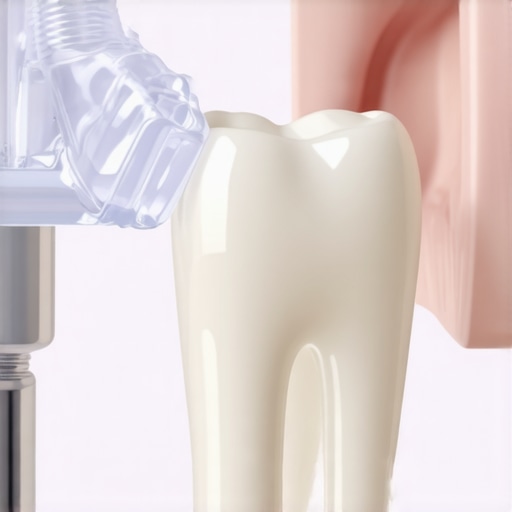
The ‘Trap’ of the Second Month
There is a specific trap most patients fall into around week eight. You might notice that your teeth feel loose during the second month of Invisalign, and you assume it’s because that one lost attachment from three weeks ago caused instability. In reality, that looseness is a sign of healthy ligament remodeling. The mistake people make is ‘testing’ the tooth’s looseness with their tongue or finger, which can actually interfere with the bone-building process. If you have lost a button on a molar, it’s usually low-priority. If it’s on a canine or a lateral incisor—teeth that require complex rotation—it’s a higher priority. Don’t fall into the trap of thinking all ‘buttons’ are created equal.
Why Modern Bonding Is Different Than Traditional Brackets
Many patients assume that a lost attachment is the same as a broken wire, but cosmetic dentistry myths debunked reveal that modern composite resin is far more flexible. We aren’t using the same rigid cements used in the 90s. We use a hybrid material that mimics your natural tooth structure. If you find yourself frequently losing attachments, the issue might not be your ‘strong’ saliva or your love for sourdough; it might be that you need a specific Invisalign maintenance adjustment to how you remove your trays. Always pull from the back molars, never from the front where the attachments are most prominent. Have you ever fallen into this trap of panicking over a molar attachment only to find out it didn’t even matter? Let me know in the comments!Once you get past the initial shock of lost attachments or tight trays, you realize that Invisalign isn’t just a dental treatment; it’s a lifestyle choice that requires its own specialized toolkit. If you’re still using your fingernails to pry your aligners off, please stop—you’re risking your manicure and putting unnecessary torque on those fragile composite buttons.
The Gadget That Finally Saved My Manicure
I swear by the ‘PUL tool’ or any similar hook-style aligner remover. It allows you to pop the trays from the back molars with surgical precision, which is essential if you have multiple attachments. Beyond just being easier, using a dedicated tool helps you follow a consistent Invisalign maintenance routine without irritating your gums or chipping your nails. I’ve found that using the tool specifically from the tongue-side of the molar prevents the tray from snapping against your cheek—a small tip that makes a huge difference in daily comfort.
Stop Scrubbing and Start Vibrating with Ultrasonic Tech
For the first month, I used a soft toothbrush and dish soap to clean my trays. It was tedious and they still looked cloudy by day ten. Then I discovered ultrasonic cleaners. These small devices use high-frequency sound waves to create microscopic bubbles that implode against the plastic, blasting away plaque in seconds. A report in the Journal of Clinical Orthodontics highlighted that ultrasonic cleaners are significantly more effective at removing biofilm than manual brushing alone. It’s the easiest way to stop your invisalign trays from smelling like old saliva. I just drop my trays in while I’m eating breakfast, and they come out looking brand new. 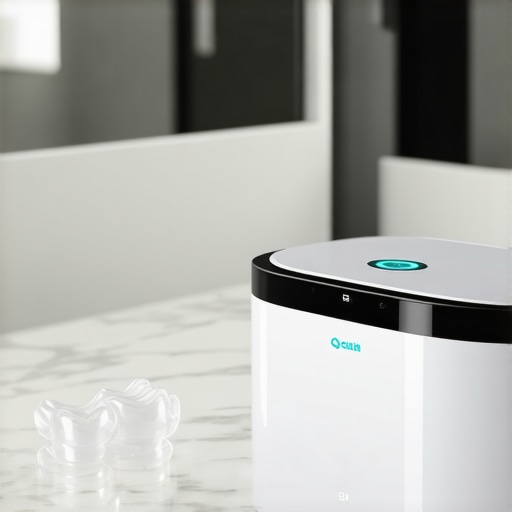
How do I maintain my results over time?
The real challenge starts the day you finish your last tray. Your teeth have ‘memory’ and will desperately try to migrate back to their original positions. This is where maintaining your teeth cleaning routine for long-term health becomes a permanent part of your life. You’ll transition to retainers—usually worn full-time for a few months and then only at night. I also recommend looking into modern teeth cleaning innovations that reduce sensitivity and boost results to ensure your enamel stays strong after the orthodontic movement is complete. If you’re a heavy caffeine drinker like me, you also need to master the secret to drinking iced coffee with invisalign without staining your teeth—essentially, use a straw and rinse immediately—to keep that Hollywood smile from yellowing prematurely.
AI Tracking and the Future of Your Smile
Looking ahead, the trend is moving toward ‘remote dental monitoring.’ We are already seeing invisalign innovations why 2025 is the year for a perfect smile where patients use a smartphone attachment to scan their teeth at home, and AI software detects if a tooth isn’t tracking or if an attachment has fallen off before you even notice it. This technology reduces the number of in-office visits and ensures your progress is being watched daily, not just every six weeks. My advanced tip for you: Invest in a high-quality ultrasonic cleaner today rather than waiting until your trays get cloudy. It is the single most important tool in my kit besides the aligners themselves. Try using one with a specialized cleaning tablet tonight, and you’ll notice the difference in clarity immediately.
Why I Stopped Stressing About the Little Bumps
Looking back at my first Saturday night panic over a lost button, I realize how much energy I wasted on things that are easily fixable. Over time, I discovered a few hard-won truths about the process: Consistency beats perfection every time. A missing attachment for 48 hours won’t ruin a year of hard work, but leaving your trays out for four hours every day certainly will. I also learned to trust the engineering of the system; those clear trays are high-tech tools designed to keep working even when a small piece of the puzzle isn’t perfect. Most importantly, I realized that choosing a dentist for your Invisalign transformation means having a partner who expects these minor hiccups and knows exactly how to pivot without losing progress.
#IMAGE_PLACEHOLDER_E#
My Daily Essentials for a Flawless Transition
You do not need a suitcase full of gadgets, but a few specific tools made my daily life significantly easier and my results more predictable. First, the PUL Tool is my non-negotiable; it saves your nails and prevents unnecessary torque on your teeth when removing tight trays. Second, I switched from soap to Retainer Cleaning Tablets, which are far more effective at killing bacteria and helping you maintain your teeth cleaning routine for long-term health. Third, Silicon Chews became my best friend for ensuring the trays were fully seated against my attachments, which is a vital part of effective Invisalign maintenance. Finally, keeping a small “Away Kit” in my car ensured I never had to put my aligners back in over unbrushed teeth while out for dinner.
Your Best Smile Is Just a Few Trays Away
Orthodontics is a marathon, not a sprint, and every small effort you make today pays off in the mirror tomorrow. Whether you are dealing with a lost button, a tight tray, or the daily grind of cleaning, remember the goal you set for yourself on day one. Don’t let a small kernel of popcorn or a rogue piece of sourdough distract you from the bigger picture of your health. By staying focused on the end result and utilizing modern cosmetic dentistry insights, you are guaranteed to reach the finish line with confidence. Have you ever felt like a specific tray was just “impossible” to get through? Let me know your story in the comments below!