
I’ll never forget that mid-afternoon appointment six months after my braces finally came off. I was feeling pretty smug about my straight teeth until my hygienist let out a long, disappointed sigh. She didn’t even have to say it; I could see the ‐limestone cave‐ of tartar she was excavating from behind my lower front teeth. I had been so worried about how to stop your bottom teeth from crowding as you get older that I completely ignored the gunk accumulating on my permanent wire. I didn’t own a water flosser—and honestly, I didn’t have the counter space for another buzzing appliance—so I just… stopped trying. That was my first big mistake. I assumed that if I couldn’t blast it with water, it couldn’t be cleaned. My struggle wasn’t just about the plaque; it was the frustration of feeling like a failure every time I looked in the mirror. I’d try to jam regular floss down there, it would shred, and I’d give up in a huff. I even worried that my negligence would lead to major dental issues down the road. But once I realized that ‐clean‐ doesn’t have to mean ‐expensive,‐ everything changed. Today, I’m going to show you how to keep that area spotless with nothing more than a few cheap tools and a bit of technique. Many of us fall into the trap of thinking technology is the only answer for maintaining your teeth cleaning routine for long-term health, but sometimes the old-school methods are actually more thorough.[IMAGE_PLACEHOLDER]
Why a Metal Wire Does Not Have to Mean Constant Plaque Build-up
We often treat permanent retainers like ‐set it and forget it‐ hardware, but they are actually high-maintenance roommates. Because that wire is bonded to each tooth, it creates tiny little ‐shelves‐ where food particles and bacteria love to set up camp. If you aren’t careful, you’ll end up needing a professional teeth cleaning for sensitive teeth more often than you’d like. I used to think I was doing enough just by brushing over the top, but the real battle happens underneath the wire where your toothbrush bristles can’t reach. I even made the mistake of trying to use a hard-bristled brush to ‐scrub‐ the wire harder, which only irritated my gums. That’s actually why your dental hygienist told you to stop using hard-bristled toothbrushes in the first place—they do more harm than good to your delicate gum tissue.
Does manual cleaning really work as well as the fancy gadgets?
There’s a common misconception that if you aren’t using a high-powered water jet, you’re failing your smile. However, the American Dental Association (ADA) emphasizes that the mechanical action of physically rubbing the tooth surface is what truly disrupts biofilm. In fact, relying solely on water can sometimes leave behind the stickier plaque that requires a bit of friction to dislodge. You don’t need a $100 machine; you just need the right approach. Have you ever felt that annoying ‐fuzziness‐ behind your lower teeth only hours after brushing? That’s exactly what we’re going to fix today. I’ve spent years perfecting the secret to flossing with a permanent lower retainer without losing your mind, and it’s surprisingly simple once you ditch the ‐all or nothing‐ mentality. We are going to dive into the manual tools that actually fit in your pocket and keep your gums from becoming inflamed and angry. Is it a bit more work? Maybe for the first week. But the results—and the lack of ‐limestone‐ at your next dentist visit—are worth every second.
Master the Needle and Thread Technique
Think of your permanent retainer like a fence in a backyard; you can’t just mow over it and expect the grass underneath to disappear. You have to get creative. The most reliable way to clear the debris is using a floss threader. It acts like a needle, pulling your floss into the gap between your teeth right at the gum line, safely tucked under the wire. I used to think regular floss was enough, but finding the secret to floss that doesnt snap between tight teeth is only half the battle when there’s a permanent metal bar in the way. Once you’ve threaded it through, don’t just pull it back and forth. You need to form a ‘C’ shape with the floss around each tooth and slide it vertically. I remember one Tuesday night, I was so desperate because I’d run out of threaders that I actually tried using a plastic sewing needle from an old travel kit. It was a complete disaster—I nearly poked a hole in my gums and the thread was too thick to even pass through. It taught me that having specific tools for maintaining your teeth cleaning routine for long-term health isn’t optional; it’s the difference between a healthy mouth and a frustrating, painful mess.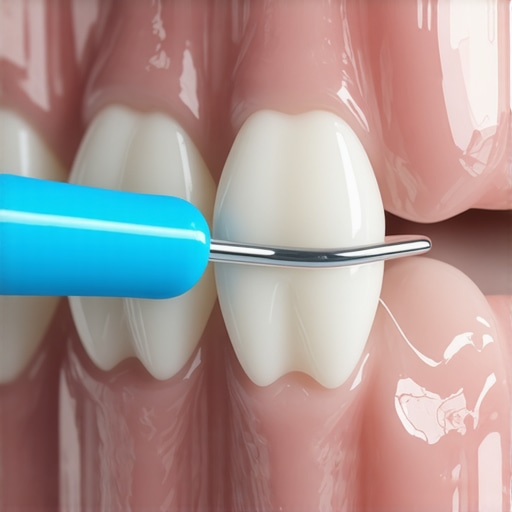
Stop Plaque with the Tiny Brush Method
If you find the threading process too tedious for a Tuesday night, let me introduce you to the interdental brush. These look like tiny, soft pipe cleaners and are absolute game-changers for the ‘corners’ where the wire meets the tooth. Many teeth cleaning myths debunked by top dentists suggest that you only need to floss, but for retainer wearers, these little brushes do the heavy lifting. You simply slide the brush into the space between the teeth, below the wire, and give it a few gentle pulses. It disrupts the biofilm much better than a standard toothbrush ever could. This is very similar to the trick to flossing under a permanent dental bridge, as both hardwares create those pesky stagnation zones where bacteria thrive. If you’ve ever wondered why your teeth feel sticky only a few hours after brushing, it’s usually because these hidden pockets weren’t properly agitated.
Perfect the Sweep to Prevent Tartar Shelves
The final part of the process is what I call the ‘Under-Wire Sweep.’ Even after flossing, plaque can sit on top of the wire itself or on the bonding material. Using a soft-bristled brush at a 45-degree angle toward the gums, you want to use short, vibrating strokes. This ensures the bristles reach behind the wire. If you neglect this, the plaque hardens into tartar, which is what leads to the feeling of having a ‘limestone cave’ in your mouth. Staying diligent with this mechanical cleaning is the most effective way of how to stop your bottom teeth from crowding as you get older, because healthy bone and gum support are what keep those teeth in their post-braces positions. It’s not about how hard you scrub; it’s about the precision of the sweep.It is incredibly easy to fall into the ‘gadget trap’ where we assume that because we spent a hundred dollars on a high-pressure water flosser, our teeth must be pristine. But let’s look at the nuance that many people miss: water flossers are exceptional at removing ‘planktonic’ bacteria—the stuff floating around—and loose food particles, but they often fail to disrupt the ‘mature biofilm.’ This biofilm is a complex community of bacteria that creates a sticky matrix, essentially gluing itself to your teeth and your retainer wire. If you aren’t using mechanical friction, you’re leaving the foundation of tartar behind. This is one of the most persistent teeth cleaning myths debunked by top dentists who see the results of ‘water-only’ routines every single day.
Why does my dentist still find tartar when I use a water flosser every night?
The answer is rooted in physics and microbiology. A study published in the Journal of Clinical Dentistry found that while water irrigation is a great adjunct, it cannot match the physical ‘shear force’ of a brush or floss making direct contact with the tooth surface. Think of it like washing a muddy car; you can spray it with a high-pressure hose all day, but until you hit it with a sponge, that thin film of grime remains. This is exactly why your teeth feel sticky even after you brush if you only rely on the water jet. The ‘Oops’ factor here is assuming that ‘wet’ equals ‘clean.’ You need physical friction to break the bond of the biofilm and truly protect your enamel.
Target the Bonding Material Instead of Just the Wire
Here is a nuance most people overlook: the wire isn’t the only thing catching plaque. The composite resin ‘bumps’—the bonding material used to glue the wire to your teeth—are actually slightly porous and have their own tiny ledges. If you only clean the wire and ignore these attachment points, you’re inviting decay right at the most vulnerable spot. This is why finding the secret to floss that doesnt snap between tight teeth is so important; you need a high-quality, slippery floss that can navigate around these resin bumps without fraying. If you’ve recently finished orthodontic treatment, you might think you’re in the clear, but invisalign maintenance expert tips for clear confident smiles apply even to those with permanent wires. Both require a dedicated focus on ‘stagnation zones’ where the hardware meets the tooth. Don’t be fooled by the convenience of tech. There is a specific reason why your dental hygienist uses a water flosser instead of manual tools in a clinical setting—they have the professional-grade power and visibility to make it effective. For your nightly home routine, the manual sweep remains your best defense for maintaining your teeth cleaning routine for long-term health. Have you ever fallen into the trap of trusting your gadgets more than your technique? Let me know in the comments.
I personally swear by a very specific toolkit that fits in a small travel pouch, because as I’ve learned, consistency is easier when your tools are accessible. After testing dozens of products, I’ve landed on the GUM Proxabrush Go-Betweens as my absolute non-negotiable. I prefer the ‐tight‐ or ‐ultra-tight‐ sizes because they slide under my lower wire without forcing the teeth apart. A technical detail I love: these brushes have a plastic-coated wire. If you’ve ever used a cheap generic version and felt that sharp, metallic ‐zap‐ when it touches your retainer, you know exactly why the coating matters. This small nuance makes teeth cleaning for sensitive teeth in 2025 much more bearable. I also keep a stash of GUM Butlerweave floss; it’s a spreadable floss that grabs the plaque rather than just sliding over it, which is the real secret to avoiding those ‐limestone caves‐ I mentioned earlier.
How do I keep my results from fading over time?
Maintenance is a marathon, not a sprint. To ensure your long-term success, you have to look beyond the surface. I follow a ‐check-in‐ protocol every Sunday night where I use a lighted dental mirror to inspect the bonding material on my lower teeth. If I see even a hint of redness in the gums, I know I’ve been lazy with my technique. This proactive approach is exactly how regular teeth cleaning can prevent major dental issues before they require a drill. According to a report by the ADA Clinical Evaluators (ACE) Panel on interdental cleaners, the physical disruption of biofilm is the single most important factor in preventing attachment loss. By focusing on the physical friction of my interdental brushes, I am scaling my oral health for the next decade, not just until my next check-up. This is also a major pillar of maintaining your teeth cleaning routine for long-term health, ensuring that your investment in braces or Invisalign doesn’t go to waste.
Ditch the Gadgets for These Pro Techniques
While I love a good tech upgrade, I’ve found that high-end gear often masks poor habits. I’ve seen friends buy the most expensive electric brushes on the market only to develop recession because they pushed too hard. This is a common theme in cosmetic dentistry trends that transform smiles today; the trend is moving toward ‐biomimetic‐ or ‐gentle‐ care. If you are struggling with sensitivity, consider switching to a high-quality manual brush with tapered bristles for a few weeks to reset your pressure sensitivity. This is one of those invisalign maintenance expert tips for clear confident smiles that also works for permanent retainers: less force, more precision. I also recommend keeping a small emergency kit in your car or purse that includes a tiny container of dental wax and a few threaders. You never know what to do if your permanent retainer wire snaps at dinner until it happens, and having that wax can save your tongue from a night of shredded misery.
What the future holds for your bathroom sink
I predict that the next five years will bring a massive shift toward ‐smart monitoring‐ rather than just ‐smart brushing.‐ We are already seeing modern teeth cleaning innovations that reduce sensitivity and boost results through AI-integrated cameras built into toothbrushes that can actually identify plaque in real-time on your smartphone screen. Imagine a world where your brush tells you exactly which ‐shelf‐ of your permanent retainer you missed. This level of feedback will revolutionize at-home care, making the ‐limestone cave‐ a thing of the past. For now, my challenge to you is this: go out and buy a single pack of interdental brushes this week. Try them just once a day before your regular brushing. You will be shocked—and maybe a little grossed out—by what your regular brush has been leaving behind under that wire.
Lessons I Had to Learn the Hard Way About Retainer Care
One of the biggest lightbulb moments I had was realizing that bleeding gums aren’t a signal to stop flossing; they are a cry for help. If you notice a little pink when you use your interdental brush, it usually means the bacteria have caused inflammation, and the only way out is through more consistent, gentle cleaning. I also discovered that the “mirror test” is non-negotiable. We often clean by feel, but since the lower retainer is in a visual blind spot, you need a high-quality dental mirror to see if you’re actually hitting the target. Lastly, I learned that your dental hygienist is your best ally, not a judge. I started asking my hygienist exactly where I was missing spots, and those teeth cleaning myths debunked by top dentists became much clearer once I saw my own trouble zones under a professional light.
The Survival Kit for a Plaque-Free Permanent Wire
Building a reliable toolkit is the secret to maintaining your teeth cleaning routine for long-term health. I personally trust the following items because they’ve kept me out of the “limestone cave” scenario for years. First, the GUM Butlerweave floss is a must-have because it’s a woven floss that expands slightly to grab more plaque than slippery, ribbon-style flosses. Second, I recommend a 10x magnifying mirror with a built-in LED light; it reveals everything your bathroom overhead light hides. Finally, I never travel without invisalign maintenance expert tips for clear confident smiles in mind, which means carrying a travel-sized pack of interdental brushes. These tools are the foundation for keeping your smile pristine without needing expensive electronic gadgets.
Take Back Control of Your Smile
It is easy to feel defeated when a permanent wire makes your oral hygiene feel like an uphill battle, but you have the power to change the outcome. By focusing on mechanical friction and precision rather than just high-tech water pressure, you are taking the most effective step in how regular teeth cleaning can prevent major dental issues. Don’t wait for your next appointment to start these habits. Grab your tools, check the back of those lower teeth, and start your new routine tonight. Have you found a specific tool or technique that makes cleaning your permanent retainer easier? Let me know in the comments below!