
I was somewhere over the North Sea, tucked into seat 18C, when the first lightning bolt of pain struck my left molar. At first, I tried to ignore it, blaming the ice in my drink, but within twenty minutes, my entire jaw was vibrating. It was visceral. It was lonely. There’s no U-turn at thirty thousand feet, and the flight attendant’s tiny packet of aspirin felt like bringing a squirt gun to a forest fire. I’d made the classic mistake of thinking that little ‘twinge’ I felt a week ago was nothing, but what happens if you ignore the tiny crack in your molar becomes painfully obvious when cabin pressure enters the equation. Today, I’m going to share exactly how I survived that nine-hour ordeal and the steps you can take to manage a throbbing toothache when you’re stuck in the sky.
When the Cabin Pressure Turns a Tiny Ache Into a Nightmare
Air expands when pressure drops. It’s simple physics, but when that air is trapped inside a tiny cavity or under a crown, it has nowhere to go but against your nerve. This phenomenon, known as barodontalgia, is a cruel reality for many travelers. I learned the hard way that even a minor issue can escalate into a full-blown emergency in a pressurized cabin. Sometimes, it isn’t even the tooth itself; the truth about why your teeth ache when you have a sinus infection is often linked to those same pressure changes. According to research published by the FDI World Dental Federation, barodontalgia is a clinically significant condition that affects both aircrew and passengers, often triggered by gas expansion in dental pulp. Have you ever felt that sharp ‘zing’ the moment the plane starts its descent?
Can a Flight Really Cause Permanent Dental Damage?
It’s a terrifying thought. You worry if your tooth is literally going to crack open before you hit the tarmac. While the pressure itself rarely shatters a healthy tooth, it acts like a magnifying glass for existing problems. Early in my travels, I skipped my pre-trip checkup, thinking I’d save time. Big mistake. I should have been focused on finding a dentist who gets your smile to clear me for travel. Instead, I spent my vacation looking for an emergency clinic. Regular maintenance, like uncovering teeth cleaning secrets that keep enamel strong, is your best defense against the ‘altitude ache.’ We’re going to walk through the immediate hacks to dull the pain and keep your sanity intact.
Dull the Throb with These Cabin-Safe Hacks
Your first line of defense is a two-pronged pharmaceutical attack. If your carry-on is properly stocked, reach for a combination of Ibuprofen and Acetaminophen. Think of them as a firewall for your nerves. While one blocks the pain signals, the other works to reduce the inflammation deep within the pulp. I remember sitting in that cramped seat, staring at the back of the headrest, counting the seconds until the meds kicked in. I’d recommend taking them with a full glass of water—not the cabin ginger ale—to ensure they hit your system as fast as possible. If you’re dealing with a flare-up, how to handle a sudden sharp pain when you bite down is a skill you hope to never need, but it starts with this chemical stabilization.
Stop the Heat and Ice Games
During my nightmare flight, I made the mistake of ordering a hot tea, thinking the warmth would soothe my jaw. It was like pouring gasoline on a fire. The heat caused the trapped gases inside my tooth to expand even further, sending me into a cold sweat. Conversely, ice-cold water can shock a sensitive nerve that is already under pressure. Your goal is neutrality. Stick to room-temperature liquids. Sometimes the pressure is aggravated by existing enamel wear, which is why teeth cleaning for sensitive teeth is a game-changer you should investigate long before you ever book a ticket. 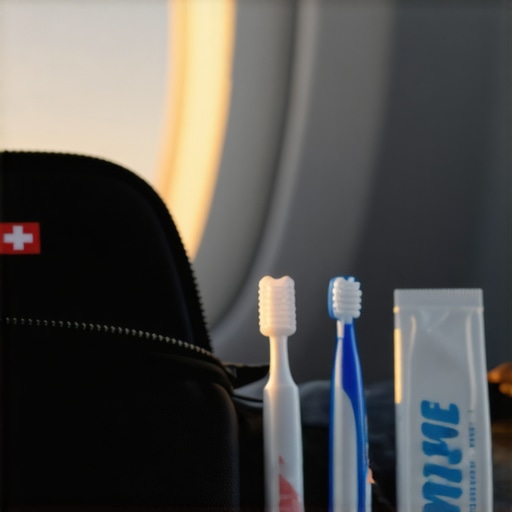
Clear the Air in Your Sinuses
People often forget that their teeth don’t live in a vacuum. Your maxillary sinuses sit right on top of your upper molars. If those sinuses are congested, they press down like a heavy boot on your dental nerves. If you have a nasal spray or a decongestant in your bag, use it. By shrinking the swelling in your sinus cavities, you create more ‘breathing room’ for your teeth. I once ignored a slight head cold before a trip to London, and by the time we hit the mid-Atlantic, I was convinced my molar was going to pop out like a champagne cork. It was a brutal lesson in how how regular teeth cleaning can prevent major dental issues by allowing your dentist to spot these ‘pressure traps’ early.
Try the Saltwater Hack in the Lavatory
It sounds primitive, but it works. Ask the flight attendant for a cup of warm water and a few salt packets. Head to the lavatory and perform a vigorous rinse. I’ve used the salt water trick for shrinking a painful gum boil at home, and it’s surprisingly effective at 30,000 feet too. The salt helps draw out some of the fluid and bacteria that might be contributing to the localized pressure. It’s a messy, awkward process in a tiny plane bathroom, but the slight reduction in throbbing is worth the effort.
Set the Stage for Permanent Fixes
Once you land, the survival phase ends and the repair phase begins. That ‘altitude ache’ is a diagnostic gift—it’s your body telling you exactly where the weakness is. Often, these issues stem from crowded teeth that are hard to clean, making choosing the best Invisalign options for your lifestyle a smart long-term move to prevent future traps. In the meantime, focus on maintaining your teeth cleaning routine for long-term health so that your next vacation is defined by the views, not the emergency clinics.I realized that my flight emergency wasn’t just bad luck; it was the result of viewing dental care as a chore rather than a structural investment. Most people treat a visit to the dentist like an oil change—purely maintenance. But the real nuance lies in the biomechanics.
Stop Treating Cosmetic Dentistry Like a Luxury Upgrade
Everyone says cosmetic procedures are just for vanity, but in my experience, they are often the only way to prevent the kind of structural failure I experienced over the North Sea. If your teeth are misaligned or worn down, you’re not just dealing with an aesthetic issue; you’re dealing with a ticking clock on your enamel. When I finally looked into cosmetic dentistry myths debunked, I discovered that modern restorations like veneers are as much about reinforcing the tooth as they are about the color. According to the American Academy of Cosmetic Dentistry (AACD), true aesthetic success is measured by biomimetic principles—where the restoration mimics the physical properties and strength of natural teeth. If you ignore the ‘why’ behind your wear and tear, even the best dentist can only provide a temporary fix.
Why does your bite feel ‘off’ even when your teeth look perfect?
This is the advanced question most patients don’t ask until it’s too late. You can have the whitest teeth in the room, but if the ‘occlusion’—how your teeth meet and function during chewing—is wrong, you’ll end up with headaches and cracked molars. This is why how to choose a dentist for your Invisalign transformation is such a critical decision. It’s not just about moving teeth into a straight line; it’s about engineering a bite that doesn’t self-destruct under pressure. 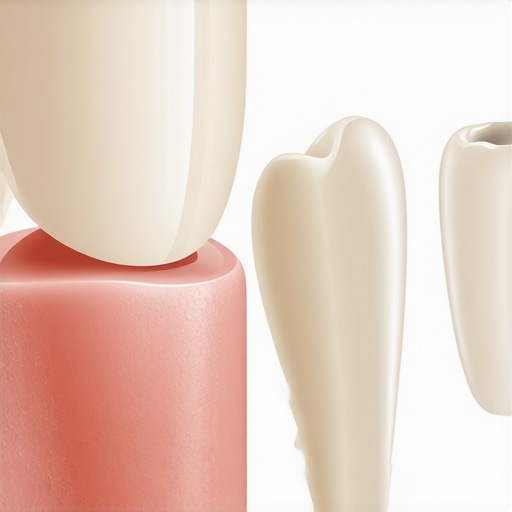
The Light Reflection Trap Most People Miss
Have you ever noticed how some people’s dental work looks ‘flat’ or too white? There is a fascinating science behind the specific reason your teeth look yellow in sunlight but white indoors. It’s all about translucency and depth. Natural teeth aren’t solid blocks of color; they are complex layers of dentin and enamel that play with light. High-end pros focus on matching the exact texture of your natural teeth with a porcelain veneer to ensure that light bounces off the surface in a way that looks alive, not manufactured. Falling into the ‘oops’ factor of choosing the whitest possible shade without considering texture often results in a smile that looks artificial.
Don’t Ignore the Post-Cleaning Clues
We often think a cleaning is successful if it doesn’t hurt. However, there are nuances in your recovery that tell a story. For example, the reason your teeth feel furry only hours after a professional cleaning could point to the specific type of biofilm in your mouth or even a slight roughness in the enamel that needs addressing. Many teeth cleaning myths debunked by experts suggest that ‘squeaky clean’ isn’t always the goal if it involves abrasive damage. The key is staying ahead of the curve with cosmetic dentistry trends that transform smiles beyond expectations, focusing on long-term health first. Have you ever fallen into the trap of prioritizing a ‘quick fix’ over structural health? Let me know in the comments.I used to think a manual toothbrush and some generic floss were enough to protect my mouth, but after that North Sea disaster, my perspective shifted. If you’ve invested thousands into your smile, treating it with five-dollar tools is like putting budget tires on a Ferrari. I’ve become obsessed with the technical side of upkeep because I realized that the ‘set it and forget it’ mentality is how most cosmetic work fails. Today, my bathroom looks more like a high-tech lab, and honestly, my gums have never looked healthier.
The Tools That Actually Earn Their Spot in My Bathroom Cabinet
The biggest game-changer for me wasn’t a fancy paste; it was switching to a high-end oscillating-rotating electric toothbrush. While sonic brushes are popular, clinical studies—including a major meta-analysis published in the Cochrane Library—suggest that the oscillating-rotating movement provides a statistically significant reduction in plaque and gingivitis compared to manual or purely sonic alternatives. This is vital because maintaining your teeth cleaning routine for long-term health isn’t just about the surface; it’s about the microscopic biofilm that eats away at your margins. I also added a water flosser to my nightly ritual. If you have any dental work, you know how easily debris gets trapped, and the hidden reason your dental bridge traps food no matter how much you brush is often due to tight angles that a string simply cannot reach.
Stop Scrubbing Your Aligners With a Toothbrush
If you are currently in the middle of a transformation, you need to rethink your hygiene kit. I see so many people using abrasive toothpaste to clean their trays, which creates micro-scratches that trap bacteria and make the plastic look cloudy. Instead, I use a dedicated ultrasonic cleaner. It uses high-frequency sound waves to create cavitation bubbles that literally blast away plaque without touching the plastic. This is the only way I’ve found to how to clean the stubborn cloudiness off your night guard or aligners effectively. Following Invisalign maintenance expert tips for clear confident smiles means realizing that clarity is a function of chemistry and physics, not just elbow grease. 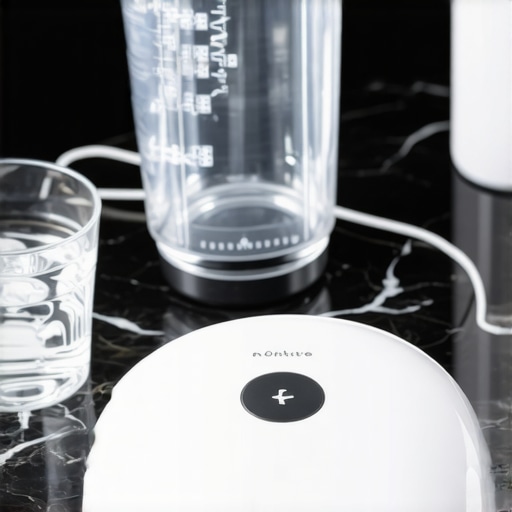
How Do I Keep This Investment Looking New for Decades?
The secret to longevity isn’t just about what you do at home; it’s about how you partner with your pro. I make sure my hygienist uses airflow technology—a combination of air, water, and erythritol powder—rather than old-school gritty polishing paste. This protects the finish on veneers and crowns. I also pay close attention to my ‘wear patterns.’ Sometimes why your Invisalign trays feel tighter on some days than others is a sign of nighttime grinding, which can shatter a ceramic restoration in a single night. Looking ahead, I predict we will soon see bio-active toothpastes that actually ‘re-mineralize’ the margins of crowns using synthetic hydroxyapatite, effectively sealing the gap between human tissue and ceramic. If you want to stay ahead of the curve, I highly recommend checking out modern teeth cleaning innovations that reduce sensitivity and boost results during your next visit. Don’t just get a cleaning—get a structural audit. Try asking your dentist for a 3D scan today just to baseline your wear patterns; it’s the most advanced way to catch issues before they become emergencies.
The Most Expensive Lesson My Molar Ever Taught Me
Reflecting on that high-altitude nightmare, I realized that dental pain is rarely a sudden event; it is the final scream of a long-ignored whisper. My biggest takeaway was that pain is a lagging indicator. By the time I felt that lightning bolt over the North Sea, the structural compromise had been there for months. I also learned that proactive maintenance is significantly cheaper and less traumatic than emergency intervention. Investing in cosmetic dentistry trends that transform smiles today isn’t just about the visual appeal; it is about reinforcing the architecture of your mouth so it can withstand the physical rigors of travel. Finally, I discovered that your dentist should be a partner in your lifestyle, not just someone you call when something breaks. Finding that synergy through choosing the right dentist expert tips for your best smile journey changed how I view every appointment.
The Gear That Keeps My Smile Professional-Grade
I have completely overhauled my daily routine to ensure I never face another mid-air crisis. My bathroom cabinet is now a curated collection of high-performance tools that I trust implicitly. First, I transitioned to a medical-grade oscillating toothbrush; the clinical precision it offers for removing biofilm is unmatched by any manual brush. I also never travel without a high-quality saline nasal spray to keep my sinus cavities clear, which is a vital secondary defense against dental pressure. For those who use aligners, I highly recommend an ultrasonic cleaning pod. If you are currently choosing the best Invisalign options for your lifestyle, this tool is the only way to maintain the structural integrity and clarity of the plastic. I also keep a digital copy of my latest 360-degree scans on my phone—having your dental records accessible globally is a small step that provides massive peace of mind.
Make Your Next Trip a Painless Adventure
Your smile is the only thing you wear every single day, and it deserves to be as resilient as it is beautiful. Whether you are seeking teeth cleaning for sensitive teeth to prep for a flight or you are ready to dive into the ultimate guide to Invisalign for adults in 2025, the key is to act before the pressure builds. Modern dentistry has evolved far beyond simple fillings; it is now a field of bio-restoration and preventive engineering. Don’t let the fear of a chair keep you from the joy of the clouds. By staying ahead of the curve with regular checkups and the right technology, you can ensure that your next vacation is remembered for the memories you made, not the toothache you endured. Have you ever experienced a sudden dental emergency while you were away from home? Let me know how you handled it in the comments below!