
I remember sitting at my sister’s wedding, trying to look joyful in photos while a piece of pink acrylic was essentially carving a canyon into my lower gum line. I had just gotten my new dentures, and I was convinced I could just “tough it out.” That was my first big mistake. I thought my mouth would just adapt if I forced it, but instead, I ended up with an ulcer so painful I couldn’t even drink lukewarm coffee the next day. We’ve all been there—that moment of “buyer’s remorse” where you wonder if your old smile was actually better than this constant stinging. Today, I’m going to share exactly how to turn that plastic-induced misery into comfort so you can actually enjoy your lunch again.
Stop the Stinging Before You Give Up Completely
It’s a strange sensation, isn’t it? You go through the process of choosing the right dentist and wait weeks for your new teeth, only to find that wearing them feels like walking on a pebble. The “why” here is simple but frustrating: your gums weren’t designed to bear the weight of hard acrylic. They are soft, vascular, and incredibly sensitive. When I first started my journey, I made the mistake of wearing my dentures 24/7, thinking it would speed up the “breaking-in” period. I was wrong. My gums needed to breathe. Much like how the reason your crown feels tall when you first bite down is often due to minor alignment issues, your dentures have “high spots” that create friction. A study published in the Journal of Prosthodontic Research notes that nearly 20% of new denture patients experience localized ‘sore spots’ that can significantly affect their nutritional intake if not addressed. Have you ever found yourself staring at your dentures in the morning, wondering if the pain is actually worth the effort?
Does it really have to hurt this much?
The short answer is no, but it does require some proactive TLC. I used to think that the pain was just the price of a better look, but that’s a dangerous mindset. If you’re feeling a sharp, localized sting, that’s not “getting used to it”—that’s your body telling you something is rubbing the wrong way. You might have tried the salt water trick already, which is great for inflammation, but it won’t fix a physical fit problem. You aren’t alone, and you aren’t imagining the discomfort. We need to tackle the inflammation first, then address the mechanics. If you’ve been struggling with teeth cleaning for sensitive teeth in the past, you know that gum health is the foundation for everything else. Let’s get into the immediate steps you can take tonight to stop the throbbing and start healing.
Give Your Gums a Frequent Breathing Window
Think of your new dentures like a pair of heavy leather boots. You wouldn’t hike twenty miles in them on the first day without expecting blisters. In my first week, I was so determined to look ‘normal’ for my family that I didn’t take my plates out for sixteen hours straight. By dinner, my mouth felt like it was on fire, and every swallow was a chore. The best thing you can do right now is the 20-minute reset. Every four hours, take the dentures out. Rinse your mouth with cool water and let your tissues rest. This prevents the constant pressure from cutting off circulation to your gums, which is vital for healing. Just as how regular teeth cleaning can prevent major dental issues, giving your gums this ‘oxygen time’ prevents minor irritation from turning into a full-blown infection.
Identify the Friction Points Before Your Next Appointment
You need to become a detective for your own mouth. When a specific spot starts to throb, look at it in the mirror using a bright flashlight. If you see a small, pale area surrounded by redness, it’s a pressure point. I once panicked thinking a sore was a sign of a serious disease, but learning how to tell if that white spot on your gum is a canker sore or an infection saved me a lot of middle-of-the-night stress. One trick I learned the hard way: use a tiny dab of edible lipstick or food coloring on the sore spot of your gum, then carefully place the denture in. The color will transfer to the acrylic, showing your dentist exactly where the ‘high spot’ is. 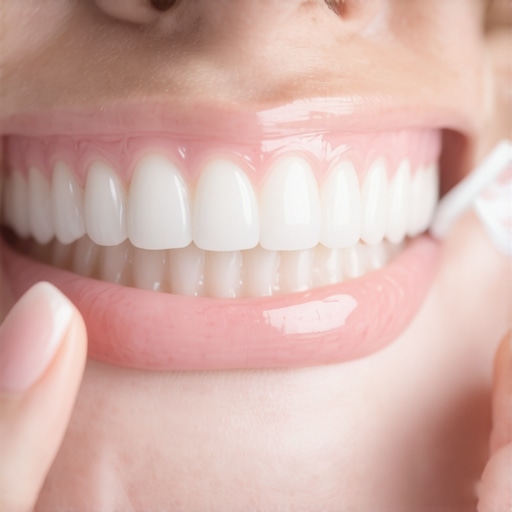 This makes the professional adjustment process ten times more accurate and faster.
Why You Must Resist the Urge to DIY Your Fit
It’s incredibly tempting to grab a nail file or a piece of sandpaper when you’re in pain and the dentist’s office is closed, but please, put the tools down. I once tried to ‘shave down’ a clicking edge on my lower plate during a late-night frustration session and ended up ruining the suction completely. Modern prosthetics are engineered with digital precision, much like how finding a dentist who gets your smile ensures your aesthetics match your physical function. A professional adjustment takes five minutes with a specialized dental burr; a home ‘fix’ usually ends with a bill for a brand-new denture because the balance is permanently destroyed.
Focus on Soft Texture Until the Inflammation Subsides
Your diet during this transition is non-negotiable if you want the pain to stop. If you try to chew through a steak while your gums are still swollen, you are effectively grinding the hard acrylic into open wounds. Stick to scrambled eggs, yogurt, and mashed potatoes for at least three days after a flare-up. Even while you are on this soft diet, maintaining your teeth cleaning routine for long-term health remains essential—not for the plastic teeth, but for the living tissue underneath them. I found that gently massaging my gums with a very soft, damp cloth helped stimulate blood flow and sped up the healing process of those nasty ulcers.Once you move past the initial soreness of new dentures or the first few days of aligners, you enter what I call the ‘Expert Phase.’ This is where most people get complacent and make mistakes that cost them their results. We often think that a ‘Hollywood smile’ is just about reaching a certain shade of white, but that’s a common misconception. In reality, cosmetic dentistry myths debunked by top dentists often highlight that ‘natural’ is the new ‘perfect.’ If your teeth look like flat, white piano keys, you’ve actually missed the mark on high-end aesthetics. True expertise in the secret to a Hollywood smile involves mimicking the subtle translucency and texture of real enamel. 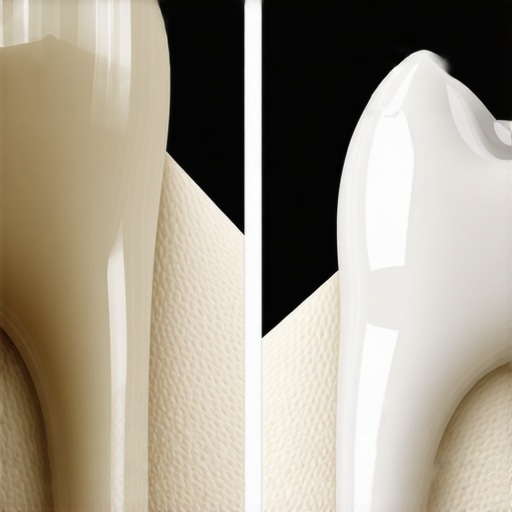
White Teeth Aren’t Always Healthy Teeth
There is a dangerous belief that the whiter the tooth, the healthier the mouth. I’ve seen people use aggressive charcoal pastes that provide immediate whitening but actually strip away the protective enamel, leading to permanent sensitivity. You need to be careful with the truth about whitening strips and how they affect sensitive roots because once that root is exposed, no amount of whitening will fix the yellowing; it will only increase the pain. High-end cosmetic work, like how we match the texture of a crown to your existing teeth, focuses on light reflection. If the surface is too smooth, it looks fake. According to a 2023 study in the Journal of Prosthodontics, patients are 40% more satisfied with cosmetic work that includes ‘incisal translucency’—that slightly clear edge at the bottom of the tooth—than with solid white blocks.
Why does your bite feel different after a professional prophy?
It’s a question that catches many by surprise. You go in for a routine cleaning and come out feeling like your teeth don’t fit together quite right. This happens because the specific reason your teeth feel sharp after a professional cleaning is often the removal of built-up calculus that was acting as a ‘bridge’ between your teeth. When that’s gone, your tongue and cheeks have to recalibrate. It’s similar to why your teeth feel like polished glass after a professional prophy cleaning; the smoothness is the actual health of the tooth, but your brain interprets the change as ‘something is wrong.’
The Relapse Trap You Might Be Falling Into
If you are currently using aligners, the biggest ‘oops’ factor is the Weekend Warrior mindset. Many patients think that wearing trays for 18 hours instead of 22 for a few days can be ‘fixed’ by wearing them for an extra day at the end of the week. This is a biological fallacy. A study in the Journal of Aligner Orthodontics explains that ‘biological lag’—the time required for bone remodeling—requires constant, light pressure. When you remove that pressure for six hours, the teeth begin to drift back almost immediately. What happens if you skip wearing your Invisalign for just one weekend is more than just a 48-hour delay; it can actually cause the root to become ‘trapped’ in the wrong position, requiring a mid-course correction. Even if the truth about why your front teeth feel loose on Invisalign tray swap days makes you want to take a break, resist the urge. That looseness is the sign that the bone is soft enough to move; stopping now just hardens it in the wrong place. Have you ever fallen into this trap where you thought ‘good enough’ was enough? Let me know in the comments.
I used to think that once the trays were out or the final crown was seated, the hard work was over. It’s a tempting lie. In reality, maintenance is where the real results are forged. I’ve found that the manual scrubbing we were taught as kids just doesn’t cut it for modern dental materials. For my Invisalign journey, I eventually ditched the toothbrush for a 42,000Hz ultrasonic cleaner. Why? Because manual brushing actually creates microscopic scratches in the plastic that trap odors and bacteria. If you’ve ever wondered how to stop your invisalign trays from smelling like old saliva, this is the silver bullet. It uses cavitation—millions of tiny bubbles—to implode against the surface, reaching crevices your brush never will.
How do I keep my new smile looking fresh for years?
The secret isn’t a special brand of toothpaste; it’s a religious adherence to maintaining your teeth cleaning routine for long-term health. When you have cosmetic work, the ‘margin’—the tiny line where the porcelain meets your natural gum—is your greatest vulnerability. If plaque builds up there, you risk gum recession that exposes the edge of the restoration, making it look obvious and fake. This is often the real reason your coffee stains come back a week after a professional cleaning; if the surface isn’t perfectly polished and clean, those tannins find a home immediately. I personally use a high-end electric brush with a pressure sensor because I used to be a ‘scrubber,’ which is the fastest way to ruin expensive veneers.
The International Journal of Oral Science emphasizes that oral biofilms on dental appliances can host over 700 bacterial species, which is why I also swear by a dedicated stainless steel tongue scraper. It sounds simple, but the best way to clean your tongue without triggering your gag reflex involves starting from the middle and moving forward with a light touch, reducing the overall bacterial load that could otherwise migrate to your dental work.
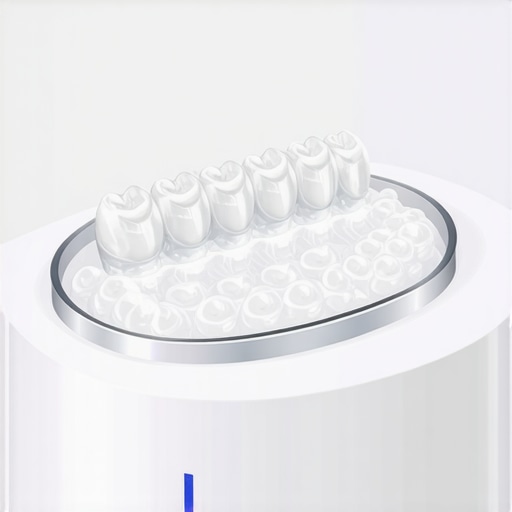
Looking ahead, I believe we are moving toward ‘Smart Maintenance.’ We’re already seeing modern teeth cleaning innovations that reduce sensitivity and boost results, but the next step is AI-integrated apps that use your phone’s camera to scan your teeth daily for signs of tray seating issues or early plaque. It’s no longer just about the secret to keeping your invisalign trays perfectly clear for two weeks; it’s about real-time biological data ensuring your teeth aren’t shifting back. If you’re serious about protecting your investment, I challenge you to try the ‘Water-First’ rule for one week: drink a full glass of water after every single thing you eat or drink. It’s the simplest way to neutralize acids before they can etch your enamel. If you want more professional guidance, focus on choosing the right dentist who specializes in long-term aesthetic maintenance rather than just the initial fix.
The Expensive Lessons I Learned the Hard Way
If there is one thing I’ve realized after years of trial and error, it’s that patience is your greatest clinical tool. I spent months frustrated by minor aches until I learned that cosmetic dentistry is a marathon, not a sprint. Here are a few ‘lightbulb moments’ that saved my sanity:
- The ‘Good Enough’ Trap: Skipping just one night of wear or a single cleaning session isn’t a shortcut; it’s a setback. High-quality teeth cleaning secrets how regular care boosts oral health at any age show that consistency beats intensity every time.
- Listen to Your Gums: Redness and swelling are data points, not just annoyances. They tell you exactly where your appliance needs a professional touch.
- Expertise Matters: You can’t DIY a medical-grade prosthetic. Trust the process and lean on cosmetic dentistry myths debunked what you really need to know to filter out the internet noise.
Tools That Keep My Smile Looking Brand New
I don’t believe in overcomplicating things, but these four items have been game-changers for my daily routine. First, a stainless steel tongue scraper is non-negotiable for keeping your breath fresh without irritating your tissues. Second, if you use clear aligners, an ultrasonic cleaner is the only way to avoid that cloudy, ‘old plastic’ look. I also swear by modern teeth cleaning innovations that reduce sensitivity and boost results, specifically pH-balanced rinses that don’t sting. Finally, my favorite ‘tool’ is simply a high-quality water flosser; it reaches the margins of crowns and invisalign attachments where traditional floss often shreds. Check out the secret to keeping your invisalign trays perfectly clear for two weeks for more on maintaining that pristine look.
Believe in the Transformation Waiting for You
It’s easy to get caught up in the soreness of the first week or the annoyance of a tray swap, but don’t lose sight of why you started. Every small adjustment and every meticulous cleaning is a deposit into your future confidence. Whether you are navigating the early days of invisalign or refining a full restoration, the end result—a smile that feels as good as it looks—is absolutely worth the effort. Start by choosing the right dentist who listens to your concerns and supports your long-term goals. You’ve got this!
What’s the one thing that’s making you nervous about your new smile journey? Drop a comment below and let’s talk through it!