
I remember the first night after my permanent crown was finally set. I was exhausted. I hit the pillow, exhaled, and then… thud. Well, not a literal thud, but my jaw felt like I had suddenly swallowed a lead fishing weight. It was not exactly pain. It was just a strange, localized heaviness that only appeared the moment I went horizontal. I spent the next three hours staring at the ceiling, convinced my expensive new investment was about to migrate into my sinus cavity. If you are feeling that same weird tugging or weight right now, take a breath. You are not losing your mind, and your tooth probably isn’t falling out either.
That Weird Weighted Feeling When You Hit the Pillow
The sensation of a “heavy” implant when you lie down is actually more common than most surgeons mention during the consultation. When I first started my journey into cosmetic dentistry insights, I assumed every tooth felt the same. I was wrong. A dental implant is a titanium post fused directly to your bone. Unlike your natural teeth, it lacks a periodontal ligament—the tiny fleshy “shock absorber” that tells your brain exactly how much pressure is being applied to a tooth. According to research published in the Journal of Oral Implantology, this lack of ligament means your proprioception—your body’s ability to sense the position of its parts—is completely different for an implant. When you lie down, the change in blood pressure and the shift in how gravity pulls on your jaw tissues can make that solid piece of metal feel much more prominent than its natural neighbors. This is especially true if you are still healing or if your body is just getting used to the fact that your dental implant feels slightly different than your natural teeth. I learned the hard way that obsessing over it only makes the sensation worse. Early on, I even tried the tapping test for a loose dental implant far too aggressively, which only irritated my gums and made me more anxious.
Does a Heavy Jaw Mean My Implant Is Failing?
This is the big fear, isn’t it? You worry that the weight means the bone isn’t holding. But usually, it is just your nerves adjusting to the density of the restoration. In those early months, my biggest mistake was not choosing the right dentist who took the time to explain the sensory transition. I thought I was a medical anomaly! We are going to dive into the physics of why this happens and when you should actually be concerned. Have you felt that strange, sinking “pull” the moment your head hits the mattress? It is a bizarre feeling, but you are definitely not alone in this.
How Gravity Changes the Way Your Implant Feels
When you transition from standing to lying flat, your body’s internal hydraulics shift. Blood pressure in your facial tissues increases slightly, which can create a sensation of tightness or a sinking feeling around the implant site. Since titanium does not compress or flex like a natural tooth root, this microscopic tissue swelling feels like a heavy weight. It is very similar to the reason your crown feels tall when you first bite down—your mouth is hyper-sensitive to even a fraction of a millimeter of pressure. In natural teeth, the periodontal ligament acts like a spring, dampening these sensations. Without it, the implant is like a solid pillar in your jaw that reflects every pulse and pressure change directly to the bone. This lack of a shock absorber means that when your blood pressure rises slightly during sleep, the bone feels the expansion of the surrounding gums much more acutely, leading to that localized weighted sensation.
The Difference Between Heavy and Broken
I remember one specific Tuesday at 2 AM. I was lying on my left side, and it felt like my new molar was trying to pull itself out of my face. I spent twenty minutes in front of the bathroom mirror, nudging the crown with my tongue, convinced I needed to know why your dental implant crown feels like it is spinning. It was not actually moving; I was just clenching my jaw because I was anxious about the recovery process. I have since learned that why your jaw clicks more when you are under stress is a huge factor in how implants feel at night. Stress tightens the masseter muscle, which puts lateral pressure on the post, mimicking that heavy or tugging sensation. If you are not seeing active bleeding or significant gum swelling, your body is likely just adjusting to the density of the restoration. 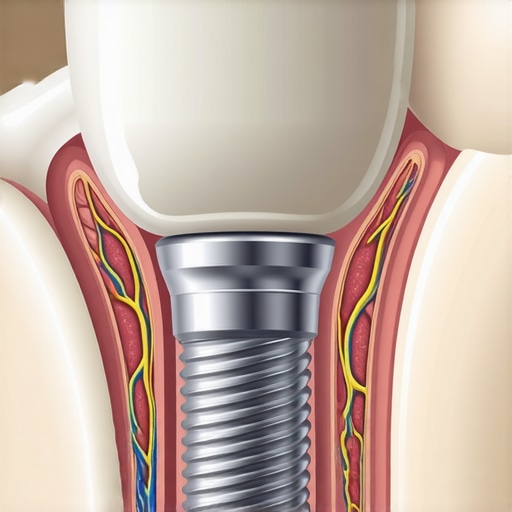
Simple Ways to Ease the Nighttime Heaviness
To manage this, start by slightly elevating your head with a wedge pillow or an extra standard pillow for the first few weeks after the crown is set. This simple change in physics prevents the pooling of blood in the jaw area that triggers the sensation of weight. Also, take note of the physical texture of the crown. Sometimes, if the fit is not perfectly smooth, you should check what to do if your dental implant crown feels gritty against your tongue. A rough surface can keep your tongue busy at night, which keeps your brain focused on the implant instead of letting it fade into the background of your consciousness. If the sensation feels like a mechanical wobble rather than just a heavy pressure, you must know how to handle a loose healing cap on your dental implant before you attempt any DIY fixes. Most of the time, the heaviness is simply the physics of a solid object meeting a living jawbone. It is also helpful to maintain a strict hygiene routine, as minor inflammation can mimic that sense of weight. Following maintaining your teeth cleaning routine for long-term health ensures that no bacteria are causing the gum tissue to swell and press against that titanium post. If you are still in the early stages, you might notice why your teeth feel furry only four hours after cleaning; this is often due to changes in saliva flow during the healing phase, which can further distract you from a comfortable night of sleep.That “furry” feeling is a classic example of how our expectations do not always align with dental reality. We often assume that the reason your teeth feel furry only four hours after cleaning is a sign of poor hygiene, but it is frequently a result of your mouth’s changing chemistry during the healing process. Let’s dig deeper into the nuances of sensory feedback. One of the biggest mistakes I see—the “Oops” factor that keeps patients in a cycle of frustration—is over-correcting with aggressive brushing or abrasive products. You might think a stiff brush and some charcoal powder will fix that film, but you are likely walking into a trap. Many people believe that “more friction” equals “cleaner teeth,” but teeth cleaning myths debunked by top dentists show that aggressive abrasion actually creates micro-scratches where bacteria can hide even more effectively.
The Dangerous Myth of the ‘Deep Scrub’ Mentality
In my experience, the most persistent myth is that professional results require a painful or highly abrasive process. Patients often come to me asking for “the strongest grit” to remove coffee stains, thinking that cosmetic dentistry insights are all about power-washing the teeth. This is where you have to be careful. If you are using charcoal-based products, you should perform the grit test for charcoal toothpaste immediately. If it feels like sand between your fingers, it is essentially sandpaper for your enamel. Unlike your skin, your enamel does not grow back. When you scrub too hard, you are not just cleaning; you are thinning the very shield that protects your teeth from sensitivity. This is why some people find that teeth cleaning for sensitive teeth becomes a necessity rather than an option—they have literally brushed away their protection. 
Why Does My Enamel Look Thinner Even With Perfect Hygiene?
This is a question that often stumps even the most dedicated flossers. It comes down to the Relative Dentin Abrasivity (RDA) scale. A study published by the American Dental Association (ADA) highlights that any toothpaste with an RDA score over 150 is considered highly abrasive and potentially harmful for daily use. If you are chasing a brighter smile by using high-abrasion whitening pastes every single day, you might be exposing the yellowish dentin layer beneath your enamel. This leads to a frustrating irony: the harder you brush to get white teeth, the more yellow they appear because the enamel is becoming translucent. It is a sophisticated trap. To avoid this, you should focus on maintaining your teeth cleaning routine for long-term health using low-abrasion, high-fluoride pastes that remineralize rather than strip. Instead of that “sandpapered” feeling, you should be aiming for the sensation of why your teeth feel like polished glass after a professional prophy cleaning—that smoothness is a sign of a healthy, intact surface. Have you ever fallen into this trap of over-brushing to get a whiter look? Let me know in the comments.The transition from being a passive patient to an active curator of your smile is a total game-changer. I personally stopped using manual brushes years ago after seeing how modern teeth cleaning innovations that reduce sensitivity and boost results actually work in real-time. I used to be skeptical of the high price tags on electric brushes, but once you realize that a manual brush cannot even come close to the 30,000+ strokes per minute of a sonic model, there is no going back. I am currently using the Philips Sonicare 9900 Prestige, not just because it looks sleek, but because it actually senses if I am pressing too hard—saving my enamel from that ‘sandpaper’ fate we talked about earlier. Beyond the brush, we have to talk about the ‘digital invisible.’ I now insist on a provider who understands how we use digital scans to catch cavities that x-rays might miss. It is not just about finding holes; it is about mapping the wear and tear on your cosmetic work before a tiny fracture becomes a full-blown emergency.
Upgrade your arsenal with tools that actually work
While many people focus on the brush, the real winners in my medicine cabinet are the specialized tools for complex work. If you have moved beyond basic fillings into the world of restorations, you need gear that reaches where bristles cannot. I have found that integrating a high-quality water flosser—specifically one with a dedicated orthodontic or implant tip—makes a massive difference in gum health. It is not just about convenience; it is about hydraulic pressure flushing out the biofilm that a string simply skips over.
How can I protect my dental investment for decades?
Maintenance is not just about avoiding pain; it is about scaling your routine to match the quality of your restorations. If you are wearing aligners, stop scrubbing them with a toothbrush. According to Dr. Gordon Christensen of the Clinicians Report, manual brushing can create microscopic scratches on the plastic that harbor bacteria and turn your ‘clear’ trays yellow. I switched to a dedicated ultrasonic cleaner—specifically the iDesign model—which uses high-frequency sound waves to blast away biofilm without touching the surface. This is the secret to keeping your Invisalign trays perfectly clear for two weeks. If you skip this, you are basically wearing a bacterial petri dish on your teeth for 22 hours a day, which is how you end up needing to know how to get the morning breath smell out of your Invisalign case for good. For my friends with implants or bridges, throw away the needle threaders. I use a Waterpik with the ‘Plaque Seeker’ tip because it is the only way to get around those titanium posts without causing irritation. Mastering how to clean under a fixed dental bridge without using a needle threader will literally save your gums from that chronic ‘itchy’ feeling. Looking ahead, I predict we are moving toward a future where Invisalign innovations why 2025 is the year for a perfect smile will include smart-trays with built-in sensors that monitor your oral pH levels in real-time. We are entering an era of proactive, rather than reactive, dentistry. If you want to see a real difference by next week, I challenge you to try this: soak your aligners or retainers in a 50/50 mix of white vinegar and water for just 15 minutes tonight. You will be shocked at how much mineral buildup disappears that your brush could not even touch. It is a simple step in Invisalign maintenance expert tips for clear confident smiles that keeps your breath fresh and your investment protected. Trust me, maintaining your teeth cleaning routine for long-term health is way cheaper than a replacement crown.I remember the first night after my permanent crown was finally set. I was exhausted. I hit the pillow, exhaled, and then… thud. Well, not a literal thud, but my jaw felt like I had suddenly swallowed a lead fishing weight. It was not exactly pain. It was just a strange, localized heaviness that only appeared the moment I went horizontal. I spent the next three hours staring at the ceiling, convinced my expensive new investment was about to migrate into my sinus cavity. If you are feeling that same weird tugging or weight right now, take a breath. You are not losing your mind, and your tooth probably isn’t falling out either.
That Weird Weighted Feeling When You Hit the Pillow
The sensation of a “heavy” implant when you lie down is actually more common than most surgeons mention during the consultation. When I first started my journey into cosmetic dentistry insights, I assumed every tooth felt the same. I was wrong. A dental implant is a titanium post fused directly to your bone. Unlike your natural teeth, it lacks a periodontal ligament—the tiny fleshy “shock absorber” that tells your brain exactly how much pressure is being applied to a tooth. According to research published in the Journal of Oral Implantology, this lack of ligament means your proprioception—your body’s ability to sense the position of its parts—is completely different for an implant. When you lie down, the change in blood pressure and the shift in how gravity pulls on your jaw tissues can make that solid piece of metal feel much more prominent than its natural neighbors. This is especially true if you are still healing or if your body is just getting used to the fact that your dental implant feels slightly different than your natural teeth. I learned the hard way that obsessing over it only makes the sensation worse. Early on, I even tried the tapping test for a loose dental implant far too aggressively, which only irritated my gums and made me more anxious.
Does a Heavy Jaw Mean My Implant Is Failing?
This is the big fear, isn’t it? You worry that the weight means the bone isn’t holding. But usually, it is just your nerves adjusting to the density of the restoration. In those early months, my biggest mistake was not choosing the right dentist who took the time to explain the sensory transition. I thought I was a medical anomaly! We are going to dive into the physics of why this happens and when you should actually be concerned. Have you felt that strange, sinking “pull” the moment your head hits the mattress? It is a bizarre feeling, but you are definitely not alone in this.
How Gravity Changes the Way Your Implant Feels
When you transition from standing to lying flat, your body’s internal hydraulics shift. Blood pressure in your facial tissues increases slightly, which can create a sensation of tightness or a sinking feeling around the implant site. Since titanium does not compress or flex like a natural tooth root, this microscopic tissue swelling feels like a heavy weight. It is very similar to the reason your crown feels tall when you first bite down—your mouth is hyper-sensitive to even a fraction of a millimeter of pressure. In natural teeth, the periodontal ligament acts like a spring, dampening these sensations. Without it, the implant is like a solid pillar in your jaw that reflects every pulse and pressure change directly to the bone. This lack of a shock absorber means that when your blood pressure rises slightly during sleep, the bone feels the expansion of the surrounding gums much more acutely, leading to that localized weighted sensation.
The Difference Between Heavy and Broken
I remember one specific Tuesday at 2 AM. I was lying on my left side, and it felt like my new molar was trying to pull itself out of my face. I spent twenty minutes in front of the bathroom mirror, nudging the crown with my tongue, convinced I needed to know why your dental implant crown feels like it is spinning. It was not actually moving; I was just clenching my jaw because I was anxious about the recovery process. I have since learned that why your jaw clicks more when you are under stress is a huge factor in how implants feel at night. Stress tightens the masseter muscle, which puts lateral pressure on the post, mimicking that heavy or tugging sensation. If you are not seeing active bleeding or significant gum swelling, your body is likely just adjusting to the density of the restoration.
Simple Ways to Ease the Nighttime Heaviness
To manage this, start by slightly elevating your head with a wedge pillow or an extra standard pillow for the first few weeks after the crown is set. This simple change in physics prevents the pooling of blood in the jaw area that triggers the sensation of weight. Also, take note of the physical texture of the crown. Sometimes, if the fit is not perfectly smooth, you should check what to do if your dental implant crown feels gritty against your tongue. A rough surface can keep your tongue busy at night, which keeps your brain focused on the implant instead of letting it fade into the background of your consciousness. If the sensation feels like a mechanical wobble rather than just a heavy pressure, you must know how to handle a loose healing cap on your dental implant before you attempt any DIY fixes. Most of the time, the heaviness is simply the physics of a solid object meeting a living jawbone. It is also helpful to maintain a strict hygiene routine, as minor inflammation can mimic that sense of weight. Following maintaining your teeth cleaning routine for long-term health ensures that no bacteria are causing the gum tissue to swell and press against that titanium post. If you are still in the early stages, you might notice why your teeth feel furry only four hours after cleaning; this is often due to changes in saliva flow during the healing phase, which can further distract you from a comfortable night of sleep.That “furry” feeling is a classic example of how our expectations do not always align with dental reality. We often assume that the reason your teeth feel furry only four hours after cleaning is a sign of poor hygiene, but it is frequently a result of your mouth’s changing chemistry during the healing process. Let’s dig deeper into the nuances of sensory feedback. One of the biggest mistakes I see—the “Oops” factor that keeps patients in a cycle of frustration—is over-correcting with aggressive brushing or abrasive products. You might think a stiff brush and some charcoal powder will fix that film, but you are likely walking into a trap. Many people believe that “more friction” equals “cleaner teeth,” but teeth cleaning myths debunked by top dentists show that aggressive abrasion actually creates micro-scratches where bacteria can hide even more effectively.
The Dangerous Myth of the ‘Deep Scrub’ Mentality
In my experience, the most persistent myth is that professional results require a painful or highly abrasive process. Patients often come to me asking for “the strongest grit” to remove coffee stains, thinking that cosmetic dentistry insights are all about power-washing the teeth. This is where you have to be careful. If you are using charcoal-based products, you should perform the grit test for charcoal toothpaste immediately. If it feels like sand between your fingers, it is essentially sandpaper for your enamel. Unlike your skin, your enamel does not grow back. When you scrub too hard, you are not just cleaning; you are thinning the very shield that protects your teeth from sensitivity. This is why some people find that teeth cleaning for sensitive teeth becomes a necessity rather than an option—they have literally brushed away their protection.
Why Does My Enamel Look Thinner Even With Perfect Hygiene?
This is a question that often stumps even the most dedicated flossers. It comes down to the Relative Dentin Abrasivity (RDA) scale. A study published by the American Dental Association (ADA) highlights that any toothpaste with an RDA score over 150 is considered highly abrasive and potentially harmful for daily use. If you are chasing a brighter smile by using high-abrasion whitening pastes every single day, you might be exposing the yellowish dentin layer beneath your enamel. This leads to a frustrating irony: the harder you brush to get white teeth, the more yellow they appear because the enamel is becoming translucent. It is a sophisticated trap. To avoid this, you should focus on maintaining your teeth cleaning routine for long-term health using low-abrasion, high-fluoride pastes that remineralize rather than strip. Instead of that “sandpapered” feeling, you should be aiming for the sensation of why your teeth feel like polished glass after a professional prophy cleaning—that smoothness is a sign of a healthy, intact surface. Have you ever fallen into this trap of over-brushing to get a whiter look? Let me know in the comments.The transition from being a passive patient to an active curator of your smile is a total game-changer. I personally stopped using manual brushes years ago after seeing how modern teeth cleaning innovations that reduce sensitivity and boost results actually work in real-time. I used to be skeptical of the high price tags on electric brushes, but once you realize that a manual brush cannot even come close to the 30,000+ strokes per minute of a sonic model, there is no going back. I am currently using the Philips Sonicare 9900 Prestige, not just because it looks sleek, but because it actually senses if I am pressing too hard—saving my enamel from that ‘sandpaper’ fate we talked about earlier. Beyond the brush, we have to talk about the ‘digital invisible.’ I now insist on a provider who understands how we use digital scans to catch cavities that x-rays might miss. It is not just about finding holes; it is about mapping the wear and tear on your cosmetic work before a tiny fracture becomes a full-blown emergency.
Upgrade your arsenal with tools that actually work
While many people focus on the brush, the real winners in my medicine cabinet are the specialized tools for complex work. If you have moved beyond basic fillings into the world of restorations, you need gear that reaches where bristles cannot. I have found that integrating a high-quality water flosser—specifically one with a dedicated orthodontic or implant tip—makes a massive difference in gum health. It is not just about convenience; it is about hydraulic pressure flushing out the biofilm that a string simply skips over.
How can I protect my dental investment for decades?
Maintenance is not just about avoiding pain; it is about scaling your routine to match the quality of your restorations. If you are wearing aligners, stop scrubbing them with a toothbrush. According to Dr. Gordon Christensen of the Clinicians Report, manual brushing can create microscopic scratches on the plastic that harbor bacteria and turn your ‘clear’ trays yellow. I switched to a dedicated ultrasonic cleaner—specifically the iDesign model—which uses high-frequency sound waves to blast away biofilm without touching the surface. This is the secret to keeping your Invisalign trays perfectly clear for two weeks. If you skip this, you are basically wearing a bacterial petri dish on your teeth for 22 hours a day, which is how you end up needing to know how to get the morning breath smell out of your Invisalign case for good. For my friends with implants or bridges, throw away the needle threaders. I use a Waterpik with the ‘Plaque Seeker’ tip because it is the only way to get around those titanium posts without causing irritation. Mastering how to clean under a fixed dental bridge without using a needle threader will literally save your gums from that chronic ‘itchy’ feeling. Looking ahead, I predict we are moving toward a future where Invisalign innovations why 2025 is the year for a perfect smile will include smart-trays with built-in sensors that monitor your oral pH levels in real-time. We are entering an era of proactive, rather than reactive, dentistry. If you want to see a real difference by next week, I challenge you to try this: soak your aligners or retainers in a 50/50 mix of white vinegar and water for just 15 minutes tonight. You will be shocked at how much mineral buildup disappears that your brush could not even touch. It is a simple step in Invisalign maintenance expert tips for clear confident smiles that keeps your breath fresh and your investment protected. Trust me, maintaining your teeth cleaning routine for long-term health is way cheaper than a replacement crown.
The Reality Check Every Implant Patient Needs
Reflecting on my own path, I have realized that the most important thing isn’t the titanium—it’s the patience you have with your own body. Here are the lightbulb moments that finally gave me peace of mind:
- Your brain takes time to ‘map’ a new object. That heavy feeling isn’t a failure; it’s a biological conversation between your jawbone and the restoration.
- Anxiety is the biggest amplifier of dental discomfort. When I stopped obsessively checking my crown with my tongue, the “weighted” sensation began to fade into the background.
- Investing in quality care means choosing the right dentist who prioritizes long-term function and patient education over a quick aesthetic fix.
- Vigilance pays off. Understanding how regular teeth cleaning can prevent major dental issues is the only way to safeguard your investment for decades.
My Personal Toolkit for a Bulletproof Smile
I no longer rely on guesswork; I rely on a curated set of tools that have proven their worth through years of trial and error. If you are serious about protecting your dental work, these are my personal non-negotiables:
- Philips Sonicare 9900 Prestige: It stops the ‘scrubbing’ damage before it starts. The sensor technology is a lifesaver for my thinning enamel.
- Waterpik with Plaque Seeker Tip: This is non-negotiable for implants. It flushes out biofilm from areas where string floss simply cannot reach.
- Digital Monitoring: I always seek out providers who explain how we use digital scans to catch cavities that x-rays might miss, ensuring I am never surprised by a hidden fracture.
- Ultrasonic Cleaners: Using high-frequency sound waves to clean aligners or retainers is the only way to maintain that ‘invisible’ look.
Take the Next Step Toward Your Best Smile
Whether you are currently dealing with a heavy-feeling implant or exploring the latest cosmetic dentistry trends that transform smiles beyond expectations, remember that you are the primary caretaker of your progress. Don’t be afraid to ask your provider the “weird” questions or seek a second opinion if a sensation just doesn’t feel right. Your comfort and confidence are worth every bit of extra effort. Have you ever felt a strange sensation with a new dental restoration that turned out to be totally normal? Let me know in the comments below!