
I will never forget the sinking feeling in my chest when I first saw my sister’s wedding photos. I had spent months perfecting my oral care, even checking out teeth cleaning secrets to make sure my pearly whites were ready for their close-up. In the mirror, I looked balanced. Symmetrical. Happy. But in those high-res digital files? It looked like I was having a mild stroke. One side of my mouth was significantly higher than the other, and my front teeth seemed to slant at a bizarre 10-degree angle. I was devastated. I actually went back to my bathroom mirror and stared at myself for ten minutes, trying to find the crooked person from the photo. She wasn’t there. I felt like I was losing my mind, wondering if I had developed some sudden facial paralysis that only a lens could detect. [IMAGE_PLACEHOLDER]
Why Your Camera Lens Is Gaslighting You
The truth is, you aren’t actually crooked, but your smartphone is a bit of a liar. Most of us spend our lives looking at a mirrored version of ourselves. We are used to that specific reflection—the one where our left eye is on the left. When a camera captures us, it flips that image to show the world’s view. Because no human face is perfectly symmetrical, seeing the true version of yourself feels inherently wrong; psychologists call this the mere-exposure effect. But there is also a technical culprit at play. Most smartphone cameras use a wide-angle lens, which creates a subtle barrel distortion. This means anything closer to the lens, like the center of your smile, gets slightly magnified and stretched, making any tiny misalignment look like a massive structural failure. In fact, a study published in JAMA Facial Plastic Surgery found that selfies taken from 12 inches away can increase the perceived size of the nose by 30% and significantly distort the proportions of the lower face. I’m here to tell you that what you see in the glass is much closer to reality than what your iPhone is telling you.
Is my face actually this lopsided?
I used to be terrified that I was walking around looking like a Picasso painting without realizing it. I even made the mistake of trying to self-correct by tilting my head aggressively to one side in every photo for a year. Trust me, do not do that; it just makes you look like you have a permanent neck cramp. I was convinced I needed the latest cosmetic dentistry trends to fix a problem that didn’t really exist in three-dimensional space. The reality is that the reason your teeth look yellow in the mirror versus white in sunlight, or why they look tilted in selfies, is often down to lighting and focal length. However, there are times when a lopsided look is a real dental concern, such as why your smile looks lopsided when you speak due to muscle pull or bite alignment. Today, we are going to separate the lens tricks from the actual dental issues so you can finally feel confident behind the lens. Have you ever avoided a group photo because you were afraid of the front-facing camera reveal? I’d love to hear your story in the comments below.
Stop Trusting Your Phone’s Front Lens
The first step to reclaiming your confidence is realizing that your selfie camera is essentially a funhouse mirror. To get an accurate view of your alignment, you need to use the rear camera and stand at least five feet away from a mirror. I remember once trying to ‘fix’ my smile for a headshot by aggressively scrubbing my front teeth with a whitening kit right before the shoot. My teeth didn’t look straighter, but why your gums turn white for a few minutes after flossing or using strong chemicals became a very real, very painful reality for me that day. The lesson? You can’t bleach away a structural tilt. Instead, use a tripod or have a friend take the photo from a distance using a 50mm equivalent lens. This mimics how the human eye actually sees you, removing the ‘nose-growing’ effect of the wide-angle lens.
Identify the Root Cause of the Tilt
Sometimes the lopsided look isn’t the camera’s fault. It is often a combination of muscle memory and tooth position. Think of your smile like a seesaw; if one side has more ‘weight’ (crowded or lower-hanging teeth), the whole balance shifts. If you notice that why your smile looks lopsided when you speak is a recurring theme, it might be time to look at alignment. For many adults, the ultimate guide to Invisalign for adults in 2025 provides the roadmap to correcting these subtle shifts without the ‘metal mouth’ look of the 90s. 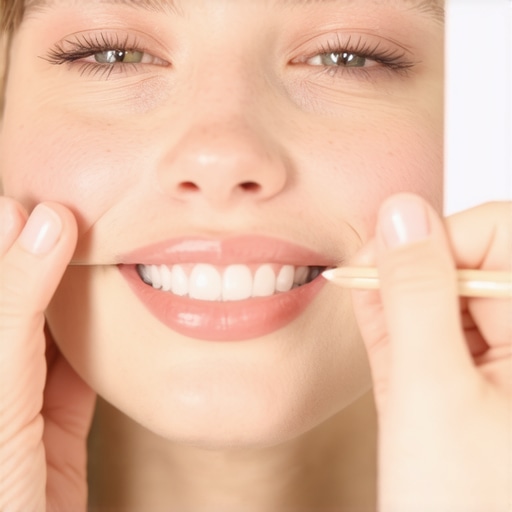
Test Your Symmetry at Home
To see if you have a real dental issue or just a ‘camera lip,’ try the ‘pencil test.’ Hold a pencil between your teeth and bite down gently. If the pencil is perfectly horizontal, your bite is likely fine, and your ‘crooked’ look is just how your muscles pull when you’re nervous. If the pencil tilts, you might be dealing with uneven wear or a skeletal shift. I did this and realized my right side was significantly lower because I grind my teeth at night. Seeing Invisalign success stories helped me realize that even a few millimeters of movement can completely re-center a face in photos.
Level Up Your Smile with Pro-Grade Maintenance
Even a perfectly straight smile looks ‘off’ if the lighting is hitting plaque or uneven staining. Darker areas in the corners of your mouth create ‘buccal corridors’ that can make a smile look narrow or lopsided. This is where teeth cleaning secrets come into play. Professional cleanings remove the calculus that reflects light poorly. If you find the real reason your teeth look yellow in bathroom lighting is a constant frustration, focus on your polish. Think of it like detailing a car; you can have a Ferrari, but if it’s covered in mud, nobody notices the lines. Consistent Invisalign maintenance or regular scaling ensures that when the light hits your teeth, it reflects evenly, hiding minor asymmetries rather than highlighting them.
When I first started obsessing over my “crooked” smile, I assumed any deviation from a perfect horizontal line was a failure. But here is the professional nuance most people miss: absolute symmetry is actually a red flag in high-end aesthetics. In the world of cosmetic dentistry myths debunked, we learn that “perfect” teeth often look like a flat white block—the dreaded “piano key” effect. Real beauty lies in the smile arc, where the edges of your upper teeth follow the curve of your lower lip. When this arc is slightly tilted, it is technically known as an “incisal plane cant,” and it is the primary reason you feel like your smile is sliding off your face in family photos.
Symmetry Often Makes Your Smile Look Fake
Everyone says they want their teeth to be “perfectly straight,” but in my experience, chasing a level horizon is where many people go wrong. A study published in the American Journal of Orthodontics and Dentofacial Orthopedics revealed that most people do not even notice a smile tilt until it exceeds a four-degree angle. However, a camera lens—especially the wide-angle ones on our smartphones—sharpens these angles, making a subtle two-degree tilt look like a landslide. If you try to fix this by asking a dentist to simply “level out” the edges of your teeth, you might end up with a smile that looks masculine or prematurely aged because why your teeth look shorter than they did ten years ago is often a result of excessive leveling that ignores the natural length required for a youthful appearance.
#IMAGE_PLACE_HOLDER_C#
The Hidden Trap of Treating Shadows with Whitening
The biggest “oops” factor I see is people trying to use extreme whitening to fix a structural tilt. When one side of your mouth sits slightly lower, it catches more direct light, while the “higher” side stays tucked in the shadow of your lip or cheek. This makes the higher side look darker or yellow. I have seen people go through bottle after bottle of bleach, not realizing that teeth cleaning myths debunked by top dentists often point to structural shadows rather than actual pigment stains. You aren’t necessarily stained; you are just shadowed. Over-whitening these areas can lead to intense sensitivity or cause the enamel to lose its depth, making it so your front teeth look transparent at the very bottom, which only highlights the unevenness you were trying to hide.
Why does a tiny four-degree tilt change everything?
For the sophisticated reader, the real question isn’t “is my face crooked?” but “how does my dental midline interact with my facial pupillary line?” If your teeth are straight relative to each other but tilted relative to your eyes, the camera will catch the disharmony every single time. This is why how we match the exact texture of your natural teeth with a porcelain veneer is about more than just choosing a white shade; it is about building up the “short” side of the cant to create an optical illusion of levelness that works in motion, not just in a static mirror reflection. Have you ever fallen into the trap of over-whitening to fix a shadow caused by a tilt? Let me know in the comments—I would love to hear your story and what you did to fix it.
I have spent a small fortune on dental work over the years, but the truth is, even the most expensive veneers or perfect alignment won’t save you if your daily gear is subpar. I am a huge advocate for modern teeth cleaning innovations that reduce sensitivity and boost results, specifically ultrasonic cleaners for your dental appliances. I personally use a 42,000Hz ultrasonic pod every single morning for my retainers. Why? Because manual scrubbing with a toothbrush creates micro-scratches in the plastic that trap bacteria and plaque, leading to that dreaded ‘cloudy’ look. If you have ever wondered how to clean the stubborn cloudiness off your night guard, this is the only way to do it without damaging the material. This level of maintenance ensures that your Invisalign maintenance stays invisible, rather than becoming a yellowed distraction in your close-up photos.
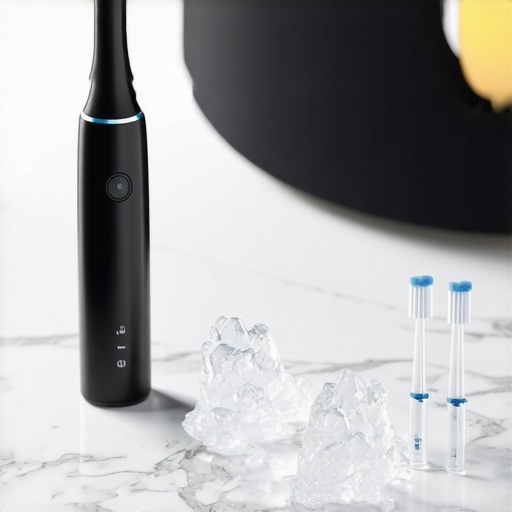
The Gear That Actually Saved My Gums
My absolute ‘holy grail’ tool is the cordless water flosser with a specialized tip for orthodontic work. I don’t just use it because it is easier than string; I use it because it reaches the ‘black triangles’ that manual floss often misses. If you are struggling with how we fix black triangles between your teeth without bulky crowns, consistent daily irrigation is your best defense against the food particles that create those dark gaps. I also swear by a high-quality electric toothbrush with a pressure sensor. I used to brush so aggressively that I was literally scrubbing my gums away on one side, which I later realized was exactly why your gums are receding on only one side of your mouth. Switching to a brush that flashes red when I press too hard saved my gum line and kept my smile arc symmetrical.
How do I maintain my smile alignment for the next decade?
The biggest mistake I see people make after finishing their treatment is the ‘set it and forget it’ mentality. Your teeth are in constant motion throughout your life, a phenomenon known as mesial drift. To fight this, I follow a strict ‘Retainers for Life’ philosophy. According to the Journal of Clinical Orthodontics, post-treatment stability is almost entirely dependent on the first 24 months of consistent retainer wear to allow the bone to fully remodel around the new tooth positions. When it comes to maintaining your teeth cleaning routine for long-term health, I predict we are heading toward a world of AI-integrated dental monitoring. We are already seeing apps that use your smartphone camera to scan for plaque or early signs of decay before they become painful issues. In the future, your phone won’t just be ‘gaslighting’ you with wide-angle lenses; it will be your primary diagnostic tool. If you have sensitive teeth, you should look into teeth cleaning for sensitive teeth what works best in 2025, as new hydroxyapatite-based pastes are literally rebuilding enamel while you sleep. My advanced tip for you today: Stop rinsing with water immediately after brushing. Spit, but do not rinse, for at least 30 minutes. It allows the protective ingredients to bond to your enamel and is the single most effective way to prevent your front teeth from looking transparent at the very bottom. Try it tonight and see if you notice the difference in ‘slickness’ by morning.
Three Hard Truths I Discovered While Chasing a Symmetrical Smile
It took me years of squinting at my own photos to realize that what I was seeing wasn’t a failure of my face, but a failure of my perception. First, I learned that shadows are often the real culprit behind perceived yellowing; if one side of your mouth is slightly higher, it naturally stays in the shade, making it look discolored compared to the side catching the light. Second, I realized that chasing a ‘perfectly level’ horizon often ruins the natural smile arc that makes you look youthful. Most importantly, I found that cosmetic dentistry myths debunked prove that a tiny bit of asymmetry is actually what makes a human smile look real rather than like a row of plastic teeth. My ‘lightbulb moment’ was realizing that the camera captures a 2D slice of a 3D person, and those lost dimensions are where your true character lives.
The Tools I Use to Keep My Smile From Shifting Back
If you want to maintain your alignment and brightness for the long haul, you need a toolkit that works as hard as your dentist. I personally swear by my ultrasonic cleaner pod for my retainers; it is the only way to prevent that cloudy bacterial buildup that makes your breath smell and your trays look visible. I also rely heavily on an electric brush with a pressure sensor to prevent gum damage, as I learned the hard way why your gums are receding on only one side of your mouth from years of over-scrubbing. Finally, keep an eye on modern teeth cleaning innovations that reduce sensitivity and boost results like hydroxyapatite pastes, which help keep your enamel polished enough to reflect light evenly, naturally hiding minor tilts and imperfections.
Your Best Smile Is Still Ahead of You
Ultimately, your smile is a living part of your expression, not a static image on a smartphone screen. Whether you are considering cosmetic dentistry innovations 2025 or simply mastering your camera angles to avoid wide-angle distortion, remember that your confidence is the most attractive thing you can wear. Don’t let a barrel-distorted lens steal your joy or your willingness to be in the family photo. You now have the tools, the knowledge, and the technological insights to present your most authentic, radiant self to the world. [IMAGE_PLACEHOLDER_FINAL]
Have you ever been shocked by how different your smile looks in a group photo compared to your reflection in the bathroom mirror? Let me know in the comments below—I would love to hear how you handled that ‘front-camera reveal’!