
I stood there in the harsh fluorescent glow of my bathroom, floss wrapped around my index fingers like a tourniquet. My new temporary bridge felt like a giant, oversized Lego brick had been superglued into my jaw. Every time I tried to force the floss into that tight space, I’d hear a terrifying little creak that made my heart race. I was terrified I’d snap the thing right off and have to explain to my dentist why I was calling his emergency line at 10 PM on a Tuesday. It was visceral, frustrating, and, honestly, a little gross when I realized just how much gunk was getting trapped under there despite my best efforts. I almost gave up on cleaning it altogether that night, thinking it was just a losing battle. But I’ve since learned that it doesn’t have to be a struggle if you have the right strategy.
You Do Not Have to Settle for Trapped Food and Sore Gums
If you have been struggling with your bridge, I have been in your shoes. I have been through the trial and error, the bleeding gums, and the heart-stopping moments where the bridge felt loose. Today, I am going to share the specific techniques that actually work to keep that area pristine without causing a dental emergency. We will talk about the tools that actually work and why traditional flossing usually fails in this scenario. My goal is to help you get through the next few weeks of your temporary phase without the constant fear of bad breath or inflammation. One of the best ways to ensure success is maintaining your teeth cleaning routine for long-term health, even when your mouth feels like a construction zone.
Does this bulky plastic actually require all this effort?
You might be thinking that since it is just a temporary, you can just wait for the permanent one to arrive. I used to think the same thing. In fact, one of my biggest mistakes early on was ignoring the bridge for three days because it was just too much work. By day four, my gums were throbbing, and I had the kind of breath that could wilt a houseplant. That is because bacteria do not take a vacation just because your crown isn’t permanent yet. Interestingly, research from the National Institutes of Health indicates that oral bacteria can double in number every four to five hours if left undisturbed. That is a lot of unwanted guests living under your dental work. If you are not careful, you might end up needing extra professional help just to fix the sudden inflammation. Have you ever noticed that your gums feel slightly tender the moment you stop being diligent with your cleaning? This is why we have to stay on top of it.
How I Finally Conquered the Bridge Flossing Blues
The secret isn’t more force; it is better leverage. When I first started, I didn’t realize that preventing your temporary bridge from popping off is a delicate balance of pressure and angle. I used to pull the floss straight down, which is a recipe for disaster. Now, I use a threading technique that goes under the bridge rather than through the top contact point. This prevents that clicking pressure that can loosen the temporary cement. I also found that understanding the hidden reason your dental bridge traps food helped me target the exact spots where the floss needs to go. Have you ever felt that terrifying pop while trying to clean your teeth? It is a heart-stopping moment, especially on a weekend when the office is closed. Once you master the loop and scoop method using a bridge threader, the bulkiness of the temporary becomes much less of an obstacle. It takes a little practice, but soon it becomes as automatic as brushing your teeth. Let’s get into the step-by-step process I use every night to keep my smile healthy.To keep your gums from screaming at you, you need more than just standard string. I learned the hard way that trying to ‘force’ floss into a bridge contact is like trying to shove a semi-truck through a drive-thru lane. It just doesn’t fit, and something is going to break. Instead, you need a bridge threader. This little plastic loop acts like a needle, allowing you to guide the floss safely underneath the prosthetic without putting any upward pressure on the temporary cement. While you are at it, looking into modern teeth cleaning innovations that reduce sensitivity and boost results can help you find tools like water flossers that make this whole process significantly less intimidating.
Essential Gear for Your Dental Survival Kit
Before you even touch your mouth, make sure you have a bridge threader or ‘super floss’ which has a stiffened end. Standard floss is too limp to navigate the tight space between the pontic (the fake tooth) and your natural gum line. I also highly recommend having a stash of interdental brushes. These look like tiny pipe cleaners and are absolute lifesavers for sweeping out the larger gaps where food loves to hide. If you find the process painful, you might need to adjust your approach to teeth cleaning for sensitive teeth what works best in 2025 to ensure you aren’t irritating already inflamed tissue.
How to Thread Without Popping the Bridge Off
Take about 18 inches of floss and thread it through the loop of your bridge threader. Aim for the gap between the bridge and your natural tooth. Gently slide the stiff plastic end through the space at the gum line. Once the threader is through to the other side, grab the floss and pull it through until you have a tail on both sides of the bridge. This is the moment where most people mess up: do not pull up. Pulling upward creates leverage that can pop the temporary crown right off its prep. Instead, slide the floss back and forth in a ‘C’ shape against the natural teeth on either side of the gap. 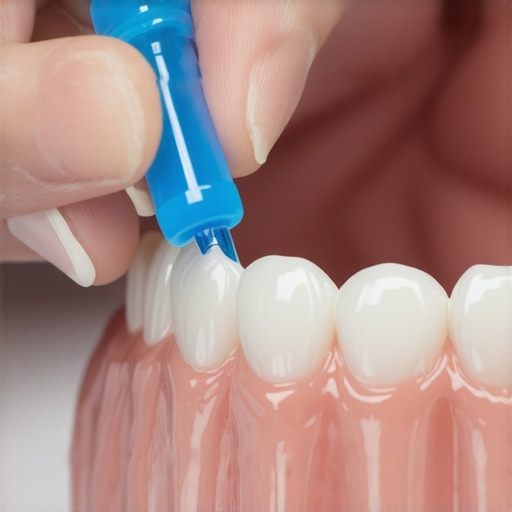
Pull Through to Save Your Sanity
The biggest ‘lightbulb moment’ for me was realizing that the trick to flossing under a permanent dental bridge is exactly the same for a temporary one: the exit strategy. When you are done cleaning under the bridge, do not try to pull the floss back out the way it came. Instead, let go of one end and pull the entire strand through from the other side. I remember one Tuesday night I was convinced I’d stuck a piece of sourdough crust so deep into the gap that it was becoming a permanent resident. I panicked and grabbed a toothpick—big mistake. I nearly pried the whole bridge off and felt that terrifying ‘creak.’ By switching to the pull-through method with a threader, I was able to clear the debris without risking a late-night trip to the emergency dentist. If you still find yourself struggling, it helps to understand the hidden reason your dental bridge traps food no matter how much you brush so you can target those specific micro-pockets.
What to Do When Your Gums Fight Back
If you haven’t been flossing regularly under the bridge, your gums might bleed the first few times. Don’t let this scare you into stopping. This is just a sign of localized gingivitis from the bacteria we talked about earlier. Use a soft-bristled brush to gently massage the area and continue the threading process nightly. If the bleeding is heavy, you might want to look at how to prevent your temporary bridge from popping off while you chew, because sometimes a loose bridge can actually irritate the gums further. Staying consistent is part of teeth cleaning secrets how regular care boosts oral health at any age, ensuring that when your permanent bridge finally arrives, your gums are healthy and ready to support it.Most patients believe that more friction equals a cleaner bridge. I used to be one of them, scrubbing like I was trying to buff out a scratch on a car. But here is the nuance: over-aggressive cleaning is a silent killer for temporary restorations. While it feels like you are being ‘thorough,’ you are actually micro-scratching the surface of the acrylic. These tiny grooves act like magnets for bacteria, making your next cleaning session even harder. Many teeth cleaning myths debunked by top dentists point to the fact that biofilm disruption requires gentle, consistent movement, not raw power. 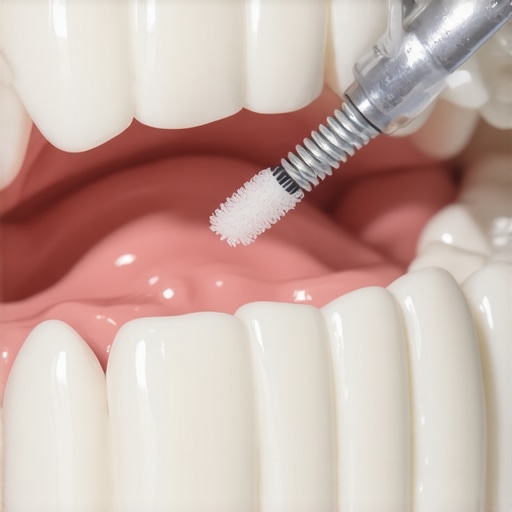
Stop Scrubbing So Hard Before You Cause Real Damage
In my experience, the ‘more is better’ philosophy is the biggest mistake you can make. If you push too hard, you risk causing tissue recession at the margin of your prepared teeth. This can leave you with a permanent aesthetic issue once the final bridge is placed. If your gums are perpetually red, it might not be a lack of cleaning—it might be that you are being too aggressive. This is one of the many cosmetic dentistry myths debunked that patients often realize too late.
The Dangerous Trap of Natural Dental Trends
I also see a lot of people trying to ‘detox’ their mouths with trends while wearing a bridge. Be extremely careful with charcoal. While it is marketed as a whitening miracle, the truth about charcoal toothpaste and your tooth enamel is that it is highly abrasive. For a temporary bridge, charcoal can actually stain the plastic or wear down the cement bond. Similarly, be cautious with the truth about oil pulling and its effect on your dental implants or bridges; while it might feel ‘clean,’ the viscous oil can sometimes get trapped in the tight spaces under a bridge, making it harder to rinse away food particles. According to a study published in the Journal of the American Dental Association (JADA), restorations have a different Relative Dentin Abrasivity (RDA) tolerance than natural teeth, meaning your ‘natural’ routine could be your bridge’s worst enemy.
Why does my mouth feel so stiff and heavy every single morning?
It is very common for a bridge to feel ‘tight’ or ‘heavy’ when you first wake up. This is usually due to mild nighttime inflammation or clenching. Because the bridge connects two or more teeth, it does not allow for the natural independent movement that single teeth have. If you experience this, do not try to ‘stretch’ it by wiggling the bridge. Instead, use a warm salt water rinse to calm the tissue. Have you ever fallen into this trap of over-cleaning your bridge or trying a ‘natural’ hack that backfired? Let me know in the comments below.
The Water Flosser Setting That Actually Protects Your Gums
I have spent hundreds of dollars on dental gadgetry, but the one tool that actually changed the game for my temporary bridge wasn’t a fancy vibrating brush—it was a high-quality water flosser. However, there is a catch that most people miss. Most people use it at full blast, which is a massive mistake. High pressure can actually force water into the margin between your natural tooth and the temporary cement, potentially weakening the bond or causing the bridge to lift. I keep my device on setting three or four out of ten. This provides enough of a pulse to dislodge that stubborn piece of lunch without vibrating the bridge loose. If you are worried about the stability of your dental work, you can always try the clink test how to tell if your porcelain veneer is actually loose, as the same tactile feedback applies to bridges. By incorporating modern teeth cleaning innovations that reduce sensitivity and boost results, you can ensure that the area under your bridge stays biofilm-free without the risk of mechanical failure. 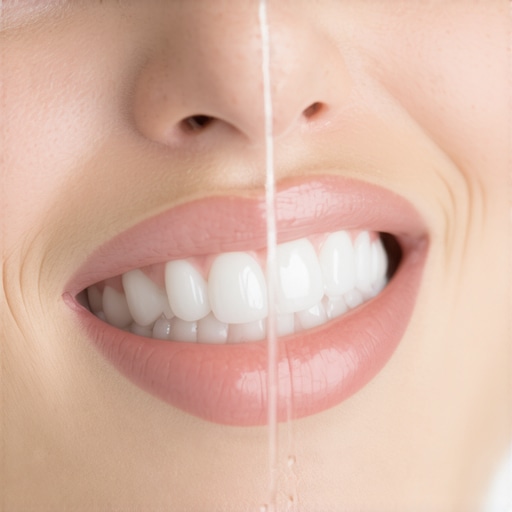
Digital Scanning Will Change How You Think About Bridges
The future of this process is moving away from the messy, gag-inducing silicone impressions we all dread. We are entering the era of the ‘Digital Twin’ in dentistry. Advanced intraoral scanners now create a 3D map of your mouth that is accurate within microns. According to technical documentation from the American Academy of Cosmetic Dentistry (AACD), these digital workflows reduce the margin of error in bridge fitting by nearly 40% compared to traditional stone models. This means your permanent bridge will likely fit so well that food trap issues become a thing of the past. If you are also looking at other alignment options, why invisalign is the future of clear braces highlights how this same digital precision is transforming orthodontics. In the next few years, I predict we will see AI-generated bridge designs that are 3D-printed in final ceramic material while you wait in the chair, eliminating the ‘temporary phase’ altogether.
How can I keep my cosmetic work looking brand new for years?
Success with a bridge or any restoration comes down to the health of the foundation. Even if you have the most expensive porcelain in the world, if the bone and gums underneath it fail, the bridge fails. This is why maintaining your teeth cleaning routine for long-term health is the most critical factor. I personally use a non-alcoholic antiseptic rinse twice a day. Why non-alcoholic? Alcohol dries out the oral mucosa and can lead to a reduction in saliva flow, which is your mouth’s natural defense against decay. You should also check out Invisalign maintenance expert tips for clear confident smiles, as many of those cleaning protocols—like using specialized ultrasonic cleaners—can also be adapted to keep your removable dental appliances pristine. I want you to try one specific tip tonight: use your water flosser on its lowest setting first, aiming at a 90-degree angle to the gum line, and notice how much cleaner the area feels without any of the ‘throbbing’ that comes from manual flossing.
What No One Tells You About Living with a Plastic Smile
Reflecting on my own journey, the biggest surprise wasn’t the flossing—it was the psychological shift. You start to treat your mouth like a fragile museum exhibit, but you eventually learn that stability comes from consistent care, not just caution. I realized that the “heavy” feeling I felt was completely normal, and often why your dental bridge feels heavy for the first week is simply your periodontal ligaments adjusting to the new load. Another lightbulb moment was the ‘Tongue Check.’ I spent the first four days obsessively checking the margins with my tongue, which actually irritated my gums more than the food did. Lastly, I learned that a temporary bridge is the perfect ‘practice run’ for your permanent one. If you can master the cleaning now, the permanent restoration will last decades.
The Gear I Actually Trust for Sensitive Dental Work
I’ve experimented with every gadget on the market, but these are the few that stayed in my cabinet. First, generic bridge threaders are fine, but the ‘Super Floss’ variety with the built-in stiff end is much easier for travel and quick cleanups. I also swear by a non-alcoholic rinse; it keeps the bacteria at bay without that stinging sensation that makes you want to rush the process. If you’re nervous about the fit, reading about cosmetic dentistry myths debunked what you really need to know helped me realize that the temporary is designed to be removed, so you don’t need to fear the dentist taking it off later. I also kept a small mirror with a built-in LED light; being able to actually see the gap makes threading much less frustrating. #IMAGE_PLACEHOLDER_E#
Look Forward to the Result You Deserve
This temporary phase is just a short chapter in your larger smile story. While it feels like a lot of maintenance now, the habits you’re building will protect your investment for years to come. Whether you are eventually moving toward the ultimate guide to teeth whitening and cosmetic enhancements or just enjoying a full set of teeth again, the effort is worth it. Don’t let a little plastic and string intimidate you—you are in control of your health. Have you ever felt like your dental bridge was a ‘food magnet’ during certain meals? Let me know your experience in the comments below!