
I sat there in the harsh glow of my bathroom mirror, clutching my toothbrush like a weapon, wondering where it all went wrong. Just fourteen days earlier, my teeth were so white they practically glowed. Now? They were back to that familiar, stubborn eggshell tint. I felt cheated. I’d gone through the full professional treatment, sat in the chair for an hour, and paid the premium price. But here’s the kicker: I made the classic mistake of thinking the treatment was a permanent shield rather than a fresh start. I learned the hard way that many cosmetic dentistry myths debunked are actually expensive lessons in disguise. I thought I was invincible, but my morning routine proved otherwise.
My Post-Whitening Glow Vanished Before My Next Paycheck
The truth is, professional whitening makes your enamel temporarily more porous. It’s like a dry sponge. I didn’t realize that my “celebratory” iced coffee the next morning was basically being vacuum-sealed into my teeth. It’s a common trap. We assume the chemicals have permanently “cured” our smile, but the reality is much more fragile. If you don’t have a plan for the coffee lover’s secret to preventing deep enamel stains, you’re essentially flushing your investment down the drain. According to the American Academy of Cosmetic Dentistry, the first 48 hours are the most critical because the protective acquired pellicle on your teeth is temporarily stripped away. I ignored this. I went straight for the balsamic glaze and red wine. By the time I noticed the dullness, the pigments had already settled in deep. Have you ever walked out of the dentist feeling like a movie star, only to feel like a fraud just two weeks later? I’d love to hear if I’m not the only one who has made this mistake.
Is professional whitening actually worth the hype?
It’s a fair question to ask when you see your results dimming faster than a cheap lightbulb. You start to wonder if you should have just stuck to the drug-store strips and saved the cash. But the difference isn’t usually the quality of the professional bleach; it’s the prep work we often skip. I found out that neglecting my regular teeth cleaning before the whitening was my biggest oversight. You can’t paint a dirty wall and expect it to look good for long. You need a clean, plaque-free canvas for those whitening agents to actually do their job and stay there. I was trying to whiten over surface buildup, and unsurprisingly, the results didn’t stick.
Get a Professional Cleaning Before You Ever Touch the Bleach
You wouldn’t wax a car that’s covered in mud, right? The same logic applies to your smile. One of the biggest teeth cleaning myths debunked is that whitening can mask poor hygiene. If you have even a microscopic layer of plaque or tartar, the whitening gel sits on that buildup instead of your enamel. When that plaque eventually falls off or gets brushed away, it leaves behind a ‘shadow’ of the original yellow tooth. I learned this when I skipped my routine appointment and went straight for the whitening chair. Two weeks later, my smile looked splotchy because the areas with the most buildup hadn’t actually been treated. Getting a thorough professional cleaning ensures the chemical agents have a direct path to your enamel, creating a uniform, brilliant result that lasts months longer.
Look for Modern Cleaning Innovations
If you have sensitive teeth, don’t let the fear of the ‘scraper’ stop you. You should seek out modern teeth cleaning innovations like ultrasonic scalers or air-polishing tools. These technologies use high-frequency vibrations and water to clear the path for whitening without the aggressive manual scraping that makes many people wince. 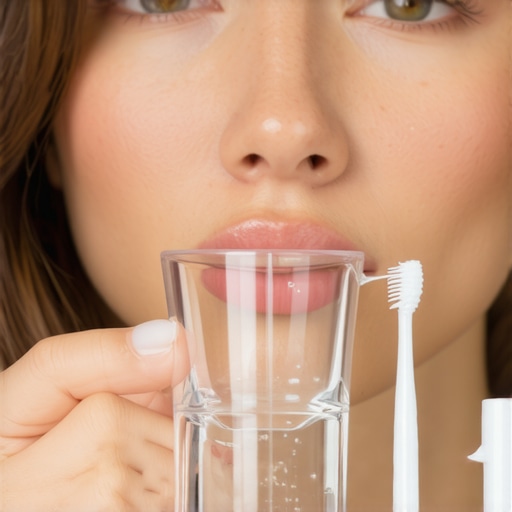
Follow the White Shirt Rule for Exactly 48 Hours
Think of your teeth as a white silk blouse immediately after whitening. Anything that would permanently ruin that blouse will now ruin your smile. This is because the whitening process temporarily dehydrates the teeth and opens up the microscopic tubules in your enamel. During this ‘rehydration’ phase, your teeth act like a vacuum, sucking in whatever liquid touches them. I remember attending a business lunch just 24 hours after a treatment and ordering a beet salad with balsamic glaze. By the time I got to the restroom, I looked like a character in a horror movie; my teeth had absorbed the purple pigment so deeply that no amount of frantic scrubbing could budge it.
Master the Art of Strategic Sipping
If you absolutely cannot survive without your caffeine fix, you need to understand the coffee lover’s secret to preventing deep enamel stains. Use a straw to bypass the front teeth entirely. However, be warned: many people realize the coffee habit is staining the back of their teeth more than the front because of how they position the straw. Position the straw further back and follow every sip of coffee with a swish of plain water. This simple rinse neutralizes the acidity and washes away loose pigments before they can settle into those open enamel pores.
Swap Your Toothpaste for a Low-Abrasion Formula
Most people instinctively reach for a ‘whitening’ toothpaste after a professional session, thinking it will help. In reality, many of these are highly abrasive and can irritate the already sensitive surface of your teeth. Instead, look for a formula designed for sensitivity that focuses on mineralizing the enamel rather than scrubbing it. If you notice your gums look pale or feel tender, it’s a sign that your post-care routine is too aggressive. Stick to soft-bristled brushes and gentle, circular motions to keep the surface polished without causing micro-scratches where new stains love to hide.I used to think that if a little whitening gel was good, then a lot must be better. That’s the first trap most of us fall into. We chase a ‘refrigerator white’ shade without realizing that teeth have a natural limit. In fact, over-whitening can lead to what pros call technicolor teeth, where the edges start to look translucent or even slightly blue. If you aren’t careful, you might be searching for the best way to whiten your teeth if you have naturally thin enamel because you’ve over-processed the surface. The common belief is that whitening simply removes stains, but it actually changes the way light reflects off your tooth. If you overdo it, you strip so much mineral content that the dark shadows from inside your mouth start to show through the tooth, leading to why your teeth look blue in certain lighting. A study published in the Journal of Evidence-Based Dental Practice highlights that aggressive whitening on thin enamel doesn’t just cause sensitivity; it can permanently alter the tooth’s optical properties, making it look duller over time rather than brighter. Another mistake is assuming your Invisalign is just a clearer version of braces. People often treat their aligners like a mouthguard they can pop in and out without a plan. I’ve seen people try to drink clear sodas thinking they’re safe, only to find they’ve trapped phosphoric acid against their enamel for hours. If you want to succeed, you need a strategy for how to keep your clear aligners from staining, even with supposedly safe liquids. 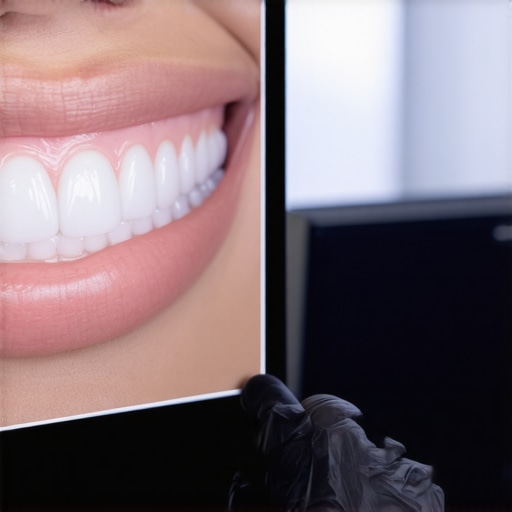
Why do my teeth look gray even after professional treatment?
This frustrating phenomenon usually happens when people try to whiten teeth that have underlying issues like tetracycline staining or naturally thin enamel. In these cases, bleach won’t help because the discoloration is inside the tooth structure, not on the surface. You might actually need to look into how we match the exact texture of your natural teeth with a porcelain veneer. Veneers don’t just change the color; they provide the opacity that bleached enamel lacks. The biggest oops moment I encountered was forgetting that whitening gel has zero effect on composite resin. If you have a small filling or a chip fixed with bonding, that spot will stay the same color while the rest of your tooth lightens. You end up with a patchy smile. It’s why you must consult a professional about how we use bonding before you start a whitening marathon. It’s a nuance that many people miss until they’ve spent hundreds on gel. Have you ever fallen into this trap of chasing whiter teeth only to end up with more sensitivity? Let me know in the comments.
Once you’ve invested in professional work, whether it’s following the ultimate guide to teeth whitening or you’re deep into an Invisalign trek, the transition from getting results to keeping results is where most people fail. I used to be a brush and pray kind of person until I realized that professional-grade smiles require professional-grade maintenance. I learned that you cannot rely on luck to keep your enamel pristine. Instead, you need a protocol that addresses both the physical surface of the tooth and the bacterial environment of your mouth.
Stop Scrubbing Your Aligners With a Toothbrush
My absolute favorite tool—the one I tell everyone to buy—is a dedicated ultrasonic cleaner. If you’ve ever wondered how to clean the stubborn cloudiness off your night guard or Invisalign trays, this is the definitive answer. It uses high-frequency sound waves to create microscopic cavitation bubbles that blast away plaque without the micro-abrasions caused by a regular toothbrush. I found that scrubbing my trays with a brush actually made them more prone to staining over time because it created tiny scratches for bacteria to hide in. By switching to ultrasonic cleaning, my trays stay as clear as the day I popped them in. 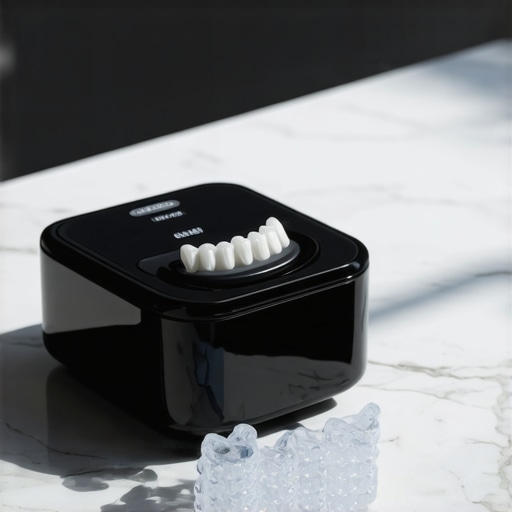
The Gadget That Saved My Invisalign Journey
It’s not just about the plastic, though. Better bio-management is the real secret to longevity. I started using a high-end water flosser every single night because I noticed that standard floss was missing the tiny pockets around my attachments. If you’ve noticed why your dental hygienist uses a water flosser during your professional cleanings, it’s because it reaches areas that string floss simply cannot penetrate. By removing that daily biofilm, you’re preventing the stain-trap from forming in the first place. This is the cornerstone of maintaining your teeth cleaning routine for long-term health and preventing that yellow tint from creeping back.
How do I keep my results from fading after the first month?
Consistency is the only way forward, but so is having a mobile plan. I keep a dedicated ortho kit in my car that includes a travel-sized alcohol-free rinse and a specialized pull-tool for my aligners. This ensures that even when I’m out for dinner, I can stick to the strict Invisalign maintenance tips that keep my trays clear and my breath fresh. Without this mobile strategy, you’ll inevitably find yourself skipping steps when you’re away from your bathroom, which is when most regressions happen. I also recommend keeping a digital log or using an app to track your wear time, as even two hours of neglect can set your progress back by days.
Smart Scans are the Next Big Leap for Your Smile
Looking ahead, we are seeing some incredible Invisalign innovations that integrate AI tracking. In the very near future, you’ll likely use your smartphone to scan your teeth weekly, and an algorithm will tell you if you’re ready for the next tray. This level of precision is going to make the human error part of cosmetic dentistry almost obsolete. According to the Journal of Clinical Periodontology, the efficacy of automated oral care devices has increased by over 20% in the last five years, suggesting that the future of a perfect smile is rooted in tech. Pick up an ultrasonic cleaner today; it’s the single best small investment I’ve made to protect a multi-thousand-dollar smile.
The Reality Check Most Dentists Skip
After years of trial and error with my own oral health, I realized that the secret to a lasting transformation isn’t just about the chemicals or the plastic—it’s about the discipline of the ‘after-care’ phase. First, understand that whitening isn’t a one-and-done event; it is a seasonal maintenance cycle. If you expect a single session to last five years without lifestyle changes, you’re setting yourself up for disappointment. Second, I learned that how regular teeth cleaning can prevent major dental issues is the absolute foundation for any cosmetic work. Without that healthy base, even the most expensive veneers or bleaching will eventually look dull. Finally, remember that your teeth are dynamic, living tissues that respond to everything you put in your mouth. Treating them like a porcelain plate rather than a porous sponge is the biggest psychological hurdle to overcome.
Tools That Saved My Smile Investment
I don’t believe in hoarding every dental gadget on the market, but these three are non-negotiable for me now. First, an ultrasonic cleaner for my night guards and aligners; it’s the only way to truly handle how to clean the stubborn cloudiness that builds up over time. Second, a high-quality water flosser. It gets into the nooks that traditional floss misses, especially if you have attachments. Third, I highly recommend reading through the ultimate guide to Invisalign for adults to understand the mechanical reality of how your smile shifts. These tools ensure that my investment stays protected against daily wear and tear.
Your Future Smile is Calling
Starting this journey can feel overwhelming, but the confidence boost of a healthy, bright smile is worth every minute of the learning curve. Don’t let the fear of maintenance stop you from exploring cosmetic dentistry trends that transform smiles. The technology is better than ever, and the results are more natural than they’ve been in decades. The most important step is simply finding a dentist who gets your smile and shares your vision for a healthy, beautiful look. Your future self will thank you for taking the leap today. What’s the one thing holding you back from starting your smile transformation? Let me know in the comments below!