
I was sitting in my dentist’s chair last Tuesday, feeling pretty smug. I had been using whitening strips, I was flossing almost every night, and my front teeth looked great in my morning mirror checks. Then, my hygienist did that thing where they get really quiet and start scraping a bit harder at the back. She handed me a little dental mirror, angled it just right, and I saw it: the back of my lower teeth looked like they had been soaking in a vat of double-shot espresso for a decade. It was a total wake-up call. I realized that while I was obsessing over my public-facing smile, the coffee I love so much was staging a silent takeover on the lingual side of my teeth where no one—except my very thorough dentist—could see it.
The mirror hides what the coffee finds
Most of us focus our brushing energy on the parts of our mouth we actually see in the mirror. It makes sense because you want to look good for photos and meetings, but when you take a sip of that dark roast, your tongue pushes the liquid directly against the back of your teeth. This area is often the most neglected during our morning rush. I made the classic mistake of thinking my coffee lover’s secret was just about finding a better toothpaste, but it’s really about the mechanics of how we drink and clean. According to the American Dental Association, certain foods and drinks like coffee contain tannins that easily latch onto dental biofilm, especially in hard-to-reach areas where saliva flow does not wash them away as effectively.
Does the way you sip actually matter?
You might be skeptical. You might think that because you brush twice a day, you are covered. But think about it for a second. When you sip, that hot, dark liquid pools behind your lower front teeth and around your molars before you swallow. If you are not hitting those specific spots with a brush at a sharp 45-degree angle, you are basically leaving a canvas for stains to build up day after day. I used to think why my teeth looked yellow in the mirror but white in sunlight was just a trick of the light, but often it was the dark reflection of those deep back-side stains dulling the overall translucency of my enamel from the inside out.
Why your brushing technique is failing your molars
It is not just about the coffee itself; it is about the unique anatomy of your mouth. The back of your teeth—the lingual surface—is actually more prone to tartar buildup because that is exactly where your major salivary glands are located. When minerals in your saliva mix with plaque, they harden into calculus, which is incredibly porous and soaks up coffee stains like a thirsty sponge. I spent years falling for various teeth cleaning myths, only to find out that my own lazy wrist movement was the real culprit. Have you ever noticed that your tongue feels fuzzy even after you have brushed the front of your teeth? That is the biological signal that you are missing the spots that need it most. Have you ever had your dentist point out a stain you did not even know existed? It is a humbling moment, but I am going to show you how to fix it without giving up your morning cup.
Master the tilt to reach the hidden spots
Brushing the front of your teeth is like washing your car’s windshield—it is obvious and satisfying. Brushing the back, however, is like trying to scrub the undercarriage. To actually remove those stubborn espresso layers, you have to break the habit of horizontal scrubbing. Instead, hold your brush vertically for the back of your front teeth. I learned this the hard way after my hygienist pointed out that I was basically skipping the most vulnerable real estate in my mouth. By using flicking motions from the gum line toward the edge of the tooth, you can disrupt the biofilm before it hardens. This is one of the most effective teeth cleaning secrets that pros use, yet most of us were never taught it in grade school.
Pick tools that go where a standard brush cannot
Sometimes your equipment is the bottleneck. A standard rectangular brush head is often too bulky to navigate the narrow curve of the lower jaw. I switched to an electric brush with a round head, which mimics the tools used during professional sessions. These modern teeth cleaning innovations allow you to focus on one tooth at a time without needing a massive range of motion. If you are dealing with crowded teeth or wear aligners, invisalign maintenance becomes much easier when you can precisely target the spaces where saliva pools and pigments hide.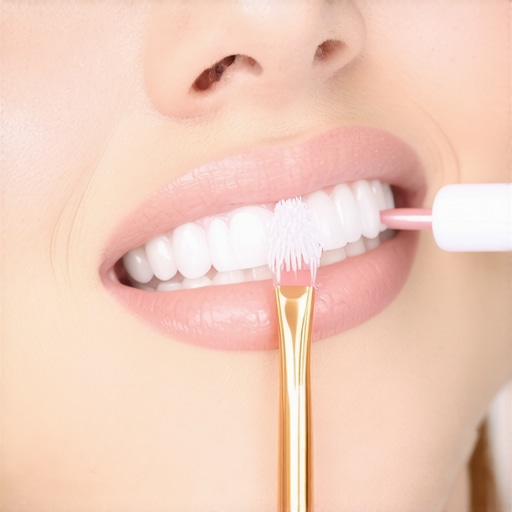
The night I finally saw the real color of my molars
I remember standing in my bathroom at 11 PM with a high-intensity flashlight and a tiny dental mirror I had bought online. I looked like a detective at a crime scene. I used a pointed end-tufted brush—a tiny tool that looks like a paintbrush for teeth—to get behind my last molars and the back of my lower incisors. It felt strange and slightly ticklish, but the result was shocking. For the first time in years, that persistent furry feeling was gone. This is more than just vanity; it is about preventing the tartar that leads to gum recession. If you have ever wondered why your gums bleed only in the back, it is usually because that is where the bacteria have been throwing a party undisturbed.
Stop the stains before they settle
It takes about 24 to 48 hours for plaque to harden into tartar. Once it is tartar, your toothbrush is useless against it. This is why timing your post-coffee rinse is crucial. Do not brush immediately after finishing your cup—the acidity of the coffee softens your enamel temporarily. Instead, swish with water to neutralize the pH and then use the best way to clean your tongue to remove the excess pigments sitting on your taste buds. Your tongue acts like a transfer station, moving coffee particles back onto your teeth all day long. Keeping the lingual side clean requires a proactive approach, especially if you want to avoid the path to radiance becoming a long, expensive series of professional whitening sessions.I used to think that a squeaky clean feeling meant I was winning the war against plaque, but here is the contrarian truth: if your teeth feel literally squeaky, you might be stripping away the microscopic pellicle layer that actually protects your enamel. Many people switch to trendy charcoal pastes thinking they are hacking the system, but teeth cleaning myths debunked by top dentists suggest these highly abrasive materials can actually create microscopic scratches. These scratches then become magnets for the very coffee stains you are trying to avoid. It is a vicious cycle of abrasion and staining that eventually leads to permanent sensitivity.
Stop falling for the ‘squeaky clean’ charcoal trap
The mistake is prioritizing immediate whitening over long-term structural integrity. When you use products with a high Relative Dentin Abrasivity (RDA) score, you are essentially sandpapering your teeth. I realized that my quest for the whitest smile possible was actually making my teeth more porous. Instead of scrubbing harder, the real secret lies in managing the biofilm chemically and mechanically without destroying the surface. If you have noticed that your gums are tender after a vigorous session, you might be contributing to why your gums are receding on only one side.
How do you know if your dental bonding is actually decaying or just stained?
This is a question that separates the beginners from the experts in cosmetic dentistry myths debunked. Often, patients see a dark line and panic, thinking they need a whole new veneer. Sometimes it is just marginal staining that a professional can polish away, but other times it is a sign that the seal has failed. You cannot tell the difference with a bathroom mirror and a flashlight. If you ignore it, you risk a cavity forming underneath the expensive restoration. This is why choosing the right dentist who uses high-magnification loupes is so critical; they see the microscopic gaps that signal a structural failure before it becomes a root canal. 
Avoid the weekend compliance trap with your aligners
Another common mistake involves clear aligners. People assume that because the trays are clear, their teeth are protected from the environment. In reality, aligners act like a petri dish for bacteria if you are not meticulous. If you have ever wondered how to stop your invisalign trays from smelling like old saliva, it is because the lack of natural saliva flow allows plaque to ferment against your enamel. According to research published in the Journal of the American Dental Association, the lack of salivary clearance significantly increases the risk of demineralization during orthodontic treatment. Have you noticed why your invisalign aligners feel tight every monday morning? It is usually the result of a weekend of grazing where the trays were out for four hours instead of two. This back-and-forth movement is not just annoying; it can cause root resorption if you are not careful. We often think of cosmetic dentistry innovations 2025 as just being about digital scans and whiter teeth, but the real expertise is in managing the bio-mechanics of your bite while maintaining hygiene. Have you ever fallen into this trap? Let me know in the comments.
I used to think my basic electric toothbrush was enough, but I have recently upgraded to a high-end sonic model that tracks my coverage through an app. It sounds high-maintenance, but it is the only way to ensure I am hitting those lingual surfaces I mentioned earlier. These modern teeth cleaning innovations have completely changed my morning routine. Instead of guessing, I now have a heatmap of my mouth on my phone showing me exactly where I am still leaving coffee residue. If you are serious about your oral health, look for a brush with a pressure sensor; it prevents you from scrubbing too hard and causing the recession I warned you about.
Ditch the manual scrubbing for sonic tech that actually works
For those of us in the middle of an orthodontic journey, invisalign maintenance is about more than just a quick rinse under the tap. I have started using a small home-use ultrasonic cleaner for my trays. It uses high-frequency sound waves to create cavitation bubbles that literally blast plaque off the plastic without scratching the surface like a toothbrush would. A study published in the International Journal of Dental Hygiene confirmed that ultrasonic cleaning is significantly more effective at reducing microbial load on oral appliances compared to manual brushing alone. This is the secret to how to stop your invisalign trays from smelling like old saliva, as it reaches into the microscopic pores of the material where bacteria love to hide.
#IMAGE_PLACE_HOLDER_D#
Why I swear by ultrasonic cleaners for my aligners
The beauty of this tool is its simplicity. You drop the trays in while you eat breakfast, and by the time you are done, they are hospital-clean. It also prevents the cloudiness that makes your aligners look like old Tupperware. If you are still drinking your morning brew with your trays in, you need to learn how to keep your clear aligners from staining when you drink iced coffee. The trick is always the immediate water swish, but the ultrasonic bath is your safety net for whatever pigments managed to sneak in. I predict that by 2030, these cleaners will be built directly into charging bases for electric toothbrushes as standard equipment.
How do I maintain my results over a lifetime?
Success is not about one deep cleaning; it is about the mundane minutes you spend every single night. Maintaining your teeth cleaning routine for long-term health requires you to think like a professional. I have added a water flosser to my arsenal, specifically for cleaning around my permanent lower retainer. It is much more effective at flushing out the debris that my toothbrush misses. We are entering an era of invisalign innovations why 2025 is the year where smart trays might actually monitor your enamel health in real-time. Until then, these teeth cleaning secrets are your best defense against the dentist’s drill. I challenge you to try this: for the next three days, use a dental mirror after you brush and specifically check the back of your lower front teeth. If you see even a hint of yellow, adjust your angle and spend an extra thirty seconds there.
The hard truths I learned behind the dental mirror
After years of trial and error, I realized that maintaining your teeth cleaning routine for long-term health isn’t just about brushing harder; it’s about brushing smarter. One major epiphany was that my morning coffee wasn’t the enemy, but my lack of post-sip hydration was. Another was the realization that if I didn’t see it, I didn’t clean it—which is why I started treating my mouth like a high-stakes project instead of a chore. I also learned that cosmetic dentistry myths debunked often point back to the same truth: healthy foundations matter more than temporary whitening. Lastly, I realized that being proactive about the lingual side of my teeth saved me from the dreaded scraper during professional cleanings.
My go-to gear for a pro-level routine
To stay on top of things, I’ve curated a few tools that have transformed my results and keep my enamel safe. First, a sonic toothbrush with a pressure sensor is non-negotiable for getting that professional feel at home without damaging my gums. Second, I cannot recommend an ultrasonic cleaner enough for anyone using trays; it’s the only real way to know how to stop your invisalign trays from smelling like old saliva. I also keep a high-quality dental mirror in my cabinet to do a weekly ‘check-up’ on those hidden spots. Lastly, finding a practitioner who listens is vital, and choosing the right dentist who understands your specific lifestyle habits will save you thousands in corrective work in the long run.
Take control of your oral health today
You don’t have to choose between your favorite roast and a dazzling smile. By incorporating small, intentional shifts into your invisalign maintenance and general hygiene, you can protect your enamel for decades. It starts with one better brush stroke tonight and the willingness to look at the parts of your smile that usually hide in the shadows. Your future self—and your hygienist—will thank you. Have you ever noticed a stain in the back of your mouth that took you by surprise? Let me know in the comments below!