
I was standing in front of my bathroom mirror [IMAGE_PLACEHOLDER_1] clutching the counter and wondering if I had just accidentally poisoned myself. It was 11:00 PM, and my tongue felt like I had spent the afternoon licking a hot sidewalk. I had just tried a new, high-potency whitening strip in preparation for a big date, and within three minutes, that ‘bright white’ dream turned into a fiery nightmare. I spat the strips out, rinsed frantically, but the damage was done—the tip of my tongue was red, raw, and absolutely stinging. It was a classic mistake in my early journey into cosmetic enhancements, and it taught me a lesson I will never forget. Today, I am going to explain exactly why this happens, how to stop the fire, and how you can get that glow without the glow-up pain.
The Night My Quest for a Brighter Smile Backfired
We have all been there. You see those results on social media and think, ‘I can do that at home.’ But here is the thing: whitening chemicals do not discriminate between your teeth and your tongue. Early in my obsession with dental aesthetics, I thought ‘more is better.’ I would leave strips on for double the recommended time, thinking I was outsmarting the system. I did not realize that the excess gel was oozing out and migrating straight to my soft tissues. If you have noticed your gums are peeling or your tongue feels scorched, you are not alone. It is usually a result of hydrogen peroxide—the active ingredient in most strips—coming into direct contact with the mucous membranes. According to the American Dental Association, while peroxide is a gold standard for bleaching, it is a known caustic irritant to oral soft tissues, especially at high concentrations. Have you ever experienced a sudden zing or a lingering burn after trying a new dental product?
Is this stinging a sign of permanent damage?
It is the question that keeps us up at night after a whitening mishap. Most of the time, the burning is a transient chemical irritation that resolves within a few days, but it is a clear signal that your application method—or the product itself—is wrong for your mouth. If you have naturally thin enamel, the stakes are even higher, and the discomfort can be much sharper. We need to find a balance between vanity and comfort so you do not have to choose between a white smile and a functional tongue.The moment you feel that sharp, metallic sting, your first instinct is to panic. Don’t just stand there staring at the mirror—act fast. Hydrogen peroxide is an oxidizer, and when it hits your tongue, it starts a chemical reaction that literally ‘cooks’ the top layer of your mucous membrane. To stop this, you need to dilute and neutralize. Swish vigorously with room-temperature water or a mild salt-water solution. If you find your palate is also affected, learning how to soothe a burn on the roof of your mouth can provide immediate relief. Avoid using mouthwashes containing alcohol, as they will only dehydrate the tissue further and intensify the pain.
Neutralize the Fire Before the Damage Spreads
Think of whitening gel like high-gloss house paint. If it stays on the wood, it looks great, but if it drips onto the carpet, it’s a disaster. When that gel migrates from your teeth to your tongue, you have to break the chemical bond. I remember once I tried to ‘power through’ the sting, thinking it meant the strips were working extra hard. Bad move. I ended up with a tongue that felt like it had been sandpapered for three days. If you’ve already made this mistake and find that even your dinner is painful, you can apply some of the same logic used to stop your gums from stinging after spicy food to calm the irritation.
Use This Kitchen Staple to Stop the Burn
A quick tip I learned from a dental hygienist is to use a Vitamin E capsule. Snip the end off and rub the oil directly onto the red, angry spots on your tongue or gums. It acts as a liquid bandage, sealing the irritation away from the air and your saliva.
Build a Barrier Between the Gel and Your Gums
Most people just slap the strips on and hope for the best, but that is a recipe for disaster. The real trick is to create a ‘no-go zone’ for the peroxide. #IMAGE_PLACE_HOLDER_B# Before you even touch the whitening kit, take a cotton swab and apply a very thin layer of petroleum jelly or Vitamin E oil to your gum line and the underside of your tongue. This creates a hydrophobic barrier—essentially a raincoat—that prevents any rogue gel from soaking into your soft tissue.
Trim Your Strips for a Tailored Fit
One size does not fit all. If your strips are wider than your teeth, they will inevitably rest on your gums, leading to that frightening sight where your gums look pale or white. Take a pair of clean scissors and trim the strips so they only cover the enamel. It takes an extra minute, but it saves you hours of throbbing pain later.
Set Yourself Up for Success with Professional Prep
You wouldn’t paint a dirty car, so why whiten ‘dirty’ teeth? If you have plaque or tartar buildup, the whitening gel will get trapped in those rough areas and sit right against your gum line. This is why teeth cleaning for sensitive teeth is the most important step before you even think about bleaching. Modern teeth cleaning innovations ensure that this prep work is painless, removing the barriers that cause uneven whitening and chemical migration. When the surface is smooth and clean, the gel stays exactly where you put it.
While my initial disaster with whitening strips taught me a lot about immediate pain, the deeper science of why our mouths react this way is even more fascinating. Most people assume that if a product is sold over-the-counter, it must be safe for every mouth. However, a major ‘oops’ factor in the world of DIY aesthetics is ignoring the biological limit of your enamel. We often think that more peroxide equals more beauty, but there is a point of diminishing returns where you aren’t just whitening; you are demineralizing. This is where cosmetic dentistry myths often lead us astray, promising ‘Hollywood’ results without mentioning the structural integrity of your teeth.
Stop Chasing the Bathroom Mirror Glow
Here is a contrarian take: the lighting in your bathroom is likely lying to you. I have spent years obsessing over my reflection, only to realize that teeth look yellow in bathroom lighting but perfectly fine in natural sunlight. Chasing a specific shade under artificial bulbs leads many people to over-process their smiles. When you over-whiten, you run the risk of creating a ‘ghostly’ look. Have you ever noticed the reason your front teeth look transparent at the very bottom? That is not a sign of purity; it is a sign that you have stripped too much of the opaque dentin’s visual influence, leaving only the glass-like enamel behind.
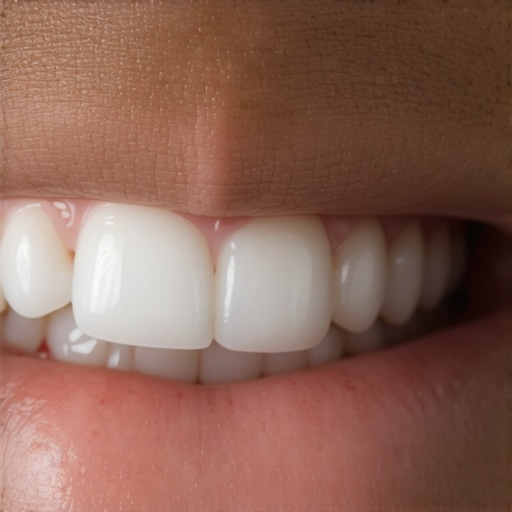
Can Over-Whitening Actually Change Your Tooth Texture?
Many advanced users believe they can just ‘re-mineralize’ their way out of a bad bleaching session. While products like hydroxyapatite paste help, they cannot always undo the change in light refraction. A study published in the Journal of Dentistry found that excessive hydrogen peroxide exposure can significantly reduce the microhardness of enamel, making it more susceptible to surface degradation. This is why you might notice your teeth look blue in certain lighting after several rounds of intensive treatment. The light is literally passing through your teeth rather than bouncing off them. It is a hidden nuance that most influencers won’t tell you about: the goal isn’t just ‘white,’ it’s ‘opaque and healthy.’
Don’t Skip the Boring Part of Your Smile Transformation
Whether you are pursuing Invisalign for adults or just a simple brightening, the foundation is everything. I once thought I could skip my professional cleaning and go straight to the cosmetic fun. Big mistake. If you have any microscopic tartar, the whitening gel pools around it, creating a patchy, ‘leopard print’ result that is a nightmare to fix. Proper modern teeth cleaning innovations are designed to smooth these surfaces first. Even with orthodontic work, people get frustrated wondering why their Invisalign trays feel tighter on some days, often ignoring that inflammation from poor cleaning can actually shift how the plastic seats on the teeth. Have you ever fallen into this trap? Let me know in the comments if you’ve ever tried to rush the process and regretted the result.
Ultimately, getting that Hollywood smile requires a balance of patience and professional insight. Understanding the ultimate guide to teeth whitening means respecting the chemistry as much as the result. If your tongue is burning or your teeth are turning translucent, it is time to put the strips down and talk to a pro who understands the nuances of your unique smile.
Once you survive the initial sting of a whitening mishap or the first ‘tight’ week of a new orthodontic phase, you enter the most critical stage: the maintenance lifestyle. I used to think that a Hollywood smile was a ‘set it and forget it’ achievement. I was wrong. It is a daily commitment to the right tools and habits. If you are investing in Invisalign for adults, you quickly realize that the aligners themselves are only half the battle; the real work is keeping those trays pristine and your enamel protected while they do their job.
Switch to an Ultrasonic Cleaner for Your Trays
For months, I was scrubbing my aligners with a soft toothbrush and mild soap, yet they still looked cloudy by day five. Then I discovered the game-changer: the ultrasonic cleaner. These small pods use high-frequency sound waves to create cavitation bubbles that literally blast plaque and bacteria off the plastic. If you want to know how to clean the stubborn cloudiness off your night guard or aligner, this is the only way to do it without creating microscopic scratches that actually trap more bacteria. According to a study in the International Journal of Dental Hygiene, ultrasonic cleaning is significantly more effective at biofilm removal than manual brushing alone, especially in the complex crevices of dental appliances.
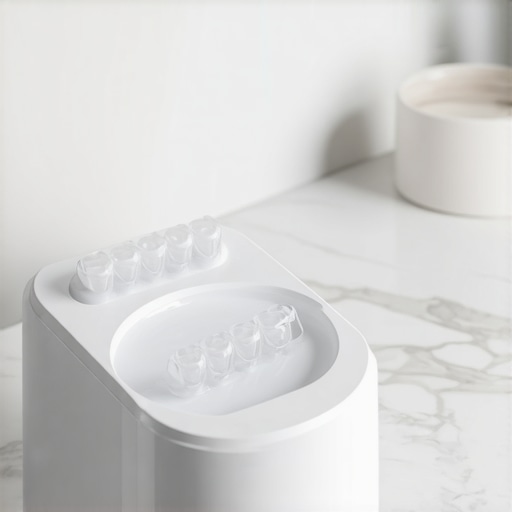
How do I keep my dental work looking fresh over time?
Consistency is the boring secret. You have to treat your mouth like a high-performance engine. This means maintaining your teeth cleaning routine with religious fervor. I personally use a high-end electric toothbrush with a pressure sensor because, as I learned during my ‘white tongue’ incident, being too aggressive is just as bad as being lazy. You also need to master Invisalign maintenance expert tips like using specialized flossing tools to get under permanent retainers. If you are a caffeine addict like me, you also need the coffee lover’s secret to preventing deep enamel stains, which involves rinsing with water immediately after your last sip to reset the pH of your mouth.
The Future of Smart Dental Monitoring is Almost Here
I predict that by the end of 2026, we won’t just be guessing if our whitening is working or if our enamel is thinning. We are moving toward AI-integrated oral cameras that sync with our phones to track demineralization in real-time. We are already seeing Invisalign innovations that use virtual care apps to reduce the number of in-office visits, and this tech will eventually expand to cosmetic monitoring. Imagine an app that tells you exactly when your teeth have reached their maximum ‘safe’ brightness so you never have to experience that chemical burn again. This level of precision is the cornerstone of the secret to a Hollywood smile in the modern era.
Take the Barrier Challenge Today
If you take one thing away from my trial-by-fire, let it be this: protection is better than a cure. Before your next whitening session or even your next cup of dark tea, try applying a tiny bit of Vitamin E oil to your gum line. It is a simple, five-second ‘advanced tip’ that creates a physical shield for your soft tissues. Don’t wait for the burn to start—build the barrier first. If you’ve been putting off a professional checkup, now is the time to look into teeth cleaning for sensitive teeth to ensure your foundation is ready for the next level of your transformation.
How I Finally Made Peace With My Sensitive Enamel
Reflecting on that night of the ‘burning tongue’ incident, I realized that my biggest mistake wasn’t the product itself—it was my lack of respect for my own biology. If I could go back and talk to my younger self, I would share these hard-won insights. First, whiter isn’t always healthier. When I learned about the ultimate guide to teeth whitening and cosmetic enhancements, I finally understood that a natural-looking, vibrant smile is far more attractive than a chalky, over-processed one. Second, the ‘sting’ is not your friend; it is a chemical emergency. Never wait for it to stop on its own. Lastly, your dental professional is your best ally, not an expensive luxury. I wasted so much money on DIY kits that caused damage when I should have been finding a dentist who gets your smile from the very beginning.
The Gear That Actually Stays in My Bathroom Cabinet
I have tried every gadget on the market, but only a few have survived my morning routine. For daily care, I swear by an ultrasonic cleaner for my night guard—it is the only way to ensure I’m not putting bacteria back into my mouth every night. I also keep a stash of high-quality Vitamin E capsules for more than just skincare; they are the ultimate ‘liquid bandage’ for any accidental oral irritation. Most importantly, I’ve committed to maintaining your teeth cleaning routine with a pressure-sensitive electric brush. If you are still guessing which professional to trust with your transformation, I highly recommend reading through these tips on choosing the right dentist to ensure your goals align with their expertise.
Your Path to a Pain-Free Glow Starts Now
You don’t have to suffer through chemical burns or sensitive zingers to achieve a look you love. Whether you are just starting with over-the-counter products or preparing for a complete transformation, remember that your comfort is the priority. By using the barrier techniques we discussed and listening to your body’s signals, you can enjoy the benefits of cosmetic dentistry without the traumatic aftermath. You deserve a smile that makes you feel confident, not one that makes you reach for the ice water in a panic. Take that first step today—your future self (and your tongue) will thank you.